Intimacy
Hard Facts: An Honest Guide to What Actually Helps Erectile Dysfunction
what actually works for ED, and what's a scam
Jul 9, 2026 · 13 min read
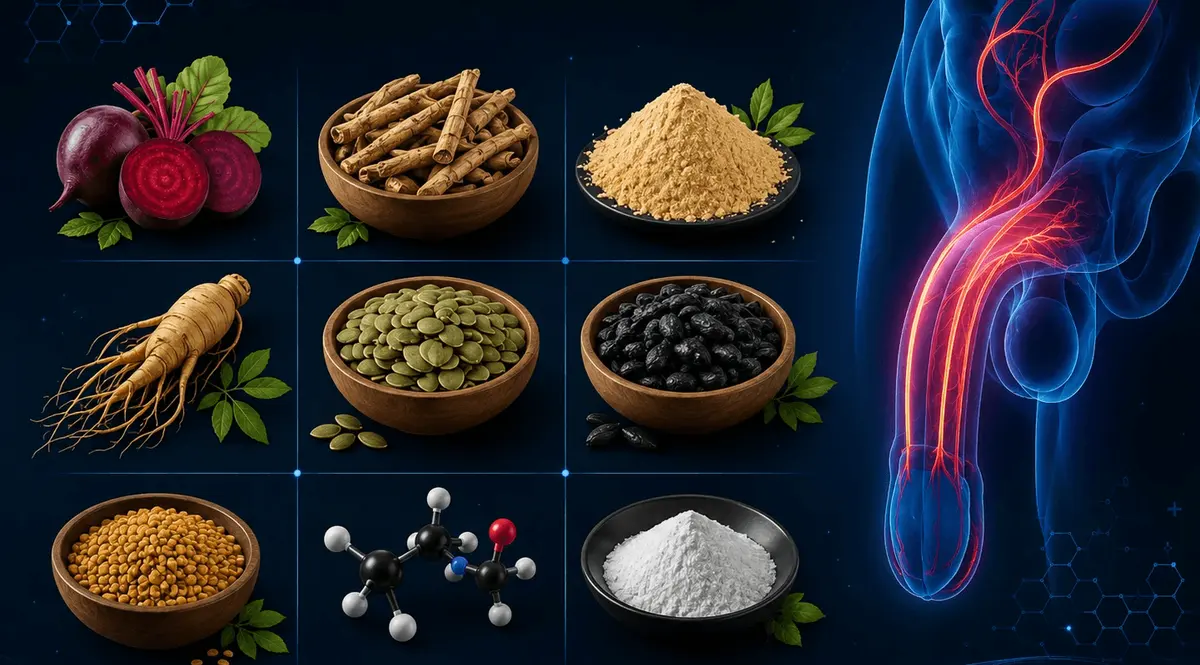
Let's talk about a topic that launches a thousand spam emails and a whole aisle of gas-station pills: erectile dysfunction, or ED. The internet is stuffed with miracle cures, "natural Viagra," and gadgets that promise to turn back the clock. Most of it is nonsense. Some of it is real. And a few pieces of it are genuinely dangerous.
So let's cut through the marketing and lay out what the actual science says: which supplements have real evidence, which are hype, what the futuristic gel-and-nanoparticle treatments can do, whether those buzzy shockwave clinics work, and (importantly) the safety stuff nobody selling you anything wants to mention.
Fair warning: this is going to be honest, which means some of your favorite ads are about to have a bad day.
First, the Plumbing: How an Erection Actually Works
An erection is basically a blood flow event. When things are working right, sexual arousal triggers your body to release a tiny, powerful molecule called nitric oxide (NO for short). Here's the chain reaction:
- Nerves and blood vessel linings in the penis release nitric oxide.
- NO switches on an enzyme (soluble guanylyl cyclase) that makes a messenger called cGMP.
- cGMP relaxes the smooth muscle inside the penis.
- Relaxed muscle lets blood rush in, and the swelling squeezes the veins shut so blood can't leave.
- Result: an erection.
Almost everything in this whole article — pills, gels, shockwaves — works by nudging some step in that chain. Keep this picture in your head and the rest makes sense.
Quick vocabulary cleanup: some people search for "nitrous" for ED. That's a mix-up. Nitrous oxide (N₂O) is laughing gas at the dentist. The molecule that matters here is nitric oxide (NO). Very different. Do not confuse your dentist's tank for a health supplement.
The Reality Check Nobody Sells: The Real Gold Standard, and a Warning
Before any supplement talk, two facts the ad industry conveniently skips.
Fact one: the proven, first-line treatments are PDE5 inhibitor pills. These are drugs like sildenafil (Viagra) and tadalafil (Cialis). They work at the bottom of that chain above, by stopping cGMP from being broken down, so the relaxation signal sticks around longer. They're well studied, they work for most men, and they're now cheap generics. Every supplement in this article is being measured against these pills, and spoiler: the supplements are weaker. Not useless, but weaker.
Fact two, and this is the big one: ED can be an early warning sign of heart disease. The arteries in the penis are small and clog before the bigger ones in your heart do. So trouble in the bedroom can be the first visible sign of trouble in your blood vessels, sometimes years before a heart attack.
⚠️ New or worsening ED is a reason to see a doctor, not a reason to shop.
Your penis is running an early-warning system for your arteries. ED shows up in men with silent cardiovascular disease years before chest pain does, and it can also be the first visible sign of diabetes, a hormone problem, or a medication side effect. Buying a supplement to paper over the symptom means ignoring the alarm. Get a checkup first — the underlying cause is often treatable, and it may be the most important appointment you make this year.
Okay. Now the supplements.
Supplements: The Good, the Meh, and the "Why Is This Even Sold?"
The Ones With Real (If Modest) Evidence
L-arginine is the most studied amino acid here. It's a direct building block your body uses to make nitric oxide. When researchers pooled 10 trials (540 men), doses of 1,500 to 5,000 mg a day beat placebo (with an odds ratio of 3.37, meaning meaningfully better odds of improvement). A high-dose study using 6 grams a day for three months improved both erection scores and measured blood flow on ultrasound, with 74% of men bumping down to a less severe ED category. It shines brightest as a teammate to the prescription pills: L-arginine plus tadalafil ranked much higher than L-arginine alone in a 2024 analysis. Side effects showed up in about 8.3% of users versus 2.3% on placebo, but nothing severe.
L-citrulline is L-arginine's sneakier cousin. When you swallow L-arginine, your liver destroys a big chunk of it before it reaches your bloodstream. L-citrulline slips past the liver and then converts into arginine inside your body, so it can actually be a better delivery system for the same goal. In a small trial of 24 men with mild ED, 1.5 grams a day moved erection hardness from "iffy" to "normal" in half the men, versus only about 8% on placebo, with no side effects. The catch: the studies are small and there are no big trials yet.
Panax ginseng is the herbal winner. Pooling five trials (399 men) showed a real improvement in erection scores, and notably the studies agreed with each other (a good sign). Its ginsenoside compounds help blood vessel linings release more NO. A Cochrane review (a very rigorous type of analysis) backed this up but flagged that the study quality was uneven and bigger trials are needed.
Pycnogenol (pine bark extract) plus L-arginine is a combo that works as a team: the arginine supplies the raw material for NO, while the pine bark extract revs up the enzyme that makes it. Three studies (184 men) showed improvement across the board, including sexual desire.
L-carnitines (two forms called propionyl-L-carnitine and acetyl-L-carnitine) are interesting because on their own the evidence is thin, but combined with sildenafil they topped one 2024 ranking for organic ED. Think sidekick, not solo act.
The "Eh, Only If You're Actually Deficient" Group
DHEA is a hormone that naturally drops with age. Despite the hype, a big analysis of 25 trials (1,353 older men) found no real benefit for men overall. One small study hinted it might help men with genuinely low DHEA levels, but it was too small to prove anything. (Oddly, the evidence is stronger for women's sexual function than men's.)
Vitamin D has a plausible story — there are vitamin D receptors in the testicles, and it's genetically linked to testosterone — and correcting a deficiency raised testosterone in one study. But no trial has actually shown vitamin D improving erections. Fix a real deficiency for your general health, sure. Just don't expect fireworks.
Zinc raises testosterone in men who are zinc-deficient, but in men with normal zinc it does nothing extra, and there's no direct evidence it treats ED. Same theme: it's a deficiency-fixer, not an enhancer.
Tribulus, saffron, and maca are the "we're not sure" pile. Maca had one small hopeful trial (50 men), while Tribulus and saffron gave messy, inconsistent results. File under "maybe, maybe not."
The Scariest Statistic in the Whole Topic
Here's the fact that should make you side-eye that flashy bottle at the checkout counter. When researchers examined the top 32 best-selling "male enhancement" and testosterone supplements, 68% of the ingredients earned a C or D grade, meaning the evidence was weak, missing, or actually pointed the wrong way. And not a single complete product had a published clinical trial proving it works. Zero.
And there's a problem that's arguably worse: health regulators have repeatedly found "all-natural" male enhancement pills secretly spiked with hidden prescription drugs, often unlabeled versions of the very PDE5 inhibitors in Viagra. That sounds like a bonus until you realize it's unregulated dosing of a real drug. When a "herbal" pill works suspiciously well, it may not be the herbs.
Nitric Oxide, the Star Molecule (and Why You Can't Just Buy It)
You'll see products screaming "NITRIC OXIDE BOOSTER." Here's the honest scoop: you can't actually take nitric oxide itself. It's a gas that exists for only a few seconds before it's gone. So every "NO supplement" is really a precursor, an ingredient your body uses to make NO. Judged as a class (arginine, citrulline, pycnogenol, ginseng), these NO-boosters did show real overall improvement in ED across 20 studies, and a nice bonus: they helped sexual desire too, which the prescription pills usually don't touch.
There are two different roads your body uses to make NO, and knowing them helps:
Road 1: L-arginine to NO. Your body converts arginine into NO using an enzyme. High doses (5 to 6 grams a day) seem to help most in men who started with low NO to begin with, meaning men with blood vessel problems. In one early study, the men who responded all had low NO markers that doubled by the end. Translation: this road helps most when the road was in disrepair to start with.
Road 2: nitrate to nitrite to NO. This is the food road. Nitrate from beetroot, spinach, and arugula gets turned into nitrite by bacteria in your mouth (yes, really), then into NO in your tissues. This pathway has strong evidence for lowering blood pressure and improving blood vessel function. But here's the honest part: nobody has run good trials showing beetroot juice specifically fixes ED. The blood vessel benefits are real; the erection claim is a reasonable guess, not proof.
And don't ignore the free stuff. Your body makes more NO when you exercise regularly, keep a healthy weight, eat omega-3 fats, and get enough antioxidants (like vitamins C and E and folate). Fixing these can improve both erections and your heart, and it makes any pills you do take work better. Boring? Maybe. Effective? Very.
When the Pills Don't Work: The Futuristic Stuff
Prescription PDE5 pills fail for roughly 30 to 35% of men. Why? Because they work at the bottom of the chain. If the upstream NO signal is badly broken, there's nothing for them to amplify. This happens especially after prostate surgery (which can damage the nerves that release NO) and in severe diabetes or artery disease (which wrecks the blood vessel linings). For these men, researchers are working on ways to deliver NO directly. Most of this is still experimental, so keep your expectations calibrated.
Approach 1: NO gel you rub on (the most advanced). A gel called MED2005 uses a 0.2% dose of glyceryl trinitrate (a nitrate that releases NO locally) applied to the penis. In a 232-man trial it beat placebo, and its headline feature was speed: nearly 44% of men got results within 5 minutes and about 70% within 10 minutes. Both the men and their partners preferred it to placebo. Side effects were mild, mostly headaches. The downsides: it mainly helped mild ED at this dose, and while the local-only action might make it safer for men who can't take heart-risky pills, that hasn't been proven. A related over-the-counter version (MED3000) also cleared the bar for a meaningful improvement over 24 weeks.
Approach 2: NO-releasing nanoparticles (still in animals and lab dishes). Scientists have built microscopic particles that slowly release NO when rubbed on the skin. In rats with surgically cut nerves (a stand-in for post-prostatectomy ED), the particles produced erections in 6 of 10 animals versus 0 of 10 controls. Even cooler, combining these particles with the prescription pills created teamwork: in nerve-injured rats where sildenafil alone did nothing, the combo produced more and faster erections. A 2026 study showed this worked with all four approved ED pills, cutting time-to-erection dramatically without messing with blood pressure. The newest version (a nitroprusside silica nanoparticle) actually out-relaxed tadalafil in human tissue samples in the lab and cleverly traps cyanide, a toxic byproduct, to stay safe. Promising. Also: no human trials yet. Do not go looking for this on Amazon.
Approach 3: skipping NO entirely (for the toughest cases). In the most severe ED, the target enzyme (sGC) can get chemically "rusted" by oxidative stress so that neither NO nor the pills can switch it on. Enter two drug classes: sGC stimulators (which boost whatever NO is left) and sGC activators (which work even on the rusted enzyme, exactly when everything else has failed). These are still experimental for ED, but the concept is proven real because one of them, riociguat, is already an approved drug for a lung blood-pressure condition. So the science is sound; the ED use is just not there yet.
What you can actually get today: while the nanoparticles cook in the lab, one rescue combo is already available: a topical alprostadil cream plus a max-dose prescription pill. In 170 men who didn't respond to pills alone, the combo meaningfully improved scores (while the cream alone did nothing), with mild side effects and no dangerous prolonged erections. That's the realistic "next step" option a urologist might actually offer.
Shockwave Therapy: Real Effect, Real Asterisks
You've probably seen clinics advertising "acoustic wave" or shockwave therapy (the fancy name is Li-ESWT) as a drug-free ED cure. This one has genuine science and genuine reasons for caution, so let's be fair to both.
How it supposedly works: a device sends gentle focused sound waves into the penis. These create tiny collapsing bubbles that stress the blood vessel walls in a good way, which seems to trigger new blood vessel growth, more NO production, some nerve repair, and recruitment of repair cells. In theory, it fixes the plumbing instead of just forcing it open for one night.
What the best evidence shows: the top-tier 2025 Cochrane review (21 trials, 1,357 men) found real, statistically significant improvement over fake treatment. Short-term, scores rose by about 3.9 points, which brushes up against the "you'd actually notice it" threshold but doesn't always clear it. Longer-term, the improvement was bigger (about 5.25 points, which does clear that bar), but that came from fewer studies that disagreed a lot with each other. Safety was excellent: no more side effects than fake treatment, just occasional minor bruising.
Now the honest caveats, because this is where clinics get quiet. A separate 2026 analysis of 19 trials agreed the results were statistically significant but noted most studies failed to reach the "clinically meaningful" bar, and flatly said it's still unclear whether it truly helps enough to matter. The overall quality of evidence is rated low. And a major medical guideline group (the AUA) still calls it investigational.
Where it actually looks best: men who failed the pills. Here the numbers are more encouraging. In the landmark trial, 54% of pill non-responders could get usable erections (while back on the pills) after treatment, versus 0% of the sham group. A later study of 106 men showed big improvements with objective ultrasound proof of better blood flow. But there's a pattern: men with mild-to-moderate ED do well, while men with severe ED plus diabetes often get little to nothing.
The protocol, roughly: studies point toward low energy settings, around 1,500 pulses per session, and about 12 sessions (better than 6), often twice a week for six weeks. A key finding is that the total number of sessions matters more than how you space them: hitting the meaningful-improvement mark happened in 62% of men after 6 sessions, 74% after 12, and 83% after 18. More is more, up to a point.
The part they really don't advertise: it wears off. Following responders for two years, only about 54% still had the benefit at 24 months. Another study following men for 30 months found about 76% of responders kept their gains, but that was only about 40% of everyone originally treated. The men most likely to keep the benefit were younger, non-smokers, non-diabetic, at a healthy weight, and had milder ED to begin with. So this is not a one-and-done cure, and it may need repeat rounds.
The Safety Talk (Please Read This Part)
Because so much of this involves blood flow, a few warnings are non-negotiable.
🚫 Never mix nitrates with ED pills, NO gels, or high-dose NO supplements.
If you take nitrate heart medication (like nitroglycerin for chest pain), combining it with a PDE5 pill — or with a NO-releasing gel, or possibly a high-dose NO supplement — can drop your blood pressure to life-threatening levels. This is not a "probably fine" interaction. It is the reason ED drugs come with a hard warning label. The same danger applies to "all-natural" pills spiked with unlabeled PDE5 drugs: you can't avoid an interaction you don't know you're having. If you take nitrates or blood pressure medication, nothing in this article goes in your body without a doctor knowing about it first.
Be cautious if you take blood pressure medicine. NO-boosting supplements can add to the effect and leave you dizzy or worse.
Don't skip the doctor. New ED can signal heart disease, diabetes, hormone problems, or medication side effects. A checkup can catch something serious and find the real cause, which often has a straightforward fix.
Don't forget the mind. It's easy to treat ED as pure plumbing, but a large share of it — especially in younger men — is psychological: stress, performance anxiety, depression, or relationship strain. No beetroot juice fixes that. Sometimes the most effective treatment is addressing anxiety, sleep, or a relationship issue, not a pill or a gadget.
The Bottom Line
Here's the whole honest picture in a nutshell:
- The proven, cheap, first-line treatment is prescription PDE5 pills (Viagra, Cialis). Everything else is measured against them, and everything else is weaker.
- A few supplements have real but modest evidence: L-arginine (especially high-dose or paired with the pills), L-citrulline, and Panax ginseng. They're best for mild ED and as teammates, not replacements.
- Most "male enhancement" supplements are unproven, and some are secretly spiked with real drugs. Buyer beware, seriously.
- Lifestyle is underrated: exercise, healthy weight, not smoking, and a good diet boost your own NO and help everything else work better.
- The futuristic gels, nanoparticles, and sGC drugs are exciting but mostly experimental. One real rescue option (topical alprostadil plus a pill) exists today for men the pills failed.
- Shockwave therapy is safe and shows real signals, best for pill non-responders with milder, blood-flow-related ED, but the evidence is still low-certainty, it often falls short of "clearly meaningful," it does poorly in severe diabetic ED, and it wears off for many men.
- ED is a health signal, not just a bedroom problem. See a doctor. It could be the most important checkup you get.
The tl;dr: your best "male enhancement" strategy is a doctor's visit, honest lifestyle work, proven medication if you need it, and a healthy suspicion of anything sold with a wink and an exclamation point. Your blood vessels (and your heart) will thank you.
This article is general education, not medical advice. ED sits at the intersection of your heart, your hormones, and your head — which is exactly why a bottle bought online is the wrong first move. Talk to a doctor before starting any supplement, device, or medication, especially if you take nitrates or blood pressure drugs. For what a physical device can and can't do, see our guide to ED devices; for the hormone question underneath it, see our pieces on low testosterone; and for why the supplement aisle keeps promising what it can't deliver, see our piece on aphrodisiac foods. If your ED is riding on anxiety, depression, or a strained relationship, those are treatable too — and sex therapy is a real option, not a last resort.