Lifestyle
Your Pop-Tart Now Lifts Weights
Protein works, but only if you lift
Aug 22, 2026 · 9 min read
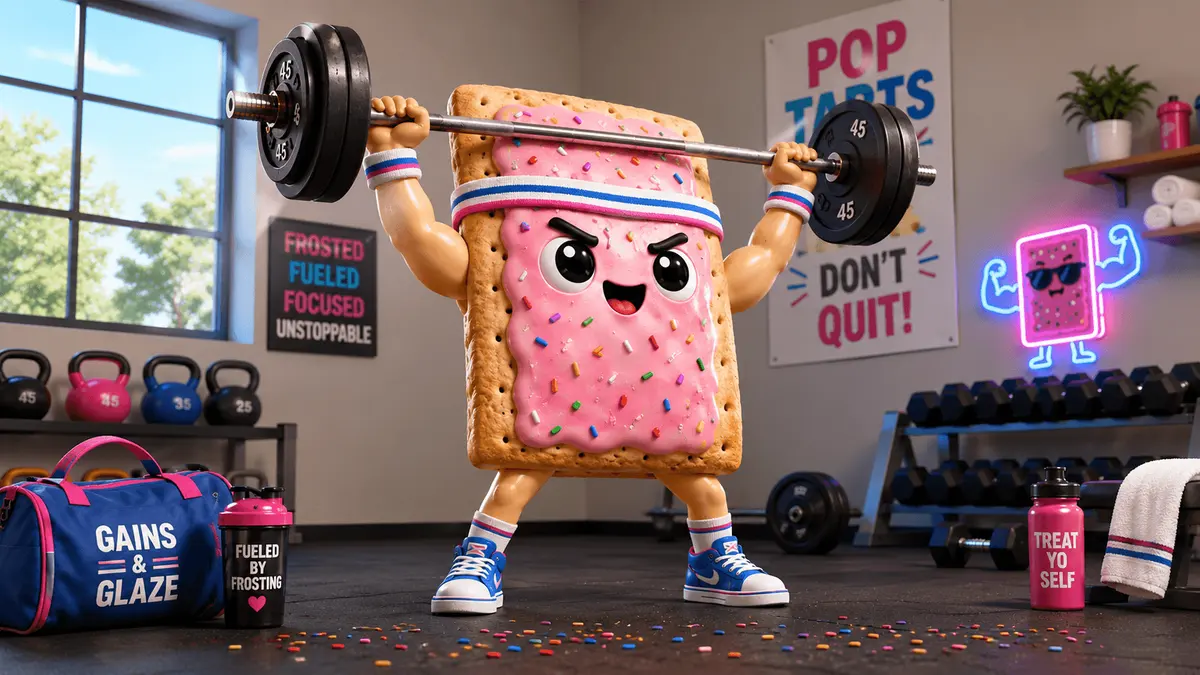
Protein has been added to cereal, chips, coffee, pasta, and yes, breakfast pastries. Here's what the science actually supports, and where the marketing department took over.
In the first Rocky, before sunrise, Rocky cracks raw eggs into a glass and drinks them. For an entire generation of teenagers, this became a challenge rather than a scene.
Anyone who tried it learned two things immediately. One, it's revolting. Two, one gulp is enough to satisfy your curiosity for life.
Here's the joke nobody knew at the time: Rocky was doing it wrong. Your body absorbs only about half the protein in a raw egg. Cook it and absorption climbs to roughly 90 percent. He could have scrambled them, gotten nearly twice the benefit, and enjoyed breakfast. Also, raw eggs carry a salmonella risk, which is a genuinely terrible way to start training camp.
Fifty years later, the raw egg has been replaced by an entire supermarket. Protein cereal. Protein pasta. Protein chips. Protein coffee. Protein bread. Protein Pop-Tarts.
When a frosted breakfast pastry starts advertising itself as a protein source, we have officially entered a new phase.
So let's sort out what's real.
What protein actually does
Protein is one of three macronutrients, alongside carbohydrates and fat. Carbs and fat are mainly fuel. Protein can be burned for fuel too, but that's not its job. Its job is building and repairing.
Yes, that includes the muscles Rocky uses to punch things. But it also includes the muscle that pumps your blood, the muscles that push food through your gut, and the muscles that open your airway so you can breathe.
And protein isn't only about muscle at all. Your nervous system, immune system, skin, and hormones all depend on it.
Protein is not "muscle food." Protein is body food. The marketing just fixated on biceps because biceps sell better than "adequate enzyme production."
Amino acids, briefly
Proteins are built from 20 amino acids. Different combinations and shapes make different proteins with different jobs. When you eat protein, your body dismantles it into amino acids and reuses the pieces, like breaking down a Lego set to build something new.
Nine of the 20 are called essential, meaning your body can't manufacture them and has to get them from food.
Animal sources like eggs, dairy, fish, poultry, and lean meat contain all nine in good amounts. Most single plant sources come up short on at least one. Grains tend to be low in lysine, legumes tend to be low in methionine. Soy is the notable exception and covers all nine.
Nutrition scientists rank this formally using scores called PDCAAS and the newer DIAAS, which combine how much of each essential amino acid a food has with how much actually gets absorbed. Dairy and egg score at the top. Individual plants score lower.
This is where the classic advice about beans and rice comes from. Each fills the other's gap.
But here's the part that gets left out of the debate: protein quality matters most when you're not eating much protein. If your overall intake is decent and your diet is varied, the day's total covers all nine amino acids regardless. You do not need to combine complementary proteins at the same meal like you're solving a puzzle. Your body doesn't run out of amino acids between lunch and dinner.
How much do you actually need?
This is where things got interesting recently.
For decades the standard was 0.8 grams per kilogram of body weight per day. The 2025-2030 Dietary Guidelines, released in early 2026, moved toward 1.2 to 1.6 grams per kilogram.
For a 150 pound person, that's a jump from roughly 54 grams a day to somewhere between 80 and 110 grams. Nearly double.
And plenty of nutrition scientists think that jump got ahead of the evidence.
The critiques are specific. The higher target leaned heavily on a rapid review of weight management trials, with much less attention paid to how protein intake relates to heart disease, type 2 diabetes, kidney disease, and bone health. Two recent systematic reviews concluded there wasn't enough evidence to raise the underlying reference value at all. Some experts argue that publishing a precise grams-per-kilogram figure goes beyond what the guidelines process is designed to do.
There's also a targeting problem. Pushing "protein at every meal," particularly from animal sources, aims a message at a population that is, on average, already eating plenty of both.
That said, the guidelines committees flagged real gaps in specific groups: adolescent and young women, and older adults genuinely tend to under-consume protein. The case for eating more is strong there. It's much weaker for the average well-fed adult who is already fine.
What protein actually looks like on a plate
The entire conversation happens in grams, and almost nobody explains what a gram of protein looks like in real food. So here:
Food | Approximate protein |
|---|---|
1 large egg | 6 g |
1 cup milk | 8 g |
2 tbsp peanut butter | 7 g |
1 cup cooked black beans | 15 g |
½ cup firm tofu | 15 g |
1 cup cooked lentils | 18 g |
1 cup Greek yogurt | 20 g |
1 can tuna, drained | 25 g |
1 cup cottage cheese | 25 g |
4 oz salmon | 25 g |
1 scoop whey powder | 25 g |
4 oz cooked chicken breast | 32 g |
Look at that list, then look at your day. Eggs at breakfast, a can of tuna at lunch, chicken at dinner, and a cup of yogurt puts you around 80 grams without a single specialty product, shaker bottle, or item with a cartoon bicep on the packaging.
Most people discover they're closer to their target than the marketing implied. Which is, of course, precisely why the marketing exists.
Does timing matter?
Somewhat, but less than the slogans suggest.
Building new muscle protein gets triggered partly by hitting a threshold amount of one specific amino acid, leucine, at a given meal. That's roughly what you'd get from 25 to 30 grams of good quality protein.
Because of that threshold, spreading protein across breakfast, lunch, and dinner may work slightly better than eating a small breakfast and a giant steak at 8pm. This matters more for older adults, whose muscles respond less strongly to protein, a phenomenon called anabolic resistance.
But precise timing is wildly oversold. There is no 30 minute "anabolic window" that closes and locks. For most healthy adults, your daily total and whether you're actually training matter far more than what the clock says when you eat.
The one finding that matters most
Here it is, and it's the part the supplement aisle would prefer you skim past:
Extra protein builds muscle only if you're doing resistance training.
This has been measured repeatedly. A network analysis of 38 randomized trials in older adults found that protein plus resistance training produced significantly better gains in muscle, strength, and physical function than protein alone. Protein by itself did little for strength or function. A separate analysis of 28 trials found that increased protein improved lean mass and grip strength only in people who were also lifting. Without training, no meaningful gain.
The biology is straightforward. The pathways that grow muscle get switched on mainly by putting heavy loads on that muscle. Training is the signal. Protein is the raw material.
Delivering lumber to a construction site does not build a house. You need someone to actually pick it up.
So what counts as resistance training?
The original version of this conversation always stops at "you must lift weights" and never says how. Basic version:
- Two to three sessions a week is enough to see real change.
- Cover the main movement patterns: push something, pull something, squat, hinge at the hips, carry something heavy.
- Bodyweight counts. Push-ups, squats, lunges, and pull-ups are resistance training. A gym membership is optional.
- Progressive overload is the whole game. Gradually add weight, reps, or difficulty over time. Doing the identical workout forever produces identical results forever.
- Work close to hard. Sets somewhere around 6 to 15 reps, ending a couple reps short of failure, is a reasonable default.
- Older adults benefit most, not least. Muscle loss with age is one of the strongest predictors of losing independence, and resistance training is the most effective intervention available.
Can you overdo protein?
For most healthy people, moderately high intake is fine. But there are limits worth knowing.
High protein intake increases pressure and filtration inside the kidney's filtering units. Sustained intake above roughly 1.5 grams per kilogram of ideal body weight per day may contribute to kidney strain over the long run, especially in people who already have reduced kidney function, diabetes, or high blood pressure. Chronic intakes at or above 2 grams per kilogram are best avoided in the general population.
Healthy kidneys have no clear problem with a higher protein diet. The catch is that kidney disease is often completely silent until it's advanced. If you're planning an aggressive high-protein regimen, getting kidney function checked first is a reasonable move, not a paranoid one.
The fullness effect is real
Companies push protein partly because it makes you feel full, and this one holds up scientifically. Controlled studies show leucine can reduce food intake. 2026 research even identified the specific mechanism: a calcium channel in the hypothalamus called Cav3.1, through which leucine activates appetite-suppressing neurons. There's a real signal running from your gut to your brain.
The tradeoff is worth naming. Appetite suppression can crowd out fruits, vegetables, beans, and whole grains, which carry fiber and micronutrients that protein bars don't. Most people are already well short on fiber. Trading a fiber deficit for a protein surplus you didn't need is a strange bargain.
Powders, bars, and fortified everything
Protein powder is a $20 billion industry, which tells you something about the margins.
When supplements genuinely help: people with poor appetite, people recovering from illness or injury, older adults struggling to hit intake, and people on GLP-1 weight loss medications. That last group matters. These drugs reduce appetite substantially, and a joint advisory from major nutrition and obesity societies specifically recommends prioritizing protein and resistance training to preserve muscle during rapid weight loss.
When they don't add much: when your intake is already adequate. A 2026 trial compared egg, salmon, pork, lentils, mycoprotein, and egg whites after resistance exercise and found they all stimulated muscle protein synthesis at similar rates. Whole food and supplements performed comparably. Leucine-rich sources like dairy and whey have a small edge, mostly relevant for older adults with anabolic resistance, and mostly when total intake is low.
Three things nobody puts on the label:
- Supplements are barely regulated. In the US, protein powders are sold as dietary supplements, meaning nobody verifies contents before they reach the shelf. Independent testing has repeatedly found heavy metals including lead and cadmium in popular powders, with plant-based ones often testing higher because plants pull metals from soil. If you use powder regularly, look for third-party certification such as NSF Certified for Sport or Informed Sport. It's a stamp on the container and it means someone actually checked.
- Do the math on the price. Protein-fortified packaged foods carry a serious premium. Eggs, milk, canned tuna, dried beans, lentils, chicken thighs, and cottage cheese deliver protein at a fraction of the cost per gram. The protein cereal is not better than the eggs. It's just better at advertising.
- Read the whole label, not the front. A "high protein" claim on the front can mean the manufacturer added four grams. Flip it over and check protein against sugar, sodium, saturated fat, and total calories. A lot of protein bars are candy bars with a gym-themed rebrand and a 40 percent markup.
The verdict
Is the protein craze real science or a fad?
Both, and the line between them is clean.
Real: protein supports muscle maintenance and growth, injury repair, fullness, and healthy aging. Some groups, particularly older adults and young women, genuinely don't get enough.
Fad: the idea that adding protein to a food automatically improves it, that more is always better, and that protein alone builds muscle. All three are contradicted by the evidence. Extra protein does little without training. Whole foods match supplements when intake is adequate. Very high intake carries real risk for compromised kidneys.
Rocky's raw eggs were never the point. He also had to run the steps.
General information, not medical advice. Protein needs vary with age, sex, activity, pregnancy, and medical history. A doctor or registered dietitian can help you set a number that fits you specifically, and that's especially worth doing if you have kidney, liver, or metabolic conditions.