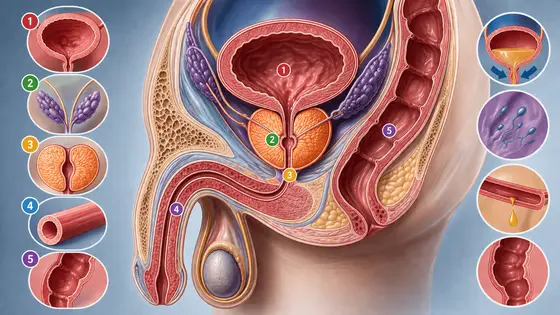
Prostate
Sometimes the Best Prescription Is Un-Prescribing
Ask your doctor: do I still need this pill?
Jul 11, 2026 · 3 min read

Imagine taking the same pill every day for years, faithfully, like brushing your teeth. Now imagine finding out you might not need it anymore. That's the surprisingly common situation for a lot of older men and their prostate medication.
The Setup
As men age, plumbing problems are almost a rite of passage. Up to 40% of men over 50 deal with lower urinary tract symptoms, the polite name for the annoying stuff: getting up all night to pee, sudden urgency, a weak stream, trouble starting.
The usual culprit is an enlarged prostate, which is incredibly common (found in about half of men in their 50s and up to 90% by their 80s). The go-to fix is a drug called tamsulosin, better known as Flomax. It relaxes muscle around the prostate so urine flows easier. It's the most prescribed urology drug out there, roughly 1 in 5 men with these symptoms take it, and once older men start, they rarely stop.
Why "Rarely Stop" Is a Problem
Tamsulosin works for many men, but its benefit is often modest, and it comes with a side-effect list worth reading.
It can drop your blood pressure when you stand up, causing dizziness and sometimes fainting, which leads to falls. A study of more than 147,000 older men found that starting this kind of drug raised the risk of falls, fractures, and head injuries in the first few months.
It also causes a sneaky eye issue called floppy iris syndrome. The drug loosens muscle in the iris, which can seriously complicate cataract surgery later, and the frustrating part is that quitting the drug beforehand doesn't fully fix it, because the changes stick around. So eye surgeons really want to know if you're on it.
Add in sexual side effects, fatigue, and the fact that every extra daily pill feeds "polypharmacy," the pile-up of medications that raises the odds of bad interactions in older adults.
The Plot Twist: Symptoms Come and Go
Here's the fact that changes everything. Those urinary symptoms aren't permanent. In one long study of older men, symptoms fading on their own was actually more common than new symptoms showing up.
Translation: a man who started tamsulosin years ago might have a prostate that has quietly calmed down, and he'd never know, because he's still taking the pill.
A Clever Little Experiment
Researchers at UCSF tested this in a smart way. Instead of comparing groups of people, they made each man his own comparison. Thirty men who'd taken tamsulosin for at least a year secretly switched back and forth between the real drug and a look-alike placebo, tracking symptoms daily without knowing which was which.
The results were eye-opening:
- About 37% got little to no benefit from the real drug over the fake one.
- About 37% got a moderate benefit.
- About 13% got a strong benefit and clearly needed it.
- About 13% felt worse on placebo and couldn't finish.
In other words, a big chunk of men were dutifully taking a pill that was barely doing anything. Even more telling, many of the "no benefit" men had sworn the drug was helping before the test. That's the placebo effect, and it's why guessing works worse than measuring.
What This Means for You (or Your Dad)
This doesn't mean tamsulosin is bad. For some men it's genuinely helpful. The lesson is that "take it forever without checking" isn't the smart default, especially for older men juggling several medications.
Doctors increasingly embrace "deprescribing," the careful, planned process of stopping a medicine when the risks start outweighing the payoff. Reviews show that with proper monitoring, many patients can safely come off various drugs.
The One Rule
🚫 Do not stop tamsulosin on your own.
Stopping suddenly can bring symptoms roaring back — including, at worst, being unable to pee at all, which is a medical emergency and not a "wait until Monday" situation. This article is an argument for asking the question, not for quietly binning your pill. Your doctor may want to run a structured trial off the drug, with monitoring, so you both find out what it's actually doing for you.
Instead, bring it up at your next visit with a simple question: "Do I still need this?" It's a small question that could save you from dizziness, a fall, or one more pill you don't need.
Sometimes the best new prescription is fewer prescriptions.
This article is general education, not medical advice. Nothing here is a reason to change a prescription on your own — it's a reason to bring one up. Two things worth flagging to any doctor you see: if you're heading for cataract surgery, tell the eye surgeon you take tamsulosin even if you stopped it, and if you also take an ED pill, alpha-blockers and PDE5 inhibitors can drop your blood pressure together, so the combination needs a plan (our Cialis-versus-Viagra guide covers why daily tadalafil sometimes replaces the alpha-blocker entirely). And if you suddenly can't urinate at all, that's an emergency room trip, not a phone call.
/cover-sm.webp)