Everything You Never Knew You Needed to Know About Ascorbic Acid
Picture this: you are a sailor in the 1700s. You have been at sea for months. Your gums are swollen and bleeding. Your teeth are falling out. Your old wounds are reopening. You feel like you are falling apart at the seams. Your fellow sailors are dropping like flies. The ship surgeon shrugs and says, "Not sure, mate." The answer to your misery was hiding in a lemon the whole time. Welcome to the wild world of Vitamin C.
Vitamin C, also known by its fancier name ascorbic acid, is a water-soluble vitamin that your body desperately needs and cannot make on its own. That is right. Your body is incapable of producing even one molecule of Vitamin C. Zero. Zilch. None. Most animals can whip up their own supply, but somewhere along the line, humans lost the enzyme needed to do it. Thanks, evolution.
The good news? Vitamin C is absolutely everywhere in the food supply. The bad news? A surprising number of people still do not get enough of it.
What Does Vitamin C Actually Do?
Vitamin C is not just for keeping scurvy away, though that is certainly a perk. This vitamin is doing a full-time job in your body around the clock. Here is what it is up to:
Building Your Body From the Inside Out
Vitamin C is essential for making collagen, which is basically the glue that holds your body together. Collagen is in your skin, bones, tendons, blood vessels, and even your corneas. Without enough Vitamin C, your body cannot produce quality collagen. Things start to fall apart, quite literally. Wounds stop healing. Old scars can reopen. Sailors on long voyages learned this lesson the extremely hard way.
Fighting Off Tiny Enemies
Vitamin C is a powerful antioxidant. That means it roams around your body neutralizing harmful molecules called free radicals, which are basically rogue particles that damage your cells. Think of Vitamin C as your body's personal security guard, tackling troublemakers before they cause serious damage.
Helping Iron Get Absorbed
Here is a fun team-up: Vitamin C dramatically improves your body's ability to absorb iron from plant-based foods. On its own, iron from spinach or lentils is not that easy for your gut to grab. But add some Vitamin C to the mix, and absorption improves significantly. This is why squeezing lemon juice on your lentil soup is actually scientifically smart, not just delicious.
Keeping Your Hormones Happy
Vitamin C plays a supporting role in making several hormones and neurotransmitters, including the stress hormone cortisol and the mood-related chemical serotonin. When you are under stress, your body burns through Vitamin C faster. It is your body asking for backup.
Fun Fact: Five servings of fruits and vegetables daily gives you roughly 200 mg of Vitamin C. The recommended daily intake for adults is about 90 to 110 mg. Eat your fruits and veggies and you are covered! |
Where Can You Find Vitamin C?
Great news: Vitamin C is not hiding in some rare exotic plant that only grows on one mountain in Peru. It is in loads of everyday foods. Here are the all-stars:
Fruit Hall of Fame
Guava: One of the richest sources on Earth
Acerola cherries: Famously packed with Vitamin C
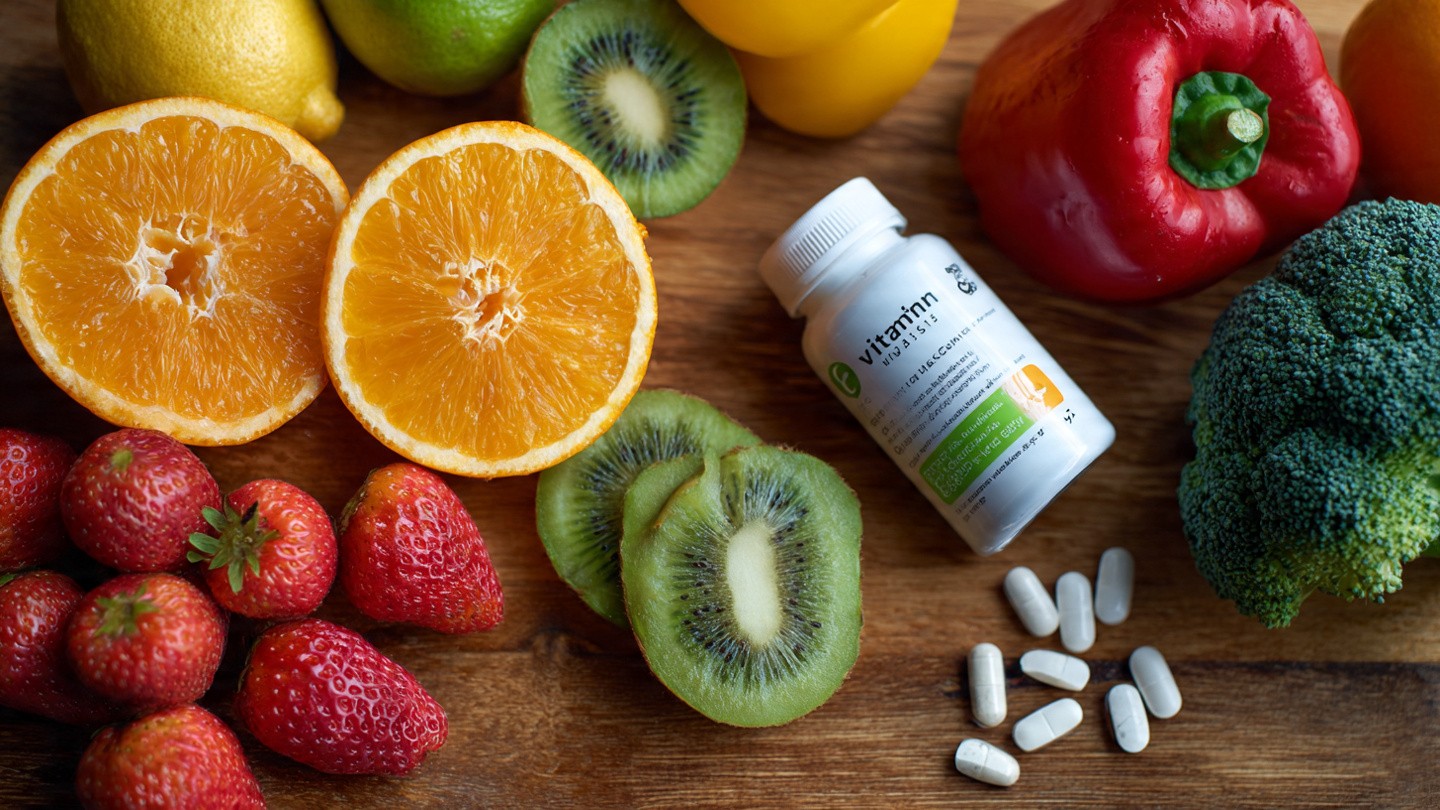
Kiwi: Small but mighty
Citrus fruits: Oranges, grapefruits, lemons, and limes
Strawberries, pineapple, papaya, and mango
Vegetable MVPs
Red and yellow bell peppers: Actually beat oranges in Vitamin C content
Broccoli: A nutritional powerhouse
Kale and spinach
Tomatoes
Potatoes: Yes, regular old potatoes have Vitamin C
A word of warning about cooking: Vitamin C is fragile. It does not like heat. Boiling vegetables can destroy 50 to 80 percent of their Vitamin C content. Microwaving or steaming with minimal water is much kinder to this delicate vitamin. Also, freshness matters. Spinach sampled in winter had more than twice the Vitamin C of spinach sampled in summer and fall. Seasonal variation is real.
How Much Do You Need?
Adults need about 90 to 110 mg of Vitamin C per day. To put that in perspective, one medium orange contains about 70 mg. A cup of raw red bell pepper blows past 150 mg. Eating a varied diet with fruits and vegetables is generally enough for most healthy people.
However, your needs go up in certain situations:
Smokers need about 35 mg more per day than nonsmokers because smoking increases oxidative stress and burns through Vitamin C faster
Pregnant and breastfeeding women have higher requirements
People under intense physical stress or extreme cold may need more
Quick Math: One cup of sliced strawberries gives you about 98 mg of Vitamin C. One medium kiwi packs around 70 mg. Eat both as a snack and you have hit your daily target before dinner even starts. |
What Happens When You Do Not Get Enough?
Going without Vitamin C for two to four months can lead to scurvy, the disease that terrified sailors for centuries. It does not happen overnight, but it does happen, and it is not pretty.
Early Warning Signs
The first sign is usually fatigue, the kind that does not go away with sleep. This is easy to dismiss, which is why scurvy often goes undiagnosed for a while.
The Classic Symptoms
As deficiency deepens, more dramatic symptoms appear:
Tiny red or purple spots around hair follicles on the skin
Corkscrew-shaped body hairs, which sounds bizarre but is a real and recognized sign
Swollen, bleeding, spongy gums
Easy bruising and slow-healing wounds
Bone and joint pain, sometimes severe enough to make walking difficult
Anemia from impaired iron absorption
The Great Pretender: Scurvy is famous for being mistaken for other conditions. Doctors have sent patients for cancer workups, autoimmune disease testing, and bone marrow biopsies when the real culprit was a lack of Vitamin C. A simple dietary history and blood test could have solved it much faster. When a patient has unexplained bruising, bleeding gums, and joint pain and eats almost no fruits or vegetables, Vitamin C deficiency should be at the top of the list.
Who Is at Risk?
Scurvy is not just a historical problem. It still happens today, and certain groups are more vulnerable:
Smokers, who have Vitamin C blood levels about one third lower than nonsmokers
People with very restricted diets, including some individuals with autism spectrum disorder or eating disorders
Elderly people living alone or in care facilities who may not eat much fresh produce
People experiencing homelessness or food insecurity
Heavy alcohol users, who tend to have poor overall nutrition
People with conditions like Crohn's disease that affect nutrient absorption
Men in general, who have consistently higher rates of deficiency than women across all groups
Can You Get Too Much Vitamin C?
Yes. Here is where things get interesting. Vitamin C is one of the safer vitamins around. Large doses up to about 2,000 mg are generally well tolerated by healthy adults. Your kidneys are good at filtering out excess. But that does not mean you should start taking massive supplements just for fun.
The Unpleasant Side Effects
Taking several grams at once can cause some uncomfortable digestive fireworks, including diarrhea and bloating. The unabsorbed Vitamin C pulls water into the gut, with predictable results. This is inconvenient but not dangerous for most people.
Serious Risks in Specific Situations
Some people need to be genuinely careful about high-dose Vitamin C:
People with kidney disease: Vitamin C is converted to oxalate in the body, which can accumulate dangerously in people with kidney problems. Those on dialysis should not exceed 200 mg per day
People with a history of kidney stones: High doses above 1,000 mg per day can increase oxalate excretion and raise stone risk
People with G6PD deficiency: This genetic condition affects red blood cells. High-dose Vitamin C, especially intravenously, can trigger a dangerous breakdown of red blood cells in these individuals. Screening is essential before giving IV Vitamin C
Pregnant women: High-dose supplementation of 1,000 mg per day combined with Vitamin E did not prevent complications and was linked to increased risk of low birth weight babies in clinical trials
People with hemochromatosis or other iron overload conditions: Vitamin C enhances iron absorption, which could worsen the condition
Important Note: More than 75 percent of commercial Vitamin C supplements exceed the recommended daily dose. Nearly 40 percent go above the upper safety limit. Read labels carefully and talk to a doctor or pharmacist before taking high-dose supplements, especially if you have any health conditions. |
What About Vitamin C and the Common Cold?
This one has been debated for decades, ever since the Nobel Prize-winning chemist Linus Pauling argued in the 1970s that mega-doses of Vitamin C could prevent colds. Spoiler: the science did not fully back him up.
Here is what the research actually shows:
Taking Vitamin C supplements regularly does not prevent colds in the general population
However, for people under extreme physical stress like marathon runners, soldiers in subarctic conditions, and competitive skiers, regular Vitamin C supplementation cut cold incidence by about 52 percent
For people already taking supplements regularly, a cold that does hit tends to be shorter by about 8 percent in adults and 14 percent in children
So Vitamin C is not the cold-cure miracle some hoped for. But it is not useless either, especially for people pushing their bodies to the limit.
Vitamin C and Bigger Health Questions
Researchers have been digging into Vitamin C's role in serious diseases. Here is a summary of where the science stands:
Cancer
Eating a diet high in fruits and vegetables is associated with lower risk of several cancers, including cancers of the mouth, esophagus, stomach, and lungs. Vitamin C is likely one of the reasons, though it is hard to separate it from all the other good stuff in produce. Interestingly, high-dose intravenous Vitamin C is being studied as a possible add-on treatment for some cancers, acting not as an antioxidant but as a pro-oxidant that may help damage cancer cells. The research is ongoing and promising but not yet definitive.
A caution: Some studies found that taking antioxidant supplements including Vitamin C during active chemotherapy was linked to worse outcomes in breast cancer patients. This does not mean Vitamin C from food is harmful, but it does mean that high-dose supplements during cancer treatment require careful discussion with your oncologist.
Heart Disease
Studies show that getting more Vitamin C from diet is associated with lower risk of heart disease and overall mortality. Getting 50 to 100 mg more per day from food is linked to meaningful reductions in risk. This is another gold star for fruits and vegetables, not necessarily for pills.
Diabetes
For people with type 2 diabetes, Vitamin C supplementation at 500 to 1,000 mg per day has shown promising effects on blood sugar control and blood pressure in some studies. Average reductions in HbA1c of about 0.54 percent and systolic blood pressure of about 6 points have been reported. The evidence is encouraging but not yet strong enough for widespread clinical recommendations.
The Bottom Line
Vitamin C is one of those nutrients that sits quietly in the background doing an enormous amount of work. It holds your body together, fights off cellular damage, helps you absorb iron, and keeps multiple body systems running properly. It is not glamorous. It does not have the mysterious reputation of some trendy supplement. It is just reliably, consistently essential.
The good news is that getting enough Vitamin C is not complicated. Eat a colorful variety of fruits and vegetables every day. Do not boil them to oblivion. Eat them fresh when you can. That is really the whole strategy.
If you smoke, are elderly, have a restrictive diet, or have a condition that affects nutrient absorption, it is worth paying extra attention to your Vitamin C intake and possibly discussing supplementation with your doctor.
And remember the sailors. Hundreds of thousands of them died over centuries from a disease that a couple of oranges would have prevented. You have easy access to oranges. There is genuinely no excuse.
Quick Reference: Vitamin C Cheat Sheet Daily need: 90 to 110 mg for adults. Best sources: bell peppers, guava, citrus, kiwi, broccoli, strawberries. Preserve it: steam or microwave instead of boiling. Upper safe limit: 1,000 to 2,000 mg per day for healthy adults. Deficiency timeline: symptoms appear after 2 to 4 months of very low intake. First sign: fatigue and skin changes. Classic sign: bleeding gums, corkscrew hairs, easy bruising. |
HSA/FSA Eligible
Doctors Are Human.
That's Why There's Medome.
Start your free trial today. No credit card required.
Start Your Free Trial
Join thousands protecting their health with AI that never forgets
Critical details get missed when your health information is scattered. Medome connects the dots across your complete record.
Start Your Free Trial
Quick Links
Medome Men
Home
Pricing
About
Health News
HealthSigns
FAQ
Contact Us
Terms of Service
Privacy Policy
Get In Touch
Email: service@medome.ai
Phone: (617) 319-6434
This is Dr. Steven Charlap’s cell. Please text him first, explaining who you are and how he can help you. Use WhatsApp outside the US.
Hours: Mon-Fri 9:00AM - 9:00PM ET