A seriously educational guide to one of the most fascinating molecules in your food
Every Thanksgiving, someone at the table says it. Maybe it is your uncle, maybe it is your dad, maybe it is you. Someone points at the turkey and says, "That is the tryptophan making you sleepy." Everyone nods. Someone reaches for another roll. The myth lives on.
But here is the thing: tryptophan is actually one of the most interesting molecules in your entire body, and the turkey story barely scratches the surface. Tryptophan does not just make you want to nap on the couch. It builds serotonin, which controls your mood. It builds melatonin, which controls your sleep. It is involved in your immune system, your gut health, your brain function, and even your heart. Oh, and it has one of the wildest stories in supplement history involving a disease outbreak in the 1980s that reads like a medical thriller.
Buckle up. We are talking tryptophan.
What Even Is Tryptophan?
Tryptophan is an amino acid. Amino acids are the building blocks of proteins, like tiny LEGO bricks that your body snaps together to make everything from your hair to your hormones. There are 20 amino acids your body uses, and nine of them are called "essential" amino acids. That means your body cannot make them on its own. You have to eat them. Tryptophan is one of those nine.
Out of all 20 amino acids, tryptophan is actually the rarest one in food. It shows up in the smallest amounts. Your body also uses more of it than you might expect, because tryptophan is not just a building block for proteins. It is also the starting ingredient for some incredibly important chemicals.
Think of tryptophan like a celebrity chef who gets hired to cook at multiple restaurants at once. Your body is constantly pulling tryptophan in different directions, each pathway competing for a piece of the action.
Where Does Tryptophan Come From?
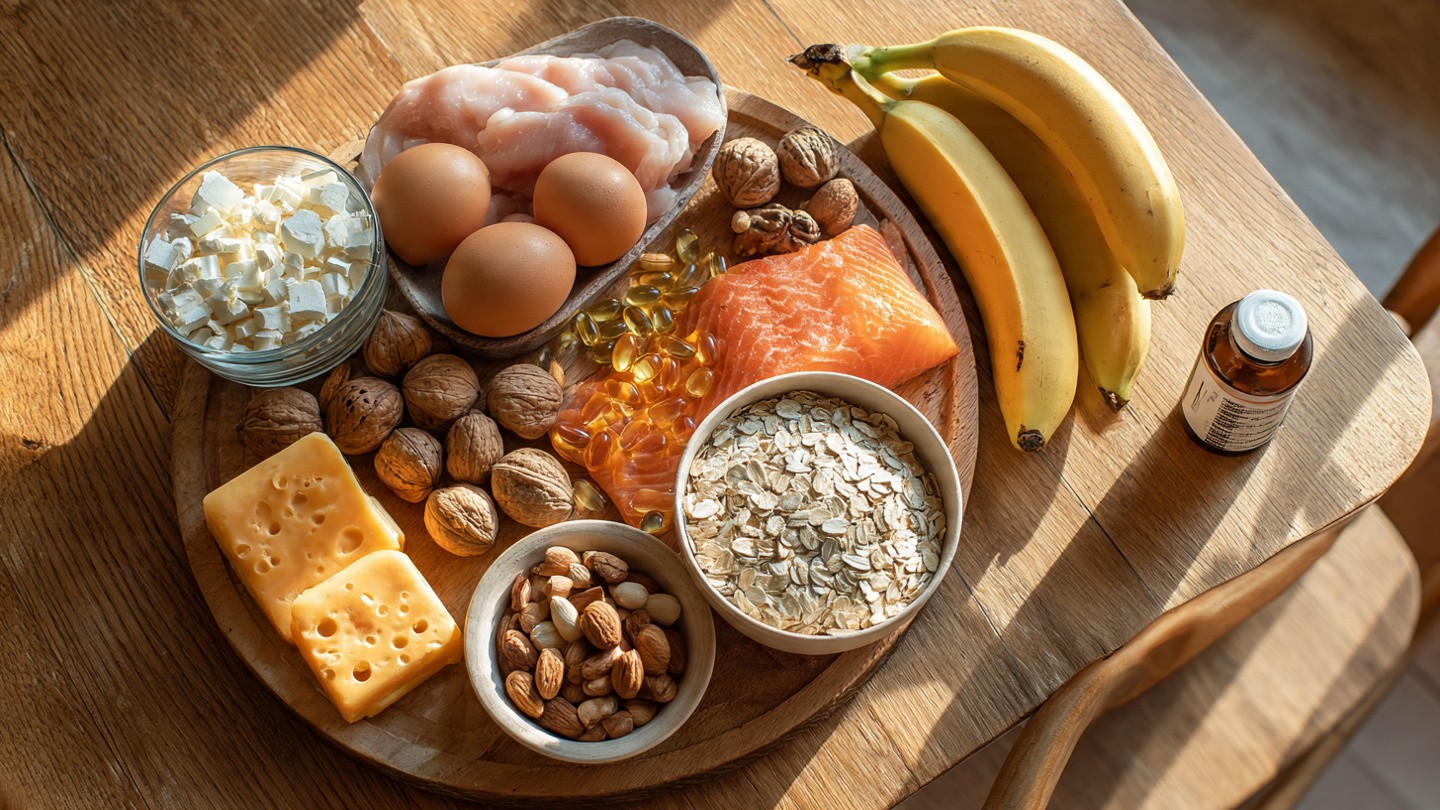
The good news: tryptophan is in a lot of delicious foods. You do not have to eat anything weird.
Top Tryptophan Foods
Turkey, chicken, and other poultry
Fish and tuna
Beef and pork
Milk and cheese (especially certain aged cheeses)
Soybeans and tofu
Nuts and seeds
Oats
Bananas
One serving of meat, fish, poultry, or some cheeses gives you more than 200 milligrams of tryptophan. The average American adult eats about 826 milligrams of tryptophan per day from food, which is actually several times more than the minimum your body needs. The minimum for a 154-pound adult is only about 280 milligrams per day.
Fun Fact: Milk proteins are among the richest sources of tryptophan on the planet. Your grandmother was onto something with that warm glass of milk before bed.
The Three Roads Tryptophan Travels
Here is where things get genuinely cool. When tryptophan gets into your body, it does not just go down one path. It splits into three major routes, like a highway with three exits. About 95% of it takes the first exit. The other two exits each get a small slice of the action. But those tiny slices are responsible for some massive effects on your body.
Road 1: The Kynurenine Pathway (The Big One, 95%)
The vast majority of your tryptophan goes down this road and gets converted into a molecule called kynurenine (pronounced KY-noo-ren-een). From there, it breaks down further into a whole family of compounds. Some of them are protective and good for your brain. Others, if they build up too much, can actually be harmful to brain cells and ramp up inflammation.
Your immune system has a huge influence over this pathway. When you are sick or inflamed, your immune system basically hijacks tryptophan and dumps it into this kynurenine route. That is part of why chronic inflammation and depression are so often linked. More inflammation means less tryptophan available for serotonin.
Road 2: The Serotonin Pathway (The Famous One, 1 to 2%)
Only about 1 to 2% of your tryptophan goes down this road. That might seem small, but this tiny fraction is what gives you serotonin, one of the most important chemicals in your brain. Serotonin is the molecule most linked to feelings of well-being and happiness. Many antidepressants work by keeping serotonin around longer in the brain.
From serotonin, your body can also make melatonin, the hormone that tells your brain it is time to sleep. So yes, tryptophan is connected to sleep. Just not in the way your uncle at Thanksgiving thinks.
Here is the plot twist: even though the serotonin pathway only gets 1 to 2% of your tryptophan, it has an outsized effect on your mood, sleep, and mental health. A small change in how much tryptophan reaches the brain can make a surprisingly big difference.
Road 3: The Gut Microbiome Pathway (The Wild Card)
Your gut is full of trillions of bacteria that live there permanently. These bacteria actually eat some of your tryptophan and turn it into a group of compounds called indoles (IN-dolz). Some indoles are protective and help keep your gut lining healthy. Others, if you have the wrong bacteria in charge, can cause problems.
A fiber-rich diet encourages your gut bacteria to make the good kind of indoles. A high-fat, low-fiber diet does the opposite. This is one of the reasons researchers think diet has such a powerful effect on both gut health and mood.
Why You Cannot Just Eat More Turkey to Get Happier
Here is the frustrating part. You might think: if tryptophan makes serotonin, and serotonin makes you happy, then eating a lot of tryptophan-rich food should make you happier. Simple, right?
Wrong. Your brain is annoyingly complicated.
To get into your brain, tryptophan has to cross a barrier called the blood-brain barrier. It uses a special transport system, like a shuttle bus with limited seats. The problem is that tryptophan has to share that bus with five other amino acids. They are all competing for the same seats.
When you eat a high-protein meal with lots of turkey or chicken, you flood your blood with all six of these competing amino acids at once. Tryptophan gets crowded out. Even though you just ate a ton of tryptophan, almost none of it reaches your brain.
The sneaky trick that actually works: eat carbohydrates. When you eat carbs, your body releases insulin, which pushes most of the competing amino acids into your muscles. Tryptophan is largely ignored by insulin, so it ends up with way fewer competitors for the shuttle bus seats. More tryptophan gets through to your brain.
A carbohydrate-rich meal can increase the ratio of tryptophan reaching your brain by more than 50% compared to a protein-rich meal. This is why people often feel calm and sleepy after a big bowl of pasta or a plate of mashed potatoes, even though those foods contain almost no tryptophan. The carbs cleared the way for your existing tryptophan to get in.
High glycemic index carbs like sugary foods produce an even bigger effect than low glycemic index carbs like oatmeal, because they spike insulin more dramatically.
The Thanksgiving Turkey Myth: Solved
So, back to the turkey. Here is why you are actually sleepy after Thanksgiving dinner, and it is not because of tryptophan in the turkey.
You ate a truly gigantic meal. Digestion takes enormous amounts of energy.
You probably ate a lot of carbohydrates. Stuffing, rolls, mashed potatoes, pie. All of those carbs raise your insulin and help tryptophan sneak into your brain.
You likely had a glass of wine or two, which makes people sleepy.
It is warm and cozy and your family is telling stories and there is a couch right there.
Chicken contains just as much tryptophan as turkey, and nobody blames their chicken sandwich for making them take a nap. The real culprit is the whole giant feast, not the bird.
Fun Fact: Tryptophan content in turkey is actually pretty similar to most other meats. Turkey is not special. Your uncle is just wrong.
Tryptophan and Your Mental Health
Beyond the Thanksgiving myth, tryptophan has real, documented effects on mood and mental health.
Depression
Research shows that higher tryptophan intake in your diet is actually linked to lower rates of self-reported depression. When your body does not have enough tryptophan, serotonin production drops, and mood can suffer.
Tryptophan supplements, usually at doses of 1 to 3 grams per day, have been studied as a treatment for mild depression. A review of clinical trials found tryptophan supplements worked better than placebo at reducing depression symptoms. Some research also shows that combining tryptophan with B vitamins, particularly vitamin B6 and nicotinamide, can improve depressed mood in young adults within just seven days.
One important timing tip: tryptophan supplements work better when taken between meals rather than with protein-rich food, for the same reason we already discussed. You want fewer competitors on the shuttle bus.
Obsessive-Compulsive Disorder
One of the stronger cases for tryptophan-related supplements involves OCD. A clinical trial found that adding 5-HTP (a direct step between tryptophan and serotonin) to standard SSRI medication significantly improved symptoms compared to the medication alone. Patients showed better response rates and more complete symptom relief. This is one of the cleaner examples of tryptophan pathway supplementation producing a meaningful clinical effect.
Sleep
Tryptophan supplements at doses of 1 gram or more can meaningfully reduce the amount of time you spend lying awake at night after waking up. A review of studies found that patients taking at least 1 gram spent significantly less time awake in the middle of the night compared to those taking smaller doses or placebo.
Interestingly, guidelines from the American Academy of Sleep Medicine suggest not using tryptophan for sleep, but their recommendation was based on studies using only 250 milligrams, which is far too low to do much of anything. The dose matters enormously.
Diet Patterns and Your Tryptophan Metabolism
What you eat overall, not just how much tryptophan you consume, has a massive effect on how your body uses tryptophan.
The Mediterranean Diet: Tryptophan's Best Friend
The Mediterranean diet, centered around vegetables, fruits, whole grains, fish, olive oil, and nuts, actively protects your tryptophan. It reduces inflammation throughout your body, which means less tryptophan gets hijacked by the kynurenine pathway. More tryptophan is available for serotonin. Your gut microbiome makes more of the protective indole compounds.
In a large study called the PREDIMED trial, people who increased their plasma tryptophan levels through the Mediterranean diet had a 21% lower risk of cardiovascular disease. The diet also protected against the harmful effects of kynurenine buildup on heart failure risk.
The Western Diet: Tryptophan's Enemy
High-fat, low-fiber diets do the opposite. They promote inflammation. Inflamed bodies pump more tryptophan into the kynurenine pathway, which can produce neurotoxic compounds and deplete serotonin. They also disrupt your gut microbiome, reducing the good bacteria that make protective indole compounds.
This is one reason researchers think that the modern Western diet may be contributing to higher rates of depression and mood disorders, beyond just the obvious factors like too much sugar and not enough exercise.
Fiber: The Unsung Hero
Dietary fiber turns out to be surprisingly important for tryptophan metabolism. Fiber feeds beneficial gut bacteria, which then produce protective tryptophan metabolites including indole-3-propionic acid, a compound that has been associated with lower risk of type 2 diabetes. Higher fiber intake is consistently linked with more of this protective compound in the bloodstream.
The Dark Chapter: The EMS Outbreak of 1989
Now for the medical thriller portion of this article.
In 1989, thousands of people in the United States who were taking tryptophan supplements suddenly developed a terrifying condition called Eosinophilia-Myalgia Syndrome, or EMS. Patients experienced severe muscle pain, extremely high counts of immune cells called eosinophils, skin changes that resembled scleroderma, nerve damage, and in some cases life-threatening lung problems.
People who were taking 1 to 3 grams daily developed symptoms anywhere from one to eighteen months after starting supplementation. For many, stopping tryptophan did not make the symptoms go away quickly. Some required years of treatment with corticosteroids. It was a public health emergency.
The FDA recalled tryptophan supplements and banned them from the US market.
Here is the twist: it was not the tryptophan. After extensive investigation, researchers traced the outbreak to a single Japanese manufacturer called Showa Denko, which had recently changed its production process in a way that introduced contaminants into the supplements. The tryptophan itself was not the culprit. The impurities in one company's batches were.
Among people who used the contaminated brand specifically, about 29% developed definite EMS and 23% developed possible EMS. The risk increased dramatically with higher doses. People taking more than 4,000 milligrams per day had a 50% chance of developing definite EMS.
The EMS outbreak is a powerful reminder that supplements are not regulated the same way as medications. Manufacturing quality and purity matter enormously. Tryptophan itself has been used for more than 50 years without causing EMS when produced properly. But the tragedy of 1989 is not something to dismiss lightly.
Important Safety Information
If you are thinking about tryptophan supplements, there are some genuinely important things to know.
The Serotonin Syndrome Risk
The most serious concern is combining tryptophan supplements with certain medications. If you take SSRIs like fluoxetine or sertraline, SNRIs, MAOIs, or the pain medication tramadol, you should not take tryptophan supplements without talking to a doctor first. Combining them can cause serotonin syndrome, a potentially life-threatening condition with symptoms including confusion, high body temperature, muscle twitching, and in severe cases, coma.
This warning applies to supplements, not food. You do not need to stop eating chicken if you take an antidepressant. The amount of tryptophan you get from a normal meal is not enough to cause problems. The concern is with concentrated supplement doses.
B Vitamins Matter
Vitamin B6 and vitamin B2 are essential cofactors for the enzymes that process tryptophan. If you are deficient in these vitamins, your body can shift tryptophan metabolism toward potentially harmful compounds instead of helpful ones. Before or alongside any tryptophan supplementation, ensuring adequate B vitamin intake is important.
Surgery Caution
Tryptophan supplements should be stopped at least 24 hours before surgery due to potential interactions with anesthesia medications.
Normal Dietary Intake Is Safe
Research shows that even at the 99th percentile of dietary tryptophan intake from food, there are no significant harmful effects on liver function, kidney function, or carbohydrate metabolism. Getting tryptophan from food is safe for most people.
Who Might Benefit Most from Tryptophan Strategies?
Based on current research, certain groups seem to benefit most from paying attention to tryptophan intake or supplementation.
Population | Potential Benefit | Key Consideration |
Mild to moderate depression | Improved mood scores | Avoid with SSRIs or MAOIs |
People with sleep maintenance problems | Less time awake at night | At least 1 gram needed for effect |
OCD patients on SSRIs | Better OCD symptom response | 5-HTP form, requires medical supervision |
People eating Western diets | Shifting to Mediterranean diet improves metabolism | Dietary change is effective without supplements |
The Big Picture
Tryptophan is not a miracle molecule. It is not going to make you happy if you are miserable, and it is not going to make you sleep if you are stressed. But it is a genuinely important piece of your body's chemistry, and understanding how it works helps you make better decisions about what you eat.
The most important takeaways:
Eat a varied diet with adequate protein from multiple sources. You are almost certainly getting enough tryptophan from food.
Eating Mediterranean-style, with lots of vegetables, fish, whole grains, and healthy fats, protects your tryptophan metabolism and reduces inflammation.
Fiber feeds the gut bacteria that turn tryptophan into protective compounds.
Carbohydrates help tryptophan reach your brain, which is why evening carbs can genuinely help you relax and sleep.
If you are considering tryptophan supplements, talk to a doctor first, especially if you take any psychiatric medications.
And for the love of science, stop blaming turkey for your nap. It is the stuffing, the pie, and the three servings of mashed potatoes. Own it.
Tryptophan has been in your food your entire life, quietly building your serotonin, helping you sleep, feeding your gut bacteria, and keeping your immune system humming along. It deserves a lot more credit than just being the scapegoat for post-Thanksgiving drowsiness.
This article is for educational purposes only and does not constitute medical advice. Always consult a healthcare provider before starting any supplement.
HSA/FSA Eligible
Doctors Are Human.
That's Why There's Medome.
Start your free trial today. No credit card required.
Start Your Free Trial
Join thousands protecting their health with AI that never forgets
Critical details get missed when your health information is scattered. Medome connects the dots across your complete record.
Start Your Free Trial
Quick Links
Medome Men
Home
Pricing
About
Health News
HealthSigns
FAQ
Contact Us
Terms of Service
Privacy Policy
Get In Touch
Email: service@medome.ai
Phone: (617) 319-6434
This is Dr. Steven Charlap’s cell. Please text him first, explaining who you are and how he can help you. Use WhatsApp outside the US.
Hours: Mon-Fri 9:00AM - 9:00PM ET