An Extremely Sticky Deep Dive
Picture this: you are a bee. Your entire job is to fly around, sip flower juice, come back home, and basically barf it into a comb. Then your bee coworkers fan it with their wings until the water evaporates. What is left? Pure golden honey. You are welcome, humanity.
Bees have been making honey for about 150 million years, and humans have been stealing it for roughly 10,000 years. That is a very long relationship, and honestly, honey has been worth every bee sting along the way. This golden stuff is not just a pancake topping. It is a science experiment, a medicine cabinet, and a history lesson all rolled into one jar.
What Even Is Honey?
Honey is essentially flower nectar that bees have transformed through a combination of enzyme chemistry and enthusiastic wing fanning. Bees add special enzymes from their bodies that break down the sugars in nectar. The result is a thick, sweet liquid that is mostly fructose and glucose, with a surprisingly acidic pH of about 3.5 to 4. That is roughly as acidic as orange juice, which is one reason honey does not go bad.
Yes, you read that right. Honey does not spoil. Archaeologists have found 3,000-year-old honey in Egyptian tombs and reported it was still perfectly edible. Nobody ate it, because that would be extremely weird, but the point stands. Honey is basically immortal food.
Beyond its sugars, honey is packed with polyphenols, flavonoids, enzymes, vitamins, amino acids, and proteins. These bioactive compounds work together like a tiny, golden superhero team, each one bringing something different to the fight against disease and infection.
Honey the Germ Slayer
Honey has been used to treat wounds since ancient times, and it turns out the ancients were onto something real. Honey kills bacteria through multiple mechanisms at once, which makes it impressively hard for germs to fight back.
The Anti-Germ Dream Team
First, honey is so sugary that it literally sucks the water out of bacteria through osmosis, essentially dehydrating them to death. Rude, but effective. Second, an enzyme in honey called glucose oxidase produces small amounts of hydrogen peroxide, which is the same stuff you might use to clean a cut. Third, honey is acidic, and most bacteria hate acidic environments. Fourth, honey contains compounds called 1,2-dicarbonyls and a peptide called bee defensin-1, which attack bacteria in additional ways.
The result is that honey has broad-spectrum antibacterial activity, meaning it can fight many different types of bacteria. When scientists compare honey to standard wound treatments, it consistently holds its own. One major review found that honey heals partial thickness burns about four to five days faster than conventional dressings. That is not a small difference.
Medical Grade vs. Grocery Store Honey
Before you go pouring your kitchen honey on a wound, there is an important distinction to make. Medical-grade honey is specially processed to ensure consistent quality and sterility. Regular grocery store honey can contain bacteria and other contaminants that make it inappropriate for wound care. For eating, standard honey is perfectly fine. For treating injuries, always use the standardized medical stuff prescribed by a healthcare provider.
Different Honeys for Different Superpowers
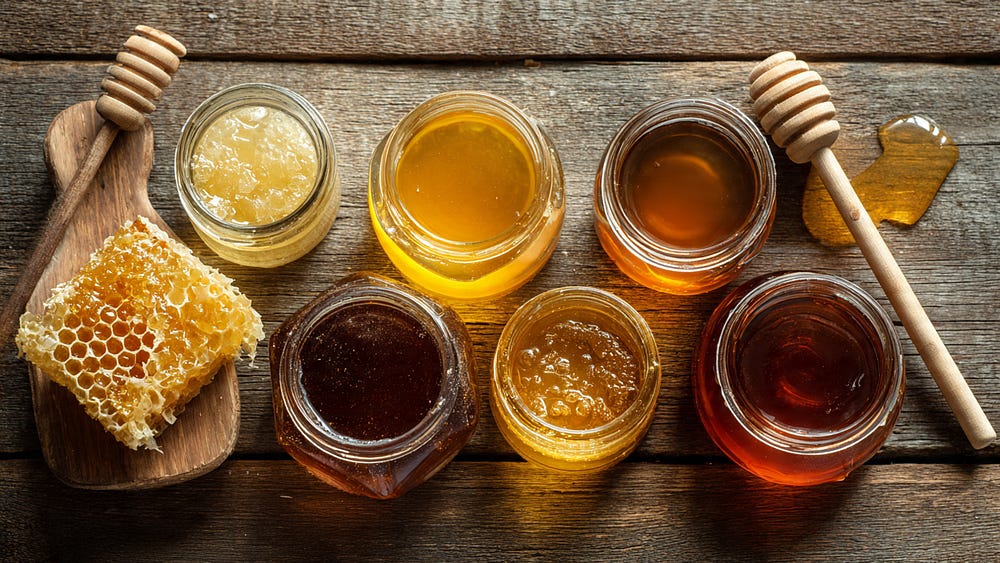
Not all honey is the same. Just as dogs vary wildly from a Chihuahua to a Great Dane, honey varies based on which flowers the bees visited, where in the world those flowers grew, and even what season it was. Each variety has its own unique mix of bioactive compounds and its own set of standout abilities.
Manuka Honey: The Overachiever
Manuka honey comes from New Zealand and Australia, produced from the nectar of the Manuka plant. What makes it special is an extremely high concentration of methylglyoxal, or MGO. This compound is Manuka’s secret weapon, and it contains up to 44 times more MGO than ordinary honey. This makes it remarkably effective against drug-resistant bacteria. You may have seen Manuka honey at the store with a UMF or MGO rating on the label. Higher numbers mean more of this active compound.
Tualang Honey: The Antioxidant Champion
Tualang honey from Malaysia has the highest phenolic content and radical scavenging activity of commercially available honeys, basically meaning it is extremely powerful at neutralizing the unstable molecules that can damage your cells. Scientists have also found that Tualang honey can inhibit a liver enzyme called CYP2C8 in lab tests, which means people taking certain medications like paclitaxel or repaglinide should talk to their doctor before going overboard on this variety.
Sidr Honey: The Biofilm Buster
Sidr honey comes from the Sidr tree, which grows across the Middle East. It contains distinctive compounds including carvacrol and thymol, the same compounds that make thyme and oregano smell great. Sidr honey is a champion at disrupting biofilms, which are the protective shields that bacteria build around themselves to avoid antibiotics. If you have ever had a stubborn infection that would not clear up, biofilms might be to blame.
Buckwheat Honey: The Dark Horse
Dark and strongly flavored, buckwheat honey has the highest cellular antioxidant activity of the major honey types and comparable antibacterial ability to Manuka honey. It is also the variety most studied for cough relief in children. If you have tasted it, you know it is bold. Think of it as the espresso of the honey world.
Stingless Bee Honey: The Surprise
Honey made by stingless bees contains a unique sugar called trehalulose that makes up 13 to 44 percent of its content. Trehalulose has a low glycemic index, meaning it does not spike blood sugar as sharply as regular honey, which is actually a notable advantage for people watching their sugar intake. This honey also tends to be more acidic and watery than regular honey, which means it ferments faster and needs more careful storage.
Mad Honey: Do Not Eat This One
Not all honey is edible. Mad honey deserves a special warning. Produced in regions where Rhododendron plants grow, particularly in Turkey and Nepal, mad honey contains compounds called grayanotoxins that cause extremely unpleasant effects. Even small amounts can trigger dizziness, blurred vision, low blood pressure, slow heart rate, and temporary paralysis. A large review found 1,199 reported cases, most of them in adult men who were trying to use it as a folk remedy. The European Food Safety Authority has even set safe concentration limits for these toxins. In short: if someone offers you mad honey, politely decline.
Honey for Your Cough: Does It Actually Work?
You have probably heard that a spoonful of honey helps soothe a sore throat. But is that real medicine or just a tasty excuse to eat honey? According to the science, it is actually real.
A 2018 Cochrane review, which is basically the gold standard of medical evidence reviews, analyzed six randomized controlled trials involving 899 children. The results showed that honey probably reduces cough frequency better than no treatment, better than diphenhydramine, and better than placebo. It performed about as well as dextromethorphan, the active ingredient in many over-the-counter cough syrups. The American College of Chest Physicians now officially suggests honey for children aged 1 to 18 years with cough from a common cold.
The evidence is strongest for short-term use. Honey for up to three days shows clear benefits. Beyond three days, the advantage over other treatments fades. So honey is best as a short-term cough soother, not a long-term cure.
The Part Where We Talk About the Risks
Honey is impressively safe for most people, but it has a few important caveats that are worth knowing.
The Absolute Rule: No Honey for Babies Under One Year
This is not a guideline. This is a hard rule. Honey can contain spores of a bacterium called Clostridium botulinum. In older children and adults, the gut bacteria already present keep these spores from doing anything harmful. But in infants under twelve months, the gut microbiome is not fully developed, and those spores can germinate and produce a dangerous toxin that causes infant botulism, a potentially fatal illness. In one study in California, 29 percent of hospitalized infant botulism patients had been fed honey before getting sick. Never give honey to a baby under one year old. Full stop.
Allergic Reactions
Honey allergies are real, and they range from mild (itchy mouth) to severe (anaphylaxis, which is a life-threatening emergency). People with pollen allergies, particularly to plants in the daisy and sunflower family, have a higher risk. People with bee venom allergies also have increased risk because honey contains proteins from bees themselves. If you have significant allergies to bee products or pollen, talk to a doctor before using honey therapeutically.
Mild Side Effects in Cough Studies
In the clinical trials studying honey for cough, the side effects reported were generally mild. About 9 percent of children receiving honey experienced some nervousness, insomnia, or hyperactivity, compared to about 3 percent in the dextromethorphan group. Gastrointestinal symptoms occurred in about 12 percent of honey-treated children versus 11 percent on placebo, suggesting that some of this may simply be due to being sick rather than honey itself.
The Heated Honey Problem
Heating honey or storing it improperly causes a compound called 5-hydroxymethylfurfural, or HMF, to form. At high concentrations, HMF is potentially toxic. This is a good reason to store honey at room temperature, never microwave it directly, and not cook with it at extremely high temperatures for extended periods.
Honey and Your Heart and Beyond
Research suggests that honey may do more than fight germs and quiet coughs. Scientists have found evidence that regular consumption of honey may improve heart health by reducing inflammation, improving how well the inner lining of blood vessels functions, improving cholesterol profiles, and helping LDL cholesterol resist oxidation. Oxidized LDL is particularly damaging to arteries, so keeping it from oxidizing is a meaningful benefit.
Research has also explored honey’s antioxidant properties, potential anticancer effects, neuroprotective properties, and immune system support. Some studies suggest it may be a safer sweetener than table sugar for people with diabetes, though this area requires more research and any diabetic patient should discuss dietary changes with their physician.
One important note: the quality of evidence for many of these broader health claims ranges from weak to moderate. Wound healing in burns has strong evidence. Cough suppression has moderate evidence. Many of the other benefits have interesting early data but need larger, better-designed studies before doctors can make firm recommendations based on them.
Does Honey Interact With Medications?
For most people taking most medications, honey in normal dietary amounts is unlikely to cause problems. Research looking at honey’s effects on liver enzymes that process drugs, including CYP3A4, CYP2D6, and CYP2C19, has found no significant changes in healthy volunteers consuming typical amounts. So putting honey in your tea is almost certainly fine.
However, Tualang honey has shown CYP2C8 inhibition in lab studies, which could theoretically affect drugs processed by that enzyme. And honey flavonoids may interfere with how the gut absorbs certain statins. These are mostly theoretical concerns from laboratory studies rather than documented clinical problems, but patients taking medications with narrow therapeutic windows should mention their honey consumption to their prescribing physician.
The Bottom Line on Honey
Honey is genuinely remarkable stuff. It has been used as medicine for thousands of years, and modern science keeps finding legitimate reasons to take those ancient uses seriously. Partial thickness burns, infected post-operative wounds, and pediatric coughs all have solid scientific support for honey treatment. The antimicrobial chemistry alone is worth marveling at.
That said, honey is not magic. The evidence for many of its claimed benefits is preliminary, and the composition of honey varies so much from type to type and region to region that findings from one honey do not automatically apply to another. Manuka MGO ratings matter. Tualang and Sidr honeys are not interchangeable. And mad honey is strictly a thing to be avoided.
So the next time you drizzle honey on your toast, take a moment to appreciate that you are eating one of nature’s most chemically sophisticated products, the result of millions of years of bee evolution and 150 million years of flower biology. And if you ever accidentally drop the jar and it shatters on your kitchen floor, at least take comfort in knowing that, given the right conditions, that honey could theoretically survive another 3,000 years.
Just maybe do not let the dog lick it off the floor.
Sources: Peer-reviewed literature including Cochrane Reviews, CHEST Expert Panel Guidelines, and multiple systematic reviews and meta-analyses (2013–2026).
HSA/FSA Eligible
Doctors Are Human.
That's Why There's Medome.
Start your free trial today. No credit card required.
Start Your Free Trial
Join thousands protecting their health with AI that never forgets
Critical details get missed when your health information is scattered. Medome connects the dots across your complete record.
Start Your Free Trial
Quick Links
Medome Men
Home
Pricing
About
Health News
HealthSigns
FAQ
Contact Us
Terms of Service
Privacy Policy
Get In Touch
Email: service@medome.ai
Phone: (617) 319-6434
This is Dr. Steven Charlap’s cell. Please text him first, explaining who you are and how he can help you. Use WhatsApp outside the US.
Hours: Mon-Fri 9:00AM - 9:00PM ET