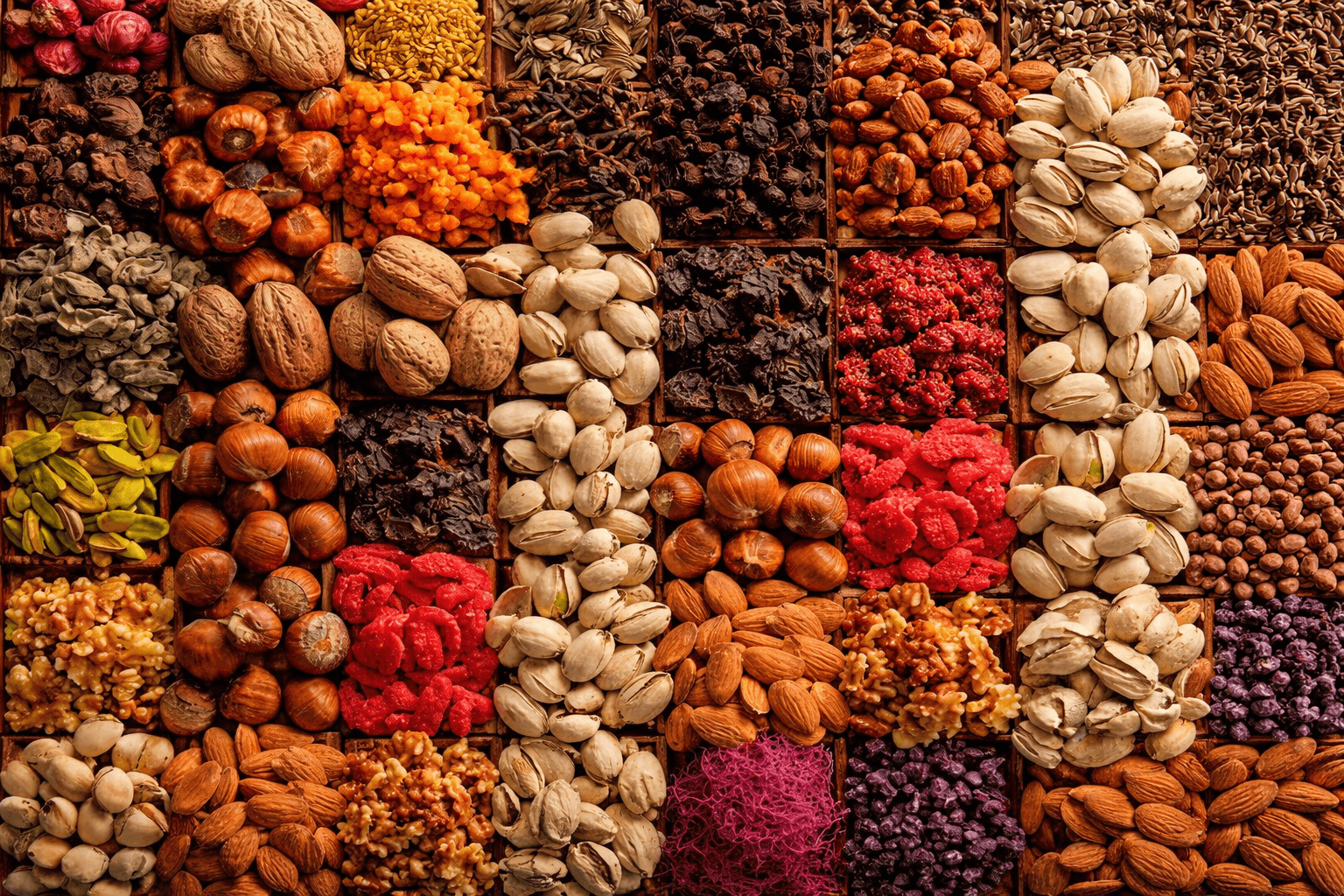
Picture this: You are sitting on your couch, bored, staring into the pantry. Your eyes land on a bag of mixed nuts. You grab a handful, pop them in your mouth, and crunch away without thinking twice. But here is the wildest part: that handful of nuts you just called a "snack" is actually one of the most scientifically impressive foods on the entire planet. That is right. Those little things rattling around in a tin are basically tiny health bombs wearing a crunchy disguise.
Scientists have studied nuts in hundreds of clinical trials (that means real experiments with real people, not just a doctor saying "eat your vegetables"). The results? Nuts help your heart, your brain, your weight, your blood sugar, and maybe even your mood. Not bad for something that fits in your palm.
So let us crack open the science of edible nuts, learn why they are good for you, find out when they are not so great, and have a little fun along the way.
What Even Is a Nut? (And Why Should You Care?)
Great question. A nut is basically a seed with armor. The hard shell protects a tiny, nutrient-packed powerhouse inside. The most popular edible nuts include almonds, walnuts, cashews, pistachios, pecans, macadamia nuts, Brazil nuts, hazelnuts, pine nuts, and peanuts.
Wait, peanuts? Yes, peanuts technically grow underground and are classified as legumes (relatives of beans and lentils), not true tree nuts. But scientists study them right alongside tree nuts because they share almost all the same nutritional superpowers. So peanuts get to sit at the cool table.
Here is what makes nuts so special: they are incredibly rich in three important things your body loves.
Healthy fats: About 50 to 75 percent of a nut's calories come from fat. Before you panic, these are the good fats: monounsaturated and polyunsaturated fats that your heart actually loves.
Protein: Nuts contain between 7 and 26 percent protein. Peanuts win this category with about 25 percent protein. Nice work, little legume.
Vitamins and minerals: Nuts are loaded with magnesium, potassium, zinc, B vitamins, and vitamin E. Just one serving of almonds gives you more than the full daily recommended amount of riboflavin (a B vitamin). Almonds are basically a multivitamin you can eat.
Your Heart Will Write Nuts a Thank-You Note
If nuts had a job title, it would be "Cardiovascular Specialist." The evidence for nuts protecting your heart is enormous. We are talking about over 139 clinical trials all pointing in the same direction: nuts are really, really good for your heart.
Lower Cholesterol? Yes Please
One of the biggest risk factors for heart disease is high LDL cholesterol, sometimes called "bad" cholesterol. Think of LDL like a tiny truck that drops off fatty gunk inside your arteries. Too much of it and your arteries start getting clogged, like a highway with too many fender benders.
Research shows that eating just one ounce of tree nuts per day (about a small handful, roughly 28 grams) can lower your LDL cholesterol by about 4.8 milligrams per deciliter. That might sound like a weird number, but in the world of cholesterol, it is meaningfully good. And if you eat more, say 60 grams a day, the effect gets even stronger.
The Big Study: PREDIMED
One of the most famous nutrition studies ever conducted was called PREDIMED. Researchers in Spain took thousands of people who were at high risk for heart disease and split them into groups. One group got a Mediterranean diet plus 30 grams of mixed nuts per day (15 grams of walnuts, plus almonds and hazelnuts). Others got different diets.
After about five years, the nut group had 28 to 30 percent fewer major heart attacks and strokes. The stroke reduction was nearly 50 percent. Half! That is not a small effect. That is the kind of result that makes scientists do a little victory dance in their labs.
But Wait, There Is More
A massive study following tens of thousands of nurses and health professionals found that people who ate nuts seven or more times per week had a 20 percent lower death rate overall. Nuts were linked to lower death from heart disease, cancer, and even breathing problems. Eating nuts regularly was basically associated with living longer.
Nuts and Your Weight: The Paradox That Will Surprise You
Here is where things get interesting, and kind of confusing at first.
Nuts are high in calories. A single ounce has about 160 to 200 calories. If you eat a whole can of mixed nuts while watching a movie, you are eating a lot of calories. So you would expect that eating nuts regularly would make people gain weight, right?
Wrong. Scientists analyzed 86 separate clinical trials with nearly 6,000 participants and found that eating nuts had no adverse effect on body weight at all. In fact, people who ate more nuts were actually associated with lower body fat over time.
How is that possible? A few reasons.
Nuts keep you full: The combination of protein, fat, and fiber means you feel satisfied longer. You eat nuts, and then you eat less of other things.
Not all the calories get absorbed: Nuts have a tough cell wall structure. Some of the fat inside those cells passes right through your digestive system without being absorbed. You are essentially getting less actual energy from nuts than the label says.
They replace worse snacks: When people swap chips or cookies for nuts, overall diet quality goes way up.
Prospective studies (where researchers follow large groups of people for years) show that regular nut eaters are 7 percent less likely to become overweight or obese. Not a magic pill, but still quite impressive for a food that actually tastes good.
Nuts and Blood Sugar: Good News for People With Diabetes
If you or someone you know has type 2 diabetes, nuts deserve special attention. In fact, people with diabetes seem to get even bigger benefits from nuts than healthy people do.
A review of 12 clinical trials in people with type 2 diabetes found that eating tree nuts at a typical dose of about 56 grams per day significantly improved blood sugar control. HbA1c (a three month average of blood sugar levels) dropped, and fasting glucose went down too.
In one notable study, patients with type 2 diabetes who replaced carbohydrates with 75 grams of mixed nuts per day for three months saw their HbA1c drop by 0.19 percent. That is clinically meaningful. It is also worth noting that for people with diabetes, nut consumption was associated with 17 percent fewer cardiovascular events, 34 percent lower cardiovascular death, and 31 percent lower risk of dying from any cause.
If you have prediabetes, pistachios seem especially promising. Studies show that eating 57 to 60 grams of pistachios per day for four months improved fasting blood sugar, insulin levels, and the body's sensitivity to insulin. Pistachios were even shown to improve beta cell function, meaning the cells in your pancreas that actually make insulin started working better.
The Nut Hall of Fame: A Guide to Individual Stars
Not all nuts are created equal. Different nuts have different nutritional superpowers. Here is a quick tour.
Walnuts: The Brain Nut
Walnuts are the only nut with significant amounts of ALA, which is a plant based omega-3 fatty acid. They are wrinkly and kind of look like a tiny brain, which is fitting because they are especially great for brain health. Walnuts lower total cholesterol by about 7 milligrams per deciliter and reduce LDL cholesterol by about 5.5 milligrams per deciliter. They also feed the good bacteria in your gut, specifically the kind that produce butyrate, a compound that helps keep your colon healthy.
Pistachios: The Overachiever
If nuts were students, pistachios would be the one who gets straight A grades, captains the soccer team, and still finds time to volunteer. Network meta-analyses (a type of statistical review that compares multiple studies at once) rank pistachios as the number one nut for lowering total cholesterol, LDL cholesterol, and triglycerides. They also lower blood pressure by about 2.89 mmHg and reduce fasting blood sugar. Pistachios are also the richest nut in carotenoids (plant pigments linked to eye health) and contain more thiamine and B6 vitamins than almost any other nut.
Almonds: The Vitamin E Champion
Almonds contain more vitamin E per serving than almost any other food. Just 100 grams provides more than four times the recommended daily intake of alpha tocopherol (the active form of vitamin E), which acts as an antioxidant in your body. Almonds also shine for postprandial (meaning after meal) blood sugar control. Eating 20 to 90 grams of almonds with a high glycemic index meal can slash the blood sugar spike by 30 to 58 percent. Great news if you love your white rice but your pancreas does not.
Brazil Nuts: One a Day Keeps Selenium Deficiency Away
Brazil nuts are in a category all their own because of their absolutely extraordinary selenium content. Selenium is a mineral your body needs for immune function and antioxidant defense. Most nuts have a little. Brazil nuts have a shocking amount. One single Brazil nut (about 5 grams) can meet your entire daily selenium requirement. This is both a superpower and a warning label, as you will read shortly.
Peanuts: The Budget Superstar
Peanuts are the most protein-rich of all the nuts (or pseudo-nuts, if you want to get technical). They uniquely increase HDL cholesterol, which is the "good" cholesterol that helps sweep the bad kind out of your arteries. Peanuts are also among the most affordable options, making heart healthy eating more accessible. The research on peanut butter is similarly positive, as studies show it delivers many of the same benefits as whole peanuts when eaten in reasonable amounts.
Cashews, Hazelnuts, Macadamias, and Pecans
Cashews rank best for LDL cholesterol reduction in some network analyses. Hazelnuts are tops for triglyceride reduction. Macadamia nuts, the richest in monounsaturated fats of any nut, reduced total cholesterol from a dangerously high level to a healthier one in a clinical trial of mildly hypercholesterolemic adults. Pecans, at doses of 57 to 68 grams per day, reduced total cholesterol by 8 milligrams per deciliter and triglycerides by 16 milligrams per deciliter in randomized trials. Pecans also improved apolipoprotein B levels, which scientists consider an even more accurate predictor of heart disease risk than LDL alone.
Nuts and Your Brain: Smart Snacking Is Real
Good news for students and anyone who has ever forgotten where they put their keys: nuts may actually help protect your brain as you age.
The PREDIMED study included a brain health substudy in which older adults at high cardiovascular risk ate a Mediterranean diet supplemented with 30 grams of mixed nuts per day. After about four years, the nut group showed significantly improved memory scores compared to the control group. These improvements held up even after accounting for age, education, and other health factors.
Another study gave older adults 60 grams of mixed nuts per day for 16 weeks. By the end, they had measurably better blood flow to the frontal and parietal lobes of the brain (the areas responsible for planning and spatial reasoning), and they made 16 percent fewer errors on memory tests. That is a meaningful improvement from just adding a handful of nuts to your daily snack routine.
Even for mood, nuts may help. A large study using data from over 13,000 adults in the UK found that people who ate low to moderate amounts of nuts (up to one 30 gram serving per day) had a 17 percent lower risk of developing depression over more than five years. That does not mean nuts are a treatment for depression, but eating them regularly seems to be part of a brain-friendly lifestyle.
Nuts for All Ages: From Babies to Grandparents
Babies and Peanut Allergy: Early Is Better
For a long time, doctors told parents to avoid giving babies peanuts during their first year of life, thinking it would prevent allergies. It turns out that was completely backwards.
A landmark clinical trial called LEAP (Learning Early About Peanut Allergy) found that introducing peanuts to high risk infants between 4 and 11 months of age resulted in an 86 percent reduction in peanut allergy by age 5. Eighty-six percent. That is a staggering difference. And the protection lasted: a follow-up study showed that even after a year of not eating peanuts, the kids who had early introduction were still protected.
The American Academy of Allergy recommends that parents introduce peanuts to high risk infants (those with severe eczema or egg allergy) between 4 and 6 months of age, with allergy testing beforehand. For lower risk babies, early introduction is encouraged without testing. The method: thin peanut butter mixed with water or breast milk, spoon fed. Not a whole peanut, obviously. That would be a choking hazard, not a clinical trial.
Kids and Teenagers
For older kids (ages 8 to 18), studies show that eating 15 to 30 grams of nuts per day improves overall diet quality without any negative effects. The research on specific cardiometabolic benefits in this age group is still growing, but the safety record is excellent.
Pregnancy
Eating nuts during pregnancy is associated with real benefits for the baby. Mothers who ate more nuts during their first trimester had children with better cognitive development scores up to age 8. Eating peanuts and tree nuts during pregnancy was also linked to lower rates of asthma and allergic rhinitis in the children. A diet rich in nuts before and during pregnancy is also associated with lower risk of gestational diabetes and high blood pressure during pregnancy.
Older Adults
Elderly women who consumed five or more servings of nuts per week had a 20 percent lower risk of becoming frail over time. Frailty in older adults, characterized by weakness, slowness, and low energy, is a serious health concern that increases the risk of falls and hospitalization. Nuts, with their combination of protein, healthy fats, and antioxidants, appear to help maintain muscle strength and metabolic health well into old age.
When Nuts Are Not Your Friend: Contraindications and Cautions
Nuts are not perfect for everyone. Here is when to be careful.
Nut Allergies: The Absolute Contraindication
If you are allergic to nuts, none of the above applies to you. A nut allergy is the one firm, non-negotiable reason not to eat nuts. Nut allergies affect about 1 to 2 percent of adults and more than 2 percent of children.
Cashew allergy has become the most common cause of severe allergic reactions (anaphylaxis) from tree nuts in children, and it can be triggered by an amount smaller than one teaspoon. Almond allergy is increasingly common in adults. Walnut and pecan tend to cross-react with each other, as do cashew and pistachio, meaning if you are allergic to one in a pair, you are probably allergic to the other.
If a nut allergy is suspected, a board-certified allergist can perform proper testing and supervised food challenges to determine which nuts are safe. Do not just guess.
Brazil Nuts: Handle With Care
Brazil nuts deserve their own safety warning. Their selenium content varies enormously based on where in South America the trees grew. One Brazil nut from a low selenium region might have barely any. One from a high selenium region might contain more than the daily safe upper limit for selenium, and a 30 gram serving from a particularly rich area could theoretically exceed levels associated with selenium toxicity.
Selenium toxicity (called selenosis) causes symptoms like hair loss, nail brittleness, nausea, and nerve damage. The safe recommendation is a maximum of one Brazil nut per day to get the selenium benefit without risking overload.
Aflatoxins and Mold: The Storage Problem
Peanuts are susceptible to contamination by aflatoxins, which are toxic compounds produced by mold. Aflatoxin B1 is a known carcinogen (cancer causing substance), particularly linked to liver cancer. Contamination is more of a concern in developing countries with less strict food safety regulations, but surveillance studies have found non-compliant levels in imported nuts too.
The practical takeaway: buy nuts from reputable suppliers, store them in a cool dry place, and do not eat nuts that smell musty or look discolored. Roasting reduces, but does not eliminate, aflatoxin levels.
High Calorie Warning for Overeaters
While studies confirm that normal amounts of nut consumption do not cause weight gain, "normal amount" is doing a lot of work in that sentence. A cup of mixed nuts has over 800 calories. If you sit down with a large container and eat mindlessly while watching TV, you will consume a significant calorie surplus. The research supports eating one to two handfuls (about 28 to 60 grams) per day, not an unlimited free for all.
Nuts and Your Medications: What You Need to Know
Good news: nuts are generally very safe to eat alongside common medications. Here is a quick rundown.
Warfarin (blood thinner): Nuts are not significant sources of vitamin K, which is the main dietary concern with warfarin. No restrictions are needed. Just keep your nut intake consistent, as with all foods when you are on warfarin.
Statins (cholesterol medications): Nuts add to the cholesterol lowering effects of statins. This is a beneficial interaction. No dose adjustment is needed, but your doctor may be pleasantly surprised at your next lipid panel.
Diabetes medications: Nuts improve blood sugar control, which is good. If you significantly increase your nut intake and your blood sugar improves substantially, mention this to your doctor. Over time, medication doses might potentially be adjusted downward, which is a good problem to have.
Blood pressure medications: Nuts modestly lower blood pressure. A two year walnut study found that participants with elevated blood pressure at baseline saw their systolic blood pressure drop by 8.5 mmHg compared to just 2.5 mmHg in the control group. Again, this is additive in a good way.
Immunosuppressants (like tacrolimus after organ transplant): Take these medications consistently with regard to timing and food. High fat meals can alter the absorption of tacrolimus. This applies to all high fat foods, not specifically nuts, but transplant recipients should ask their doctor about timing.
Unlike grapefruit juice (which famously messes with dozens of medications) or St. John's Wort (which is a pharmacological chaos agent), nuts have not been shown to cause clinically significant drug interactions in real world studies.
How to Actually Eat More Nuts (Without Going Overboard)
Science is great, but you also have to actually eat the things. Here are some practical tips.
Aim for one to two handfuls per day (28 to 60 grams, or about one to two ounces). This is the sweet spot supported by the most research.
Choose unsalted, raw, or dry roasted nuts when possible. Heavy roasting destroys some vitamins, and excess sodium adds cardiovascular risk.
Mix it up. Different nuts have different strengths. A mixed nut approach lets you capture the benefits of pistachios (blood sugar, cholesterol), walnuts (brain health, omega 3 fats), peanuts (HDL elevation), and Brazil nuts (selenium), all at once. Just remember: limit Brazil nuts to one per day.
Eat nuts before or with meals. Studies show that eating nuts before or alongside a high carbohydrate meal substantially reduces the blood sugar spike that follows.
Replace, do not add. The research showing weight neutrality was largely conducted in people who substituted nuts for other snacks (especially refined carbohydrates). Adding nuts on top of an already adequate calorie intake will still add calories.
Store them properly. Keep nuts in a cool, dark place or in the refrigerator to prevent the fats from going rancid and to minimize mold risk.
The Bottom Line: Nuts Are Worth the Crunch
Here is what decades of clinical research boil down to: eating about one to two handfuls of nuts per day is one of the simplest, most evidence backed things a person can do for their long term health. It protects your heart, helps manage blood sugar, supports brain function as you age, may lower cancer risk, and is even associated with living longer overall.
They are not magic. They will not undo a diet of fast food and soda. They are not safe for people with nut allergies, and Brazil nuts require some moderation. But for the vast majority of people, of all ages, nuts are a remarkably powerful food hiding in plain sight on the snack shelf.
So the next time someone tells you that you are going nuts for nuts, just tell them: actually, the science agrees with you. And then offer them a handful. They will thank you later.
Fun Nut Facts to Impress Your Friends
Pistachios are technically fruits. The part you eat is the seed inside the fruit's pit.
A single Brazil nut tree can produce up to 450 pounds of nuts per year, and the trees can live for 500 years or more.
Cashews are never sold in their shells commercially because the shell contains urushiol, the same irritating compound found in poison ivy.
Almonds are the most consumed tree nut in the world, and California produces about 80 percent of the global supply.
Walnuts were called "brain food" by ancient Romans, who believed their wrinkled shape was a sign they were meant for the mind. They were not wrong.
HSA/FSA Eligible
Doctors Are Human.
That's Why There's Medome.
Start your free trial today. No credit card required.
Start Your Free Trial
Join thousands protecting their health with AI that never forgets
Critical details get missed when your health information is scattered. Medome connects the dots across your complete record.
Start Your Free Trial
Quick Links
Medome Men
Home
Pricing
About
Health News
HealthSigns
FAQ
Contact Us
Terms of Service
Privacy Policy
Get In Touch
Email: service@medome.ai
Phone: (617) 319-6434
This is Dr. Steven Charlap’s cell. Please text him first, explaining who you are and how he can help you. Use WhatsApp outside the US.
Hours: Mon-Fri 9:00AM - 9:00PM ET