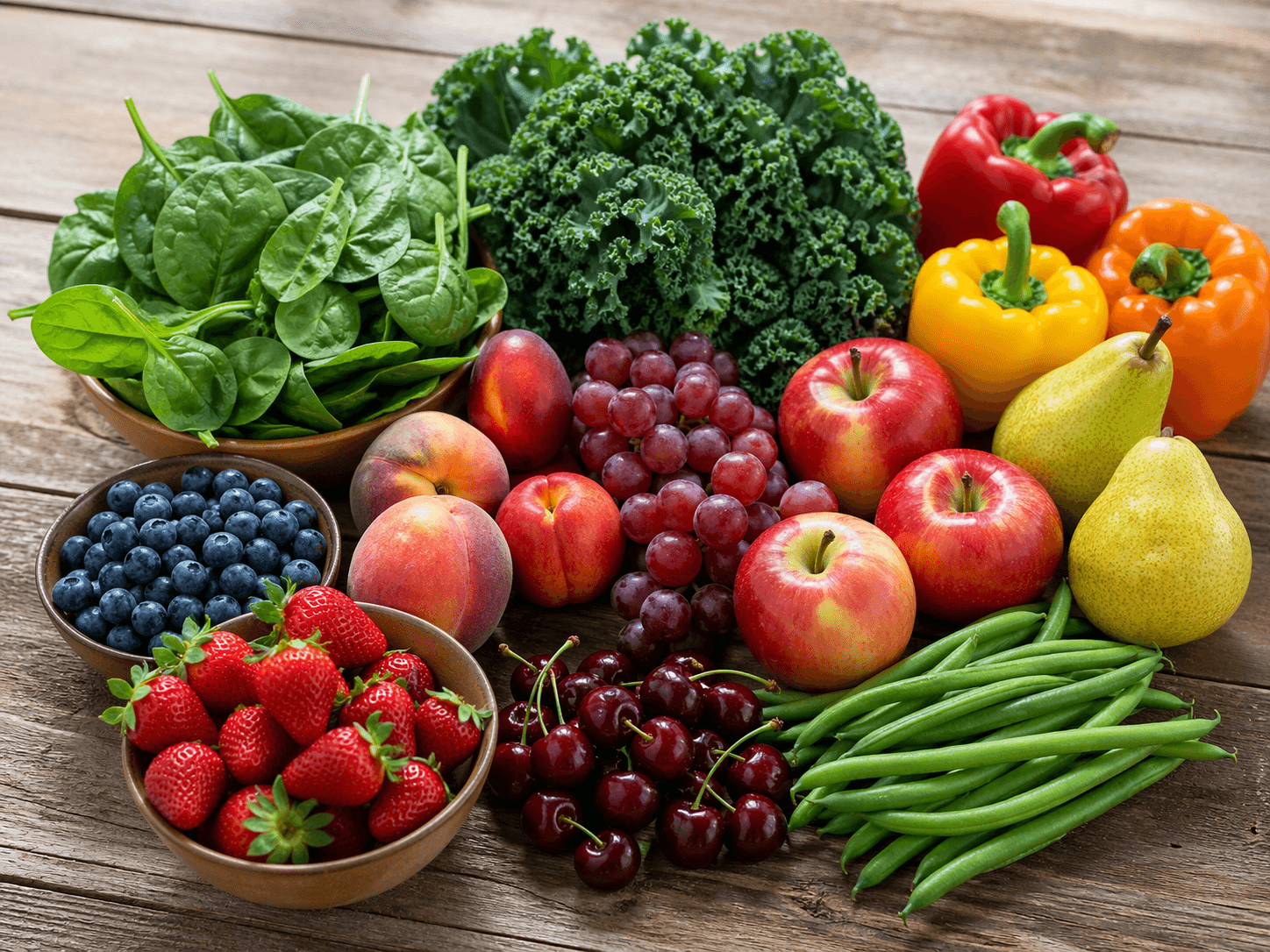
The Secret Life of Your Strawberries
A Mostly Lighthearted Guide to Pesticides, Produce Washing, and Not Freaking Out at the Grocery Store
Picture this. You walk into the grocery store, grab a gorgeous red apple, and take a bite. Crunchy. Juicy. Delicious. But did you also just snack on a tiny side dish of bug spray?
Okay, that might be a little dramatic. But pesticides are real, they do show up on some of our food, and it is worth knowing how to deal with them. The good news? You do not need to throw out your fruit bowl or live on saltines for the rest of your life. You just need a little info and a box of baking soda.
Let's dig in.
So, What Even Are Pesticides?
Pesticides are chemicals that farmers use to stop bugs, weeds, and mold from destroying their crops. Think of them as tiny bouncers for vegetables. Without them, a lot of our food would get chomped by beetles or smothered by mold before it ever made it to your plate.
There are three main kinds:
Insecticides, which kill bugs
Herbicides, which kill weeds
Fungicides, which kill mold and other nasty fungus
Tiny bits of these chemicals can hang out on fruits and veggies even after they are picked. Most of the time, the amounts are very small. Government agencies say these amounts are safe for most people. But "safe for most" does not always mean "zero risk" for everyone, especially pregnant women, babies, and young kids.
Wait, Healthy Eating Can Be Risky? The Weird New Study
Here is the plot twist nobody saw coming. Researchers at the USC Norris Comprehensive Cancer Center recently looked at younger non-smokers (people under 50) who ate more fruits, veggies, and whole grains than the average American. You would expect those folks to be the healthiest of the healthy. But the study found that this group actually had higher rates of lung cancer than regular Americans eating a normal diet.
Yeah. You read that right. Healthy eaters. More lung cancer.
The lead scientist, Dr. Jorge Nieva, thinks that pesticides sitting on regular produce might be the hidden troublemaker. This is still early science. The study guessed pesticide levels instead of actually measuring them in people's bodies, so more research is needed. A giant Swedish study of nearly 69,000 people found no extra deaths from pesticide mixtures in food, and the benefits of eating produce stayed rock solid.
So here is the deal. Keep eating your fruits and veggies. They still protect you from a whole list of terrible things, including heart disease, stroke, diabetes, and many cancers. Just be smart about pesticides while you enjoy them.
Meet the Dirty Dozen (and Their Squeaky Clean Cousins)
Every year, a nonprofit called the Environmental Working Group (EWG) looks at thousands of tests done by the US Department of Agriculture and ranks produce by pesticide residue. Out come two famous lists:
The Dirty Dozen: the 12 fruits and veggies carrying the most pesticide residue.
The Clean Fifteen: the 15 with the least.
The Dirty Dozen usually includes:
Strawberries
Spinach
Kale, collard greens, and mustard greens
Grapes
Peaches
Pears
Nectarines
Apples
Cherries
Bell peppers and hot peppers
Cherry tomatoes
Celery
The Clean Fifteen usually includes:
Avocados
Sweet corn
Pineapple
Onions
Papaya
Frozen sweet peas
Asparagus
Honeydew melon
Kiwi
Cabbage
Mushrooms
Mangoes
Watermelon
Sweet potatoes
Carrots
Think of the Dirty Dozen as a "buy organic if you can" list, not a "this food will poison you" list. Even the dirtiest regular produce usually stays within legal safety limits. But if your budget only stretches so far, the Dirty Dozen is a great place to aim your organic dollars. Avocados? Save your money. The bouncer is already doing a great job at the door of that thick skin.
How to Wash Produce Like an Absolute Pro
Rinsing your apple under the faucet for five seconds? Sorry. That barely does anything. Plain tap water only removes about 35 to 38 percent of surface pesticides. A quick soak in plain water for 1 minute is basically the same as not washing at all.
But science has some much better tricks.
The Champion: Baking Soda
Baking soda is the undisputed winner. In one study, a baking soda bath completely removed two common pesticides from apples in about 12 to 15 minutes. It works because baking soda is slightly alkaline, which helps break down pesticides chemically, not just rinse them off.
Here is the method:
Fill a big bowl with water.
Add about 1 teaspoon of baking soda for every 2 cups of water.
Drop in your produce and let it soak for 12 to 15 minutes.
Gently rub the surfaces, especially on firm things like apples and cucumbers.
Rinse well under clean running water.
Dry with a clean towel or paper towel.
For leafy greens like spinach and kale, separate the leaves first so the solution can get into every little crinkle.
Runner Up: Vinegar and Water
Mix one part white vinegar with one part water and soak your produce for about 5 minutes. Studies on peaches found this method was one of the most effective. Vinegar is especially good at knocking out certain fungicides.
Surprise Contender: Salt Water
A salt solution (about 1 to 5 percent salt) can remove up to 90 percent of certain bug killers, especially ones called organophosphates and pyrethroids. Who knew table salt had superpowers?
Things You Should NOT Use
Bleach. Yes, it kills pesticides. No, you should never put it on food. It leaves its own chemical residue behind. Even the bleach rinse used commercially on some produce does not fully remove pesticides anyway.
Dish soap or detergent. Soap is not food safe. It can leave behind chemicals you really do not want to eat. The FDA specifically says no.
Strong hydrogen peroxide. Overkill. It can damage your produce without doing much extra good.
Fancy "produce wash" sprays from the store. Science shows most of them are no better than baking soda water, and they cost way more. The baking soda in your pantry wins.
Two More Power Moves: Peel It and Cook It
Peeling fruits and veggies removes up to 80 percent of pesticide residues, since most of the chemicals hang out on or just under the skin. The downside is you also lose some fiber and nutrients from the peel. For Dirty Dozen items, especially for little kids, peeling is a perfectly fine choice.
Cooking (boiling, steaming, blanching) can knock out 72 to 78 percent of pesticide residues. Heat breaks the chemicals apart or makes them evaporate. Blanching your veggies before freezing is a double win: better texture and less pesticide.
Other Smart Moves That Actually Work
Mix it up. Do not eat the same five things every single day. Different crops are treated with different pesticides, so eating a variety means less exposure to any single chemical. Plus, variety is just more fun.
Buy organic for the Dirty Dozen. Organic produce has about one third as many pesticide residues as regular produce. You do not have to go 100 percent organic to help yourself. Focus your dollars where it matters most.
Grow something. Even a pot of basil or a single tomato plant on a windowsill gives you pesticide-free produce and a pretty satisfying hobby. Your basil does not care if you are good at gardening.
After You Eat: Can You Actually "Detox"?
Let's be honest. Anyone selling you a "pesticide detox pill" is probably also selling you a bridge in Florida. There is no magic flush. But your body already has a fantastic detox system (it is called your liver and kidneys), and you can give it a hand.
Drink water. Your kidneys are huge fans of hydration.
Eat enough protein. Your liver needs amino acids to do its cleanup work.
Sleep. Your body does a ton of repair and cleanup overnight.
Load up on antioxidants. Berries, nuts, dark leafy greens (washed, obviously), and green tea may help fight the cell damage that pesticides can cause. Some animal research hints that N-acetylcysteine and glycine, two nutrients that help build your body's master antioxidant, may also help. We need bigger studies in humans to be sure.
Eat fiber. Fiber grabs onto pesticide bits in your gut and helps carry them out of your body before they get absorbed. Yes, the same produce that carries pesticides also carries the fiber that helps remove them. Nature has a sense of humor.
Get moving. Some research shows certain pesticides come out in sweat. You do not need to sit in a sauna chanting "cleanse me." But regular exercise that makes you sweat may give your body a small extra hand.
Avoid stacking exposures. If you are already getting pesticides from food, cut back on other sources where you can. Use natural pest control at home. Leave your shoes at the door after walking across a treated lawn. Small choices add up.
Who Needs to Be Extra Careful
Not everyone faces the same risk. Some groups really do need to pay closer attention.
Top Priority: Be Extra Careful
Pregnant women. Some pesticides, like chlorpyrifos, can cross the placenta and reach the baby at levels up to 4 times higher than in the mother's blood. Studies link pesticide exposure during pregnancy to smaller head size at birth, brain differences on MRI scans, and learning or attention issues that can last through at least age 7. The first and third trimesters seem to be the most sensitive windows.
Babies and young children. Kids eat more food per pound of body weight than adults, their organs are still developing, and their detox systems are not fully built yet. Pesticides are one of the top 10 things kids get poisoned by, and about 45 percent of all pesticide poisoning reports to poison control involve children.
Young non-smoking women under 50. Based on that surprising USC study, this group may face a unique lung cancer risk from pesticides in food. More research is coming, but being careful makes sense.
Also Be Mindful
Kids of farmworkers. Children whose parents work with pesticides have urine levels of these chemicals about 2 to 9 times higher than other kids. Pesticides ride home on work clothes, shoes, and skin. The good news: simple habits like changing out of work clothes before going inside, washing work laundry separately, and showering right after work can cut kids' exposure by 37 to 51 percent. Teaching farmworker families these habits is one of the most proven interventions we have.
Heavy produce eaters. If you drink a green smoothie every morning and crush salads for every meal (nice work, by the way), your pesticide intake can add up. Prioritize organic for the foods you eat most often.
People with liver or kidney problems. Your detox organs are already juggling a lot. Give them a break where you can.
What Has Actually Been Proven to Work
A lot of advice online is half truth at best. Here are things real studies have shown work:
Switching to an organic diet lowers pesticide levels in your pee within 3 to 6 days. Some markers drop 70 to 95 percent. Kids, pregnant women, and adults all show this drop.
A 24 week organic produce program with pregnant women cut certain pesticide levels 3.5 times lower than in the regular produce group.
Baking soda soaks remove more surface pesticide than plain water, vinegar, or fancy store washes.
Peeling removes up to 80 percent of residue.
Cooking removes 72 to 78 percent of residue.
Teaching farmworker families simple hygiene habits cut their kids' pesticide exposure by 37 to 51 percent in a real study.
Gloves during harvest dropped pesticide on farmworkers' hands from 777 micrograms per pair down to 8 micrograms. That is a massive win.
Tractors with enclosed cabins cut farmworker pesticide exposure compared to open tractors.
When "Helpful" Advice Is Actually Bad Advice
Some popular tips you should skip:
Bleach rinses. Gets rid of pesticides but adds toxic chemicals. Hard no.
Dish soap rinses. Not food safe. The FDA specifically says no.
High strength hydrogen peroxide. Too aggressive. It can damage produce for no real benefit.
"Detox" teas, cleanses, or pills claiming to remove pesticides. No solid evidence. Some are actually unsafe.
Sauna-only "sweat detox" plans. You cannot sweat your way out of a bad diet.
Skipping fruits and veggies entirely because of pesticide fear. This is the biggest mistake of all. Not eating produce is way worse for your health than eating washed conventional produce.
Here is one for the medical folks reading along. If someone is being treated for pesticide poisoning, the antidote pralidoxime works great for organophosphate poisoning but can actually make carbamate poisoning worse with certain chemicals like carbaryl. That is why ER doctors are careful about which pesticide caused the problem before picking the antidote.
The Big Picture: Don't Let Perfect Ruin the Good
Here is the single most important thing to remember. Fruits, vegetables, and whole grains are some of the best foods on the planet. They lower your risk of heart disease, stroke, type 2 diabetes, and many cancers. Even the American Cancer Society straight up says you should eat lots of them, organic or not.
The goal is not to stop eating healthy food. The goal is to eat healthy food and be a little smarter about pesticides while you do it. Think of it like wearing a seatbelt. You do not stop driving, you just add a layer of protection.
So soak your strawberries in baking soda water. Peel the apples for your toddler. Buy organic when you can, especially for the Dirty Dozen. Mix up what you eat. And then sit back and enjoy, because a washed regular apple is still a million times better for you than no apple at all.
Your body will thank you. And so will your taste buds, because seriously, have you ever bitten into a perfectly ripe peach that you actually washed properly? It is basically nature's candy, minus the sketchy chemical coating.
Happy eating.
HSA/FSA Eligible
Doctors Are Human.
That's Why There's Medome.
Start your free trial today. No credit card required.
Start Your Free Trial
Join thousands protecting their health with AI that never forgets
Critical details get missed when your health information is scattered. Medome connects the dots across your complete record.
Start Your Free Trial
Quick Links
Medome Men
Home
Pricing
About
Health News
HealthSigns
FAQ
Contact Us
Terms of Service
Privacy Policy
Get In Touch
Email: service@medome.ai
Phone: (617) 319-6434
This is Dr. Steven Charlap’s cell. Please text him first, explaining who you are and how he can help you. Use WhatsApp outside the US.
Hours: Mon-Fri 9:00AM - 9:00PM ET