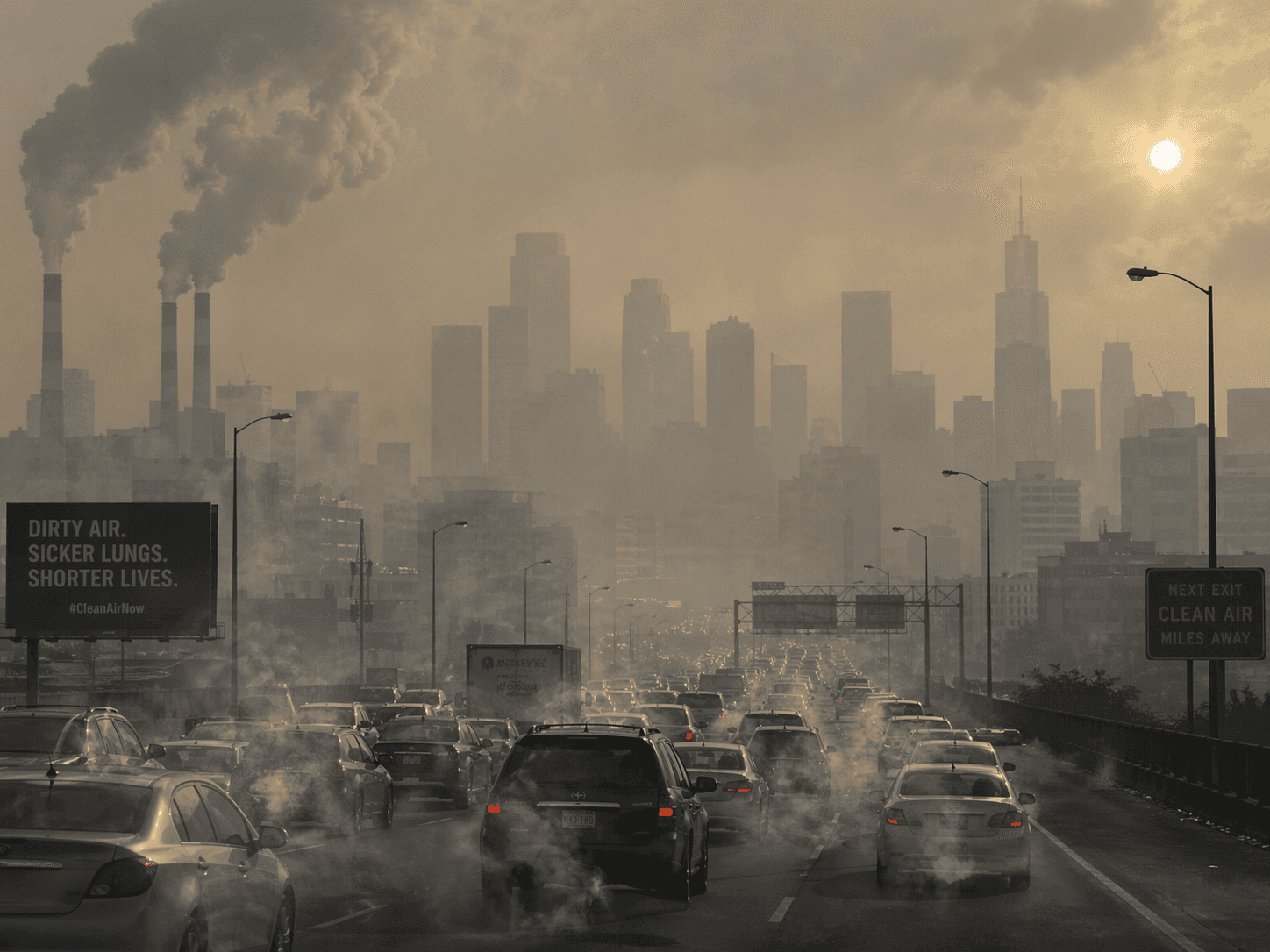
So, About That Stuff You're Breathing
Hey there, fellow human who needs oxygen to survive! Breathing is pretty great. We do it around 20,000 times a day without even thinking about it. Free entertainment! The only issue? Sometimes the air we gulp into our lungs has sneaky little troublemakers hiding inside. This guide will help you figure out when the air is fine, when it is being rude, and what you can actually do about it.
Grab a snack. Or maybe a glass of water. But not a scented candle, because we will get to those in a minute.
Meet the Troublemakers
Three main villains float around in the air we breathe. Let's introduce them like contestants on a very unfortunate game show.
Particulate Matter: The Tiny Invaders
Particulate matter is just a fancy name for teeny tiny particles. Some are so small they can zoom past your nose hairs, dive deep into your lungs, and even sneak into your bloodstream. Rude, right?
These little invaders raise your risk of heart attacks, strokes, asthma attacks, and lung infections. Over a long time, they can even lead to heart disease and lung cancer. In other words, not friendly houseguests.
Ozone: The Sunbeam Villain
Ozone forms when sunlight mixes with other pollutants in the air. It loves hot, sunny days, which feels deeply unfair because those are the days we want to be outside. Ozone irritates your airways and makes asthma way worse.
Wildfire Smoke: The Long Distance Traveler
Wildfire smoke is a wild mix of fine particles, chemicals, and metals. Here is the scary part: it can travel hundreds of miles from the actual fire. So even if you live far away from the flames, your air can still get ruined. Fun fact that is not fun at all: wildfire particles may be even more toxic than regular city pollution.
When Is the Air Okay? When Is It Not?
Here is where air quality apps become your new best friend. The EPA has a website called AirNow, and there are plenty of apps that show you the Air Quality Index, or AQI. Think of it like a weather report for your lungs.
The AQI Color Code
Green (Good): Go live your best life outside.
Yellow (Moderate): Fine for most people. Sensitive folks should take it easy.
Orange (Unhealthy for Sensitive Groups): Kids, older adults, and anyone with asthma or heart problems should chill inside.
Red (Unhealthy): Everyone should cut back on outdoor stuff.
Purple (Very Unhealthy): Stay inside if you can.
Maroon (Hazardous): Pretend you are a vampire and stay indoors.
Quick rule: if you can see or smell smoke, do not wait for an app to tell you something is wrong. Your nose is giving you a free warning, so listen to it.
The VIP List: Who Needs Extra Care
Some people have to be extra careful on bad air days. If you or someone you love is on this list, pay close attention.
Kids: Tiny lungs are still growing. Pollution can mess with lung development and raise the risk of asthma later on.
Older adults (over 65): More likely to have heart attacks, strokes, and other problems when pollution spikes.
People with asthma or lung disease: Pollution can trigger flare ups and make every symptom louder.
People with heart disease or diabetes: Bad air days bump up the risk of heart trouble.
Pregnant people: Exposure can raise the risk of preterm birth and low birth weight.
Folks in low-income communities: Often face more pollution and have fewer tools to fight back. Not fair, but true.
What Actually Works (The Good Stuff)
Portable HEPA Air Cleaners: The Superstars
If you only buy one thing to fight indoor pollution, make it a HEPA air cleaner. These machines are basically tiny bouncers that kick troublemakers out of your air. Studies show they can cut indoor particle pollution by 50 to 92 percent. That is huge.
A 2026 study of 100 adults with moderate to severe asthma found that real HEPA purifiers boosted asthma control and raised symptom-free days by almost 28 percent compared to a pretend purifier. Science is cool.
Tips for getting along with your HEPA buddy:
Pick a unit rated for the size of your room.
Put it in your bedroom, since you spend so much time there.
Run it at the highest speed you can stand.
Change the filter when the instructions say to (more often during smoke season).
Skip any model labeled ionizing or electrostatic. We will talk about those villains soon.
Exhaust Fans: The Unsung Heroes
See that fan above your stove? Use it. Every time you cook, especially if you have a gas stove. Gas stoves release pollutants, and exhaust fans whisk them outside where they belong.
One study put fancy ventilation systems into the homes of kids with asthma. The results were awesome: fewer wheezing episodes and way less formaldehyde, mold, and smelly chemicals floating around. A happy, less wheezy kid is a beautiful thing.
Your Central HVAC Filter
If you have forced-air heating or cooling, you already have a filter. Make it a good one.
Use a filter rated MERV 7 to 13.
Change it every three months, or more often during wildfire season.
Make sure it fits snugly so air cannot sneak around the sides.
Run the fan more often when pollution is high.
Smart Window Moves
This is the simplest advice ever: when the outside air is bad, do not invite it inside. Keep windows and doors shut. If you have AC, set it to recirculate mode so it cleans the air you already have.
But when the outside air is good? Throw those windows open! Fresh air helps flush out indoor pollutants like cooking fumes and cleaning product gases.
Wildfire Smoke: Special Ops Mode
Wildfires call for extra moves. Here is your game plan:
Build a clean room. Pick one room. Close it up tight. Put a HEPA cleaner in there. Hang out in that room during the worst smoke.
Skip activities that add pollution. Frying food, burning candles, and even vacuuming (which kicks up settled particles) can make indoor air worse.
Use the right mask. Surgical masks and cloth masks do almost nothing against fine smoke particles. If you need to be outside, you need a properly fitted N95 or P100 respirator.
Follow local health advisories. Your local experts know what is happening nearby.
In the Car
Sadly, cars are not magic bubbles. Here is how to cruise a little safer:
Close your windows when driving through polluted areas.
Set the AC to recirculate mode.
Avoid rush hour traffic when you can.
Do not tailgate diesel trucks or buses unless you enjoy eating their exhaust.
Swap out your car's cabin air filter now and then.
Food, Medicine, and Supplements: The Truth
Okay, real talk time. You might have heard that certain foods, pills, or magic supplements shield you from air pollution. Broccoli! Vitamin C! Fish oil! Rainbow smoothies with seventeen superfoods and a sprinkle of hope!
Here is the honest answer: the strong scientific evidence for dodging pollution focuses mostly on environmental stuff like air cleaners and ventilation. Researchers are studying diet and supplements, but we do not yet have solid proof that any particular food or pill can undo pollution's damage.
The Experimental Stuff
Scientists at the National Institutes of Health have been looking at a molecule called hyaluronan. Air pollution seems to break it down in your lungs, which might mess with lung repair. But hyaluronan is not a treatment you can buy at the pharmacy. It is lab research, not dinner.
What You Actually Should Do About Medicine
If you have asthma, heart disease, COPD, or diabetes, do not just load up on random supplements and hope for the best. Make sure your regular, doctor-prescribed medications are working well. Talk with your doctor about a plan for bad air days. That is way more powerful than any trendy juice.
A Sneaky Pollution Source You Might Miss
Some people try to fight pollution with aggressive cleaning using harsh chemicals. Whoops. Strong cleaning products and many air fresheners release their own pollutants called volatile organic compounds, or VOCs. Use milder cleaners, crack a window when you do clean, and maybe skip the plug in scented things.
Warning: Some Air Cleaners Are Sneaky Villains
Not every air cleaner is your friend. Some are wearing disguises.
Ionizing and Electrostatic Air Cleaners
These are the worst offenders. Why? They can actually produce ozone while they clean your air. You know, that same ozone we met earlier that irritates your lungs. Big oops.
A study in Beijing found that ionizing air purifiers reduced some particles but also messed with kids' heart rate patterns. That is not a trade anyone wants to make.
Even worse, when ozone from these devices bumps into common household chemicals, it can create more tiny particles instead of fewer. You paid money for a machine that made things worse. Science facepalm.
The American Heart Association's advice: do not buy these. Stick with plain old HEPA filters and go enjoy your life.
Dirty HEPA Filters Also Misbehave
Even the good HEPA cleaners can turn weird if you ignore them. When a filter gets old and crusty, bacteria can build up on it. When you flip on the machine, it might shoot tiny bacterial bits called endotoxins into your air. Ew.
The fix is simple: change your filters on the schedule the maker suggests. Put a reminder on your phone. Your lungs will send thank-you notes in the form of easier breathing.
When Interventions Go Wrong
Not everything helpful is helpful in every situation. Here are times when common advice backfires:
Running your air cleaner too quietly: Many people crank the speed down because they hate the noise. But low speed means less cleaning. Run it loud when you can.
Leaky homes: If your house has lots of air leaks, HEPA cleaners work less well because outdoor air keeps sneaking in.
Mechanical ventilation in super polluted areas: A system that pumps in unfiltered outdoor air can actually make things worse. Always pair ventilation with filtration when outdoor air is rough.
Opening windows during pollution events: Helpful when the air is clean, harmful when it is not. Check the AQI first.
Poorly maintained AC systems: Dirty, leaky, or broken systems can cause sick building symptoms. Keep them cleaned and serviced.
Relying on surgical or cloth masks: These do very little against fine particles. Use a fitted N95 or P100 for real protection.
Who Needs Constant Monitoring?
Some people cannot just peek at the air once a week. They need to keep an eye on things daily and have a plan ready to roll.
Anyone with moderate to severe asthma.
Kids who already have breathing problems.
Adults over 65 with heart or lung disease.
People with diabetes.
Pregnant folks, especially in the third trimester.
People with COPD.
Outdoor workers in polluted zones, like construction workers, landscapers, and delivery drivers.
People who live near big highways, factories, or industrial zones.
For these folks, daily AQI checks are not paranoid. They are smart. Having a HEPA cleaner running is not fancy. It is basic gear. And having an action plan with your doctor is not extra. It is essential.
The Bigger Picture (Brief Pep Talk)
Personal steps are great, but they can only do so much. The very best way to deal with air pollution is to have less of it in the first place. That means cleaner energy, smarter policies, and tackling climate change together.
Also, the people who face the worst pollution often have the fewest tools to protect themselves. If you have extra resources, a portable HEPA cleaner for a family in need is a genuinely wonderful gift. Lungs everywhere will cheer.
The Cheat Sheet
The Good Stuff
HEPA air cleaners (mechanical, not ionizing).
Exhaust fans while cooking.
Quality HVAC filters changed on schedule.
Daily AQI checks.
Properly fitted N95 masks during heavy smoke.
Working with your doctor to manage asthma, heart disease, diabetes, and COPD.
The Stuff That Does Not Really Work
Surgical masks for pollution.
Cloth masks for pollution.
Ionizing or electrostatic air purifiers.
Supplements that claim to detox pollution.
Opening the windows during smoke events.
The People Who Need Extra Care
Kids.
Seniors.
Pregnant people.
Anyone with asthma, heart disease, COPD, or diabetes.
Outdoor workers in polluted zones.
Now go forth and breathe wisely. Your lungs have been asking you for this for years.
HSA/FSA Eligible
Doctors Are Human.
That's Why There's Medome.
Start your free trial today. No credit card required.
Start Your Free Trial
Join thousands protecting their health with AI that never forgets
Critical details get missed when your health information is scattered. Medome connects the dots across your complete record.
Start Your Free Trial
Quick Links
Medome Men
Home
Pricing
About
Health News
HealthSigns
FAQ
Contact Us
Terms of Service
Privacy Policy
Get In Touch
Email: service@medome.ai
Phone: (617) 319-6434
This is Dr. Steven Charlap’s cell. Please text him first, explaining who you are and how he can help you. Use WhatsApp outside the US.
Hours: Mon-Fri 9:00AM - 9:00PM ET