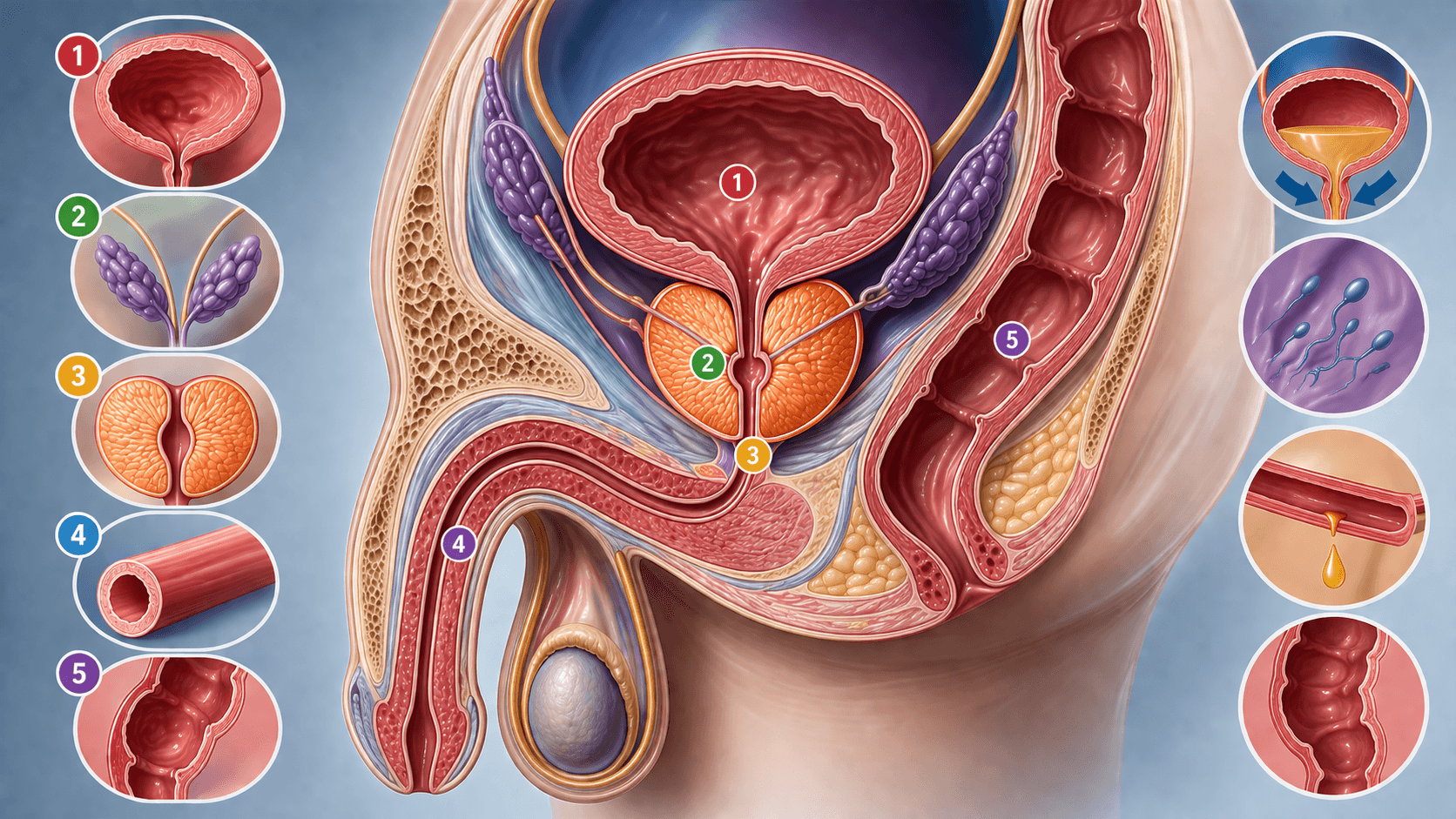
Welcome, gentlemen (and curious partners, sons, friends, and anyone who loves a man with a prostate). You are about to learn more about a tiny gland than you ever thought possible. By the end, you will know what your prostate does, what can go wrong with it, what foods to load up on, what pills to swallow (and which to avoid), and when it is time to call your doctor. Buckle up. Your walnut deserves your attention.
Part 1: Meet Your Prostate (the Quietest Gland in the Building)
Your prostate is a small gland about the size of a walnut. It sits right under your bladder and wraps around the urethra, which is the tube that carries urine (and semen) out of the body. Its main job is to make some of the fluid that mixes with sperm to create semen. That is it. One job. And it is pretty good at it for most of your life.
The trouble is that the prostate is a bit of a late bloomer when it comes to causing problems. Most guys never think about their prostate until they hit their 40s, 50s, or 60s. Then suddenly it starts demanding attention like a toddler at bedtime. The two big issues are an enlarged prostate (called BPH) and prostate cancer. Both are very common, and both are usually very manageable when caught early.
Here is the headline: about 1 in 4 American men deals with symptoms from an enlarged prostate, and about 11 percent of men will be diagnosed with prostate cancer in their lifetime. Sounds scary, right? It is not, mostly. The 5-year survival rate for prostate cancer is about 98 percent. Most prostate problems are treatable, and many do not even need treatment at all.
Part 2: The Annoying Roommate Called BPH
What Is BPH?
BPH stands for benign prostatic hyperplasia, which is medical talk for "your prostate got bigger but it is not cancer." Think of it as your walnut slowly turning into a small lemon. Because the prostate hugs the urethra, a bigger prostate can squeeze that tube and turn peeing into a frustrating science experiment.
By their 60s and 70s, most men have some BPH. About half of men with BPH have at least moderate symptoms. So if your dad or grandpa makes nightly bathroom trips, he is in good company.
How BPH Feels (Spoiler: Annoying)
Common symptoms include:
Peeing more often, especially at night (the medical name is nocturia, which sounds way more dramatic than it is)
A weak or stop-and-start stream
Feeling like you did not fully empty your bladder
Sudden urgency — the gotta-go-NOW feeling
Dribbling after you finish (yes, the dreaded post-pee surprise)
Why Does BPH Happen?
Doctors do not know the exact cause, but it is closely tied to aging and shifting hormones. Risk goes up with a sedentary lifestyle, high blood pressure, and diabetes. Basically, the same stuff that is bad for your heart is bad for your prostate. Your body is connected. Who knew?
Part 3: BPH Treatments, From Couch Tweaks to Robot Surgery
Lifestyle Tweaks (Free, Mostly Painless)
Cut back on fluids in the evening, especially before bed
Limit caffeine and alcohol (your bladder will thank you)
Try timed voiding — going to the bathroom on a schedule instead of waiting for the urge
Do pelvic floor exercises, also known as Kegels. Yes, men can do them too. No, no one can tell you are doing them in line at the grocery store.
Practice mindfulness to manage urgency. The bladder is surprisingly bossy and sometimes you can talk it down.
Medications (the Pills That Actually Work)
Alpha-Blockers
Drugs like tamsulosin (Flomax), silodosin, alfuzosin, doxazosin, and terazosin relax the muscles around the prostate and bladder neck. They work fast, often within a few days, and are usually first-line treatment.
Pros: Quick relief, no effect on prostate size but they make peeing easier.
Cons (the side effect parade):
Dizziness when you stand up too fast (3 to 15%), highest with terazosin and doxazosin
Retrograde ejaculation — semen heads backward into the bladder instead of out (8 to 28%), highest with silodosin and tamsulosin
Erectile dysfunction (1 to 20%)
Headache, fatigue, stuffy nose
Floppy iris syndrome during cataract surgery (15 to 86%), highest with tamsulosin. If you have cataract surgery coming up, tell your eye doctor and ideally start the medication after surgery.
Quick tip: If ejaculation matters to you, alfuzosin and doxazosin are the gentlest of the bunch.
5-Alpha Reductase Inhibitors
Finasteride (Proscar) and dutasteride (Avodart) actually shrink the prostate over time. They take up to a year for full effect, so patience is required. They work best for larger prostates (30 mL or bigger).
Pros:
Shrink the prostate by 20 to 25%
Lower risk of needing surgery later
May reduce overall prostate cancer risk by about 25%
Cons:
Sexual side effects: lower libido, ejaculation problems (about 2 to 4%), erectile dysfunction (1 to 8%), and breast tenderness or swelling
Side effects are most common in the first year, then often improve
Linked to depression in some studies, especially in the first 18 months — the absolute risk is small but real
They cut PSA levels in half. Your doctor needs to double the reading to interpret it correctly. Otherwise a rising cancer could fly under the radar.
PDE5 Inhibitors
Tadalafil (Cialis) at 5 mg daily is the only BPH drug that also helps with erectile dysfunction. It is a two-for-one deal.
Pros: Improves urinary symptoms and erections at the same time; generally well tolerated; few people stop taking it because of side effects.
Cons:
Headache (4 to 5%), heartburn, back pain, flushing
Absolutely cannot be combined with nitrate medications (like nitroglycerin) — the combination can drop your blood pressure dangerously low
Can amplify the dizziness from alpha-blockers
Combination Therapy
Mixing an alpha-blocker with a 5-alpha reductase inhibitor works better than either alone. The combo lowers the risk of symptoms getting worse to under 10% (versus 10 to 15% with one drug). The trade-off: more side effects, including a 3-fold higher risk of ejaculation problems.
Anticholinergics and Beta-3 Agonists (for Overactive Bladder Symptoms)
If urgency and frequency are the main issue, your doctor might add an anticholinergic like trospium or oxybutynin, or a beta-3 agonist like mirabegron or vibegron.
Anticholinergics:
Common side effects: dry mouth (20 to 70%, the worst offender), constipation, dry eyes, and blurred vision
Can cause confusion or memory issues, especially in older men — oxybutynin is the riskiest for the brain
Should not be used in narrow-angle glaucoma
Beta-3 Agonists (mirabegron, vibegron):
Way fewer dry mouth and confusion problems
Can raise blood pressure a little (3 to 10 mmHg)
Better choice for older adults worried about cognition
Surgery and Minimally Invasive Options
Only about 1 in 100 men with BPH ends up needing surgery. But when pills are not enough, the options have come a long way.
TURP (transurethral resection of the prostate): the classic gold standard. A scope goes through the urethra and trims away extra tissue. Very effective.
HoLEP (holmium laser enucleation): a laser does the trimming. As effective as TURP.
Rezum (water vapor therapy): steam is injected into the prostate to shrink it. Lower sex side effects but you might need a repeat treatment.
UroLift (prostatic urethral lift): tiny implants prop the prostate open. Great for keeping sexual function intact but up to 21% of men need a redo.
Aquablation: uses a high-pressure water jet, often guided by ultrasound. Very gentle on sexual function.
TPLA (transperineal laser ablation): newer option that also tends to preserve ejaculation.
If sexual function is high on your priority list, talk to your doctor about UroLift, Rezum, Aquablation, or TPLA before agreeing to traditional TURP, which causes retrograde ejaculation in 65 to 75% of patients.
Part 4: The Big One — Prostate Cancer
How Common Is It?
Prostate cancer is the most common non-skin cancer in American men and the second most common cancer in men worldwide. About 11% of men will get it during their lifetime. The good news: 5-year cancer-specific survival is around 98 percent. Most prostate cancers are slow growers, and many men live full lives with one without ever knowing.
The Different Types
More than 95% of prostate cancers are adenocarcinomas, which start in the gland cells. The rare bad apples include small cell carcinoma, neuroendocrine tumors (both fast-growing and aggressive), transitional cell carcinoma, and sarcoma.
Doctors grade prostate cancer using the Gleason score, now grouped into Grade Groups 1 through 5:
Grade Group | Gleason Score | Risk Level |
|---|---|---|
Grade Group 1 | Gleason 6 | Low risk, slow growing. Often does not need treatment. |
Grade Group 2 | Gleason 3+4=7 | Favorable intermediate risk |
Grade Group 3 | Gleason 4+3=7 | Unfavorable intermediate risk |
Grade Group 4 | Gleason 8 | High risk |
Grade Group 5 | Gleason 9 to 10 | Very high risk |
Risk Factors You Cannot Change
Age: risk climbs sharply after 50. Most cases are diagnosed after age 65.
Race and ethnicity: Black and African American men have the highest rates and about double the death rate compared to white men. This is largely about access to care and social factors, not biology alone. When treatment is equal, outcomes look similar.
Family history: a father or brother with prostate cancer roughly doubles your risk. Multiple relatives push it higher.
Genetics: mutations in BRCA1, BRCA2, ATM, CHEK2, HOXB13, PALB2, and TP53 raise risk. BRCA2 in particular is linked to aggressive, early-onset disease. If cancer runs in the family, ask about genetic counseling.
Risk Factors You CAN Change
Smoking: linked to advanced and fatal prostate cancer. One more reason to quit.
Obesity: tied to worse outcomes and possibly more aggressive disease.
Diet: lots of dairy and calcium (especially supplements), red meat, and grilled meats may push the risk up.
Inactivity: couch life is bad. Vigorous exercise may protect.
Agent Orange: Vietnam veterans exposed to it may have higher risk of high-grade disease.
Part 5: The Food Fight — Heroes and Villains for Your Prostate
Team Hero (Eat More of These)
Tomatoes (The MVP)
Lycopene is the red pigment in tomatoes, watermelon, and pink grapefruit. Cooking actually unlocks the lycopene, so pasta sauce, salsa, and pizza are doing some heavy lifting (yes, really).
In one large study of men at high heart risk, those who ate the most lycopene had a 54% lower risk of prostate cancer compared to those who ate the least. A small clinical trial in men with BPH found that 15 mg of lycopene daily for 6 months actually lowered PSA, prevented prostate enlargement, and improved symptoms compared to placebo.
Bottom line: eat your tomatoes. Cooked, raw, in sauce, in soup — however you like them.
Cruciferous Vegetables
Broccoli, cauliflower, Brussels sprouts, kale, and cabbage contain compounds like sulforaphane and indole-3-carbinol that fight cancer in lab studies. In the PLCO trial, these veggies were linked to a real drop in advanced prostate cancer. Eat them roasted, steamed, or sautéed (with garlic, please).
Soy and Isoflavones
Tofu, edamame, soy milk, and tempeh are linked to lower rates of aggressive prostate cancer. This may help explain why men in Asian countries with traditional diets have lower rates of prostate cancer. Up to 3 servings a day appears safe and beneficial.
Fish (with a Big Asterisk)
Eating fish — especially salmon, sardines, mackerel, and herring — has been linked to a lower risk of advanced prostate cancer. A 2025 trial called CAPFISH-3 found that men with prostate cancer on active surveillance who ate a high omega-3, low omega-6 diet with fish oil capsules slowed cancer growth markers.
Here is the catch: a different study (the SELECT trial) found that men with the highest blood levels of omega-3s actually had higher prostate cancer risk. Eating real fish appears safer than high-dose fish oil pills. Eat the fish. Skip the high-dose pills unless your doctor recommends them.
Green Tea
Green tea contains EGCG, a compound that fights cancer in lab studies. A 2025 meta-analysis of 43 studies found a notable reduction in prostate cancer risk with green tea drinkers. The catch: you may need 7 or more cups a day to see big effects. Maybe time to switch from your fourth coffee of the day.
Team Villain (Limit These)
Dairy and high calcium: high calcium, especially from supplements, is linked to more aggressive prostate cancer. Stick to recommended amounts and get calcium from food when possible.
Red and processed meats: grilled and charred meats contain heterocyclic amines, which are known carcinogens. Limit red meat to about 18 ounces of cooked meat per week and avoid processed meats.
Refined sugar: linked to higher prostate cancer risk in genetic studies. Plus, it is bad for everything else.
Excess alcohol: irritates the bladder and is linked to many cancers.
Part 6: The Supplement Aisle — Saints, Sinners, and Snake Oil
Walk into any drugstore and you will find shelves of pills promising to keep your prostate happy. Some help. Some do nothing. Some actively make things worse. Here is the science.
The Useless
Saw Palmetto
This is the most popular prostate supplement in the world. The 2023 Cochrane review and a major JAMA trial both found that saw palmetto works no better than placebo for BPH symptoms, even at double and triple the usual dose. Save your money.
The Possibly Helpful
Pygeum Africanum (African Plum Tree Bark): Modest evidence shows it may improve BPH urinary symptoms. Not in the official guidelines, but some men find it helps.
Beta-Sitosterol: This plant compound found in nuts, seeds, and vegetables may improve urine flow and BPH symptoms. The evidence is modest but more favorable than saw palmetto.
Lycopene: Best from food (cooked tomatoes), but supplements may help in BPH. Reasonable to try if you do not love tomatoes.
The Dangerous
⚠️ AVOID THESE SUPPLEMENTS
Vitamin E: The huge SELECT trial of over 35,000 men found that 400 IU per day of vitamin E increased prostate cancer risk by 17%. That is a real harm. Do not take vitamin E pills hoping to prevent prostate cancer.
Selenium: Also tested in SELECT. No benefit, and possibly increased high-grade cancer risk in men with already adequate selenium levels.
Beta-carotene supplements: Higher levels are linked to increased prostate cancer risk in some studies. Eat your carrots and sweet potatoes — skip the pills.
Calcium supplements: Linked to more aggressive prostate cancer when taken in high doses. Get your calcium from food.
High-dose zinc: Moderate amounts from food are fine. High-dose pills may raise prostate cancer risk.
The Mixed Bag
Vitamin D: Low levels seem to be linked to more aggressive disease, especially in Black men. But vitamin D supplements have not clearly reduced prostate cancer risk in trials. Get your level checked and supplement only if low.
L-Carnitine and Coenzyme Q10: One small trial found these helped when added to finasteride. Promising but more research needed.
Curcumin, Resveratrol, Quercetin: Lots of buzz, lots of lab studies, very little human evidence. Stay tuned.
Part 7: The Elephant in the Bedroom (Sexual Side Effects)
Let's be honest. A lot of men avoid prostate medications because they are scared of what will happen to their sex life. That fear is reasonable, but the news is better than you might think.
Pick the Right Drug from the Start
If sexual function matters to you, tell your doctor. Some alpha-blockers are far gentler than others on ejaculation:
Highest risk: silodosin and tamsulosin
Lowest risk: alfuzosin and doxazosin (rates similar to placebo)
Tadalafil to the Rescue
Tadalafil (Cialis) 5 mg daily is the only BPH medication that also improves erections. A 2025 meta-analysis of 11 trials found that combining tamsulosin with tadalafil improved both urinary symptoms and erections more than tamsulosin alone, with no extra side effects. The American Urological Association now recommends this combination.
The Nocebo Effect (Mind Over Matter, Sort Of)
Here is a fascinating fact: in one study of finasteride, men who were told about sexual side effects reported them 43% of the time. Men who were not warned reported them only 15% of the time. Same drug, same dose, totally different experience.
This does not mean your doctor should hide information from you. It means a balanced conversation matters. Side effects are usually most common in the first year and often improve. Most are reversible if you stop the drug.
Lifestyle Helps Too
Lose weight if needed — belly fat is linked to both BPH and erectile dysfunction
Exercise improves blood flow everywhere
Treat diabetes, high blood pressure, and high cholesterol aggressively. They all hurt erections.
Get tested for low testosterone if symptoms suggest it
When Pills Are Not Enough
Modern minimally invasive procedures preserve sexual function much better than traditional TURP:
Procedure | Anejaculation Rate | Notes |
|---|---|---|
UroLift | 0% | Improved sex scores |
Rezum | ~3% | Mostly transient changes |
Aquablation | Very low | Preserves sexual function in most men |
TPLA | ~5% | — |
Traditional TURP | 65 to 75% | Retrograde ejaculation very common |
Part 8: Can You Actually Prevent Prostate Cancer? Yes (Mostly)
There is no magic bullet, but several things lower your risk in real, measurable ways.
The Strategies That Work
Eat tomatoes (lycopene, again)
Eat cruciferous vegetables, fish, and soy
Limit dairy, red meat, and processed meat
Stay active, especially with vigorous exercise
Maintain a healthy weight
Do not smoke
Skip vitamin E, selenium, and beta-carotene supplements
Yes, We Are Going There: The Ejaculation Study
This one always gets a chuckle, but the science is real. A Harvard study followed nearly 32,000 men for 18 years. Men who ejaculated 21 or more times per month had about a 20% lower risk of prostate cancer compared to men who ejaculated 4 to 7 times per month. A 2025 meta-analysis of 29 studies confirmed this protective effect.
The theory is that regular ejaculation may flush potentially harmful substances from the prostate and reduce inflammation. The protective effect was strongest for low-risk disease. The evidence is not yet strong enough for doctors to officially prescribe this strategy, but it is not exactly a hard sell.
Part 9: PSA Testing — the Most Famous Blood Test in Men's Health
What Is PSA?
PSA stands for prostate-specific antigen. It is a protein your prostate makes, and it shows up in your blood. Higher levels can mean cancer, but they can also mean an enlarged prostate, an infection, recent ejaculation, vigorous exercise, or even a long bike ride. So a high PSA is a clue, not a verdict.
Reading the Numbers
PSA Level | What It Means | Action |
|---|---|---|
Below 1 ng/mL | Very low risk | Retest every 2 to 4 years (ages 45 to 75) |
1 to 3 ng/mL | Low to moderate | Retest every 1 to 2 years |
Above 3 ng/mL | Warrants attention | Time for further evaluation |
Above 4 ng/mL | Traditionally "elevated" | ~75% of men with PSA 4 to 10 do NOT have cancer |
PSA naturally rises with age. Reasonable upper limits are about 2.5 in your 40s, 3.5 in your 50s, 4.5 in your 60s, and 6.5 in your 70s.
Important plot twist: A single high PSA returns to normal in 25 to 40% of men when retested. So before you panic, retest.
When to Start Screening
Age 40: higher-risk men — Black men, men with a family history of prostate cancer, and men with known mutations like BRCA2
Age 45: most men (NCCN guidelines)
Ages 50 to 69: shared decision-making recommended (American Urological Association)
Ages 55 to 69: shared decision-making recommended (U.S. Preventive Services Task Force)
When to Stop Screening
Routine screening usually stops after age 75. Men over 75 with PSA below 3 have a very low chance of dying from prostate cancer. Exception: very healthy men over 75 with another decade or more of life left may still benefit, especially if they have never been tested.
The Pros of PSA Testing
Can catch cancer early, when it is most curable
Reduces the risk of cancer spreading and dying from it
In one study, screening only 23 men over 60 with PSA above 2 prevented one prostate cancer death
The Cons of PSA Testing
Overdiagnosis: many cancers found by screening would never have caused harm
False alarms: leading to biopsies that turn out negative, with risks of bleeding and infection
Overtreatment: surgery and radiation can cause incontinence and erectile dysfunction
Screening clearly reduces deaths from prostate cancer but has a smaller effect on overall lifespan
Special note: If you take finasteride or dutasteride, double your PSA for an accurate read. Otherwise a rising cancer could hide in the data.
Part 10: Cancer Treatments — From Watching to Cutting Edge
Active Surveillance (Watching Closely)
For low-risk prostate cancer (Grade Group 1), the modern preferred approach is active surveillance. You do not get treated right away. Instead, you get regular PSA tests, biopsies, and MRI scans to keep an eye on things.
In a study of over 2,100 men on active surveillance, after 10 years:
Almost half had no progression and never needed treatment
Fewer than 2% developed metastases
Fewer than 1% died of prostate cancer
The cancer is not being ignored. It is being watched like a hawk.
Watchful Waiting (Different from Active Surveillance)
This is for men with limited life expectancy due to age or other illnesses. The goal is comfort, not cure. No biopsies, no intensive monitoring. Treat symptoms only if they show up.
Surgery (Radical Prostatectomy)
Removing the whole prostate. Used for intermediate or high-risk localized cancer in men with at least 10 years of life expectancy ahead. Modern approaches use robot-assisted laparoscopic surgery or open surgery.
Risks: urinary incontinence (leaking), erectile dysfunction, blood loss requiring transfusion (about 3.6%), infection (about 3.4%), serious complications under 1%.
Surgeon experience matters — a lot. Find someone who does many of these per year.
Radiation Therapy
Two main types: external beam radiation (delivered from outside, over several weeks) and brachytherapy (radioactive seeds placed inside the prostate). Often combined with hormone therapy for intermediate or high-risk cancer. For high-risk disease, radiation plus 12 to 36 months of hormone therapy is standard.
Side effects: bowel issues, urinary symptoms, erectile dysfunction. Different side-effect profile than surgery, but not pain-free.
Hormone Therapy (Androgen Deprivation Therapy or ADT)
Prostate cancer cells need testosterone to grow. ADT lowers it or blocks it. Used with radiation for intermediate and high-risk disease, as the backbone of treatment for metastatic prostate cancer, and sometimes alone for men who cannot have surgery or radiation.
Side effects: hot flashes, low libido, weight gain, bone thinning, fatigue, mood changes. Basically a man-made menopause. Worth it when it works.
Newer and Emerging Treatments
Next-generation hormone drugs: enzalutamide (Xtandi) and abiraterone (Zytiga) block androgens more powerfully
PARP inhibitors: olaparib (Lynparza), rucaparib, talazoparib (Talzenna), and niraparib target cancers with BRCA mutations or other DNA repair defects
Lutetium-177 PSMA (Pluvicto): a "smart missile" treatment that targets a protein called PSMA on cancer cells and delivers radiation directly to them. Approved for advanced PSMA-positive cancer.
Sipuleucel-T (Provenge): a personalized vaccine made from your own immune cells. Adds about 4 months of survival in advanced disease.
Pembrolizumab (Keytruda): an immunotherapy that helps a small group of men with specific tumor markers (MSI-high or mismatch repair deficient)
Chemotherapy (docetaxel, cabazitaxel): still important for advanced disease when hormone therapies stop working
Part 11: Other Medications and Your Prostate
Aspirin
A meta-analysis of 43 studies found that aspirin users have about a 7% lower risk of prostate cancer, with stronger protection against advanced and high-grade disease. Long-term use (5 or more years) seems most protective. Aspirin is not officially recommended for prostate cancer prevention because of bleeding risks, but if you are already on aspirin for your heart, it may be a quiet bonus.
Statins
Some studies show lower risk of advanced prostate cancer and better survival. Others show no benefit. A 2025 French study suggested fat-soluble statins (like simvastatin or atorvastatin) used for 10 or more years may protect against high-grade cancer. If you need a statin for your heart, take it. If not, do not start one just for your prostate.
Metformin
Lowers PSA by about 14%. No clear effect on prostate cancer risk.
Part 12: Who Needs Extra Vigilance?
Most men can follow standard screening guidelines. But certain groups need closer watching, earlier screening, and more aggressive risk reduction.
Black and African American Men
Highest incidence of prostate cancer. About double the death rate of white men. Should start PSA discussion at age 40, not 45. Earlier and regular screening saves lives in this group.
Men with a Family History
If your father, brother, or son had prostate cancer, your risk roughly doubles. With multiple relatives affected, it goes higher still. Start the PSA conversation at 40 and consider genetic counseling.
Men with BRCA1, BRCA2, or Other High-Risk Mutations
BRCA2 is especially concerning because it is linked to early-onset and aggressive prostate cancer. These men should start screening at 40 and consider yearly PSA tests. PARP inhibitor drugs are particularly effective if cancer develops in this group.
Vietnam Veterans Exposed to Agent Orange
Higher risk of high-grade prostate cancer. Should start screening discussions earlier and have careful follow-up.
Men with Obesity, Diabetes, or Metabolic Syndrome
Higher risk of aggressive disease. Lifestyle changes are especially important here, plus reasonable screening.
Men on Finasteride or Dutasteride
These drugs cut PSA in half. Always make sure your doctor is doubling the reading to interpret it correctly. Otherwise a rising cancer could be missed for years.
Men Over 50 (Generally)
This is when both BPH and prostate cancer become more common. Annual checkups, awareness of urinary symptoms, and a chat with your doctor about PSA are all reasonable.
Part 13: Quick Reference Cheat Sheet — Foods, Supplements, and Drugs at a Glance
Item | Effect | Verdict |
|---|---|---|
Cooked tomatoes (lycopene) | May lower cancer risk; helps BPH | Eat freely |
Cruciferous vegetables | Lower advanced cancer risk | Eat often |
Fatty fish (salmon, sardines) | Lower aggressive cancer risk | Eat 2 to 3 times per week |
Soy and isoflavones | Lower aggressive cancer risk | Up to 3 servings per day OK |
Green tea | Possibly lower cancer risk | Drink it, ideally several cups |
Red and processed meat | May raise cancer risk | Limit |
Dairy and calcium supplements | Linked to aggressive cancer | Limit, get calcium from food |
Vitamin E supplements | Increases cancer risk by 17% | AVOID |
Selenium supplements | No benefit, possible harm | AVOID |
Saw palmetto | No effect on BPH | Skip, save your money |
Pygeum and beta-sitosterol | Modest BPH benefit | Optional, talk to doctor |
Lycopene supplements | Possible BPH benefit | Reasonable if you skip tomatoes |
Fish oil capsules | Mixed results, possible harm at high doses | Eat fish instead |
Tamsulosin (alpha-blocker) | Fast BPH relief | Effective; sex side effects possible |
Alfuzosin or doxazosin | BPH relief, gentler on ejaculation | Good choice if sex matters |
Finasteride or dutasteride | Shrinks prostate; lowers cancer risk | Effective; sex and mood side effects |
Tadalafil 5 mg daily | BPH plus erectile help | Two-for-one winner |
Mirabegron / vibegron | Helps overactive bladder | Better than anticholinergics for older men |
Aspirin | Possible mild cancer risk reduction | Bonus if already on it for heart |
Part 14: The Prostate Pro Lifestyle
Boil it all down and the formula for a happy prostate looks a lot like the formula for a happy heart, brain, and body in general:
Do not smoke. If you do, quit. Today is fine.
Move your body. Aim for regular exercise, with some vigorous activity in the mix.
Maintain a healthy weight, especially around the belly.
Eat the rainbow, with extra emphasis on tomatoes, leafy greens, cruciferous veggies, fish, and soy.
Limit dairy, red meat, processed meat, and grilled meats.
Skip the prostate supplements unless your doctor recommends one.
Talk to your doctor about PSA screening at the right age for you.
Know your family history. Ask your relatives. Yes, even Uncle Earl.
Do not ignore urinary symptoms. They are usually BPH, but get them checked.
Stay sexually active. Your prostate appears to appreciate it.
Part 15: Pop Quiz! Test Your Walnut Wisdom
Question 1: What is the prostate's main job?
A) Filtering blood like a kidney
B) Helping make the fluid that carries sperm
C) Producing testosterone
D) Storing urine
Question 2: BPH (benign prostatic hyperplasia) means:
A) You have prostate cancer
B) Your prostate has shrunk too small
C) Your prostate has grown larger but it is NOT cancer
D) Your prostate has an infection
Question 3: Which food contains lycopene, a compound that may help protect against prostate cancer?
A) White bread
B) Cooked tomatoes
C) Fried chicken
D) Ice cream
Question 4: At what age do most guidelines recommend men START talking to their doctor about PSA screening?
A) Age 30
B) Age 40 to 45 for higher-risk men; age 45 to 55 for average-risk men
C) Age 65
D) Age 75
Question 5: A PSA level of 5 ng/mL means you definitely have prostate cancer. True or false?
A) True, any PSA above 4 means cancer
B) False, an elevated PSA can be caused by many things, and 75% of men with PSA 4 to 10 do NOT have cancer
C) True, but only if you are over 60
D) False, PSA tests are completely useless
Question 6: Which of the following is a well-known risk factor for prostate cancer that you CANNOT change?
A) How much coffee you drink
B) Family history and genetics
C) How many hours of TV you watch
D) What brand of soap you use
Question 7: What is active surveillance for prostate cancer?
A) Ignoring the cancer completely
B) Immediately having surgery
C) Closely monitoring the cancer with regular tests, and treating only if it progresses
D) Taking chemotherapy pills every day
Question 8: The Harvard ejaculation study found that men who ejaculated more frequently had:
A) A higher risk of prostate cancer
B) No change in prostate cancer risk
C) About a 20% lower risk of prostate cancer
D) A 90% lower risk of prostate cancer
Question 9: Which herbal supplement has been shown to be NOT effective for BPH symptoms?
A) Pygeum africanum
B) Beta-sitosterol
C) Saw palmetto
D) Tamsulosin
Question 10: Lutetium-177 PSMA (Pluvicto) is a newer treatment for advanced prostate cancer. How does it work?
A) It boosts testosterone to fight cancer
B) It targets a protein on prostate cancer cells and delivers radiation directly to the tumor
C) It is a type of herbal supplement
D) It removes the prostate through a tiny incision
Question 11: When should most men STOP routine PSA screening?
A) At age 50
B) At age 60
C) Generally after age 75, unless they are very healthy with a long life expectancy
D) Never, screening should continue for life
Question 12: Which BPH medication doubles as an erectile dysfunction treatment?
A) Tamsulosin
B) Finasteride
C) Tadalafil
D) Mirabegron
Question 13: Which supplement has been clearly shown to INCREASE prostate cancer risk?
A) Vitamin E (400 IU per day)
B) Vitamin C
C) Magnesium
D) B12
Answer Key
B — Helps make seminal fluid that carries sperm.
C — BPH is benign enlargement, not cancer.
B — Cooked tomatoes are loaded with bioavailable lycopene.
B — Higher-risk men start at 40 to 45; average risk at 45 to 55.
B — PSA can be elevated by many things; most men with PSA 4 to 10 do not have cancer.
B — Family history and genetics are unchangeable.
C — Active surveillance means watching closely and treating only if needed.
C — About 20% lower risk in the Harvard study.
C — Saw palmetto is not effective.
B — Pluvicto targets PSMA on cancer cells and delivers radiation.
C — Generally stop after age 75 except in very healthy men.
C — Tadalafil (Cialis) treats both BPH and erectile dysfunction.
A — Vitamin E at 400 IU daily increased risk by 17% in the SELECT trial.
Your Score
12 to 13 correct: Walnut Champion. You could probably write your own guide.
9 to 11 correct: Solid student. Your prostate is in good hands.
6 to 8 correct: Decent start. Worth a re-read.
0 to 5 correct: No shame. Bookmark this article and try again next week.
One Last Thing
Your prostate is a small gland that does an outsized amount of work and asks very little in return. Treat it well by eating right, moving often, knowing your numbers, and not waiting until something feels truly wrong before talking to a doctor. Most prostate problems are very manageable when caught early. Most men live long, full lives even after a prostate cancer diagnosis.
So mind your walnut. It is the only one you have got.
This article is for education only. Always speak with your doctor about your individual health situation, screening choices, and treatment options.
HSA/FSA Eligible
Doctors Are Human.
That's Why There's Medome.
Start your free trial today. No credit card required.
Start Your Free Trial
Join thousands protecting their health with AI that never forgets

Critical details get missed when your health information is scattered. Medome connects the dots across your complete record.
Start Your Free Trial
Get In Touch
Email: service@medome.ai
Phone: (617) 319-6434
This is Dr. Steven Charlap's cell. Please text him first, explaining who you are and how he can help you. Use WhatsApp outside the US.
Hours: Mon-Fri 9:00AM - 9:00PM ET