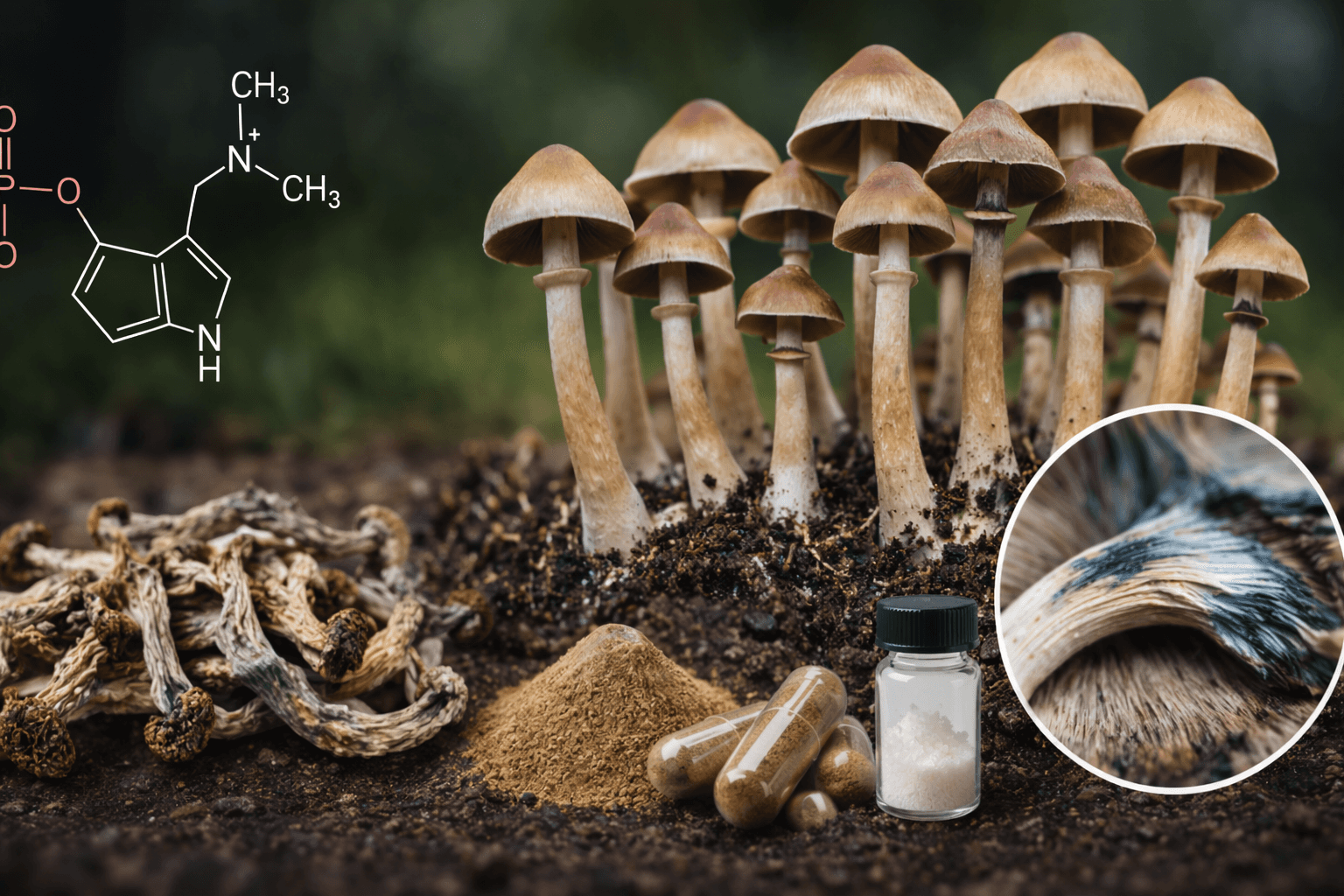
A Scientifically Rigorous, Surprisingly Fun Guide. Based on peer-reviewed clinical research through 2026
Chapter 1: What Even IS Psilocybin?
Imagine a tiny molecule hiding inside a mushroom, just waiting to blow your mind. Not literally, of course. But psilocybin (pronounced sigh-loh-SY-bin) is a natural chemical found in certain mushrooms that, when eaten, turns into another chemical called psilocin (SY-loh-sin) inside your body. And psilocin? It does some truly wild things to the brain.
Scientists have studied psilocybin intensively over the last two decades, and the research is clear: in the right setting, with the right people, psilocybin therapy can be a powerful tool against depression, anxiety, and other mental health conditions that have not responded to regular treatments.
Fun Fact: Psilocybin was first isolated and studied by Dr. Albert Hofmann (the same Swiss chemist who accidentally discovered LSD) from Psilocybe mexicana mushrooms in 1958. He reportedly tested it on himself first. Because science.
The Chemistry: From Mushroom to Brain
Here is the step-by-step journey psilocybin takes after you swallow it:
You take psilocybin by mouth (it comes as a capsule in clinical trials).
Your liver converts it into psilocin. This takes about 90 minutes to reach peak levels in your blood.
Psilocin travels to your brain, where it attaches to serotonin receptors (specifically the 5-HT2A receptor) like a key fitting into a lock.
Those brain receptors get activated, changing the way different brain regions communicate with each other.
After 4 to 6 hours, the effects fade as your kidneys filter psilocin out through your urine.
Psilocin is what scientists call a partial agonist at the 5-HT2A receptor, meaning it turns the receptor on, but only about 40% of the way (compared to serotonin, which would turn it on fully). At therapeutic doses, it can occupy up to 72% of those receptors. The more receptors it occupies, the more intense the effects. Scientists can actually measure this relationship directly, and the intensity of the experience correlates precisely with both receptor occupancy and psilocin levels in the blood.
Psilocin also binds to other serotonin receptors: 5-HT2C, 5-HT1A, and 5-HT1B, in decreasing order of how strongly it sticks. These interactions contribute to the full range of effects, including mood changes, altered perception, and the fascinating changes in brain connectivity.
What Happens in the Brain
The most important brain regions affected are:
The Prefrontal Cortex: Your thinking and decision-making headquarters. Psilocybin changes how this region talks to the rest of the brain.
The Visual Cortex: Explains why some people see geometric patterns or enhanced colors during a session.
The Default Mode Network (DMN): This is the brain network that is active when you are daydreaming, thinking about yourself, or ruminating. In depression, the DMN is often overactive and stuck in negative loops. Psilocybin disrupts these loops.
Scientists describe the brain state during psilocybin as becoming more locally differentiated and globally integrated at the same time. In plain English, different brain regions start doing their own thing more, while also communicating more widely with distant regions they do not normally talk to. It is like upgrading from a company with strict departments that never talk to each other, to an open-office floor plan where everyone can collaborate.
This disruption of the default mode network is thought to create a window of neuroplasticity: a brief period where the brain is more able to form new connections and break old, unhelpful patterns. Think of it like a fresh layer of snow covering old footpaths. For a short time, you can make entirely new paths.
Chapter 2: Where Does Psilocybin Come From?
Psilocybin is found naturally in over 200 species of mushrooms, primarily in the Psilocybe genus. Here are the main players:
Mushroom Species | Key Facts |
|---|---|
Psilocybe mexicana | The original source from which psilocybin was first isolated in 1958 |
Psilocybe cubensis | The most commonly cultivated species worldwide |
Psilocybe semilanceata | Known as 'liberty caps,' found in grassy fields in temperate regions |
Conocybe, Gymnopilus, Panaeolus, Pluteus | Other genera that also contain psilocybin |
⚠️ CRITICAL SAFETY WARNING: Do NOT try to harvest wild mushrooms for psilocybin. Psilocybin content varies wildly between individual mushrooms, even within the same species. Mushroom extracts may be significantly more potent than pure synthetic psilocybin due to other active compounds. You cannot tell how much psilocybin is in a mushroom just by looking at it. Most dangerously, toxic and even deadly mushroom species can look almost identical to psilocybin-containing ones. Misidentification can cause fatal poisoning. All clinical research uses exclusively synthetic psilocybin for precise dosing, purity, and safety. There are no widely available tests for psilocybin content.
It is also important to note that psilocybin-containing mushrooms remain Schedule I controlled substances in most countries, meaning they are illegal to possess, grow, or distribute in most places. A small number of states and cities in the United States have begun to decriminalize or create regulated therapeutic access programs.
Chapter 3: Who Can Psilocybin Help? (The Indications)
This is where things get exciting. Clinical research has identified several mental health conditions where psilocybin therapy shows real promise. Let us go through them from most studied to least.
1. Major Depressive Disorder (MDD)
Depression is the most extensively studied condition for psilocybin therapy, and the results are genuinely impressive.
What the Science Says: A randomized clinical trial of 104 adults with MDD found that a single 25-mg dose of psilocybin with psychological support produced clinically significant, sustained reduction in depressive symptoms compared to placebo. Mean score differences on the MADRS depression scale were 12.3 points at day 43 and 12.0 points at day 8 (both p < 0.001). Another trial showed that 71% of participants maintained a clinically significant response (defined as at least 50% reduction in depression scores) at 4-week follow-up. A 2025 meta-analysis found psilocybin demonstrated outstanding capacity to reduce symptoms of anxiety and MDD (effect size SMD = 1.438, p < 0.001) and mood disorders (SMD = 1.476, p < 0.001).
To put those numbers in perspective, a 12-point difference on the MADRS depression scale is considered clinically meaningful. Traditional antidepressants typically take 4 to 6 weeks to show effects. Psilocybin can show results within days.
Typical candidates for psilocybin therapy in MDD trials are adults aged 21 to 75 years with moderate to severe depression (GRID-HAMD score of 17 or higher) who are medically stable and have been thoroughly screened for safety.
2. Treatment-Resistant Depression (TRD)
Treatment-resistant depression is defined as depression that has not responded to at least two different antidepressant medications from different drug classes. This affects roughly one-third of people with depression, and it is one of the most difficult conditions in psychiatry to treat. Psilocybin may be especially promising here.
The EPISODE trial, one of the most rigorous TRD studies to date, found:
Outcome | 25-mg Psilocybin Group | 1-mg Control Group |
|---|---|---|
Response rate at 3 weeks | 36% | 18% |
Remission rate at 3 weeks | 29% | 7% |
FDA Designation | Breakthrough Therapy (2018) | N/A |
Early phase 2 trials showed even higher remission rates of 42 to 57%, though larger, more rigorous trials have settled on rates of 25 to 29%. Still, for a condition that has defied standard treatments, these numbers represent a meaningful advancement.
3. Cancer-Related Anxiety and Depression
Receiving a diagnosis of a life-threatening illness like cancer often causes profound psychological suffering. Psilocybin has shown some of its most dramatic and sustained results in this population.
Studies in patients with advanced-stage cancers (breast, gastrointestinal, genitourinary, and hematologic malignancies) experiencing anxiety and depression have found:
High-dose psilocybin (0.3 mg/kg or approximately 22 mg per 70 kg body weight) produced significant reductions in both anxiety and depression.
These benefits persisted for 6 months after treatment.
60 to 80% of participants maintained responder status on depression and anxiety scales.
At 6.5-month follow-up, response rates were 78% for anxiety and 58% for depression.
For context, typical antidepressants and anxiolytics often have limited effectiveness in the face of terminal illness, and many patients find the existential weight of confronting death impossible to address with standard medications. The mystical or deeply meaningful experiences that often occur during psilocybin sessions appear to help people reframe their relationship with life and death.
4. Substance Use Disorders
This is an area of active and exciting research. Psilocybin is being studied for:
Tobacco and nicotine dependence: Open-label studies using doses of 20 to 30 mg per 70 kg body weight have shown promising results for smoking cessation.
Alcohol use disorder: Multiple ongoing clinical trials.
Cocaine use disorder: Under active investigation.
Opioid use disorder: Early-phase studies underway.
The mechanism likely involves psilocybin's ability to disrupt rigid, habitual patterns of thinking and behavior, combined with therapy that helps people build new frameworks for their relationship with substances.
5. Obsessive-Compulsive Disorder (OCD)
Initial small studies (9 participants) demonstrated acute symptom reduction in OCD, and phase 2 trials are currently underway to attempt to replicate and expand on these findings.
6. Other Conditions Under Investigation
Researchers are exploring psilocybin for:
Anorexia nervosa
Depression in early Alzheimer's disease
Bipolar II disorder (small trials only; bipolar I remains contraindicated, as described in Chapter 4)
End-of-life anxiety in terminal illness patients
Neurodegenerative diseases
The Transdiagnostic Principle: Psilocybin may have a common underlying mechanism across many different psychiatric conditions. The mystical-type experiences and decreases in negative affect that occur during sessions appear to mediate benefits across multiple diagnoses. This suggests that psilocybin may address root-level psychological flexibility and openness rather than targeting any one specific disorder.
Chapter 4: Who Should NOT Use Psilocybin? (The Contraindications)
This chapter is just as important as the last one. Psilocybin therapy is NOT for everyone, and the reasons are backed by serious safety science.
Absolute Contraindications: Full Stop, No Exceptions
The following conditions completely rule out psilocybin therapy based on current research protocols:
🚫 ABSOLUTE CONTRAINDICATIONS:
History of psychosis or any psychotic disorder.
History of bipolar I disorder.
Active suicidal ideation with a plan or intent to act.
Personal or strong family history of schizophrenia.
These are non-negotiable exclusions. Psilocybin can precipitate or worsen psychotic episodes in vulnerable individuals, and no potential benefit is worth that risk.
The concern about psychosis has historical roots. Research from the mid-20th century documented cases where psychedelic use appeared to trigger psychotic episodes, particularly in individuals with genetic vulnerability. Current exclusion criteria reflect this hard-won clinical wisdom.
Bipolar I disorder is excluded because psilocybin could potentially trigger a manic or mixed episode. Bipolar II disorder is currently being studied in small, carefully monitored trials, but is still considered a relative contraindication at most centers.
Relative Contraindications: Proceed With Extreme Caution
These conditions do not automatically rule out psilocybin therapy, but they require careful evaluation by a specialist team before any decision is made:
Cardiovascular disease: Psilocybin causes transient increases in blood pressure and heart rate during sessions. Most clinical trials exclude patients with any baseline cardiovascular concerns. People with hypertension, arrhythmias, or heart disease should discuss this risk carefully with their prescribing physician.
Seizure disorders: Case reports suggest that combining psilocybin with lithium (a mood stabilizer) may increase seizure risk. If someone has a seizure disorder, their full medication list and medical history must be reviewed.
Pregnancy and lactation: There is simply no safety data available for pregnant or breastfeeding individuals. Until there is, psilocybin therapy should be avoided entirely during these periods.
Severe personality disorders: These may increase the risk of adverse psychological reactions, including difficulty engaging with the therapeutic process or managing distressing experiences during sessions.
Moderate or severe substance use disorder in the past year: Active or recent serious substance abuse is exclusionary in most trials.
Significant lifetime hallucinogen use: More than 10 lifetime uses of classic hallucinogens, or any use in the past 6 months, is typically exclusionary.
The 4% Warning: Psychiatric Comorbidities
A critical safety finding: serious adverse events occurred in approximately 4% of participants who had pre-existing neuropsychiatric disorders, including worsening depression, suicidal behavior, psychosis, and convulsive episodes. In contrast, healthy volunteers with no psychiatric history showed a 0% rate of serious adverse events.
This does not mean people with depression cannot be treated. It means the psychiatric screening process is absolutely essential to identify which people with depression or anxiety are appropriate candidates versus which are at higher risk for harm.
Chapter 5: How Is Psilocybin Therapy Done?
Psilocybin therapy is not like taking a pill at home. It is a structured, multi-step process requiring trained professionals, a carefully designed environment, and significant time commitment. Here is how it works.
The Dosing: How Much?
Clinical trials have used the following dose levels:
Dose Category | Amount | Purpose |
|---|---|---|
Low / Active Control | 1 to 10 mg | Used as an 'active placebo' in trials; minimal psychedelic effects |
Moderate Dose | 20 mg per 70 kg body weight | First session in two-session protocols |
High Dose | 25 to 30 mg per 70 kg body weight | Most common therapeutic dose; second session in protocols |
Single Fixed Dose | 25 mg flat dose | Currently being evaluated in registration trials; simpler and cheaper |
Interestingly, a post-hoc analysis of 288 participants found no significant association between body weight and the intensity of subjective effects across a wide weight range (49 to 113 kg). This suggests fixed dosing (a flat 25-mg dose regardless of weight) may be just as effective as weight-adjusted dosing, and is simpler and more cost-effective.
Psilocybin is administered as oral capsules taken with approximately 100 mL of water.
The Session Structure: It Takes All Day
A psilocybin therapy program follows a specific structure that has been carefully designed for both safety and therapeutic effectiveness. Cutting corners on this structure significantly reduces both safety and benefit.
Phase | Duration | What Happens |
|---|---|---|
Preparation | 8 hours total (before first session) | Multiple meetings with trained facilitators; patient learns what to expect, sets intentions, builds therapeutic relationship |
Dosing Session | 6 to 8 hours | Patient lies on a couch wearing eyeshades and headphones; listens to a curated music playlist; two trained facilitators are present the entire time, providing a nondirective, supportive presence |
Integration | 2 to 3 hours total (after sessions) | Follow-up meetings with facilitators; patient processes and makes meaning of their experience; connects insights to daily life |
The environment matters enormously. Clinical sessions take place in a comfortable, living-room-like space, not a sterile medical office. Soft lighting, plants, meaningful artwork, and comfortable furniture are standard features. The goal is to create a setting that minimizes anxiety and maximizes the patient's ability to have a therapeutic inner experience.
Why the Music? The curated music playlists used in psilocybin sessions are carefully designed to guide the emotional arc of the experience, moving from calming introductory pieces to more emotionally evocative and complex music during the peak, and back to grounding pieces as the session winds down. Researchers have found that the music meaningfully shapes the quality and depth of the therapeutic experience.
The Two-Session vs. Single-Session Approach
Two-session approach: An initial dose of 20 mg per 70 kg body weight, followed 1 to 3 weeks later by 30 mg per 70 kg body weight. This allows the patient to become familiar with the experience before the higher, more therapeutically powerful dose.
Single-dose approach: A flat 25-mg dose. Currently being evaluated in registration trials as a potentially simpler and more accessible protocol.
The Critical Role of Set and Setting
In psychedelic research, 'set' refers to the patient's mindset, intentions, and psychological state going in. 'Setting' refers to the physical and social environment during the session. Both powerfully influence outcomes. This is why the preparation phase is not optional; it is therapeutic medicine in itself.
Factors that research has identified as associated with better outcomes include:
Having a meaningful or mystical-type experience during the session. Across multiple studies, the depth of this type of experience correlates with greater antidepressant effects.
A strong therapeutic alliance with the facilitators.
High scores on a measure called the Psychedelic Preparedness Scale (PPS), a recently validated 20-item instrument that measures four domains: knowledge and expectations, intention and preparation, psychophysical readiness, and support planning.
Psychological openness and willingness to engage with the process.
Chapter 6: What Are the Side Effects?
Let us be honest: psilocybin therapy has real side effects. Most are mild and temporary, but some can be serious. Here is a comprehensive breakdown.
Acute Side Effects (On the Day of Dosing)
These effects occur during or just after the dosing session and typically resolve within 24 to 48 hours. From a systematic review and meta-analysis of therapeutic dose psilocybin trials:
Side Effect | Frequency in 25-mg Group | Notes |
|---|---|---|
Headache | 24% | Most common side effect; typically mild and resolves same day |
Nausea | 22% | Nearly 9-fold increased risk vs. control; usually resolves within a few hours |
Dizziness | 6% | Transient; resolves during session |
Fatigue | 6% | Post-session tiredness is common |
Anxiety | More than double vs. control | Transient; usually manageable with facilitator support |
Increased blood pressure | Common | Transient; monitored throughout session |
Increased heart rate | Common | Transient; monitored throughout session |
Disrupted attention and working memory | Present during session | Resolves with end of drug effect |
Perceptual Alterations (Usually Same Day)
These are the effects most people associate with psychedelics. In a clinical setting with trained facilitators, these are generally manageable and often therapeutically meaningful:
Perceptual Effect | Frequency |
|---|---|
Pseudohallucinations (visual experiences with awareness they are not real) | 21% |
Paresthesias and dysesthesias (unusual body sensations, tingling) | 14% |
Synesthesia (mixing of senses, e.g., 'seeing' music) | 13% |
Paranoia | 3.8% |
Thought disorder (disorganized thinking) | 1.9% |
Serious Adverse Events (SAEs)
These are rare but critically important. In one major phase 2 trial of treatment-resistant depression:
⚠️ SERIOUS ADVERSE EVENTS: In the 25-mg psilocybin group, 9% of participants experienced serious adverse events, including 2 cases of suicidal ideation and 2 cases of intentional self-injury. In the 10-mg group, 7% experienced serious adverse events. Across 584 outpatient participants in high-dose psilocybin studies with 12 weeks of follow-up, 3.9% experienced delayed serious adverse events. One death by suicide was documented after a patient received placebo in a cancer trial. All three participants who exhibited suicidal behavior were nonresponders to treatment.
The full list of documented serious adverse events across major trials includes:
Suicidal ideation: 5 events documented across major TRD trials
Suicidal behavior: 3 events (all in nonresponders)
Nonsuicidal intentional self-injury: 4 events
Worsening depression: reported in some nonresponders
Psychotic symptoms: rare, typically transient
Adjustment disorder: 2 events
Hospitalization for worsening depression: 1 event
Brief psychotic episode: 1 reported case (in a participant with prior stimulant-induced psychosis history)
Hallucinogen Persisting Perception Disorder (HPPD)
HPPD is a condition where visual disturbances or other perceptual changes persist long after the drug has left the body. There are two types:
Type 1 HPPD: Transient flashbacks (brief re-experiencing of visual effects). Generally benign.
Type 2 HPPD: Chronic, pervasive perceptual symptoms that can persist for months to years or may be permanent. Associated with dissociative symptoms and overactivation of visual processing pathways. This type can significantly impair daily functioning.
Estimated prevalence from recreational use is approximately 4% of users. However, in all controlled clinical trials to date, zero cases of HPPD have been reported. This strongly suggests that proper psychiatric screening, standardized dosing, and supportive supervision dramatically reduce this risk compared to uncontrolled recreational use.
Theoretical Long-Term Risks (Not Yet Proven)
Valvular heart disease: Because psilocybin activates 5-HT2B receptors (in addition to the therapeutic 5-HT2A receptors), there is a theoretical concern about heart valve damage with repeated use. Fenfluramine (fen-phen), a diet drug pulled from the market in 1997, caused valvular heart disease via a similar mechanism. However, no data currently link psilocybin to valvular disease. This risk, if it exists, would likely only apply to repeated, high-frequency dosing, not the 1 to 2 session therapeutic model.
Unmasking of latent psychotic illness: Psilocybin may theoretically unmask a predisposition to psychosis in people with genetic vulnerability. This is why family history screening is essential.
Real-World vs. Clinical Setting: An Important Distinction
It cannot be stressed enough that the safety profile of psilocybin in controlled clinical trials is very different from uncontrolled recreational use. Poison control data show that 15% of recreational psilocybin cases required hospital admission to a critical care unit, noncritical care unit, or psychiatric facility. Clinical trials, with rigorous screening and professional supervision, show dramatically better safety profiles.
Chapter 7: Drug Interactions
This chapter is critically important for anyone on other medications. Psilocybin interacts with several common psychiatric drugs in ways that can reduce effectiveness or, in some cases, create serious risks.
⚠️ IMPORTANT: Drug-drug interaction data for psilocybin remain limited. Many questions about interactions with serotonergic medications, antipsychotics, and non-psychiatric drugs require further investigation. Always disclose all medications, supplements, and herbal products to your clinical team before any psilocybin session.
Medications That May REDUCE Psilocybin's Effectiveness
Drug Class | Mechanism | Clinical Significance |
|---|---|---|
SSRIs (e.g., fluoxetine, sertraline, escitalopram) | Chronic SSRI use may downregulate 5-HT2A receptors, reducing psilocybin's binding target | MIXED EVIDENCE: Some studies show reduced psychedelic effects; one major trial (Goodwin et al.) showed 42% reduction in depression severity despite ongoing SSRI use. Clinical significance remains unclear. |
SNRIs (e.g., venlafaxine, duloxetine) | Similar mechanism to SSRIs | Limited data; same uncertainty applies |
Antipsychotics (e.g., haloperidol, risperidone) | Block 5-HT2A receptors directly, preventing psilocybin from binding | Would likely significantly attenuate or eliminate psychedelic effects |
Because SSRIs may reduce psilocybin's effectiveness, many clinical trial protocols require patients to taper off and discontinue their antidepressants before participating. This decision must be made carefully and collaboratively between the patient and their prescribing physician, as stopping antidepressants carries its own risks including withdrawal symptoms and potential return of depression. The decision to taper is made by the patient and their doctor, not study personnel. Some protocols require a minimum of 2 weeks or 5 half-lives (whichever is longer) of washout before dosing. Fluoxetine, which has an unusually long half-life, requires a 5-week washout period.
Potentially DANGEROUS Drug Interactions
Drug | Interaction | Recommendation |
|---|---|---|
Lithium | Co-administration may significantly increase seizure risk based on case reports | AVOID. Do not combine lithium with psilocybin. |
MAO Inhibitors (e.g., phenelzine, tranylcypromine) | Theoretical risk of serotonin syndrome, a potentially life-threatening condition involving dangerously high serotonin activity | AVOID. Limited human data exist, but the theoretical risk is serious enough to prohibit this combination. |
Lamotrigine | Does NOT appear to significantly increase seizure risk | Does not require automatic exclusion, but disclose to clinical team |
Medications Typically EXCLUDED From Trials
Most clinical trials exclude participants currently using:
Benzodiazepines (e.g., diazepam, lorazepam, alprazolam): These can attenuate the effects of psilocybin. However, benzodiazepines ARE kept available during sessions for emergency use in cases of severe acute anxiety.
Other psychoactive prescription medications
Monoamine oxidase inhibitors
Antipsychotics
Emergency Medications Available During Sessions
Even though most adverse events resolve naturally with facilitator support, the following medications are kept on hand during psilocybin sessions in case they are needed:
Benzodiazepines (e.g., lorazepam): For severe acute anxiety. These are rarely used; large trials report use in less than 1% of participants.
Antiemetics: May be considered for severe nausea, though not routinely used.
Antihypertensives: Not routinely used, as blood pressure elevations are typically transient; available if needed.
Chapter 8: Special Populations and Who Needs Extra Caution
Beyond the absolute and relative contraindications covered in Chapter 4, certain specific populations require particular attention and careful consideration.
People With Pre-Existing Neuropsychiatric Disorders
This is the most critical population distinction. Research has clearly demonstrated that:
Healthy volunteers with no psychiatric history: 0% rate of serious adverse events in clinical trials.
Participants with pre-existing neuropsychiatric disorders: Approximately 4% rate of serious adverse events, including worsening depression, suicidal behavior, psychosis, and convulsive episodes.
This does NOT mean people with depression cannot safely receive psilocybin. The condition being treated is depression. What it means is that careful, comprehensive psychiatric screening is essential and non-negotiable, and that higher-risk individuals within the depressed population must be identified and excluded or closely monitored.
Children and Adolescents
All current clinical trials have enrolled adults, with minimum ages of 21 to 25 years in most protocols. There is no safety or efficacy data for minors. Psilocybin therapy is not currently appropriate for anyone under the age of 18, and likely not appropriate for young adults under 21 given the critical developmental phase of the adolescent brain and its heightened sensitivity to disruptions in serotonergic systems.
Older Adults (Over 75)
Most trials have enrolled participants up to age 75. People over 75 may have higher rates of cardiovascular comorbidities, use more medications with potential interactions, and have age-related changes in drug metabolism. Psilocybin therapy in this population requires especially careful cardiovascular and medication screening.
People With Cardiovascular Conditions
Psilocybin reliably causes transient increases in blood pressure and heart rate during sessions. While these elevations are typically moderate and resolve as the drug effect wears off, they could pose risks for people with coronary artery disease, heart failure, severe hypertension, or arrhythmias. Most clinical trials exclude anyone with uncontrolled cardiovascular conditions, and cardiac screening (including electrocardiogram) is a standard part of the enrollment process.
Pregnant and Breastfeeding Individuals
There is zero safety data available for pregnant or breastfeeding individuals. The potential effects of psilocybin on fetal development or on a nursing infant are entirely unknown. Psilocybin therapy is completely contraindicated during pregnancy and breastfeeding until rigorous safety data exist.
People With a History of Substance Misuse
People with a current moderate or severe substance use disorder (past year) are excluded from trials. Interestingly, psilocybin is being actively studied as a treatment for substance use disorders, so mild to moderate prior substance use history is not automatically disqualifying. The specific nature, severity, and timeline of prior substance use is evaluated individually.
People on Multiple Psychiatric Medications
Polypharmacy (being on multiple psychiatric drugs simultaneously) creates complex interaction risks that are not fully understood. As described in Chapter 7, some combinations are clearly dangerous (psilocybin with lithium) and others are uncertain (psilocybin with SSRIs). Anyone on multiple psychiatric medications requires especially careful individual evaluation.
People With Bipolar II Disorder
Bipolar I disorder is an absolute contraindication. Bipolar II disorder (characterized by hypomanic rather than fully manic episodes) is being studied in small, carefully monitored trials. The concern is that psilocybin could trigger a hypomanic or manic episode. Until larger trials establish safety, bipolar II remains a relative contraindication, and anyone with this diagnosis should only be considered for psilocybin therapy within a research setting with appropriate monitoring.
The Screening Funnel in Real Life
To illustrate how rigorous the selection process is: in one major clinical trial, only 27 of 870 individuals initially screened (just 3%) ultimately qualified for enrollment. The most common reasons for exclusion during prescreening were:
Current antidepressant use with unwillingness or inability to taper off
Living too far from the study site
Medical contraindications
Family history of psychotic disorders
Substance use concerns
Unconfirmed MDD diagnosis
Safety concerns identified during screening
Chapter 9: The Honest Pros and Cons
Like any medical treatment, psilocybin therapy comes with real advantages and real limitations. Here is the unvarnished summary.
The Advantages
Advantage | Why It Matters |
|---|---|
Rapid onset of action | Significant antidepressant effects within days. Traditional antidepressants take 4 to 6 weeks. For people suffering severely, speed matters enormously. |
Sustained effects from limited dosing | Benefits last weeks to months after just 1 to 2 sessions. Unlike ketamine (another fast-acting treatment), which requires repeated infusions to maintain effects, psilocybin's benefits appear to persist. |
Low addiction potential | No evidence of physical dependence, tolerance, or withdrawal syndrome. Psilocybin is not habit-forming. |
Favorable safety profile in controlled settings | Zero serious adverse events in healthy volunteers. Clinical deaths attributable to psilocybin: zero. |
Transdiagnostic potential | May help with multiple psychiatric conditions through shared mechanisms, expanding potential applications. |
Most adverse effects are mild and temporary | Headache, nausea, and dizziness resolve within 24 to 48 hours in most cases. |
The Disadvantages
Disadvantage | Why It Matters |
|---|---|
Requires intensive clinical infrastructure | 6 to 8 hour supervised sessions with two trained facilitators, plus multiple preparation and integration meetings. This is expensive, time-consuming, and not easily scalable. |
Limited generalizability | Trial participants are highly selected. Real-world clinical populations are more complex and the safety and efficacy data may not apply directly. |
Psychiatric risks in vulnerable populations | 4% serious adverse event rate in patients with pre-existing neuropsychiatric disorders is significant. |
Emerging suicidality signal | Multiple trials have documented new or worsening suicidal ideation in some participants. This requires monitoring and careful risk assessment. |
Uncertain drug interactions | Limited data on interactions with many common psychiatric and non-psychiatric medications. |
Medication washout challenges | Discontinuing SSRIs or other antidepressants to enable psilocybin therapy can itself cause withdrawal and return of symptoms. |
No long-term safety data | Unknown risks with repeated use or in diverse populations over years to decades. |
Not FDA approved | Currently available only in research settings or select jurisdictions with regulated access programs. |
Cardiovascular concerns | Theoretical long-term risk of valvular heart disease with repeated 5-HT2B stimulation (not yet proven, but the mechanism is biologically plausible). |
Acute psychological distress | Risk of frightening experiences (colloquially, 'bad trips') with intense anxiety, paranoia, or emotional distress during sessions, even with facilitator support. |
Chapter 10: How Doctors Screen for Psilocybin Therapy
Because the safety of psilocybin therapy depends so heavily on patient selection, the screening process is meticulous and multi-layered. Here is what it looks like in practice.
Step 1: The Diagnostic Interview
The Structured Clinical Interview for DSM-5 (SCID-5) is used to confirm the diagnosis and screen for exclusionary conditions. This includes three components:
SCID-5 Clinical Version: Confirms the primary diagnosis (e.g., MDD or TRD).
SCID-5 Screening Personality Questionnaire: Screens for problematic personality traits.
SCID-5 Personality Disorders Assessment: Full evaluation for personality disorders that could increase adverse event risk.
Step 2: Depression Severity Scales
Patients must meet minimum depression severity thresholds to be eligible:
GRID-Hamilton Depression Rating Scale (GRID-HAMD): Score of 17 or higher required in most trials (scale ranges from 0 to 52; 17 or above indicates moderate depression).
Montgomery-Asberg Depression Rating Scale (MADRS): Score of 28 or higher required in some protocols.
Hamilton Depression Rating Scale-17 (HAMD-17): Score of 17 or higher required in European trials.
In trials with a medication washout period, researchers also verify that depression scores do not improve by more than 30% during the taper phase, to confirm that the person truly has persistent moderate to severe depression at baseline.
Step 3: Medical Screening
Comprehensive physical evaluation includes:
Complete medical history and physical examination
Electrocardiogram (ECG) to screen for cardiac conduction abnormalities
Routine blood laboratory tests
Urinalysis
Pregnancy testing for individuals who can become pregnant
Step 4: Psychiatric Risk Assessment
This is the most important screening component. It covers:
Personal history of psychosis, bipolar I disorder, or schizophrenia (any history: automatic exclusion)
First-degree and second-degree family history of psychosis or bipolar disorders (automatic exclusion in most protocols)
Substance use disorder assessment using DSM-5 criteria
Detailed suicidality assessment (active plan or intent: exclusion)
For TRD trials: Documentation of at least two prior adequate antidepressant treatment failures from different drug classes in the current episode
Step 5: The Psychedelic Preparedness Scale (PPS)
A recently validated 20-item assessment that predicts therapeutic outcomes by measuring readiness across four domains:
Knowledge and Expectations: Does the person understand what the experience will involve?
Intention and Preparation: Does the person have clear therapeutic intentions and have they prepared mentally?
Psychophysical Readiness: Is the person in a suitable physical and psychological state?
Support Planning: Does the person have adequate support systems and safety plans in place?
People who score high on the PPS show significantly better mental health outcomes after psilocybin therapy compared to those who score low. The PPS has excellent internal consistency reliability (omega = 0.954). This instrument helps clinical teams identify people who need more preparation before proceeding.
The Three Pillars of Readiness Assessment
Beyond formal medical eligibility, experts recommend evaluating three broader areas before proceeding:
Patient Presentation: Intrapersonal factors including psychological openness, capacity for introspection, and emotional regulation ability.
Therapeutic Alliance: The quality of the patient's relationship with facilitators, and their ability to engage meaningfully in the therapeutic process.
Patient Safety: Environmental supports, social stability, and capacity to manage challenging experiences.
Chapter 11: Where Does Psilocybin Therapy Stand Today?
Psilocybin therapy is one of the most promising developments in psychiatry in decades. For conditions like treatment-resistant depression and cancer-related psychological distress, it offers something genuinely new: rapid, sustained relief through a mechanism completely unlike traditional psychiatric medications.
But it is not magic, and it is not simple. It requires significant clinical infrastructure, extremely careful patient selection, experienced facilitators, and a treatment model centered on psychological support rather than just pharmacology. The drug does not do the work alone; the preparation, the session itself, and the integration of insights afterward are all essential components.
The FDA designated psilocybin a breakthrough therapy for treatment-resistant depression in 2018, signaling recognition of its potential. Full FDA approval is not yet in place, meaning psilocybin therapy is currently available only within research settings or in the small number of jurisdictions that have created regulated access programs.
As research continues to refine the optimal patient populations, dosing protocols, screening criteria, and safety monitoring systems, psilocybin therapy may eventually become a mainstream option for carefully selected patients. For now, it remains a powerful but highly specialized tool in the hands of experienced clinical teams.
Bottom Line for Patients and Clinicians: Psilocybin therapy shows genuine, evidence-based promise for treatment-resistant depression, major depressive disorder, cancer-related anxiety and depression, and possibly substance use disorders. It must only be considered by qualified clinical teams following rigorous safety screening. It is not appropriate for recreational use, home administration, or anyone with a personal or family history of psychosis or bipolar I disorder. For appropriate candidates in controlled settings, the benefit-to-risk ratio is favorable and the results can be transformative.
Quick Reference: Key Facts at a Glance
Category | Summary |
|---|---|
Drug class | Tryptamine alkaloid prodrug; serotonin 5-HT2A partial agonist |
Active metabolite | Psilocin (formed in liver after oral administration) |
Time to peak plasma concentration | Approximately 90 minutes |
Duration of effects | 4 to 6 hours |
Primary mechanism | 5-HT2A receptor partial agonism; disruption of default mode network |
Strongest indications | MDD, TRD, cancer-related anxiety and depression |
Therapeutic dose range | 20 to 30 mg per 70 kg (or 25 mg fixed dose) |
Session duration | 6 to 8 hours (supervised) |
Absolute contraindications | Psychosis, schizophrenia, bipolar I disorder, active suicidal plan |
Most dangerous drug interaction | Lithium (seizure risk); MAOIs (serotonin syndrome risk) |
Most common side effects | Headache (24%), nausea (22%), transient anxiety |
HPPD in clinical trials | Zero cases reported (4% estimated in recreational use) |
Serious adverse event rate | 0% in healthy volunteers; approximately 4% in psychiatric populations |
FDA approval status | Not approved; breakthrough therapy designation for TRD (2018) |
Addiction potential | No evidence of dependence or withdrawal |
Key References
This article is based on peer-reviewed clinical research including publications from JAMA Psychiatry, The New England Journal of Medicine, JAMA Network Open, EClinicalMedicine, The Cochrane Database of Systematic Reviews, and other peer-reviewed sources through 2026. Key studies include the EPISODE trial (Goodwin et al., NEJM 2022), the Davis et al. MDD randomized clinical trial (JAMA Psychiatry 2021), the Raison et al. single-dose trial (JAMA 2023), the US National Network of Depression Centers consensus statement (Hosein et al., EClinicalMedicine 2025), and systematic reviews and meta-analyses published through 2026.
HSA/FSA Eligible
Doctors Are Human.
That's Why There's Medome.
Start your free trial today. No credit card required.
Start Your Free Trial
Join thousands protecting their health with AI that never forgets
Critical details get missed when your health information is scattered. Medome connects the dots across your complete record.
Start Your Free Trial
Quick Links
Medome Men
Home
Pricing
About
Health News
HealthSigns
FAQ
Contact Us
Terms of Service
Privacy Policy
Get In Touch
Email: service@medome.ai
Phone: (617) 319-6434
This is Dr. Steven Charlap’s cell. Please text him first, explaining who you are and how he can help you. Use WhatsApp outside the US.
Hours: Mon-Fri 9:00AM - 9:00PM ET