Sleep
Skimp on Sleep, Grow a Belly: The Cruel Math of Late Nights
Jul 11, 2026 · 3 min read
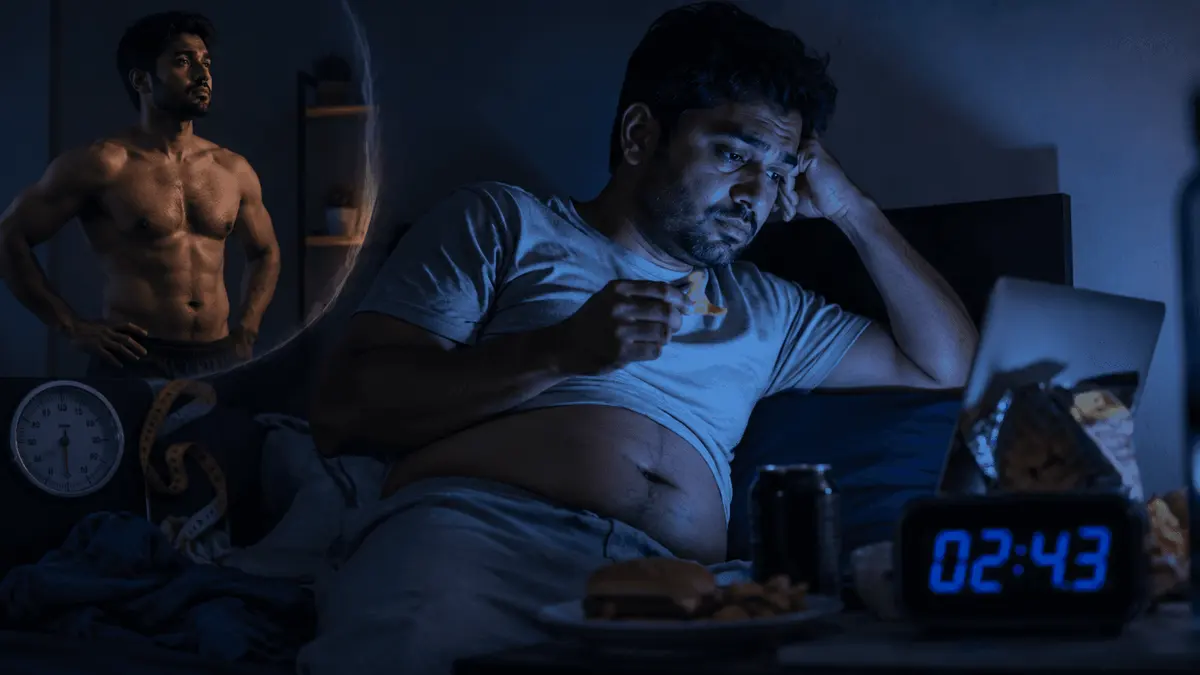
Here's a bummer wrapped in a science paper. You can eat well, hit the gym, and do everything "right," and still gain weight if you keep shorting yourself on sleep. Your mattress, it turns out, is one of the most underrated pieces of exercise equipment you own.
About a third of American adults sleep less than seven hours a night. Over the same decades, obesity and heart problems climbed. Scientists have now shown these trends aren't just neighbors. Losing sleep actively helps push the scale up.
The 80-Minute Experiment
The clearest evidence comes from a 2026 study that combined two careful trials. Ninety-five adults who normally slept seven-plus hours were assigned either to keep sleeping well or to cut about an hour and a half of sleep a night for six weeks. In real life they lost about 78 minutes nightly, roughly the sleep debt many of us rack up during a busy work week.
The short-sleep weeks brought about a pound of weight gain, a bigger waist, and roughly 17 extra minutes of sitting a day, with no bump in exercise to make up for it. Small numbers, yes. But the direction was consistent, and it stacked up in just six weeks.
It's the Snacks, Not the Calorie Burn
You might guess staying awake longer burns more calories. Barely. The real problem is that tired people eat more.
In one strict inpatient study, people on short sleep ate about 308 extra calories a day, with no real change in how much they burned. A big review of 41 trials landed on a similar number, roughly 253 extra calories a day.
The flip side is hopeful. When researchers helped short-sleepers sleep about 1.2 hours more per night, they ate about 270 fewer calories a day without even trying. Stretched over years, that could add up to real weight loss.
Where the Weight Likes to Land
Here's the part that should make anyone sit up (ideally out of a chair). Sleep loss doesn't just add weight evenly. It prefers to pack fat around your organs, the deep belly fat called visceral fat.
In one study, this hidden fat rose about 11% during short sleep, and it kept climbing even during a recovery weekend of catch-up sleep. That's a problem, because visceral fat is the mean kind: more inflammatory and more closely tied to heart disease than the softer fat under your skin. And "catch-up sleep on Saturday" apparently does not undo a rough week.
Why Your Brain Betrays You at 1 a.m.
Several things go haywire when you're underslept. Your hunger hormones drift the wrong way, and your stress hormone cortisol rises in the evening, cranking up appetite. Your brain's reward center lights up harder for junk food, so much that after a bad night people will literally pay more money for it, even when they say they aren't hungrier. Your body handles sugar worse, sliding toward insulin resistance, a step on the road to diabetes. And you move less, because tired equals couch.
Put it together and you get a double whammy: you eat more and move less, and your body stashes the extra in the worst spot.
Not Everyone Gets Hit Equally
Women going through menopause seem especially vulnerable, since dropping estrogen and choppy sleep gang up on the heart and metabolism.
The Takeaway
Sleep isn't lazy. It's maintenance. If you're working on your weight or your heart, treat 7 to 9 hours a night like part of the plan, not a luxury you'll get to later. Protecting your sleep might be the easiest health upgrade you're currently ignoring.
Your bed is on your side. Let it help.
This article is general education, not medical advice. One honest caveat on the framing: sleep is a lever, not a moral test — if you're a shift worker, a new parent, or a caregiver, "just sleep more" isn't advice you can act on, and the fix there is protecting what sleep you can get rather than feeling guilty about the rest. If you regularly can't fall asleep or stay asleep, that's insomnia, and it has real treatments (CBT-I works better than any supplement) — talk to a doctor rather than reaching for the melatonin bottle, and see our piece on melatonin for why the dose on the label is probably wrong anyway.