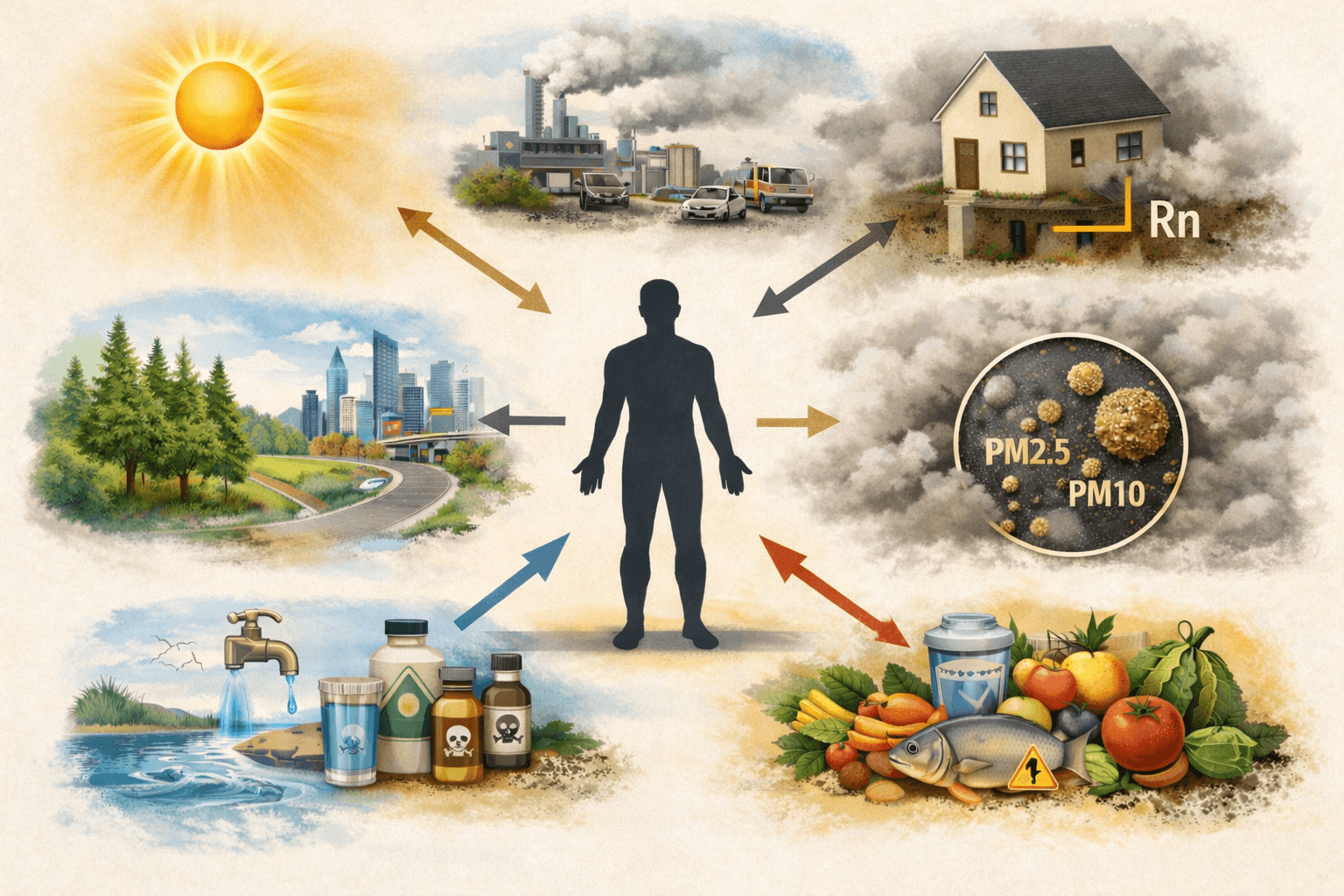
Because Your Body Did Not Sign Up to Be a Science Experiment
A Comprehensive Patient and Clinician Reference. Compiled from Peer-Reviewed Medical Literature, Clinical Guidelines, and Evidence-Based Research
© 2025 Medome.ai. All rights reserved. This document is intended for educational purposes. Always consult a qualified healthcare provider for personal medical advice.
Why Your Home Might Be Trying to Mess With You
Here is a wild fact: the average American spends about 90 percent of their time indoors. That means the air inside your home, the water coming out of your tap, and the stuff your couch is made of might matter more to your health than whether you live next to a factory.
The good news is that science has figured out a lot of this. We know what the biggest threats are, we know how to test for them, and we know what actually works to reduce them. This guide covers all of it, from the invisible gas seeping up through your floor (hello, radon) to the chemicals hiding in your nonstick pan.
This is not a scare document. Think of it as a user manual for the place you live. Knowing what to look for, and what to do about it, puts the power back in your hands.
🔬 Science Note
Every recommendation in this guide comes from peer-reviewed research, clinical guidelines from major medical organizations, or both. No supplements, detox kits, or unproven treatments are suggested here.
What We Are Covering
This guide walks you through the most important environmental health topics in your home and outside it. Here is the order:
Air quality indoors and outdoors, including particles, smoke, and gases
Radon, the invisible lung cancer gas
Volatile organic compounds (VOCs) and formaldehyde
Carbon monoxide, the sneaky silent killer
Mold and dampness
Water quality including lead, arsenic, PFAS, and disinfection byproducts
Heavy metals
Pesticides
Plastics and microplastics
Ultraviolet radiation and sun exposure
Temperature, humidity, and their effects on health
Green spaces and nature exposure
Intervention tools: air purifiers, water filters, dehumidifiers, humidifiers, and more
Section 1: The Air You Breathe Indoors
What Are Particles, and Why Should You Care?
Tiny particles float through the air all the time. Scientists measure them by size, using units called micrometers. The most dangerous ones are called PM2.5 because they are 2.5 micrometers or smaller. To give you a sense of scale, a human hair is about 70 micrometers wide. PM2.5 particles are 28 times smaller than that. They are small enough to travel deep into your lungs and even cross into your bloodstream.
There is no completely safe level of PM2.5. Research published in the Journal of the American College of Cardiology found that heart disease risk goes up even at concentrations below the World Health Organization guideline of 10 micrograms per cubic meter. That is not a typo. The risk starts before you even reach the official limit.
What Is PM2.5 Exactly?
PM stands for particulate matter. The 2.5 refers to the size in micrometers. Sources include smoke from cooking, candles, incense, cigarettes, fireplaces, and outdoor air drifting inside. These particles cause cardiovascular disease, respiratory illness, stroke, and early death with prolonged exposure.
Common Indoor Sources of Particle Pollution
Your home has more particle sources than you might think:
Cooking on the stovetop, especially frying or cooking at high heat
Candles and incense, which many people burn for relaxation but which release significant particles
Wood-burning fireplaces and pellet stoves
Cigarette, cigar, or e-cigarette smoke
Outdoor air coming in through windows, especially during wildfire season or in cities
Vacuuming with a non-HEPA vacuum, which actually stirs particles back into the air
Health Effects of Indoor Particle Exposure
Short-term effects include coughing, wheezing, worsened asthma, and irritated eyes and throat. Long-term effects are much more serious. Prolonged exposure to PM2.5 is strongly linked to heart attacks, strokes, lung cancer, and reduced lung function. Children and elderly people are especially vulnerable because children have faster breathing rates (so they inhale more per pound of body weight) and older adults often have heart or lung conditions that make them more sensitive.
HEPA Air Purifiers: The Gold Standard for Indoor Particles
HEPA stands for High Efficiency Particulate Air. A true HEPA filter captures at least 99.97 percent of particles that are 0.3 micrometers or larger. Studies consistently show that portable HEPA air purifiers reduce indoor PM2.5 levels by 50 to 60 percent on average, with some studies showing up to 92 percent reduction under ideal conditions.
A landmark study published in JAMA Pediatrics found that placing a HEPA purifier in children's bedrooms improved small airway mechanics by 73 percent and reduced airway inflammation by 28 percent in children with asthma. Those are not small numbers.
Feature | Details |
|---|---|
How well it works | 50 to 92 percent reduction in PM2.5 in the room |
Best placement | Bedroom, because that is where you spend 7 to 9 hours every night |
How many to use | At least one per major room; 3 or more on medium speed works well |
Fan speed | Run at highest tolerable speed; higher speed equals more cleaning |
Filter replacement | Every 6 to 12 months, or sooner in high-pollution areas |
What it does NOT remove | Gases, VOCs, formaldehyde, nicotine from smoke |
Cost range | $100 to $800 for the unit; $20 to $100 per filter replacement |
Special populations | Especially useful for people with asthma, COPD, heart disease, the elderly, children, and pregnant women |
⚠️ The Ionizer Warning
Some air purifiers advertise ionizing technology. These produce ozone as a byproduct. Ozone is a lung irritant and can trigger asthma attacks. The American Heart Association advises against using ionizing air cleaners. Stick with mechanical HEPA filtration only.
One Hidden Problem With Air Purifiers: Used Filters
Here is something that does not make the marketing brochure. Research published in the journal Environment International found that when a clogged HEPA filter is running, it can release endotoxins (toxic fragments from dead bacteria on the filter surface) back into the air, especially when first turned on. The fix is simple: replace your filter on schedule. Do not wait until the filter looks gray and sad.
HVAC Filters: Your Whole-House Option
If your home has a forced-air heating and cooling system, upgrading the filter is one of the most cost-effective things you can do. Filters are rated on the MERV scale, which runs from 1 to 16. Standard cheap fiberglass filters are MERV 1 to 4. They catch big dust bunnies but not much else. Upgrading to MERV 7 to 13 can reduce indoor PM2.5 nearly as well as a portable HEPA purifier, when the system is running.
The key word is 'when running.' Most residential HVAC systems cycle only about 20 percent of the time. Running the fan continuously or on a timer dramatically increases how much air gets filtered.
Install MERV 7 to 13 filters and replace them on the manufacturer's schedule
Seal the filter slot tightly so air does not sneak around the edges
Run the fan more frequently, especially on high-pollution days
Check with your HVAC technician that your system can handle a higher-MERV filter without reducing airflow
Ventilation: Letting Fresh Air In (When It Is Actually Fresh)
Opening windows is free, effective, and often underused. Studies show that outdoor air supply below 25 liters per second per person increases the risk of sick building syndrome symptoms and more sick days. Good ventilation dilutes indoor pollutants including CO2, VOCs, and biological particles.
The catch is that outdoor air is not always cleaner than indoor air. On days when wildfire smoke or urban smog is bad, opening windows makes things worse. Use the AirNow app or airnow.gov to check the Air Quality Index (AQI) before opening windows. On good air quality days (AQI below 50), ventilate freely. On bad days (AQI above 100), keep windows closed and rely on filtration instead.
A carbon dioxide monitor is an inexpensive way to measure ventilation quality. CO2 above 1,000 parts per million means the room needs more fresh air. Good CO2 monitors cost $50 to $150.
Section 2: Outdoor Air and How to Protect Yourself
Air Quality Index: Your Daily Weather Report for Breathing
The AQI runs from 0 to 500. Here is what each level means for your health:
AQI Range | Category | What High-Risk People Should Do |
|---|---|---|
0 to 50 | Good | Go outside and enjoy it |
51 to 100 | Moderate | Unusually sensitive people should consider limiting prolonged outdoor effort |
101 to 150 | Unhealthy for Sensitive Groups | Reduce prolonged outdoor exercise; go inside if you feel symptoms |
151 to 200 | Unhealthy | Avoid prolonged outdoor exercise; stay indoors with filtration running |
201 to 300 | Very Unhealthy | Avoid all outdoor exercise; create a clean air room indoors |
301 to 500 | Hazardous | Stay indoors; consider evacuation if air is extreme for multiple days |
N95 Respirators for Outdoor Pollution
Standard surgical masks and cloth masks do almost nothing for PM2.5. The particles are far too small and slide right around the edges. What actually works is a certified N95, N99, or P100 respirator, which filters at least 95 percent of airborne particles when properly fitted.
Always use a certified respirator with the proper NIOSH markings
Clean-shaven skin is needed for a proper seal; beards significantly reduce effectiveness
Fit testing is ideal but not always available; press the mask against your face and adjust straps
Replace when breathing becomes noticeably harder or after manufacturer-specified duration
Cloth masks, bandanas, and gaiters: do not bother for pollution protection
🚗 Car Travel Tip
When driving in traffic, set your car's ventilation system to recirculate mode and run the air conditioning. This reduces how much outdoor PM2.5 enters the cabin. Studies show that high-efficiency cabin air filters reduce PM2.5 inside the car by about 37 percent. Avoid idling in traffic when possible.
Wildfire Smoke: A Special Situation
Wildfire smoke is a mixture of PM2.5, toxic gases, and hundreds of chemical compounds. Exposure can spike to dangerous levels very quickly. People with asthma, COPD, cardiovascular disease, children, elderly people, and pregnant women need to take it especially seriously.
During wildfire events, create a clean air room in your home. Choose one room, preferably a bedroom, close all windows and doors, run a HEPA purifier on the highest setting, and avoid activities that generate indoor particles (cooking, candles, vacuuming). If AQI exceeds 300 for multiple days in a row and you cannot maintain acceptable indoor air quality, consider evacuation.
Section 3: Radon, the Invisible Lung Cancer Gas
What Is Radon and Why Is It So Dangerous?
Radon is a radioactive gas. It has no color, no smell, and no taste. You cannot detect it without a test. It comes from the natural breakdown of uranium in soil and rock, and it seeps up through cracks in foundations, around pipes, through sump pits, and basically any gap between your house and the ground.
Radon is the second leading cause of lung cancer death in the United States, responsible for about 21,000 deaths every year. The EPA estimates that radon causes about 13 percent of all lung cancer deaths. When you breathe in radon, the radioactive decay products attach to your lung tissue and damage DNA over time.
🚭 The Smoking Connection
Radon and cigarette smoking are a terrible combination. The two exposures together create a synergistic risk, meaning the combined harm is far greater than either alone. A smoker living in a high-radon home has a risk of lung cancer that can be 10 to 20 times higher than a non-smoker in a low-radon home. If you smoke, quitting is the single most impactful thing you can do for your lung cancer risk, followed closely by testing and fixing your radon levels.
What Levels Are Dangerous?
Radon is measured in picocuries per liter of air (pCi/L). Research consistently shows a 10 percent increase in lung cancer risk for every increase of 100 Becquerels per cubic meter (which equals about 2.7 pCi/L).
EPA action level: 4 pCi/L or higher requires mitigation
WHO recommendation: Take action at 2.7 pCi/L or higher
Target goal after mitigation: Below 2 pCi/L if possible
Average indoor level in the US: About 1.3 pCi/L
Outdoor air average: About 0.4 pCi/L
How to Test for Radon
Testing is easy and inexpensive. Every home below the third floor should be tested. Even if neighbors have low levels, radon can vary significantly from house to house based on foundation type, ventilation, and local geology.
Test Type | Duration | Best Use | Cost |
|---|---|---|---|
Short-term test | 2 to 7 days | Initial screening; quick results | $10 to $30 |
Long-term test | 90 days to 1 year | Most accurate annual average; best for decision-making | $25 to $50 |
Professional testing | Varies | For real estate transactions or confirming high results | $100 to $300 |
For most accurate results, test during the heating season (fall and winter in colder climates), when windows are closed and radon tends to accumulate more. Place the test in the lowest livable level of the home.
Radon Mitigation: How to Fix It
If your test shows levels at or above 4 pCi/L (or above 2.7 pCi/L if you want to follow the stricter WHO standard), mitigation is strongly recommended. The good news is that mitigation works extremely well, reducing levels by 50 to 99 percent.
Sub-Slab Depressurization (The Best Method)
A certified contractor installs a PVC pipe through your basement floor slab into the gravel or soil below. A fan draws the radon out from under the house and vents it above the roofline before you breathe it. This system runs continuously, costs $800 to $2,500 installed, and requires only minor annual maintenance (checking that the fan is running).
Most homes qualify for sub-slab depressurization
Fan typically lasts 5 to 10 years and costs $200 to $400 to replace
System includes a warning device (a manometer or alarm) to tell you if the fan stops
Test again after installation and every two years thereafter
🏗️ Building a New Home?
Radon-resistant construction techniques cost only $300 to $500 extra when built in during construction, compared to $800 to $2,500 for a retrofit. If you are building a home, ask for radon-resistant features including a gas-permeable gravel layer under the slab, a plastic sheeting vapor barrier, and a vent pipe running from below the slab through the roof. A fan can be added later if testing shows elevated levels.
Who Should Be Extra Careful About Radon?
Everyone should test, but especially: people in basements or first floors, homes in the central and mountain states of the US, and older homes with cracked foundations
Smokers or former smokers face dramatically amplified risk from radon exposure
Families with children should prioritize testing because children will accumulate more lifetime exposure in the home
People buying a home should insist on radon disclosure and fresh testing
Section 4: VOCs and Formaldehyde (Your New Furniture Might Have a Secret)
What Are Volatile Organic Compounds?
Volatile organic compounds, or VOCs, are chemicals that easily evaporate into the air at room temperature. Formaldehyde is the most studied and most concerning one. Others include benzene, toluene, xylene, and ethylbenzene. The term 'off-gassing' refers to how products slowly release these chemicals into your indoor air after manufacturing.
VOC levels are often highest in newly built or recently renovated homes, and in rooms with new furniture, new flooring, new carpets, or freshly painted walls.
Where Do VOCs Come From?
Pressed wood products: particle board, MDF (medium-density fiberboard), and plywood used in furniture, cabinets, and flooring all use formaldehyde-containing glues
Laminate flooring and new carpets
Paints, varnishes, and adhesives
Cleaning products, air fresheners, and scented candles
Personal care products including hairsprays, perfumes, and nail polish
Dry-cleaned clothes brought into the home
Printers and photocopiers
🚨 Formaldehyde and Cancer
The International Agency for Research on Cancer (IARC) classifies formaldehyde as a Group 1 carcinogen, meaning there is sufficient evidence that it causes cancer in humans. It is linked to nasopharyngeal cancer and leukemia. A study of European educational buildings found formaldehyde levels exceeding safe thresholds in 14 countries. Many US homes, especially newer ones with lots of pressed wood furniture, exceed safe guideline levels as well.
Health Effects of VOC Exposure
Short-term effects at typical indoor levels include headaches, eye irritation, sore throat, dizziness, nausea, and fatigue. People who have just moved into a new home or received new furniture often notice these symptoms and assume they are coincidental. They are not.
Long-term effects include asthma exacerbation (especially in children), respiratory disease, neurological damage, and increased cancer risk. Children are particularly vulnerable because their breathing rates are higher and their developing tissues are more sensitive.
What Actually Works to Reduce VOCs
1. Ventilation: The Fastest and Cheapest Fix
Opening windows is the most effective immediate intervention. Ventilation can reduce formaldehyde levels by 50 to 90 percent depending on how much air exchange occurs. Cross-ventilation (windows on opposite sides of the house) is most effective. Doing this daily when outdoor air quality is acceptable can make a dramatic difference.
2. Source Control: The Best Long-Term Strategy
The best way to reduce VOCs is to reduce sources. When buying furniture, flooring, or building materials, look for:
CARB Phase 2 compliant pressed wood products (California Air Resources Board standard for low formaldehyde emissions)
GREENGUARD Gold certification, which tests products specifically for chemical emissions
Solid wood instead of particle board or MDF whenever the budget allows
Low-VOC or zero-VOC paints and adhesives
Green Label Plus certified carpets
3. The Bake-Out Technique
For newly renovated spaces, you can accelerate off-gassing by briefly heating the space to 85 to 90 degrees Fahrenheit for 24 to 72 hours with windows closed, then ventilating aggressively with all windows open. This can reduce formaldehyde levels by 40 to 60 percent. Do not be in the home during the heating phase.
4. Activated Carbon Filters for Gases
Standard HEPA filters do not remove gases or VOCs. They only remove particles. For VOC removal, you need an activated carbon filter, which adsorbs chemical molecules onto a porous carbon surface. These filters wear out faster in high-VOC environments and need more frequent replacement. Some air purifiers include both HEPA and activated carbon stages.
For formaldehyde specifically, standard activated carbon works poorly. You need potassium permanganate-treated activated carbon or a specialized formaldehyde-removing filter, which some higher-end air purifiers include.
🌱 The Houseplant Myth
You may have seen articles claiming that houseplants purify indoor air. While plants do absorb some VOCs through their leaves and soil, the effect in a real home is extremely small. You would need hundreds of plants to make a meaningful dent in VOC levels. The main benefit of houseplants is psychological, and that is a real benefit, just not for air purification. For VOCs, ventilation and source control are what actually move the needle.
Who Needs to Be Most Careful About VOCs?
Pregnant women: VOC exposure is associated with adverse birth outcomes; prioritize low-VOC products and ventilation
Infants and young children: Higher breathing rates mean more exposure per pound of body weight
People with asthma: VOCs can trigger exacerbations
People moving into new construction or freshly renovated homes
Anyone with chemical sensitivities or multiple chemical sensitivity disorder
Section 5: Carbon Monoxide, the Silent Household Killer
What Is Carbon Monoxide and Why Is It So Dangerous?
Carbon monoxide (CO) is a colorless, odorless, tasteless gas produced when fuel does not burn completely. It binds to hemoglobin in your blood, the protein that carries oxygen, about 250 times more strongly than oxygen does. When CO takes oxygen's place, your organs and brain are starved of oxygen even though your lungs are working fine. This is why people can die in their sleep from CO poisoning without waking up.
🚩 Symptoms That Should Raise a Red Flag
Multiple household members having flu-like symptoms at the same time, without fever, especially in winter, is a classic sign of CO exposure. Symptoms include headache, dizziness, nausea, fatigue, and confusion. If symptoms improve when you leave the home and return when you come back, CO or another indoor pollutant is almost certainly the cause. Leave the building immediately and call 911.
Sources of Carbon Monoxide in the Home
Malfunctioning gas furnace: the most common source
Gas water heater with poor venting
Gas stove or oven used for heating
Fireplace or wood stove with blocked chimney
Car left running in an attached garage, even with the garage door open
Portable generator used indoors or near an open window or door (causes many deaths annually)
Charcoal grills or camping stoves used indoors
Carbon Monoxide Detectors: Not Optional
CO detectors should be installed in every home with fuel-burning appliances or an attached garage. This is required by law in many states. One detector outside each sleeping area is the minimum. Detectors on every level of the home is better.
Choose plug-in models with battery backup so they still work during a power outage
Test detectors monthly using the test button
Replace detectors every 5 to 7 years; CO sensors degrade over time
Do not place detectors directly above cooking appliances (nuisance alarms from normal cooking gases)
What to Do If Your Detector Alarms
Get everyone including pets out of the home immediately
Do not stop to grab belongings
Call 911 from outside
Do not go back in until emergency responders say it is safe
Get medical evaluation, even if symptoms seem mild
Treatment for CO Poisoning
Treatment involves 100 percent oxygen delivered through a non-rebreather mask. This reduces the half-life of carboxyhemoglobin (CO attached to hemoglobin) from 4 to 6 hours down to about 60 to 90 minutes. For severe poisoning, including loss of consciousness, confusion, cardiovascular symptoms, or pregnancy with significant exposure, hyperbaric oxygen therapy (HBO) may be indicated. HBO involves breathing pure oxygen inside a pressurized chamber and can prevent delayed neurological complications that sometimes occur after CO poisoning.
Section 6: Mold and Dampness
The Basics of Indoor Mold
Mold is a type of fungus that grows wherever there is moisture and organic material to eat. Your home has plenty of both. Mold releases tiny spores into the air. When you breathe them in, your immune system responds, and in sensitive individuals, that immune response becomes the health problem.
About 50 percent of children with persistent asthma are sensitized to indoor molds. The most common culprits are Alternaria, Aspergillus, Cladosporium, and Penicillium. A meta-analysis found that exposure to these four mold genera increases asthma exacerbation risk by 36 to 48 percent.
Health Effects of Mold Exposure
Asthma development (in previously non-asthmatic people) and exacerbation (in those who already have it)
Allergic rhinitis: runny nose, congestion, sneezing
Respiratory infections and bronchitis
Cough, wheeze, and shortness of breath
Atopic dermatitis (eczema)
Fatigue, headache, and difficulty concentrating
In rare severe cases: hypersensitivity pneumonitis, a serious lung inflammation
⏱️ Dose Matters
Prolonged exposure to mold is worse than brief exposure. Research shows that people with 20 years of mold exposure have stronger health effects than those with 10 years. The message is to fix mold problems promptly rather than waiting to see if they get worse.
How Mold Gets Into Your Home
Mold needs moisture above everything else. It does not spontaneously appear; it grows where water has been. Common causes include:
Roof leaks
Plumbing leaks under sinks or behind walls
Flooding, even minor or old flooding that was not fully dried
Condensation on cold windows, walls, or pipes
Poor ventilation in bathrooms and kitchens
High indoor humidity above 60 percent
Wet basements from poor drainage or foundation cracks
Finding Mold in Your Home
You can often see mold as black, green, gray, or white fuzzy growth on walls, ceilings, under sinks, or around windows. Musty odors are another sign. Mold can also hide behind drywall, under carpet, above ceiling tiles, and inside HVAC systems.
Moisture meters are inexpensive tools ($20 to $50) that measure water content in building materials. Wood above 20 percent moisture content is at high risk for mold. Infrared cameras can identify hidden moisture pockets that are not visible to the eye. These are standard tools for certified mold inspectors.
The DIY Versus Professional Remediation Line
Less than 10 square feet of visible mold can typically be handled as a DIY project. More than 10 square feet, mold in HVAC systems, mold on structural materials, or any mold situation involving immunocompromised household members requires a certified professional.
DIY Mold Removal Protocol (Under 10 Square Feet)
Fix the moisture source first. This is not optional. If you clean mold without fixing why it grew, it will be back within weeks.
Gear up: N95 respirator, rubber gloves, eye protection, long sleeves
Close the area off from the rest of the home and point a fan toward an open window to push air outward
Scrub visible mold with detergent and water. On non-porous surfaces (tile, glass, metal), a solution of 1 cup bleach per gallon of water is effective. Never mix bleach with ammonia.
Porous materials with heavy mold growth (drywall, ceiling tiles, carpet) should be removed and discarded in sealed bags
Dry the area completely within 24 to 48 hours using fans and dehumidifiers
Monitor for recurrence over the following weeks
Professional Mold Remediation
Certified mold remediation contractors (look for IICRC certification) will contain the work area under negative pressure, use commercial HEPA filtration during the work, remove contaminated materials, treat surfaces, fix the moisture source, and conduct post-remediation verification testing. Cost ranges from $500 to $6,000 or more depending on extent.
Humidity Control Is Mold Prevention
Keeping indoor relative humidity between 40 and 60 percent is the single best thing you can do to prevent mold. Most mold species require greater than 60 percent relative humidity to grow. Dust mites, another major indoor allergen, thrive above 50 percent humidity. A basic hygrometer to measure humidity costs $10 to $30. A dehumidifier to control it costs $150 to $400.
Special Medical Conditions Related to Mold
Allergic Bronchopulmonary Aspergillosis (ABPA)
ABPA is a specific condition where the immune system overreacts to Aspergillus fungus in the airways. It occurs mainly in people with asthma or cystic fibrosis. It causes worsening asthma, mucus plugs in airways, and can lead to permanent lung damage if untreated. Treatment involves oral corticosteroids and antifungal medications (typically itraconazole). Regular monitoring of total IgE levels guides treatment duration.
Hypersensitivity Pneumonitis (HP)
Hypersensitivity pneumonitis is a serious immune reaction in the lung caused by repeated exposure to organic antigens, including mold spores. The most important clue is that symptoms improve when you are away from home and worsen when you return. It can be mistaken for repeated respiratory infections. Pulmonary function tests typically show a restrictive pattern, and high-resolution CT of the chest shows characteristic patterns. Antigen avoidance is the cornerstone of treatment. Corticosteroids treat inflammation. If fibrosis develops, the prognosis is more serious and antifibrotic medications may be needed.
Section 7: What Is Actually in Your Tap Water
The Good News and the Less Good News
Municipal tap water in the United States is among the most regulated in the world. The EPA sets maximum contaminant levels for hundreds of substances under the Safe Drinking Water Act. The vast majority of Americans receive water that meets all standards. That is genuinely good news.
The less good news is that meeting regulatory standards does not mean zero risk. Some contaminants have no truly safe level (lead, arsenic). Others are permitted at levels where long-term risk still exists. And some contaminants, most notably PFAS chemicals, are only now being regulated after decades of widespread exposure.
Lead: The Plumbing Legacy
Lead was used in plumbing pipes and solder extensively before 1986. The EPA estimates that millions of homes still have lead pipes, lead solder, or brass fixtures that can leach lead into drinking water. There is no safe level of lead exposure. In children, even very low blood lead levels cause measurable reductions in IQ, behavioral problems, and developmental delays. In adults, lead exposure increases cardiovascular disease risk, kidney damage, and cognitive decline.
💧 How Lead Gets Into Water
Lead is almost never naturally present in drinking water at the source. It leaches into the water as it sits in lead pipes or solder, especially acidic water. Homes built before 1986 and homes in cities with aging infrastructure (including Chicago, Milwaukee, and many northeastern cities) are at highest risk. If you have any doubt, test your water.
Testing for lead: request a test kit from your local water utility (often free) or purchase one from a state-certified lab. The EPA recommends using the first liter of water after water has sat in pipes for 6 or more hours (called a first-draw sample) because this represents worst-case exposure.
Reducing lead exposure from tap water: a certified point-of-use filter (see the water filter section) is the most practical solution while awaiting infrastructure replacement. Reverse osmosis and NSF 53 certified solid carbon block filters both effectively remove lead.
Arsenic: A Natural Contaminant
Arsenic occurs naturally in rock formations and can dissolve into groundwater. It is most common in private wells in certain regions of the United States (New England, the Southwest, and parts of the Midwest). The EPA maximum contaminant level is 10 micrograms per liter. However, health effects, including increased risk of bladder, skin, and lung cancer, cardiovascular disease, and diabetes, are documented even below this level.
Private well owners are responsible for testing their own water. The EPA does not regulate private wells. If you have a well, test for arsenic (and a panel of other contaminants) at least every 3 to 5 years, or whenever there is reason to think contamination may have occurred (flooding, nearby agricultural or industrial activity, changes in water taste or color).
PFAS: The Forever Chemicals
What Are PFAS?
Per- and polyfluoroalkyl substances (PFAS) are a family of more than 12,000 synthetic chemicals that have been used since the 1940s in products including nonstick cookware, stain-resistant fabrics, water-resistant clothing, food packaging, firefighting foam, and many other items. They are called forever chemicals for two reasons: they do not break down in the environment, and they accumulate in the human body over time.
Nearly 50 percent of US tap water contains detectable PFAS. Most Americans have measurable PFAS in their blood from decades of exposure through water, food, and products.
Health Effects of PFAS
Effect | Strength of Evidence |
|---|---|
Decreased antibody response after vaccination | Sufficient evidence |
Elevated cholesterol and dyslipidemia | Sufficient evidence |
Decreased infant and fetal growth | Sufficient evidence |
Kidney cancer in adults | Sufficient evidence |
Liver dysfunction | Sufficient evidence |
Thyroid dysfunction | Sufficient evidence |
Breast, testicular, ovarian, and prostate cancer | Suggestive evidence |
Ulcerative colitis | Suggestive evidence |
Reduced fertility and preeclampsia | Suggestive evidence |
Type 2 diabetes | Suggestive evidence |
Immune system dysfunction | Suggestive evidence |
What PFAS Blood Testing Can and Cannot Tell You
As of current guidelines, routine blood testing for PFAS is NOT recommended by major medical organizations because it only indicates that you were exposed (which is true for almost everyone), cannot predict your future health, does not tell you whether current health problems are caused by PFAS, and most importantly, there is no medical treatment to remove PFAS from the body. Monitoring for associated conditions (cholesterol, thyroid function, kidney function) is the appropriate medical response.
Where PFAS Comes From (and What You Can Actually Do)
Contaminated drinking water: use reverse osmosis or certified GAC filter
Nonstick cookware (Teflon and similar): switch to stainless steel, cast iron, or ceramic
Stain-resistant and water-resistant fabric treatments: wash new clothing before wearing; avoid products marketed as stain-proof
Microwave popcorn bags and fast food wrappers with grease-resistant coating: choose alternatives
Cosmetics and personal care products: check labels for ingredients containing 'fluoro' or 'perfluoro'
Carpets and upholstery with stain-resistant treatments: opt out of treatments when buying new
New EPA Regulations
In 2024, the EPA finalized Maximum Contaminant Levels for PFOA and PFOS at 4 parts per trillion (nanograms per liter), replacing the older health advisory of 70 parts per trillion. This is a significant tightening of the standard. Public water systems must comply and test regularly. If you receive a notice that your water exceeds the new standard, switching to filtered or bottled water while the utility addresses the issue is appropriate.
Disinfection Byproducts
Chlorine is added to municipal water to kill germs, which it does extremely well. But chlorine reacts with naturally occurring organic matter in water to create a family of compounds called disinfection byproducts (DBPs). The most studied are trihalomethanes (THMs) and haloacetic acids (HAAs).
Epidemiological studies consistently associate long-term exposure to DBPs with bladder cancer and possible reproductive effects. Removing chlorine and DBPs from drinking water is one of the things that activated carbon filters do very well, making them a worthwhile addition for most households even if no other contaminants are present.
Nitrates
Nitrates enter water mainly from agricultural fertilizer runoff and septic systems. The EPA limit is 10 milligrams per liter. Infants under 6 months are the most at-risk population; high nitrate intake can cause methemoglobinemia (blue baby syndrome), where blood loses the ability to carry oxygen. Rural households with private wells near farmland should test for nitrates at least annually. Reverse osmosis and ion exchange systems effectively remove nitrates.
Section 8: Water Filters, Explained (Because the Options Are Overwhelming)
The Hierarchy of Water Filtration
Different filtration technologies remove different contaminants. No single technology removes everything. Here is what each major type does and does not do:
Reverse Osmosis: The Overachiever
Reverse osmosis (RO) works by forcing water under pressure through an extremely fine semi-permeable membrane that blocks molecules based on size and electrical charge. It is the most comprehensive point-of-use filtration technology available for residential use.
Contaminant | RO Removal Efficiency |
|---|---|
PFAS (long-chain) | Greater than 95 percent |
Lead | Greater than 99 percent |
Arsenic | Greater than 99 percent |
Nitrate | Greater than 99 percent |
Haloacetic acids (DBPs) | Greater than 75 percent |
Bacteria | Greater than 99.999 percent |
Viruses | Greater than 99.999 percent |
Total dissolved solids | 95 to 99 percent |
Fluoride | 85 to 92 percent |
VOCs and chlorine | Moderate (better with carbon pre/post filters) |
The Pros of Reverse Osmosis
Most comprehensive contaminant removal of any residential technology
Effective against PFAS, heavy metals, nitrates, microorganisms, and most inorganic contaminants
NSF/ANSI Standard 58 certified systems available for verification
Dramatically improves taste and odor
Under-sink models are compact and do not require counter space
The Cons of Reverse Osmosis
Wastes water: typically 3 to 4 gallons of reject water for every gallon of clean water produced. Newer high-efficiency models are improving this ratio.
Slow production: typical under-sink unit produces 50 to 75 gallons per day, stored in a small tank
Removes beneficial minerals: calcium and magnesium are filtered out, making water slightly more acidic. For people drinking primarily RO water long-term, using a remineralization cartridge is a reasonable option.
Requires regular maintenance: pre-filters every 6 to 12 months, membrane every 2 to 3 years, post-filter annually
Higher cost: $200 to $800 for under-sink unit, plus $50 to $150 per year in filters
Activated Carbon Filters: The Everyday Workhorse
Activated carbon works by adsorption: contaminants stick to the enormous porous surface area inside the carbon material. A single gram of activated carbon can have a surface area of over 500 square meters. It is excellent at removing organic compounds, chlorine, and taste-and-odor causing compounds.
What Carbon Removes Well | What Carbon Does NOT Remove |
|---|---|
Chlorine and chloramines | Nitrates |
Trihalomethanes and haloacetic acids (DBPs) | Fluoride |
VOCs, pesticides, herbicides | Hardness minerals |
Taste and odor compounds | Arsenic (without special media) |
Some pharmaceuticals and hormones | Short-chain PFAS |
Long-chain PFAS (with certification) | Microorganisms (bacteria, viruses) |
Some heavy metals (lead, mercury) | — |
Carbon filters come in pitcher form ($20 to $40), faucet-mounted form ($20 to $50), and under-sink systems ($50 to $300). They all need regular filter replacement. A saturated carbon filter can actually release accumulated contaminants back into the water if not replaced on schedule. This is not hypothetical; it happens.
✅ The NSF Certification Rule
When buying a water filter for any specific contaminant (lead, PFAS, arsenic, etc.), look for NSF/ANSI certification for that specific contaminant. NSF International independently tests filters to verify that they actually do what manufacturers claim. A filter that says 'reduces lead' on the box is not the same as one with NSF Standard 53 certification for lead removal.
Ultraviolet (UV) Disinfection
UV disinfection uses light at 254 nanometers wavelength to damage the DNA of microorganisms, preventing them from reproducing. It is extremely effective against bacteria, viruses, and protozoa including Cryptosporidium and Giardia, which are resistant to chlorine. However, UV does absolutely nothing to remove chemical contaminants, taste, odor, or particles. It is used as a disinfection step, typically paired with filtration, especially in homes on private wells.
Ion Exchange Systems
Ion exchange systems swap undesirable ions for more acceptable ones. Water softeners are the most common type; they replace calcium and magnesium (hardness minerals) with sodium ions. Specialized ion exchange resins can also remove nitrates, uranium, and PFAS. These systems require periodic regeneration with salt and monitoring of resin performance. They are not appropriate as the sole treatment for water with multiple contaminants.
Choosing the Right Filter System
Situation | Best Filter Approach |
|---|---|
PFAS in municipal water | Reverse osmosis (first choice) or NSF-certified GAC |
Lead from old pipes | NSF 53 certified solid carbon block or reverse osmosis |
Arsenic in well water | Reverse osmosis or activated alumina |
Nitrates in well water | Reverse osmosis or ion exchange |
Chlorine taste and DBPs in municipal water | Activated carbon (any good pitcher or faucet filter) |
Microorganisms in well water | UV disinfection plus filtration |
Comprehensive protection, multiple concerns | Reverse osmosis with carbon pre and post filters |
Budget option for general improvement | NSF 53 certified pitcher or faucet carbon filter |
Section 9: Heavy Metals in Your Environment
The Main Players
Lead, arsenic, cadmium, mercury, and chromium are the heavy metals of greatest public health concern. They enter the body through contaminated water, food, air, and sometimes direct skin contact or ingestion of household dust. Their effects span multiple organ systems and are largely irreversible once damage is done, which makes prevention far more important than treatment.
Lead
We covered lead in drinking water above. But water is not the only source. In homes built before 1978, lead-based paint is the primary source of exposure for children, especially as it deteriorates or is disturbed during renovation. Children with pica (the tendency to eat non-food materials) are at especially high risk.
Blood lead level testing is recommended for all children at ages 1 and 2, or at any age if exposure is suspected. The CDC reference value that triggers action is 3.5 micrograms per deciliter. There is no safe level. Nutritional interventions (ensuring adequate iron, calcium, and vitamin C) reduce lead absorption. Chelation therapy is reserved for blood lead levels of 45 micrograms per deciliter or higher.
If your home was built before 1978, assume lead paint is present until tested otherwise
Do not sand or disturb lead paint without certified contractor involvement
Use HEPA vacuum and wet mopping to reduce lead-contaminated dust
Keep children away from bare soil near the foundation (lead concentrates in soil near old buildings)
Cover or cap deteriorating paint rather than disturbing it if you cannot abate it now
Cadmium
Cadmium accumulates primarily in the kidneys over a lifetime and can cause kidney damage. Long-term exposure is associated with renal cancer (Class II evidence, meaning convincing association). Main exposure routes include tobacco smoke (smoking is the dominant source for smokers), certain foods grown in cadmium-contaminated soil, and occupational exposure in battery manufacturing and metalworking.
Mercury
Mercury exposure occurs primarily through eating large predatory fish (tuna, swordfish, shark, king mackerel, and tilefish) that bioaccumulate methylmercury. Pregnant women and young children should follow FDA and EPA guidelines, which recommend limiting high-mercury fish and choosing lower-mercury options such as salmon, canned light tuna (not albacore), shrimp, and catfish. Methylmercury causes neurological damage, and the developing fetal brain is particularly vulnerable.
Arsenic
In addition to drinking water (covered above), arsenic exposure occurs through rice, which absorbs arsenic from paddy water more readily than other grains. Rinsing rice before cooking and using more water (cooking in a larger water-to-rice ratio and draining the excess) can reduce arsenic content by 25 to 50 percent. Brown rice has more arsenic than white rice because the outer layer concentrates it.
Section 10: Pesticides at Home and in Food
Why Pesticides Are a Bigger Deal Than Most People Think
Pesticides are designed to kill living things. The fact that they are used on food and in homes means we need to think carefully about our exposure. In 2018, approximately 35,000 toxic exposures in children under 5 years old involved pesticides in the United States. Residential pesticide exposure is linked to some of the most concerning chronic health effects, including childhood leukemia, lymphoma, and brain tumors.
Health Effects of Pesticide Exposure
Neurodevelopmental Effects
This is where the evidence is strongest and most alarming for children. Organophosphate pesticides (a common class) are associated with autism spectrum disorder (ASD), attention deficit hyperactivity disorder (ADHD), and lower IQ scores, particularly from prenatal exposure. The first and third trimesters appear to be the most critical windows of vulnerability.
A 2015 meta-analysis published in Pediatrics found that childhood residential exposure to indoor insecticides was associated with a 47 percent increased risk of leukemia and a 43 percent increased risk of lymphoma. These are not small effects.
Acute Toxicity: Organophosphate and Carbamate Poisoning
In acute high-dose poisoning, organophosphates and carbamates cause a cholinergic crisis by blocking an enzyme that the nervous system needs to function. Symptoms spell out the acronym SLUDGE: Salivation, Lacrimation (tears), Urination, Defecation, GI distress, and Emesis (vomiting). Muscle twitching, weakness, difficulty breathing, altered mental status, and seizures can follow. This is a medical emergency requiring atropine and pralidoxime (2-PAM) antidotes.
Reducing Pesticide Exposure at Home
Integrated Pest Management (IPM): The Gold Standard
IPM is a systematic approach that uses multiple strategies to manage pests while minimizing chemical use. It is recommended by the American Academy of Pediatrics as the preferred approach for families with children.
Start with prevention: seal gaps and cracks, fix moisture problems, store food in airtight containers, remove clutter that provides pest harborage
Use physical controls first: traps, sticky strips, door sweeps, caulk
If chemicals are needed, use the least toxic option (baits and gels rather than sprays)
Avoid broad-spectrum insecticide sprays indoors, especially in homes with children
Keep children and pets away from treated areas for at least 24 to 48 hours
Store all pesticides locked and in original containers
Reducing Pesticide in Food
The Environmental Working Group publishes an annual 'Dirty Dozen' list of produce with the highest pesticide residues and a 'Clean Fifteen' list of produce with the lowest. While washing produce reduces pesticide residue by 20 to 30 percent, it does not eliminate it completely. For fruits and vegetables on the high-pesticide list, choosing organic is a reasonable option. Peeling produce also helps when applicable.
Foods consistently showing higher pesticide residues: strawberries, spinach, kale, peaches, pears, nectarines, apples, grapes, bell peppers, and cherries. Foods consistently showing lower residues: avocados, sweet corn, pineapple, onions, papaya, frozen sweet peas, asparagus, honeydew melon, kiwi, and cantaloupe.
Occupational Pesticide Exposure
Agricultural workers, landscapers, exterminators, and golf course workers face much higher pesticide exposures than the general public. For these workers:
Cholinesterase testing (before and during exposure season) is the standard medical surveillance tool for organophosphate and carbamate exposure
Red blood cell cholinesterase is the most specific test; a 20 percent decrease from baseline warrants removal from exposure
Proper personal protective equipment includes respirators with organic vapor cartridges, chemical-resistant gloves, and protective clothing
Follow EPA re-entry intervals for treated fields strictly
Workers have legal rights under the EPA Worker Protection Standard
Section 11: Plastics and Microplastics (Everywhere, Literally)
What Are Microplastics?
Microplastics are plastic particles smaller than 5 millimeters. Nanoplastics are even smaller, less than 1 micrometer. They come from the breakdown of larger plastic items (bottles, packaging, synthetic clothing, tires), as well as from microbeads in some personal care products. They have been found in every environment on Earth, from deep ocean trenches to Antarctic ice to the summit of Mount Everest.
More relevantly, microplastics have been found in human blood, breast milk, placenta, fetal tissue, lungs, liver, colon, and even in arterial plaques. If that list seems long, it is because science has been finding them in new places with essentially every study that looks.
Health Effects: What We Know and Do Not Know
The honest answer is that we do not yet fully understand the health consequences of microplastic accumulation in human tissues. The science is moving fast. Here is what current evidence shows:
High-quality evidence suggests microplastics adversely affect sperm quality and reproductive health
High-quality evidence suggests immune suppression and colon inflammation from digestive exposure
Moderate evidence suggests pulmonary inflammation and reduced lung function
Animal and in vitro studies show oxidative stress, endocrine disruption, DNA damage, and metabolic effects
Most evidence is from animal or laboratory studies; long-term human epidemiological data is limited
An important point: the plastics themselves carry risk, but so do the chemical additives (phthalates, BPA, PFAS, heavy metal stabilizers) and environmental contaminants that stick to plastic surfaces. Microplastics act as both particles and chemical carriers.
Reducing Microplastic Exposure: What Actually Works
Drinking Water
Reverse osmosis filters remove greater than 90 percent of microplastics from tap water
Avoiding plastic water bottles reduces exposure because bottled water contains more microplastics than filtered tap water in most studies
Glass, stainless steel, and ceramic containers are preferable to plastic
Food
Avoid microwaving food in plastic containers; use glass or ceramic
Avoid plastic wrap touching hot food; use glass lids or wax paper
Choose fresh foods over heavily packaged processed foods
Cook with stainless steel, cast iron, or ceramic cookware instead of nonstick
Use wooden, stainless steel, or silicone utensils; plastic utensils degrade over time and release particles
Rinse rice and pasta before cooking
Indoor Air
Vacuum regularly with a HEPA-filtered vacuum; microplastic fibers from synthetic textiles accumulate in house dust
Wet mop floors in addition to vacuuming
Choose natural fiber clothing (cotton, wool, linen) when possible; synthetic fabrics (polyester, nylon, acrylic) shed microfibers with every wash and wear
Use a microfiber-catching laundry bag or filter for synthetic clothing
Air-dry clothes rather than using the dryer, which releases microplastic fibers into household air
Personal Care and Household Products
Avoid products listing microbeads in ingredients (banned in the US for rinse-off products but still present in some items)
Reduce single-use plastic: reusable bags, containers, and bottles
Choose products in glass containers when available
🎯 Realistic Expectations
Complete elimination of microplastic exposure is not currently possible. They are too widespread. The goal is reduction, not perfection. Focus on the high-impact changes (water filtration, food storage, reducing plastic in cooking) and do not spend energy on low-impact changes or developing anxiety about unavoidable exposures.
Section 12: The Sun Is Your Friend and Your Enemy
UV Radiation and Skin Cancer
Ultraviolet radiation from the sun is an established human carcinogen. The International Agency for Research on Cancer classifies UV radiation as a Group 1 carcinogen, meaning the evidence is definitive. Approximately 95 percent of cutaneous melanoma cases in the United States are attributable to UV radiation. UV also causes basal cell carcinoma (the most common cancer in the US), squamous cell carcinoma, cataracts, and immune suppression.
The Montreal Protocol, an international treaty that phases out ozone-depleting chemicals, is estimated to prevent 11 million melanoma cases and 432 million cases of other skin cancers in the US alone for people born between 1890 and 2100. Protecting the ozone layer is one of the most impactful environmental health actions in human history.
Risk Factors for UV-Related Harm
Fair skin, light hair, and light eyes (less melanin pigment = less natural protection)
History of sunburns, especially blistering burns in childhood
Family history of melanoma
Large number of moles or atypical moles
Outdoor occupation or high recreational sun exposure
Living at high altitude or near the equator
History of indoor tanning bed use
Evidence-Based Sun Protection
Sunscreen
Use SPF 30 or higher, broad-spectrum (blocking both UVA and UVB), water-resistant sunscreen. Apply 15 to 30 minutes before going outside, and reapply every 2 hours or after swimming or heavy sweating. The typical person uses only 25 to 50 percent of the recommended amount. The correct amount for full body coverage is about 1 ounce, which is roughly the volume of a full shot glass. Most people need to apply more than they think.
Both mineral sunscreens (zinc oxide, titanium dioxide) and chemical sunscreens (oxybenzone, avobenzone, others) are effective. Mineral sunscreens are generally recommended for young children and those with sensitive skin.
Protective Clothing
Wide-brimmed hat (at least 3 inch brim all around) protects the face, neck, and ears
Long sleeves and pants provide more reliable protection than sunscreen
UPF-rated clothing (Ultraviolet Protection Factor) provides known, reliable UV protection and does not need reapplication
Sunglasses blocking 100 percent of UV radiation protect against cataracts, macular degeneration, and eye cancers; look for lenses labeled UV400 or 100 percent UV protection
Behavioral Strategies
Seek shade especially between 10 AM and 4 PM, when UV intensity is highest
Clouds block heat but not UV; you can burn on overcast days
UV reflects off sand, water, and snow, increasing exposure
Avoid indoor tanning completely; there is no safe dose from tanning beds
Window glass blocks UVB but not UVA; if you spend many hours near windows, UV-blocking film is worth considering
The Vitamin D Question
Sunlight is the main way humans produce vitamin D, which is essential for bone health, immune function, and potentially much more. This creates a genuine tension: enough sun to maintain vitamin D levels versus avoiding the cancer risk.
The practical resolution is brief, sensible sun exposure on a regular basis. In most latitudes from spring to fall, exposing the arms and legs for 10 to 15 minutes in the middle of the day, two to three times per week, produces adequate vitamin D in most people. Beyond that, sunscreen and protective clothing are appropriate. In winter at northern latitudes, food sources and supplementation may be needed to maintain adequate vitamin D levels.
Skin Cancer Surveillance
The American Cancer Society recommends annual skin examinations by a dermatologist for people at elevated risk. All adults should perform monthly self-skin exams and report any changing, growing, or unusual skin lesion to a physician promptly.
The ABCDEs of melanoma detection: Asymmetry (one half does not match the other), Border (irregular, ragged, or blurred edges), Color (variation in color within the lesion), Diameter (larger than 6 millimeters, about the size of a pencil eraser), Evolution (any change in size, shape, color, or new bleeding).
Section 13: Humidity and Temperature
The Goldilocks Zone for Indoor Humidity
Indoor relative humidity between 40 and 60 percent is optimal for human health, work performance, and infection prevention. This range minimizes respiratory irritation, reduces mold growth, suppresses dust mite reproduction, and limits the airborne survival of viruses.
Humidity Level | Main Problems at This Level |
|---|---|
Below 30 percent | Dry skin, irritated airways, reduced mucociliary clearance, increased influenza and COVID-19 virus survival, increased static electricity |
30 to 40 percent | Mild respiratory dryness; some virus survival benefit; below optimal |
40 to 60 percent | Optimal range for health, work performance, and infection control |
60 to 70 percent | Dust mite populations begin increasing; mold growth risk rises |
Above 70 percent | Significant mold growth risk; high dust mite populations; structural moisture damage |
Dehumidifiers: Benefits and Risks
Benefits
A dehumidifier brings high indoor humidity down into the 40 to 60 percent target range. This reduces dust mite populations (which cannot reproduce below 50 percent humidity), inhibits mold growth (most molds require above 60 percent), reduces musty odors, and improves respiratory comfort. A field trial published in Science of the Total Environment found that reducing indoor humidity from 75 percent to 45 percent significantly improved coagulation markers, inflammatory indicators, and lung function in elderly subjects.
Risks and How to Mitigate Them
Over-dehumidification: If humidity drops below 40 percent, respiratory symptoms and virus survival increase. Use a built-in humidistat to target 45 to 55 percent.
Mold and bacteria in the reservoir: The water-collecting tank is a prime breeding ground. Empty the reservoir daily, clean it weekly with dilute bleach solution, and dry it thoroughly. Some units have a continuous drain option that eliminates manual emptying.
Energy consumption: Dehumidifiers use significant electricity. The benefit generally outweighs the cost in humid climates, but running one unnecessarily in an already dry home wastes energy and harms health.
Humidifiers: More Complicated Than They Look
In dry climates and during winter in heated buildings, indoor humidity can drop well below 40 percent. Adding humidity back with a humidifier makes sense in principle. In practice, humidifiers require careful attention to avoid creating new problems.
The Bacterial Contamination Problem
A study published in the journal Indoor Air found that portable ultrasonic humidifiers can dramatically increase indoor bacterial aerosol concentrations. Within one week of use at 70 percent relative humidity, bacterial concentrations in the room exceeded 1,000 colony-forming units per cubic meter. The dominant bacteria found included Pseudomonas (40.5 percent), Brevundimonas, Acinetobacter, and Legionella. These bacteria reach the respiratory tract in the fine particle size range that travels deep into the lungs.
Health consequences documented include hypersensitivity pneumonitis (a serious lung inflammation), respiratory infections, and a condition called humidifier fever, which presents as flu-like symptoms shortly after starting the humidifier.
The Mineral Aerosolization Problem With Ultrasonic Humidifiers
Ultrasonic humidifiers aerosolize whatever is in the water, including dissolved minerals and metals. Studies have found that using tap water in ultrasonic humidifiers produces inhalable particles containing arsenic, cadmium, chromium, copper, manganese, and lead at levels that can exceed safe inhalation limits, especially for children in poorly ventilated rooms.
Humidifier Type | Bacterial Risk | Mineral Risk | Best Practice |
|---|---|---|---|
Ultrasonic (cool mist) | HIGH: aerosolizes bacteria in water | HIGH: aerosolizes dissolved minerals | Use only distilled water; clean weekly with dilute bleach; do not run at high humidity |
Evaporative (wick-based) | MEDIUM: bacteria grow in wick | LOW: minerals stay in wick | Replace wick filter monthly; clean reservoir weekly |
Steam/warm mist | LOW: heat kills bacteria | LOW: minerals stay in unit | Burn risk if tipped; higher energy use; best microbial safety profile |
💧 The Distilled Water Rule
If you use an ultrasonic humidifier, use distilled or demineralized water, not tap water. This eliminates the mineral aerosolization risk. It does not eliminate the bacterial contamination risk, which requires daily water changes and weekly cleaning.
Indoor Temperature and Health
High temperatures increase cardiovascular and respiratory mortality risk, particularly for people with hypertension, heart failure, and respiratory disease. Research from Spain published in the European Journal of Preventive Cardiology found consistent associations between both very hot and very cold temperatures and increased risk of cardiovascular and respiratory deaths. The elderly are most vulnerable to temperature extremes.
Cooling strategies including air conditioning, fans, hydration, and avoiding outdoor exertion during peak heat reduce heat-related illness risk. During extreme heat events (heat advisories or warnings), checking on elderly neighbors and relatives is genuinely lifesaving.
Section 14: Green Spaces and Nature Exposure (the Free Medicine)
The Evidence for Nature and Health
Spending time in green spaces is associated with reduced mortality, better heart health, lower blood pressure, improved mental health, and increased physical activity. These are not soft outcomes from self-reported well-being surveys. A systematic review and meta-analysis published in Environmental Research found that people living in higher-greenness areas had a 31 percent lower odds of all-cause mortality compared to those in lower-greenness areas.
A 0.1 unit increase in the NDVI (a satellite-measured greenness index) is associated with 2 to 3 percent lower odds of cardiovascular mortality, ischemic heart disease mortality, and stroke. The effects remain significant even after accounting for income, air pollution, and physical activity.
Forest Bathing
Shinrin-yoku, or forest bathing, is a Japanese practice of spending mindful time in forested environments. Multiple randomized controlled trials and meta-analyses show that forest bathing reduces heart rate, blood pressure, salivary cortisol (a stress hormone), anxiety, and depression. A 2025 meta-analysis in Frontiers in Psychology confirmed short-term cardiovascular and mental health benefits.
You do not need to hike or exercise in the forest for benefits to occur. Sitting quietly, walking slowly, and engaging all the senses is sufficient. The benefits come from the combination of natural sights, sounds, smells, phytoncides (antimicrobial compounds released by trees), reduced noise pollution, and psychological restoration.
How Much Nature Is Enough?
Research suggests aiming for at least 120 minutes per week in natural settings for sustained health benefits. This does not need to happen in one visit. Two one-hour visits to a local park, or four 30-minute walks on tree-lined streets, all count.
Even small amounts of nature matter. Studies show physiological and psychological benefits from viewing natural scenes, having access to window views of trees, and spending even brief periods in urban parks.
Urban Green Space: What to Look For
City parks, especially those with trees and natural features
Tree-lined streets and green corridors
Community gardens (also provide access to fresh food)
Waterfront areas: rivers, lakes, coastlines
Trails and greenways
🌿 Special Populations and Nature
People with pollen allergies should check daily pollen counts and may need to avoid certain natural environments during peak pollen seasons, or use antihistamines before visits. People in tick-endemic areas should wear light-colored clothing, use EPA-registered insect repellent, and check for ticks after any time in wooded or grassy areas. These precautions are worth taking because the benefits of nature exposure are substantial.
Section 15: Who Needs to Pay Extra Attention
Children
Children are not simply small adults when it comes to environmental exposures. They breathe more air per pound of body weight, which means more pollutant intake for the same concentration. Their organ systems are still developing, making them more susceptible to disruption. They spend more time on floors and put hands in their mouths, increasing contact with contaminated dust. And they have more lifetime ahead of them in which chronic exposures can accumulate.
Priority environmental interventions for homes with children: radon testing and mitigation, lead testing and abatement in older homes, HEPA air purifiers in bedrooms, smoke-free home environment, avoiding pesticide use inside the home, keeping humidity between 40 and 60 percent, mold prevention, and low-VOC products.
Elderly Adults
Older adults are more vulnerable to temperature extremes, air pollution, and humidity extremes because of reduced physiological reserve and common underlying conditions (heart disease, lung disease, kidney disease). Research consistently shows that elderly people benefit the most from HEPA air filtration and humidity control. They are also at higher risk of severe illness from CO poisoning and wildfire smoke exposure.
Pregnant Women
During pregnancy, what the mother is exposed to affects the developing fetus. Lead, arsenic, and other heavy metals cross the placenta. Air pollution is associated with preterm birth and reduced birth weight. PFAS is associated with reduced fetal growth and preeclampsia. VOCs during the first trimester may affect organ development.
Priority interventions during pregnancy: test and filter drinking water (especially for lead and PFAS), avoid high-VOC environments including new furniture and freshly painted rooms, maintain clean indoor air with HEPA filtration, avoid pesticide use, avoid nonstick cookware and PFAS-containing products, and limit mercury-containing fish.
People With Cardiovascular Disease
The relationship between air pollution and cardiovascular disease is one of the most thoroughly documented in environmental medicine. PM2.5 triggers inflammation, platelet activation, and autonomic nervous system changes that can precipitate heart attacks, arrhythmias, strokes, and heart failure exacerbations. People with established cardiovascular disease should check the AQI daily, run HEPA purifiers at home, use N95 masks during high-pollution events, and avoid outdoor exercise within 400 meters of highways.
People With Asthma and Respiratory Disease
For people with asthma, the evidence for indoor environmental control is particularly strong. Multicomponent allergen reduction programs that combine HEPA filtration, HEPA vacuuming, humidity control, mold remediation, and impermeable allergen covers are recommended by the National Asthma Education and Prevention Program. Single interventions alone (such as only using impermeable covers or only using an air purifier) produce inconsistent results; combining multiple interventions is more effective.
People With Private Wells
Private well owners have no regulatory protection. The EPA does not test or regulate private wells. Well water can contain arsenic, nitrates, radon dissolved in water, lead, bacteria, viruses, agricultural runoff contaminants, and industrial chemicals. The American Academy of Pediatrics recommends annual testing of private well water for families with young children, with testing for a comprehensive panel including nitrates, coliform bacteria, pH, hardness, arsenic, and locally relevant contaminants.
Section 16: The Master Action Guide
Prioritized by Impact and Cost
If you are wondering where to start, here is a prioritized framework. Start at the top and work your way down.
Tier 1: Free and High Impact (Start Here)
Stop smoking and prohibit indoor smoking: the single highest-impact indoor air quality intervention possible
Test for radon ($10 to $50): cannot see it, cannot smell it, but it is the second leading cause of lung cancer
Check the AQI daily and adjust behavior accordingly (free via airnow.gov or app)
Ventilate your home: open windows on good air quality days
Practice sun protection (seek shade, wear a hat and sunscreen)
Spend 120 or more minutes per week in natural settings
Install CO detectors on every level (required by law in many places)
Tier 2: Low Cost, High Impact ($10 to $200)
HEPA air purifier in the bedroom ($100 to $300): reduces PM2.5 by 50 to 92 percent during your 7 to 9 hours of sleep
Short-term radon test ($10 to $30) followed by long-term test if elevated
Upgrade HVAC filter to MERV 7 to 13 ($20 to $40)
Hygrometer to monitor indoor humidity ($10 to $30)
CO detector on every level of home ($20 to $50 each)
Low-VOC cleaning products and air freshener elimination (cost neutral or savings)
Impermeable mattress and pillow covers for dust mite control ($30 to $80 per set)
Tier 3: Moderate Cost, High Impact ($200 to $1,000)
Reverse osmosis under-sink water filter ($200 to $600): comprehensive water purification for PFAS, lead, arsenic, nitrates
Additional HEPA air purifiers for living room, children's rooms
Dehumidifier for humid climates or basements ($150 to $400)
Radon mitigation if levels are at or above 4 pCi/L ($800 to $2,500)
Professional mold inspection and remediation for visible mold or water damage history ($300 to $6,000 depending on extent)
Tier 4: Higher Cost, Targeted Impact ($1,000 and above)
Whole-house air filtration system integrated with HVAC
Whole-house water filtration or point-of-entry reverse osmosis
Comprehensive indoor environmental quality assessment by a certified professional ($500 to $3,000)
HVAC system replacement or energy recovery ventilator (ERV) installation ($2,000 to $15,000)
Lead paint abatement ($1,000 to $20,000 depending on extent)
Section 17: When to Stop Reading and Call a Doctor
Emergency Situations (Call 911)
Severe shortness of breath, wheezing, or chest tightness
Confusion, loss of consciousness, or seizures
Multiple household members simultaneously experiencing headache, nausea, and dizziness (possible CO poisoning)
Severe allergic reactions (throat swelling, difficulty breathing, hives with cardiovascular symptoms)
Suspected acute pesticide poisoning (excessive salivation, muscle twitching, difficulty breathing)
Same-Day or Urgent Evaluation
Flu-like symptoms in multiple household members without fever, especially in winter (possible CO poisoning)
Worsening asthma that does not respond to rescue inhaler
Signs of acute CO poisoning: CO detector alarm, symptoms that improve outside the home
Scheduled Appointment Within a Few Weeks
Persistent cough, wheeze, or shortness of breath lasting more than 2 weeks
Symptoms that consistently improve when away from home or work and worsen upon return
Recurrent respiratory infections
Skin lesions with any ABCDE characteristics of melanoma
Developmental delays, behavioral changes, or learning difficulties in a child with possible lead exposure
Persistent fatigue, brain fog, or unusual symptoms without clear explanation in a person with known environmental exposures
Unexplained elevated cholesterol, thyroid problems, or kidney function changes in a person with known PFAS exposure
Specialists Who Focus on Environmental Health
Allergists and immunologists: mold sensitization, asthma with environmental triggers, allergic reactions
Pulmonologists: hypersensitivity pneumonitis, occupational lung disease, COPD exacerbations from pollution
Dermatologists: skin cancer surveillance, sun damage
Occupational and environmental medicine specialists: workplace chemical exposures, occupational pesticide exposure, complex environmental exposure assessments
Pediatric environmental health specialists: heavy metal exposure in children, environmental contributors to developmental concerns
Section 18: Quick Reference Summary Table
Use this as a cheat sheet when someone asks you why you just bought a water filter.
Exposure | Main Health Effects | Best Mitigation | Who Tests/Monitors | Cost Range |
|---|---|---|---|---|
PM2.5 particles | Heart disease, stroke, lung disease, death | HEPA air purifier in bedroom; close windows on high AQI days | Everyone; priority for heart/lung disease, elderly, children | $100 to $800 purifier |
Radon | Lung cancer (2nd leading cause in US) | Test; sub-slab depressurization if 4 pCi/L or higher | All homeowners; especially basements and first floors | $10 to $50 test; $800 to $2,500 mitigation |
Formaldehyde and VOCs | Cancer, asthma, neurological effects | Ventilation; source control; low-VOC products | New construction, renovated homes, new furniture | Free (ventilation) to $300+ (air purifier with carbon) |
Carbon monoxide | Acute poisoning; death; chronic neurological effects | CO detectors; annual appliance inspection | All homes with fuel-burning appliances or attached garage | $20 to $50 per detector |
Mold | Asthma exacerbation, respiratory infections, HP | Fix moisture source; professional remediation over 10 sq ft; humidity control | Homes with visible mold, water damage, or respiratory symptoms | $500 to $6,000+ for remediation |
Lead in water | Neurodevelopment in children; cardiovascular in adults; no safe level | NSF-certified water filter or reverse osmosis | Homes built before 1986; municipal water with old pipes | $200 to $600 filter |
PFAS in water | Immune effects, cancer, thyroid, cholesterol | Reverse osmosis or certified GAC filter | Areas near industrial sites, military bases; anywhere PFAS detected | $200 to $600 RO filter |
Arsenic in water | Bladder, skin, lung cancer; cardiovascular; diabetes | Reverse osmosis; activated alumina | Private well owners; affected municipal systems | $200 to $600 filter; $5,000+ if replacing well |
Heavy metals (general) | Multi-organ toxicity; neurodevelopment; cancer | Test water and dust; HEPA vacuum; wet mopping; dietary choices | Older homes; industrial areas; agricultural areas | Varies widely |
Pesticides | Leukemia, lymphoma, neurodevelopment, endocrine effects | Integrated Pest Management; no indoor spray pesticides; wash produce | All families; especially those with children or during pregnancy | Low (IPM is often cheaper than pesticides) |
Microplastics | Suspected reproductive, digestive, respiratory effects | Reverse osmosis water filter; glass containers; reduce plastic packaging | Everyone; especially pregnant women and infants | $200 to $600 water filter; minimal cost for behavioral changes |
UV radiation | Melanoma, skin cancer, cataracts | SPF 30+ sunscreen; UPF clothing; shade 10 AM to 4 PM; no tanning beds | Everyone; especially fair-skinned, outdoor workers, children | Low (sunscreen, hat, shade) |
High indoor humidity | Mold, dust mites, respiratory effects | Dehumidifier; ventilation; fix leaks | Humid climates; basements; homes with respiratory problems | $150 to $400 dehumidifier |
Low indoor humidity | Dry airways, virus survival, respiratory irritation | Evaporative or steam humidifier (cleaned weekly) | Dry climates; winter heating season | $30 to $200 humidifier |
A Final Word
This guide is long because the topic is genuinely complex. The environment affects health through dozens of pathways, and there are real interventions with real evidence behind them. But we want to leave you with a few simple principles:
Do not be paralyzed by the list. Start with the free stuff (ventilating, testing for radon, sun protection, CO detectors), then add paid interventions as budget allows.
The biggest bang for your buck is usually radon testing, a HEPA purifier in the bedroom, and a water filter appropriate for your water's specific contaminants.
Perfect is the enemy of good. Reducing exposures meaningfully is achievable without spending thousands of dollars or living in paranoia.
Children, pregnant women, elderly adults, and people with existing heart or lung disease benefit the most from these interventions and should be prioritized.
See a doctor for symptoms that might be environmentally related. Environmental medicine is a real specialty, and early identification of exposure-related disease makes a difference.
Your home should be your sanctuary, not a source of illness. With some knowledge and a few well-chosen interventions, it can be exactly that.
© 2025 Medome.ai. All rights reserved.
This document is intended for educational and informational purposes only. It does not constitute medical advice. Always consult a qualified healthcare professional for diagnosis, treatment, and personal medical guidance.
HSA/FSA Eligible
Doctors Are Human.
That's Why There's Medome.
Start your free trial today. No credit card required.
Start Your Free Trial
Join thousands protecting their health with AI that never forgets
Critical details get missed when your health information is scattered. Medome connects the dots across your complete record.
Start Your Free Trial
Quick Links
Medome Men
Home
Pricing
About
Health News
HealthSigns
FAQ
Contact Us
Terms of Service
Privacy Policy
Get In Touch
Email: service@medome.ai
Phone: (617) 319-6434
This is Dr. Steven Charlap’s cell. Please text him first, explaining who you are and how he can help you. Use WhatsApp outside the US.
Hours: Mon-Fri 9:00AM - 9:00PM ET