A Medome.ai Health Education Publication
Based on American Diabetes Association Standards of Care 2026, JAMA, NEJM, Lancet, and Cochrane Reviews
So What Exactly Is a CGM?
Imagine having a tiny spy living under your skin that whispers your blood sugar level to your phone every five minutes, all day, all night, even while you sleep. No needles every hour. No test strips. Just a constant, real-time window into what your body's sugar is doing. That spy is called a Continuous Glucose Monitor, or CGM for short.
Traditional glucose testing is like checking your speedometer once every few hours and hoping you did not speed in between. A CGM is like having cruise control that also tells you if you are about to drive off a cliff. The difference is enormous, and for people managing diabetes, it can be life-changing.
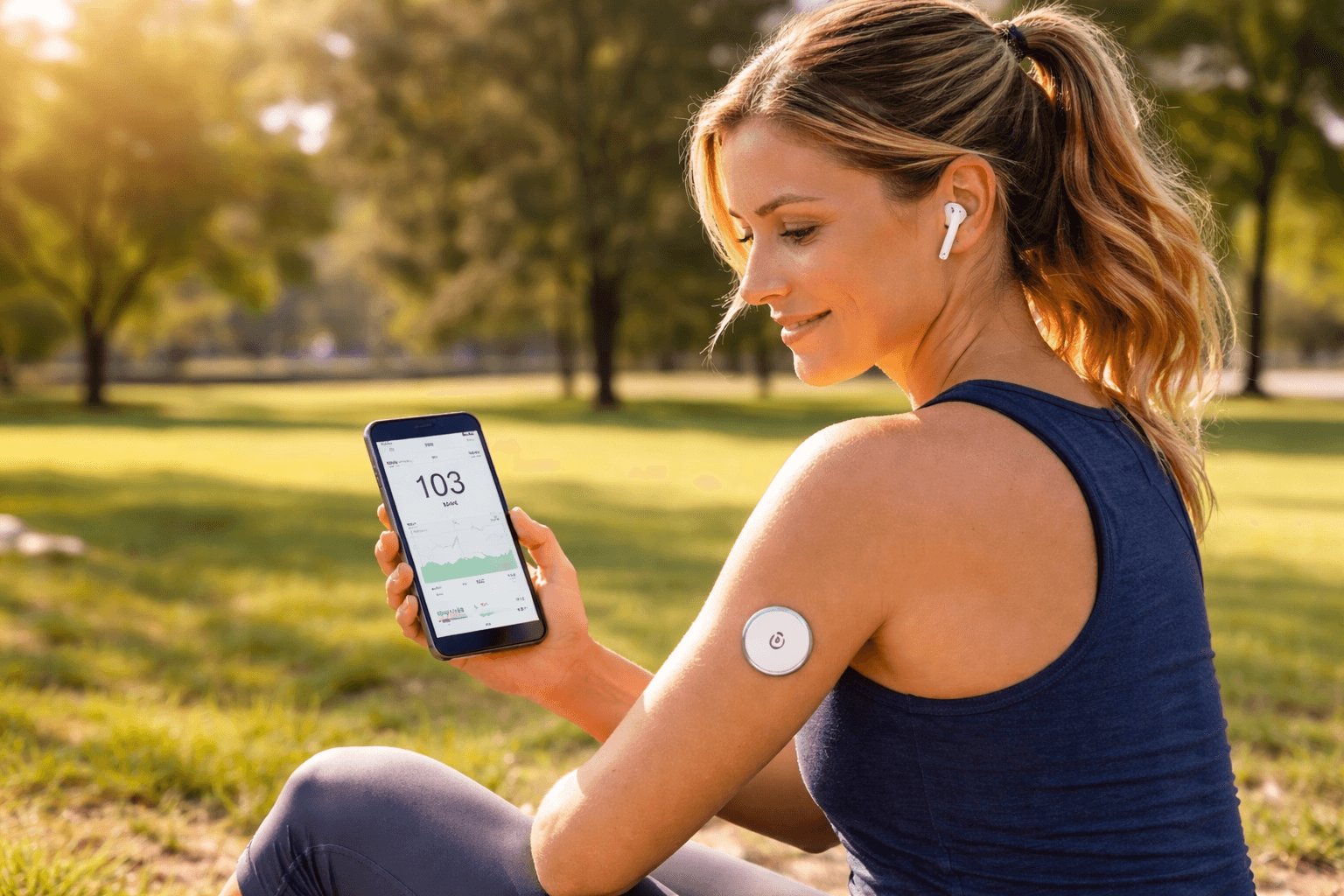
A CGM uses a tiny flexible sensor inserted just under the skin, usually on the belly or the upper arm. That sensor sits in the fluid between your cells (called interstitial fluid) and measures the sugar there every one to fifteen minutes. It sends that data wirelessly to a receiver, a smartphone, or even a smartwatch. You get numbers, charts, arrows showing which direction your sugar is heading, and alerts when things go too high or too low.
🔍 The Big Picture
A CGM is NOT a replacement for your doctor. It is a powerful tool that gives you and your healthcare team incredibly detailed information to make better treatment decisions. Think of it as the world's most detailed diary of your blood sugar, written automatically, 24 hours a day.
How Does It Actually Work?
Here is the science, explained simply. Under your skin, in the fluid that surrounds your cells, there is glucose. Your CGM sensor contains a tiny wire coated with a special chemical called an enzyme. When glucose touches this enzyme, a small electrical signal is produced. The stronger the signal, the higher your sugar. The device measures that signal continuously and converts it into a glucose reading.
Most modern CGM systems are factory-calibrated, which means they come pre-set and you do not have to poke your finger to check them. Some older systems still require occasional fingerstick checks to keep the reading accurate. The sensor transmits data wirelessly using Bluetooth to your phone or a dedicated receiver.
One important thing to know: interstitial glucose lags about four minutes behind blood glucose on average. During times when your sugar is rising or falling quickly, the lag can be longer. This is why CGM readings and fingerstick readings can differ slightly, especially right after eating or during exercise. The trend arrows on a CGM are just as important as the number itself.
↕️ What Those Arrows Mean
Arrow straight up: Sugar is rising faster than 3 mg/dL per minute. Act fast.
Arrow diagonally up: Sugar is rising 2 to 3 mg/dL per minute.
Arrow sideways: Sugar is stable. You are cruising.
Arrow diagonally down: Sugar is dropping 2 to 3 mg/dL per minute.
Arrow straight down: Sugar is dropping faster than 3 mg/dL per minute. Treat now.
The Three Main Types of CGM
Type 1: Real-Time CGM (rt-CGM)
This is the gold standard for most people with diabetes. Real-time CGM sends your glucose reading to your device every one to five minutes, automatically, without you having to do anything. You can see your number, your trend arrow, and your history at any time. You can set alarms that buzz or beep when your sugar goes too high or too low. This is especially valuable at night when you might not feel a low sugar happening.
Examples include the Dexcom G6 and G7, the Medtronic Guardian, and the Eversense 365, which is a sensor implanted under the skin that lasts up to a full year without needing to be replaced.
Type 2: Intermittently Scanned CGM (isCGM / Flash CGM)
Think of this as a CGM that records everything but only shows you the data when you ask. The sensor records your glucose continuously, but you have to wave your phone or a reader over it to see the number. The most famous example is the Abbott FreeStyle Libre family of devices.
Older versions of the FreeStyle Libre had no alarms, so if your sugar dropped dangerously at night, the device would not wake you up. The newer versions, like the FreeStyle Libre 2 Plus and Libre 3, added optional alarms. These newer models also send data automatically, more like a traditional real-time CGM. Sensor life is typically 14 days.
Type 3: Over-the-Counter CGM (OTC-CGM)
In a recent development approved by the FDA, some CGM devices are now available without a prescription. These are designed for people without diabetes, or people with prediabetes, who want to understand how their body responds to food, exercise, and stress. They do not have alarms and are not meant to guide insulin doses. They are purely for awareness and lifestyle learning.
🏥 Professional CGM: The Doctor-Owned Version
Healthcare providers can apply a CGM sensor in their office for you to wear for 7 to 14 days. You return the device, and the doctor downloads all the data. This 'professional CGM' is useful when personal CGM is not affordable, when your doctor wants to see your sugar patterns before starting you on a personal device, or when occasional monitoring is enough. It can run in 'blinded' mode where you cannot see your own data during the wear, which gives the most honest picture of your daily patterns.
The Best CGM Devices: A Head-to-Head Comparison
Multiple studies have compared the most popular CGM systems. Here is what the science says about the major players.
Device | Sensor Life | Warm-Up Time | Calibration | Alarms | Rx Needed? |
|---|---|---|---|---|---|
Dexcom G7 | 10 days | 30 minutes | Factory (none needed) | Yes, fully customizable | Yes |
Dexcom G6 | 10 days | 2 hours | Factory (none needed) | Yes, fully customizable | Yes |
FreeStyle Libre 3 | 15 days | 1 hour | Factory (none needed) | Optional alarms | Yes |
FreeStyle Libre 2 | 14 days | 1 hour | Factory (none needed) | Optional alarms | Yes |
Medtronic Simplera | 7 days | 1 hour | Factory (none needed) | Yes, pump-integrated | Yes |
Medtronic Guardian 3 | 7 days | 2 hours | 2+ fingersticks/day | Yes, pump-integrated | Yes |
Eversense 365 | 365 days | 24 hours | 2+ fingersticks/day | Yes, vibration too | Yes |
OTC Devices (e.g., Stelo, Lingo) | 14 days | 1 hour | Factory (none needed) | None | No |
What Does the Science Say About Accuracy?
Accuracy in CGM is measured by something called Mean Absolute Relative Difference, or MARD. Think of it as the average percentage that the CGM reading differs from a true lab blood sugar. Lower is better.
Dexcom G6 (abdomen): MARD of 9.9 percent
Dexcom G7 (abdomen): MARD of 9.1 percent
Dexcom G7 (upper arm): MARD of 8.2 percent
FreeStyle Libre systems: MARD between 9.5 and 17.2 percent, depending on the model and activity level
Medtronic Guardian Sensor 3: MARD of 11.6 to 13.9 percent, and slightly less accurate in the normal glucose range compared to Dexcom G7 and FreeStyle Libre 3
A critical 2025 study compared the FreeStyle Libre 3, Dexcom G7, and Medtronic Simplera worn at the same time on 23 people. The three devices gave different readings that would have led to different treatment decisions. The Libre 3 and Dexcom G7 agreed most closely with each other, while the Simplera tended to read lower on average. This matters because switching between CGM systems can make your sugar look different without anything actually changing.
🎯 Bottom Line on Devices
The Dexcom G7 wins for ease of use (fastest warm-up, smallest size) and solid accuracy. The FreeStyle Libre 3 is a strong competitor with the longest sensor life at 15 days and no required calibration. The Eversense 365 is the best choice if you cannot tolerate adhesive on your skin. The Medtronic systems shine if you are already using a Medtronic insulin pump.
Who Benefits Most From CGM?
Type 1 Diabetes: The Highest Evidence
If you have Type 1 diabetes, CGM is not just a nice gadget. The American Diabetes Association gives it their highest rating, Grade A evidence, meaning multiple high-quality studies prove it works. CGM is now considered the standard of care for nearly all adults and all children and adolescents with Type 1 diabetes.
Multiple clinical trials and a meta-analysis of 22 studies involving 2,188 people showed that CGM reduces the main long-term diabetes measure, the HbA1c, by about 0.23 to 0.4 percent on average. In people whose starting HbA1c was above 8 percent (very high), the improvement was even greater. CGM also reduces time spent in dangerous low sugar episodes and increases time in the healthy target range.
The DIAMOND trial, a landmark clinical study published in JAMA, specifically showed these benefits in Type 1 patients using insulin injections rather than a pump, proving CGM helps regardless of how insulin is delivered.
Type 2 Diabetes: Solid and Growing Evidence
For Type 2 diabetes, the evidence is rated Grade B (good, but not quite as overwhelming as Type 1). A 2024 meta-analysis of 12 randomized controlled trials involving 1,248 participants found that CGM reduced HbA1c by 0.31 percent compared to traditional fingerstick testing. Interestingly, this benefit was similar whether people were taking insulin or only using oral medications.
CGM also increased time in the healthy target range by about 6.36 percent and reduced time in the low range by 0.66 percent in Type 2 patients. These are meaningful improvements in day-to-day sugar control.
CGM is particularly recommended for people with Type 2 diabetes who use multiple daily insulin injections, use basal insulin and are not meeting their glucose targets, are at risk for hypoglycemia, or take medications like sulfonylureas that can cause low blood sugar.
Pregnancy
Pregnant people with Type 1 diabetes should use CGM. Evidence shows it improves time in the healthy range, reduces HbA1c, and leads to better outcomes for the baby. There is emerging evidence of benefit in other types of diabetes during pregnancy as well. The ADA gives this Grade B evidence.
Older Adults
CGM is especially helpful for older adults because hypoglycemia (low blood sugar) is extremely dangerous in this population. Low sugar can cause falls, confusion, heart problems, and emergencies. A study found that 75 percent of older adults with HbA1c above 8 percent had unrecognized episodes of glucose below 60 mg/dL, and 93 percent of these hypoglycemic episodes had no symptoms. The person felt completely normal while their sugar was dangerously low.
For older adults, glucose targets are adjusted. A healthy older adult without many other conditions aims for over 70 percent time in range. Those with complex health needs aim for at least 50 percent time in range, with a priority on avoiding lows.
People with Hypoglycemia Unawareness
Some people lose the ability to feel when their blood sugar drops dangerously low. This is called hypoglycemia unawareness. For these individuals, real-time CGM with alarms is critically important. The device can detect the drop and alert them before they lose consciousness or become unable to help themselves. Real-time CGM with alerts is the preferred choice for this group.
Children and Adolescents
CGM is recommended for all children and adolescents with Type 1 diabetes. Studies show impressive adherence: in one trial, 97 percent of older adults wore their CGM at least six days per week, and similar adherence has been seen in motivated youth with proper family support.
Understanding the Numbers: CGM Metrics Explained
A CGM produces a standardized report called an Ambulatory Glucose Profile, or AGP. It shows 14 days of glucose data in a way that helps you and your doctor see patterns at a glance. Here are the key numbers to understand.
Metric | Target | What It Means |
|---|---|---|
Time in Range (TIR) | More than 70% (about 17 hours/day) | Sugar between 70 and 180 mg/dL. This is your sweet spot. |
Time Below Range (TBR) | Less than 4% (under 1 hour/day) | Sugar below 70 mg/dL. Too low is dangerous. |
Serious Low | Less than 1% (under 15 minutes/day) | Sugar below 54 mg/dL. This is clinically significant. |
Time Above Range (TAR) | Less than 25% | Sugar above 180 mg/dL. Too high causes long-term damage. |
Serious High | Less than 5% | Sugar above 250 mg/dL. Requires prompt attention. |
Glucose Management Indicator (GMI) | Compare to lab HbA1c | Estimates your 3-month average sugar from CGM data. |
Coefficient of Variation (CV) | 36% or less | Measures how wild your sugar swings are. Higher means more unstable. |
A helpful way to think about it: 70 percent time in range roughly equals an HbA1c of 7 percent, which is the main goal for most adults with diabetes. Every 5 percent improvement in time in range is considered clinically meaningful.
The Coefficient of Variation (CV) above 36 percent signals that your sugar is swinging too wildly, which is associated with increased risk of both dangerous lows and dangerous highs, even if your average looks okay. A good CGM user pays attention to both the average AND the variability.
How to Read Your AGP Report: A Step-by-Step Guide
Step 1: Look at time in range first. Is it above 70 percent?
Step 2: Check time below range. Any sugar below 70 mg/dL, even brief episodes, must be taken seriously.
Step 3: Review the AGP curve. The colored bands show your typical glucose pattern by time of day. Yellow zones are high, red zones are low.
Step 4: Look for patterns. Does your sugar spike after dinner every night? Does it drop in the early morning hours? These patterns guide your next steps.
Step 5: Check the CV. If it is above 36 percent, variability needs to be addressed.
Step 6: Compare your GMI to your lab HbA1c. If they are far apart, discuss with your doctor.
How to Use a CGM: A Practical Guide
Getting Started
You need a prescription for all personal CGM devices except the new over-the-counter options. Your doctor, endocrinologist, or even your primary care provider can prescribe one. Before you get it, check with your insurance to understand what is covered and whether you need prior authorization.
Most people can learn to insert a sensor from online tutorials provided by the manufacturer. Formal diabetes education is recommended for anyone starting CGM, especially for learning how to interpret the data and make decisions based on it.
Inserting Your Sensor Correctly
Clean the skin at the chosen site with an alcohol wipe and let it dry completely
Common sites: abdomen for most devices, upper arm for Dexcom G7 and FreeStyle Libre systems
Rotate your sites with each new sensor to let the skin recover and prevent irritation
Consider using a barrier film (a thin protective coating sold at pharmacies) if your skin is sensitive
Use adhesive over-patches if your sensors tend to fall off before the sensor life is complete
Use an adhesive remover product when taking the sensor off to avoid tearing your skin
Daily Use Tips
Wear your sensor continuously. Studies show daily use is strongly linked to better HbA1c outcomes. More wear time equals more benefit.
Check your number before meals, before bed, before driving, and before exercising
Pay attention to trend arrows, not just the number. A reading of 120 with a straight-down arrow is very different from 120 with a flat arrow.
Share your data with family members or caregivers if they want to watch for emergencies
Do a fingerstick blood test when your CGM reading does not match how you feel, when sugar is changing rapidly, or before making a major treatment decision like a large insulin dose
Reviewing Your Data
Weekly: Pull up your AGP report and look for patterns. Most CGM apps do this automatically.
Before doctor appointments: Upload your data so your healthcare team can review it with you
Target sensor wear time of at least 70 percent of days for a valid and useful assessment
⭐ The One Rule That Matters Most
Daily use is everything. A CGM sitting in a drawer helps no one. Research consistently shows that the more days per week you wear your CGM, the better your sugar control. Even one extra day per week of wear can make a measurable difference.
Setting Your Alerts: Not Too Loud, Not Too Quiet
One of the most common reasons people stop using their CGM is alarm fatigue. That is when the device buzzes and beeps so often that you start ignoring everything, including the alarms that actually matter. Here is how to set alerts that help without driving you crazy.
Low alert: Most doctors recommend setting this between 70 and 80 mg/dL. Some people prefer 70, others prefer 75. Talk to your doctor.
Urgent low alert: Keep this at 55 mg/dL. This one should always be on.
High alert: Set based on your personal goals. For most adults aiming for HbA1c under 7 percent, 180 to 200 mg/dL is a common choice.
Rate-of-change alerts: Some devices let you set alarms when sugar is rising or falling faster than a certain speed. Use these if you often miss dangerous rapid changes.
Do not set every alert to its most sensitive setting. Customize based on your lifestyle and what actions you can actually take.
Who Does NOT Benefit From CGM (and Why)
CGM is powerful, but it is not for everyone. There are specific situations where the science shows little benefit, or where the device may cause more harm than good.
Healthy People Without Diabetes and Without Risk Factors
If you do not have diabetes, prediabetes, or a family history of diabetes, you do not have a medical indication for CGM. A landmark JAMA Internal Medicine paper from 2025 specifically warned against overuse. The concern is that completely normal glucose fluctuations in healthy people can look alarming on a CGM display, leading to unnecessary anxiety, unnecessary doctor visits, and unnecessary dietary restrictions.
Healthy people naturally have glucose spikes after meals. These are completely normal and not dangerous. Seeing a temporary reading of 155 mg/dL after a big meal and panicking about it is a waste of energy and potentially harmful to your relationship with food. The CGM cannot distinguish between a healthy post-meal spike and the beginning of diabetes in a healthy person without proper clinical context.
People Who Cannot Act on the Data
CGM requires that you or your healthcare team be able to respond to what the data shows. If someone has severe cognitive impairment and no caregiver to monitor the alerts, or if they do not have access to a doctor who can adjust their medications based on CGM patterns, the device loses much of its value. The data is only as useful as the response to it.
People with Severe Unmanaged Psychological Distress
For some people, especially adolescents, the constant awareness of glucose numbers creates serious anxiety. If every slightly elevated number causes a panic attack, or if the device is causing obsessive checking behavior, the psychological harm may outweigh the clinical benefit. Mental health support should be addressed alongside CGM use for these individuals. Discontinuation rates run between 3 and 11 percent overall, with some populations showing much higher rates.
Hospitalized and Critically Ill Patients
CGM is not approved for use in hospitalized patients or critically ill patients. In intensive care units, the accuracy of CGM can be affected by medications, poor circulation, and other factors. In these settings, frequent fingerstick testing or direct blood glucose measurement remains the standard.
People with Interfering Substances
Certain medications reduce CGM accuracy. The most important one is acetaminophen (the active ingredient in Tylenol and hundreds of other products). High doses of acetaminophen can cause false high readings on some CGM systems, though the extent of this interference varies by device. Other substances that can interfere include high-dose vitamin C, hydroxyurea (a cancer medication), mannitol, and sorbitol.
⚠️ Always Tell Your Doctor
Always tell your doctor about every medication and supplement you take before starting CGM. Some medications can cause your CGM to give dangerously inaccurate readings. Never make a major treatment decision based on a single CGM reading that does not match how you feel.
Side Effects and Adverse Effects of CGM
CGM is generally very safe, but it is not without downsides. Here is an honest look at what can go wrong.
Skin Reactions: The Most Common Problem
Up to 28 percent of CGM users experience some form of skin reaction at the sensor site. Most are mild irritant contact dermatitis, basically a rash from the adhesive or the skin not being able to breathe under the patch. About 3.8 percent of FreeStyle Libre users develop a true allergic contact dermatitis from a chemical in the adhesive called isobornyl acrylate (IBOA).
In a study of children and adolescents, a truly concerning 38.1 percent of those who developed contact dermatitis had to stop using their CGM or insulin pump because of it. Only about half achieved full resolution of their skin reaction even with treatment.
Prevention Strategies (Evidence-Based)
Apply a skin barrier film before sensor insertion
Rotate insertion sites religiously with every new sensor
Consider omitting alcohol wipe disinfection before insertion (studies show this does not increase infection risk and may reduce skin irritation)
Apply lipid cream regularly to sensor sites
A structured skin care program using these steps reduced wound development by 71 percent in a controlled study
Treatment When Skin Reactions Occur
Irritant contact dermatitis (rash from adhesive, not true allergy): topical corticosteroid creams are first-line treatment
Occlusive hydrocolloid patches worn for 3 days showed 21 percent complete resolution in studies versus 0 percent in untreated controls
If infection is suspected: combination of topical corticosteroid and topical antibiotic
True allergic dermatitis to isobornyl acrylate: switch to a different device brand, consider patch testing to identify the specific allergen
For severe cases that cannot tolerate any adhesive: the Eversense implantable sensor completely avoids the adhesive problem
Resources: The PANTHER Program (www.pantherprogram.org/skin-solutions) offers skin care guides in English and Spanish
Psychosocial Burden: The Mental Side
Living with a device attached to your body 24 hours a day is not trivial. Common psychological challenges include the constant reminder of having diabetes, information overload from 288 glucose readings per day, anxiety from frequent alerts, concern about others seeing the device, and disrupted sleep from overnight alarms.
These are real and valid concerns. If CGM is causing more stress than it is relieving, talk honestly with your healthcare provider. The solution might be adjusting alert settings, taking a planned break, or adding mental health support.
What Clinical Trials Found About Adverse Events
A 2024 Cochrane-level systematic review found that real-time CGM was associated with a small but statistically significant increase in adverse events compared to standard blood glucose monitoring (relative risk 1.22). Intermittently scanned CGM showed a similar trend. The vast majority of these adverse events were skin reactions. Critically, CGM did NOT increase the risk of severe hypoglycemia (dangerously low blood sugar) in most studies. In fact, CGM reduces it.
A Detailed Protocol for Keeping Your Skin Happy
For people who want to use CGM long-term, skin care is not optional. Here is a science-backed routine.
Step | What to Do and Why |
|---|---|
Before Insertion | Wash the area with mild soap and water. Dry completely. Skip the alcohol wipe if your skin is sensitive (studies show this is safe). Apply a thin layer of barrier film (like Skin Tac, Tegaderm Film, or Cavilon) and let it dry for 30 seconds. |
Choosing the Spot | Pick a site that moves less during daily activity. For arm sensors, the outer upper arm (tricep area) is recommended. Avoid areas with scars, tattoos, or skin folds. Mark your last three sites and avoid them. |
During Wear | If the sensor starts peeling, secure the edges with over-patches (Skin Tac wipes, Rockadex, GrifGrips). Do not use regular tape that goes directly over the sensor window. |
Sensor Removal | Never rip the sensor off. Use an oil-based adhesive remover (like Uni-Solve or Detachol). Peel slowly from one edge, working the remover under as you go. This prevents skin tears and reduces redness. |
After Removal | Apply a gentle moisturizer or the prescribed lipid cream. Give the area at least 24 to 48 hours of rest before using it again. |
When Things Go Wrong | Redness that fades within 24 hours: normal. Redness lasting more than 48 hours, itching, blistering, or raised welts: contact your doctor. These signs suggest contact dermatitis that needs treatment. |
Special Situations: CGM Across Different Populations
Using CGM During Exercise
Exercise causes glucose to change rapidly and unpredictably, which is exactly when CGM is most valuable AND least accurate. During intense exercise, blood flow to the sensor site changes, which can cause readings to lag further behind true blood glucose.
Check a fingerstick before high-intensity exercise to confirm your CGM reading
Use trend arrows to guide pre-exercise eating. Flat arrow at 120: probably fine to exercise. Straight-down arrow at 120: eat something first.
Aerobic exercise (running, swimming): typically lowers glucose
High-intensity interval training or weightlifting: can temporarily RAISE glucose before it drops
CGM data from exercise sessions helps you learn your personal patterns over time and adjust your nutrition strategy
Using CGM With Limited Health Literacy
Research published in the Journal of the American Pharmacists Association found that 51 percent of patients reported receiving no training or inadequate training before starting CGM. That is a serious problem. However, the solution is not to withhold CGM from people who have difficulty with health literacy. The solution is better education and support.
Studies confirm that health literacy affects CGM outcomes. But they also confirm that with the right support, people with lower health literacy can successfully use CGM and benefit from it. Pharmacist-led CGM education programs have shown significant HbA1c reductions and improved engagement in underserved communities.
Request a hands-on demonstration, not just a pamphlet
Ask for a follow-up appointment within two weeks of starting CGM to review your data together
Community health workers and pharmacists are excellent resources for ongoing support
Ask for materials in your preferred language
Focus first on just two or three numbers: current reading, trend arrow, and time in range
CGM in Prediabetes
People with prediabetes are a rapidly growing population for CGM. A Japanese study published in 2025 found that using intermittently scanned CGM combined with lifestyle modification significantly increased time in range and improved metabolic awareness in prediabetes patients compared to lifestyle changes alone.
Early research suggests that CGM can detect abnormal glucose patterns, called glucotypes, that predict higher diabetes risk before HbA1c becomes elevated. This could make CGM a powerful early intervention tool. However, this is an emerging area and the science is still developing.
The Cost Reality: What Does CGM Actually Cost?
Without insurance, CGM is expensive. A reader device costs about $75 upfront, and sensors run roughly $135 per month. Over a year, that is over $1,600 just for the consumables. For many people, this is a significant barrier.
Medicare coverage requires very specific criteria: at least 4 daily fingerstick tests AND either at least 3 daily insulin injections or insulin pump use
Commercial insurance coverage varies widely. Many plans cover CGM well for Type 1 diabetes but have stricter criteria for Type 2 diabetes, especially for patients not using intensive insulin therapy
A 2023 policy analysis paper argued that expanded coverage for Type 2 diabetes patients on non-intensive therapies is justified by the evidence
Manufacturer patient assistance programs exist for most major CGM brands. Ask your doctor or pharmacist about these options.
The cost-effectiveness argument is strong for insulin users: CGM reduces emergency department visits and hospitalizations, which cost far more than the device itself
💰 Do Not Give Up on Cost
If cost is a barrier, specifically ask your provider or pharmacist about manufacturer programs, patient assistance programs, and whether a prescription for a different device might have better coverage under your plan. Some manufacturers offer free starter kits. Insurance coverage is changing rapidly as evidence mounts.
CGM for Biohacking and Wellness: What Does Science Really Say?
You may have seen influencers and athletes wearing CGMs and claiming amazing results from tracking their glucose. Let us separate what the science actually supports from what is hype.
What Science Supports
Learning how your body responds to specific foods: CGM provides real-time feedback on how meals affect your glucose, which can motivate healthier eating choices
Exercise optimization for athletes and fitness enthusiasts: understanding glucose dynamics before, during, and after workouts helps optimize nutrition strategy
Prediabetes management: strong emerging evidence that CGM combined with lifestyle changes improves glucose control in prediabetes
Stress identification: CGM can reveal glucose spikes associated with stress hormones, helping identify patterns tied to emotional or physical stress
Sleep quality awareness: poor sleep raises blood sugar the next day. CGM can show this connection clearly, motivating better sleep habits
What Science Does NOT Yet Support
CGM is NOT proven to improve long-term health outcomes in healthy people without diabetes or prediabetes
Normal glucose spikes in healthy people (like going to 155 after a pizza) are NOT medically dangerous and should NOT cause alarm
Using CGM data to make extreme dietary restrictions in healthy people is NOT evidence-based and may cause more harm than good
There is no established 'optimal' glucose target for healthy people. What is normal in healthy individuals varies widely.
⚠️ A Note of Caution for Wellness CGM
If you are healthy and want to try an OTC-CGM to learn about your body, that is a reasonable choice. But please do this with curiosity rather than anxiety. Work with a healthcare provider to interpret what you see. Do not make dramatic dietary changes or panic about readings that are completely normal in healthy people. The data needs clinical context to be meaningful.
When to Call Your Doctor or Seek Emergency Care
🚨 Call 911 or Go to the Emergency Room
Sugar below 54 mg/dL and you cannot treat yourself, or you have lost consciousness
Nausea, vomiting, stomach pain, or fruity-smelling breath together with high glucose (these are warning signs of diabetic ketoacidosis, a medical emergency)
Confusion, slurred speech, seizure, or unresponsiveness
Call Your Doctor Within 24 to 48 Hours
Sugar above 250 mg/dL for more than 2 hours despite your usual treatment
Frequent lows (below 70 mg/dL) more than twice per week
Time in range consistently below 50 percent
Your CGM and how you feel are giving completely different signals repeatedly
Skin reaction that is not improving after 48 hours
Schedule a Routine Appointment
HbA1c above your personal goal
Time below range above 4 percent
Your CGM data shows a pattern you do not understand
You are experiencing alarm fatigue and need to adjust your alert settings
You want to review and adjust your medications based on CGM patterns
The Pros and Cons: An Honest Summary
✅ Advantages | ⚠️ Disadvantages |
|---|---|
Reduces HbA1c by 0.3 to 0.4 percent on average | Skin reactions in up to 28 percent of users |
Reduces dangerous low blood sugar events | Expensive without insurance (over $1,600/year) |
Increases time in healthy range | Alarm fatigue from frequent alerts |
Detects silent hypoglycemia (lows with no symptoms) | Visible device affects body image for some users |
Eliminates or reduces painful daily fingersticks | 4-minute lag during rapid glucose changes |
Real-time trend arrows guide action better than single numbers | Interference from acetaminophen and other drugs |
Reduces emergency visits and hospitalizations | Does not measure below 40 or above 400 mg/dL |
Allows remote sharing with family and caregivers | Requires learning curve to interpret data correctly |
Enables telehealth monitoring by providers | 288 readings per day can be overwhelming |
Improves quality of life and reduces diabetes distress | Not approved for hospitalized or critically ill patients |
The Science: How Strong Is the Evidence?
Population | Evidence Grade | Key Finding |
|---|---|---|
Type 1 Diabetes | Grade A (Highest) | Meta-analysis of 22 studies (2,188 patients): HbA1c reduced 0.23 percent. Multiple RCTs confirm hypoglycemia reduction. Benefits persist over 2+ years. |
Type 2 Diabetes (Insulin) | Grade B (Good) | Meta-analysis of 12 RCTs (1,248 patients): HbA1c reduced 0.31 percent. Time in range increased 6.36 percent. Time below range reduced 0.66 percent. |
Type 2 Diabetes (No Insulin) | Grade B (Emerging) | Benefits similar to insulin users (0.29 percent HbA1c reduction). Evidence growing but not yet at Grade A level. |
Pregnancy (Type 1) | Grade B (Good) | Improved time in range, HbA1c, and neonatal outcomes confirmed in clinical trials. |
Older Adults | Grade B (Good) | 93 percent of hypoglycemic episodes in older adults are asymptomatic. CGM detects them. Modified targets recommended. |
Prediabetes | Grade C (Emerging) | CGM with lifestyle modification improves time in range. Long-term outcome data still developing. |
Healthy Adults | Limited Evidence | No proven long-term outcomes benefit. Risk of overdiagnosis and anxiety from normal physiologic variation. |
Where This Information Comes From
This article is based exclusively on gold-standard, scientifically validated sources. Here are the key references:
American Diabetes Association Standards of Care in Diabetes 2026 (Diabetes Care Journal, Sections 6, 7, 13, and others): The definitive annual clinical guidelines
ADA/EASD Consensus Report on Type 1 Diabetes Management (Diabetes Care, 2021): International expert consensus
JAMA: Type 1 Diabetes review (Jacobsen and Schatz, 2026)
JAMA: Continuous Glucose Monitoring review (Bergenstal, Martens, Beck, 2025)
JAMA: CGM in Type 2 with basal insulin trial (Martens et al., 2021)
JAMA: DIAMOND Trial, CGM in Type 1 with injections (Beck et al., 2017)
JAMA Internal Medicine: Avoiding CGM overuse (Barton et al., 2025)
Lancet: Advances in Type 1 diabetes technology (Beck, Bergenstal, Laffel, Pickup, 2019)
Diabetologia: Meta-analysis of CGM in Type 1 (Teo et al., 2022)
Diabetologia: Meta-analysis of CGM in Type 2 (Jancev et al., 2024)
Diabetes Care: International CGM metrics consensus (Battelino et al., 2023)
Diabetes Care: CGM skin care program RCT (Berg et al., 2023)
Diabetes Care: Comparative CGM systems accuracy study (Freckmann et al., 2025)
Cochrane Database: CGM in Type 2 diabetes systematic review (Kataoka et al., 2025)
Journal of Diabetes Science and Technology: Fifth through seventh generation CGM comparison (Welsh et al., 2024)
Journal of Diabetes Science and Technology: CGM in healthy adults (Holzer, Bloch, Brinkmann, 2022)
Journal of Clinical Endocrinology and Metabolism: Endocrine Society hypoglycemia guideline (McCall et al., 2023)
🎯 The Bottom Line
CGM is one of the most powerful tools in modern diabetes management. It does not cure diabetes, but it gives people with diabetes and their healthcare teams the information they need to dramatically improve control, prevent emergencies, and live fuller lives.
Like any powerful tool, it works best in the right hands, for the right person, with the right support. Used wisely, CGM changes lives.
© 2025 Medome.ai. All rights reserved.
This article is intended for educational purposes only and does not constitute medical advice. Always consult a qualified healthcare professional before making any changes to your diabetes management plan.
Content referenced from American Diabetes Association, JAMA Network, NEJM, Lancet, and Cochrane Reviews under applicable licensing terms.
HSA/FSA Eligible
Doctors Are Human.
That's Why There's Medome.
Start your free trial today. No credit card required.
Start Your Free Trial
Join thousands protecting their health with AI that never forgets

Critical details get missed when your health information is scattered. Medome connects the dots across your complete record.
Start Your Free Trial
Get In Touch
Email: service@medome.ai
Phone: (617) 319-6434
This is Dr. Steven Charlap's cell. Please text him first, explaining who you are and how he can help you. Use WhatsApp outside the US.
Hours: Mon-Fri 9:00AM - 9:00PM ET