Healthcare
Your Doctor May Have 20 Minutes. Your Health Has 365 Days.
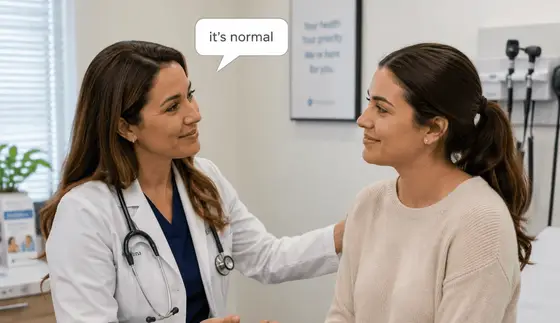
Having a regular primary care doctor may help you live longer. But just having a doctor isn't enough. You need to help your doctor help you.
Oct 8, 2026 · 7 min read

Here's a surprisingly powerful prescription for better health:
Find a good primary care doctor. See them regularly. And show up prepared.
No miracle pill required.
New research adds to years of evidence suggesting that people with regular access to primary care tend to live longer and have better health outcomes.
One recent study of adults 65 and older found that people who regularly saw a primary care doctor had a 16% lower risk of dying during the following 15 years.
Their median survival was also at least two years longer than people without a primary care doctor.
That doesn't prove that simply getting a family doctor adds two years to your life. People who have regular doctors may differ from those who don't in many other ways.
But this study isn't standing alone.
Research has repeatedly linked greater access to primary care with better health outcomes.
So why can one doctor make such a difference?
Because good primary care isn't just about treating you when you're sick.
It's about trying to keep you from getting sick in the first place.
Your doctor is supposed to be your medical quarterback.
Think about everything happening to your body over the course of a year.
Your blood pressure changes.
Your weight changes.
You start a medication.
Another doctor changes it.
A blood test comes back slightly abnormal.
Your knee starts hurting.
You're sleeping poorly.
Your cholesterol creeps upward.
You develop heartburn.
You forget that your father had colon cancer at 52.
Then you show up for your annual physical and have approximately enough time to discuss half of it.
Welcome to American medicine.
A good primary care doctor is supposed to connect those dots.
The article identifies four particularly important jobs.
1. Prevent problems before they happen.
Your primary care doctor should be thinking about things you may not be thinking about at all.
Vaccinations. Blood pressure. Cholesterol. Diabetes. Cancer screening. Smoking. Weight. Exercise. Family history.
One analysis cited in the report found that 96% of adults with a usual source of primary care received preventive services for chronic disease, compared with 68% of people without regular primary care.
That's a big difference.
High blood pressure is a perfect example.
It usually doesn't hurt.
It doesn't announce itself.
It doesn't send you a text saying:
"Hi. It's your blood pressure. I'm quietly damaging your arteries."
You have to look for it.
That's what prevention is supposed to do.
2. Catch small problems before they become big ones.
A little burning when you urinate may be a simple urinary tract infection.
Ignore it long enough and it could become a kidney infection.
Slightly uncontrolled blood pressure today could contribute to a heart attack or stroke tomorrow.
A cough might be nothing.
Occasionally, it isn't.
The original article describes a woman who had shortness of breath and a recurring cough for five months. She went to multiple urgent care clinics.
Eventually, a family physician ordered a CT scan.
It revealed a mass in her chest.
That's one of the problems with fragmented medical care.
Every visit can become a snapshot.
What you really need is a movie.
Someone needs to know what happened last month, what happened last year, what medications failed, what tests were abnormal, and whether today's seemingly minor complaint fits into a much larger pattern.
3. Manage chronic disease before it manages you.
Diabetes. High blood pressure. High cholesterol. Obesity. Heart disease. Asthma.
These conditions rarely disappear after one office visit.
They require monitoring and adjustment over years.
Regular primary care appears to help.
According to data cited in the article, having a usual source of primary care was associated with an 11% lower likelihood of an emergency-room visit and a 20% lower likelihood of hospitalization among people with chronic disease.
That's why your primary care doctor shouldn't simply be the person you call when something hurts.
They should know your medical story.
4. Keep the pieces connected.
Modern medicine has become incredibly specialized.
You might have a cardiologist looking at your heart.
A gastroenterologist looking at your stomach.
A dermatologist looking at your skin.
An orthopedist looking at your knee.
And an urgent care doctor looking at whatever started hurting Saturday morning.
Each may do an excellent job.
But who's looking at you?
That's another critical role of primary care.
Your family doctor can help coordinate specialists, tests, medications, referrals, and follow-up so important information doesn't disappear between medical silos.
Think of your doctor as the quarterback.
The cardiologist may be a terrific wide receiver.
But somebody still needs to know the play.
Unfortunately, there's a problem.
America doesn't have enough primary care.
And even when you have a doctor, getting an appointment can be difficult.
Insurance changes. Doctors retire. Practices stop accepting certain plans. Appointments become shorter. People move. Records don't always follow them cleanly.
You go to urgent care because your doctor can't see you.
Then urgent care doesn't have your complete history.
The next doctor sees your cholesterol numbers but doesn't know you previously tried a medication and couldn't tolerate it.
That's exactly the sort of problem described by a patient in the report. When her insurance changed, new doctors could see some of her laboratory history but didn't necessarily know why earlier medications had been stopped. She had to remember and explain it herself.
And therein lies an uncomfortable truth:
You are the only person present at every medical visit you will ever have.
Doctors change. Hospitals change. Insurance changes. Electronic medical records change.
You don't.
That means patients increasingly need to become active participants in their own care.
Not their own doctors.
Their own advocates.
There's a very important difference.
How to get more from every doctor's visit
Before your next appointment, don't simply walk into the examination room and wait for the doctor to start asking questions.
Prepare.
Know:
- Why am I here?
- What symptoms have I had?
- When did they start?
- What makes them better or worse?
- What medications and supplements am I taking?
- What have I already tried?
- What important medical problems run in my family?
- What tests or screenings might I be due for?
- What has changed since my last visit?
And perhaps the most important question:
What am I forgetting to tell my doctor?
That last question is more important than it sounds.
Doctors can only reason from the information available to them.
If an important symptom, family-history detail, medication reaction, or previous test result never enters the conversation, it may never enter the doctor's reasoning.
This is one place AI may help.
This is part of the reason we developed Medome.ai.
Medome isn't intended to replace your doctor.
It's designed to help you and your doctor get more value from the time you have together.
Before a medical visit, Medome can help you work through your health history systematically rather than trying to remember everything while sitting on an examination table wearing a paper gown.
It can help organize symptoms, medications, family history, risk factors, previous records, and other relevant information.
It can help identify questions worth discussing with your doctor.
And it can help turn a scattered medical story into a more organized one.
That's important because a doctor's reasoning can only be as good as the information available.
Artificial intelligence should not become an excuse to eliminate the physician-patient relationship.
Used correctly, it may help make that relationship better.
Think of it as preparing before an important meeting.
You wouldn't walk into a major business negotiation without reviewing the facts.
Why walk into a 20-minute conversation about your health completely unprepared?
Your medical record also matters.
Keep track of your:
- Medications and doses.
- Medication allergies and reactions.
- Major diagnoses.
- Operations.
- Hospitalizations.
- Important laboratory results.
- Imaging studies.
- Vaccinations.
- Family medical history.
- And which treatments you've already tried.
This becomes increasingly important as medical care becomes more fragmented.
The original article predicts that healthcare may continue moving away from a simple "one doctor, one patient" model, with care increasingly divided among physicians, nurse practitioners, physician assistants, urgent care centers, pharmacies, and retail clinics. The challenge will be maintaining a continuous thread connecting all of that care.
Technology may ultimately help create that thread.
But until healthcare systems communicate perfectly with one another, assume that you are part of the backup system.
Don't wait until you're sick.
This may be the biggest lesson.
Medicine works best when it prevents the fire rather than simply putting it out.
Check your blood pressure. Know your cholesterol. Know your blood sugar. Get appropriate cancer screenings. Keep vaccinations current. Exercise. Don't smoke. Maintain muscle. Sleep.
And establish a relationship with a primary care professional before you desperately need one.
Because the emergency room is a wonderful place when you're having an emergency.
It's a terrible place to build a long-term healthcare strategy.
The bottom line
Having regular primary care is associated with better health and longer life.
But access alone isn't enough.
Continuity matters. Information matters. Preparation matters. Prevention matters.
And increasingly, patient participation matters.
Your doctor may see dozens of patients every week.
You have exactly one patient to worry about:
You.
So find a good primary care doctor.
Build a relationship.
Keep your medical information organized.
Prepare before appointments.
Ask questions.
Follow up.
And consider using tools like Medome.ai to help you gather and organize your health information before you walk through the doctor's door.
Technology shouldn't put more distance between doctors and patients.
The best technology should help doctors understand their patients better.
Because your doctor's appointment might last 20 minutes.
Your health has to last a lifetime.