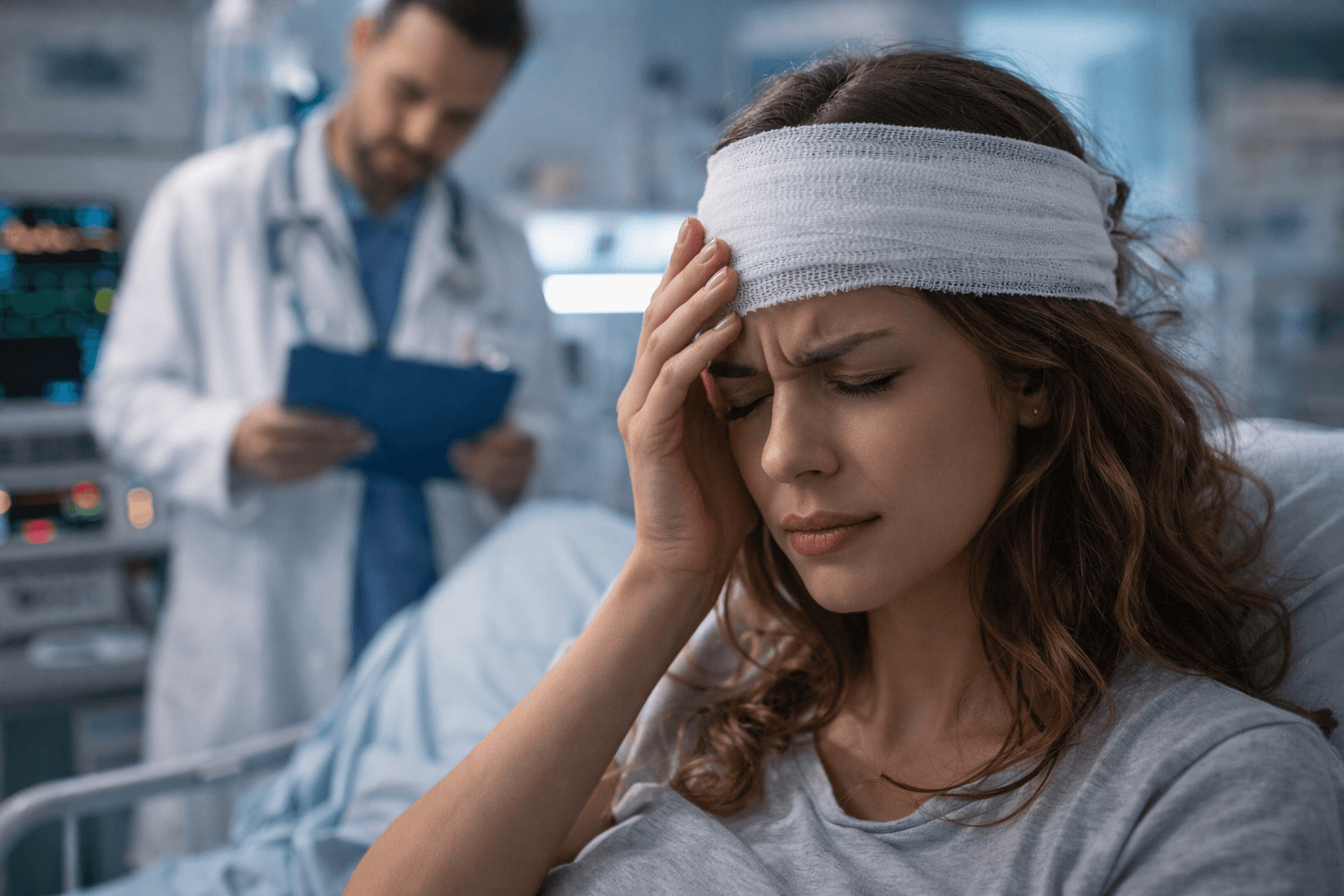
The Complete, Funny, and Surprisingly Important Guide to Concussions and Traumatic Brain Injuries
For Everyone Who Has a Brain and Would Like to Keep Using It
A note before we begin: This article is for educational purposes only. If you or someone you know has hit their head hard, please see a doctor. No article, however brilliantly written, replaces real medical care.
Introduction: Your Brain Is Kind of a Big Deal
Let us start with a simple truth: you are walking around right now with the most amazing organ in the known universe floating inside your skull. Your brain runs your thoughts, your memories, your breathing, your sense of humor, and yes, even your questionable taste in music. It does all of this while using about as much energy as a dim lightbulb. Pretty impressive.
Now here is the less fun truth: that amazing brain is also surprisingly fragile. It sits in a pool of fluid inside your skull, cushioned but not totally protected from the world. When your head gets hit hard, or when your head snaps forward and back quickly, your brain sloshes around in there and can get hurt. This is called a traumatic brain injury, or TBI for short. When the injury is milder, it is often called a concussion.
Every year, millions of people get concussions. Some happen on sports fields. Some happen on icy sidewalks. Some happen in car crashes. Some happen in living rooms when small children launch themselves off furniture like tiny wrecking balls. These injuries are extremely common, which means understanding them is extremely important.
This guide covers everything you need to know: what concussions and TBIs are, what they feel like, when you are okay and when you absolutely need help, what to eat and what to avoid, what treatments actually work, and who is most at risk for serious long-term problems. By the end, you will be smarter about brains. Which is fitting, because you are using one to read this.
Section 1: What Actually Happens When You Hit Your Head
The Difference Between a Concussion and a TBI
Doctors use the term traumatic brain injury to describe any brain damage caused by a blow, jolt, or bump to the head. A concussion is a mild form of TBI. Think of TBI as the whole family, and concussion as the youngest sibling who seems okay but is secretly struggling.
When someone hits their head, the force travels through the skull and shakes the brain. This sets off a chain reaction inside the brain cells. Potassium suddenly rushes out of cells, calcium rushes in, and the brain dumps a chemical called glutamate in large amounts. This triggers a kind of energy crisis inside the brain. The brain needs more fuel than it can get, which is a big problem because the brain really, really does not like running low on fuel.
For mild injuries like concussions, there is usually no permanent structural damage that shows up on a regular brain scan. The injury is functional and chemical. The brain looks normal on an MRI but works differently. This is actually one of the reasons concussions are tricky. You cannot see them on a scan, so some people (and some coaches and some parents) assume there is nothing really wrong. There is.
Primary and Secondary Injury
Doctors talk about two stages of brain injury. The primary injury is what happens the instant the impact occurs. This includes stretching and tearing of nerve fibers, bruising of brain tissue, and bleeding. This happens in milliseconds and cannot be undone once it starts.
The secondary injury happens afterward, over minutes, hours, and days. This is when the chemical chaos kicks in, causing inflammation, cell death, and breakdown of the barrier that protects the brain from the blood. Secondary injury is actually where a lot of the long-term damage comes from, and it is also where treatment can make the biggest difference.
How Different Brains React Differently
Not all brains are created equal when it comes to concussion. Your age matters a lot.
Kids and Teenagers
Children have higher water content in their brains, less developed insulation around nerve fibers, and brains that are still growing and changing. This makes them more vulnerable to a type of severe brain swelling that is rarely seen in adults. Teenagers, especially in sports, are at the highest risk for a dangerous situation called second impact syndrome. This happens when someone has a second concussion before fully recovering from the first. The brain swells rapidly and catastrophically. This is one of the main reasons why return-to-play protocols for young athletes are so strict.
Adults
Adult brains are more fully developed but not immune. Motor vehicle crashes, falls, sports injuries, and violence are the leading causes in this age group. Alcohol is involved in roughly half of all TBI cases in adults, which is a sobering statistic in every sense of the word.
Older Adults
Falls cause more than 78 percent of TBIs in older adults. The aging brain experiences more shrinkage over time, which actually creates more room inside the skull. This sounds like a good thing but it is not: the blood vessels connecting the brain to the skull become stretched, making them easier to tear and causing a type of dangerous bleeding called a subdural hematoma. Older adults who take blood thinners are at especially high risk because their blood cannot clot properly after an injury. A seemingly minor bump to the head can cause serious internal bleeding in an elderly person on blood thinners, which is why any head injury in this group needs immediate medical attention.
Section 2: Symptoms — What Does a Concussion Feel Like?
Concussion symptoms fall into four main groups. Knowing them could save your life, or at least save you from months of misery by getting help sooner.
The Four Main Symptom Groups
Symptom Group | Common Symptoms |
|---|---|
Physical (Somatic) | Headache, dizziness, nausea, sensitivity to light, sensitivity to noise, blurry vision, feeling foggy or groggy |
Thinking (Cognitive) | Confusion, memory problems, difficulty concentrating, slow thinking, feeling like you are in a dream |
Emotional (Affective) | Irritability, sadness, anxiety, mood swings, feeling overwhelmed by small things |
Sleep Related | Sleeping too much, sleeping too little, trouble falling asleep, feeling exhausted even after sleeping |
Most people with a concussion feel better within days to a few weeks. But a significant number — possibly up to half of all concussion patients — develop something called post-concussion syndrome, or PCS. This is when symptoms drag on for months or longer. Research published in JAMA Network Open found that the symptoms most likely to persist are difficulty concentrating, emotional symptoms like anxiety and sadness, and pre-existing conditions like depression or sleep disorders.
Symptoms in Different Age Groups
Children, especially adolescents, are most likely to develop severe headaches with migraine features after a concussion. Female teenagers and those who had migraines before their injury are at higher risk for a longer recovery.
Older adults often do not present with the classic concussion symptoms. Instead, they may show confusion, unusual behavior, or a gradual change in mental status. This can be mistaken for other conditions, which is why any significant head injury in an older person deserves a medical evaluation, full stop.
🚨 Red Flag Symptoms: Call Emergency Services Now
The following symptoms require immediate emergency medical care. Do not wait. Do not Google it. Call emergency services right away.
Headache that keeps getting worse and worse
Repeated vomiting
Seizures or convulsions
One pupil larger than the other
Slurred speech
Weakness or numbness in arms or legs
Increasing confusion or bizarre behavior
Cannot be woken up or is extremely difficult to rouse
Loss of consciousness that lasts more than a moment
These symptoms could indicate a dangerous bleed inside the skull. Time is critical. Every minute of delay increases the risk of permanent damage or death.
Section 3: When Are You Okay and When Are You Not?
The Initial Medical Evaluation
When someone with a head injury shows up at an emergency room, doctors use specific tools to decide who needs a CT scan. CT scans use radiation, so doctors do not want to give them to everyone unnecessarily.
For adults, doctors use guidelines like the Canadian CT Head Rule and the New Orleans Criteria. These look at factors like whether the person lost consciousness, whether they have amnesia, whether they vomited, whether they are 65 or older, and whether they are on blood thinners. The more of these risk factors a person has, the more likely they need a scan.
For children, doctors use the PECARN criteria, which looks at altered mental status, scalp hematoma in certain locations, loss of consciousness, severe mechanism of injury, and signs of skull fracture. Children under two are evaluated especially carefully.
Who Is Okay to Go Home?
Most people with a mild concussion can go home to recover, as long as they have a responsible adult with them who can watch for worsening symptoms and there are no red flag signs present. Going home does not mean everything is fine and you can get back to normal activities immediately. It means you are stable enough to recover in a comfortable environment.
Who Should Not Go Home Right Away?
Risk Factor | Why It Matters |
|---|---|
Age 65 or older | Higher risk of slow internal bleeding even after minor impact |
Taking blood thinners (warfarin, aspirin, newer anticoagulants) | Blood cannot clot normally; even a small bleed can expand rapidly |
Two or more episodes of vomiting | Suggests increased pressure inside the skull |
Amnesia lasting more than 30 minutes | Indicates more significant injury to memory circuits |
Previous TBIs or concussions | Each injury increases vulnerability to the next |
GCS score below 15 | Means the person is not fully alert and oriented |
Signs of skull fracture | Bone damage significantly increases risk of serious injury |
Section 4: The First 48 Hours After a Concussion
Rest: The Old Advice vs. The New Advice
For decades, the standard advice for concussion was simple: go home, sit in a dark room, do absolutely nothing, and wait to get better. This advice, it turns out, was wrong in a very important way.
Yes, the first 24 to 48 hours do call for relative rest. This means no sports, no heavy exercise, no stressful mental tasks, and no staring at screens all day. But complete rest beyond 48 hours actually makes things worse. It can make symptoms last longer and lead to anxiety, depression, and a whole new set of problems. Think of it this way: if you broke your leg, your doctor would not tell you to lie completely still forever. You would rest, then slowly start moving again. The same principle applies to the brain.
Early Light Activity Is Your Friend
Research now strongly supports starting light activity within 24 to 72 hours of injury, as long as it does not more than mildly worsen symptoms. A mild and temporary increase in symptoms — defined as no more than 1 or 2 points on a 10-point scale — is acceptable. If activity makes symptoms significantly worse, stop and rest.
Good early activities include gentle walking, light stretching, and calm household tasks. Think of it as telling your brain: the danger has passed, time to start healing.
Sleep Hygiene: Not Boring, Actually Critical
Sleep is when your brain does most of its repairs. After a concussion, sleep hygiene matters enormously. Here is what doctors recommend:
Go to bed and wake up at the same time every day
Keep the bedroom dark, quiet, and cool
Avoid caffeine after noon
Avoid alcohol completely during recovery (more on this later)
Limit screen time, especially in the first 48 hours
Do not use the bedroom for anything except sleep
A common myth is that you should not let someone with a concussion sleep in the first few hours after injury. This myth has caused a lot of unnecessary sleep deprivation and misery. The real concern is about checking on someone periodically in the first few hours if they are at higher risk for worsening — not preventing sleep altogether. If a doctor says the person is stable enough to go home, they can sleep. Wake them every few hours only if there are concerning symptoms.
Measuring Progress: The Tools Doctors Use
Assessment Tool | What It Measures |
|---|---|
Post Concussion Symptom Scale (PCSS) | 22 different symptoms rated 0 to 6 for total severity score |
Rivermead Post Concussion Symptoms Questionnaire (RPQ) | Common physical and cognitive symptoms after head injury |
ImPACT Computerized Testing | Reaction time, memory, processing speed compared to baseline |
SCOAT6 and Child SCOAT6 | Comprehensive sport concussion office assessment for serial tracking |
Buffalo Concussion Treadmill Test (BCTT) | Finds the heart rate at which exercise causes symptom flare |
Section 5: Getting Back to Normal — The Six Stage Return Plan
Whether you are an athlete trying to get back to the field or a student trying to get back to school, recovery from a concussion follows a graduated plan. You must not skip stages or rush ahead just because you feel okay for one good day. The brain needs time, not pressure.
Each stage should last at least 24 hours. If symptoms come back during a stage, stop that activity, wait 24 hours, and try the same stage again when you feel better. Do not go backward more than one stage. Do not advance until symptoms are controlled.
Stage | What You Do |
|---|---|
Stage 1: Daily Activities | Light walking, gentle household activities that do not more than mildly worsen symptoms. Goal is to ease back into daily life and school or work gradually. |
Stage 2a: Light Aerobic Exercise | Stationary bike or walking at low to medium pace, no more than 55% of maximum heart rate. Maximum heart rate equals 220 minus your age. |
Stage 2b: Moderate Exercise | Same activities at up to 70% of maximum heart rate. Light resistance training is okay if it does not worsen symptoms. |
Stage 3: Sport Specific Exercise | Running drills, change of direction drills. No contact with other people and no activities that risk another head impact. |
Stage 4: Noncontact Training | Team drills, passing, multiplayer practice at full intensity. No contact. High cognitive demands are part of this stage. |
Stage 5: Full Contact Practice | Normal team practice with full contact, only after all symptoms are completely gone. Medical clearance required before this stage. |
Stage 6: Return to Competition | Normal game play with written medical clearance. You made it! |
For children and teenagers, the American Academy of Pediatrics adds an important rule: do not advance past stage 2 until the child has returned to their normal level of symptoms AND is fully participating in school. Brains in school first, then sports second.
Section 6: Aerobic Exercise as Medicine — A Surprisingly Fun Treatment
Here is something that would have shocked doctors 15 years ago: one of the best treatments for concussion is aerobic exercise. Not rest. Not darkness. Exercise.
Research from a major randomized clinical trial showed that adolescents who started controlled aerobic exercise 2 to 10 days after their concussion recovered in about 13 days. Those who just did gentle stretching took about 17 days. Only 21 percent of the exercise group still had symptoms after 28 days, compared to 32 percent of the stretching group.
A large study of college athletes found that those who started light exercise within 2 days after a concussion were 92 percent more likely to fully recover from symptoms compared to those who did not exercise before starting their return-to-play plan. Ninety-two percent. That is remarkable.
How to Prescribe Exercise Like a Doctor
If you have access to a sports medicine doctor or a concussion specialist, they can perform the Buffalo Concussion Treadmill Test to find your personal safe exercise heart rate. The target is set at 80 percent of the heart rate at which your symptoms start to worsen. You exercise daily at that level, stopping if symptoms increase by 2 or more points, or when 20 minutes are up.
If you do not have access to a treadmill test, a simple starting point is 50 percent of your age-predicted maximum heart rate. Calculate it like this:
Maximum Heart Rate = 220 minus your age
Starting Exercise Target = 50% of Maximum Heart Rate
For a 15-year-old: 220 minus 15 equals 205. Fifty percent of 205 is about 103 beats per minute. That is a gentle walk or easy cycling pace. A heart rate monitor or smartwatch makes this easy to track at home.
For older adults, the same approach works with extra attention to other health conditions. Someone with heart disease or high blood pressure needs medical supervision before starting any exercise after a head injury.
The Optimal Amount of Exercise for Kids
For children aged 5 through 18, research found that the sweet spot for recovery is about 259 minutes of moderate to vigorous physical activity in the first week after injury. That is about 37 minutes per day. Beyond this amount, additional exercise provided no extra benefit. Too little exercise slows recovery. Too much can be just as bad. Aim for that middle ground.
Section 7: Food, Supplements, and Your Recovering Brain
Your brain is made mostly of fat — about 60 percent of it, to be precise. And it is very, very hungry. The brain consumes about 20 percent of all the energy you eat, even though it is only about 2 percent of your body weight. What you put in your mouth after a concussion genuinely matters.
Foods That Help
Omega-3 Fatty Acids — The Brain's Best Friend
Omega-3 fatty acids have the strongest evidence of any nutritional supplement for supporting brain health after injury. They support the structure of brain cell membranes, reduce inflammation, and may support the healing process. The best sources are fatty fish (salmon, sardines, mackerel, herring, tuna), flaxseeds and chia seeds, walnuts, and fish oil supplements at 1 to 3 grams daily.
Important caution: high-dose omega-3 supplements can increase bleeding risk, especially if you are already taking blood thinners like warfarin, aspirin, or newer anticoagulants. Always tell your doctor.
Vitamin D — The Sunshine Vitamin for a Cloudy Brain
Vitamin D has been linked to better cognitive function and reduced brain inflammation after injury. Many people are deficient, especially those who live in northern climates or spend little time outdoors. A daily supplement of 1,000 to 2,000 IU is commonly recommended. Use caution in people with kidney disease.
Creatine — Not Just for Bodybuilders
Creatine supports energy production in brain cells. After a concussion, when the brain is running low on energy, creatine may help support mitochondrial function. A typical dose is 5 grams daily. People with kidney problems should avoid creatine or use it only with medical supervision.
B Vitamins — The Brain's Maintenance Crew
B vitamins including B6, B9 (folate), and B12 play important roles in brain cell health and nerve function. Getting adequate B vitamins through food and a daily multivitamin is sensible. Avoid very high doses of B6, which can cause nerve damage at megadoses, and be aware that high-dose B3 (niacin) can cause uncomfortable flushing.
Vitamin E — Handle With Care
Keep doses at or below 400 IU daily. High-dose vitamin E can increase bleeding risk and should be avoided by people on blood thinners.
Probiotics — The Gut-Brain Connection
Research has shown that the bacteria in your gut communicate with your brain through the gut-brain axis. Stick to standard dietary probiotic sources like yogurt, kefir, and fermented vegetables, and talk to your doctor before taking supplements if you are immunocompromised.
Foods to Avoid During Concussion Recovery
Alcohol: Even moderate consumption worsens brain inflammation, disrupts sleep quality, slows healing, and impairs cognitive recovery. Completely avoid alcohol during recovery. This is not a suggestion.
High-sugar processed foods: Cause inflammation and blood sugar spikes that are particularly hard on a recovering brain dealing with an energy crisis at the cellular level.
Excess caffeine: Small amounts are fine for most people but large amounts worsen sleep problems and may increase anxiety, both of which are already common after concussion.
Highly processed junk food: Provides little nutrition while promoting body-wide inflammation that extends to the brain.
Skipping meals: The recovering brain needs steady fuel. Do not fast or skip meals during recovery.
Important disclaimer: The American Academy of Pediatrics and the American Medical Society for Sports Medicine both state clearly: no supplement has been definitively proven to treat or prevent concussion in humans. Animal studies are promising, but human clinical trial evidence is still limited. Supplements may support recovery but they are not a substitute for proper medical care.
Section 8: Medications That Help (and What to Watch Out For)
Doctors do not have a magic concussion pill. Most medications used after a concussion target specific symptoms rather than the underlying injury.
Medication | What It Targets | Typical Dose / Notes |
|---|---|---|
Methylphenidate (Ritalin) | Cognitive deficits, focus, processing speed | 10 to 20 mg daily; reserved for persistent cognitive symptoms; may worsen anxiety |
Sertraline (Zoloft) | Mood symptoms, depression, anxiety, headache | 50 to 200 mg daily; also used when anxiety or depression complicate recovery |
Amitriptyline (Elavil) | Headache, sleep problems, mood | 10 to 50 mg at bedtime; low dose; can cause drowsiness |
Melatonin | Sleep disturbances | 3 to 10 mg at bedtime; safe and well tolerated; start low |
Ondansetron (Zofran) | Nausea and vomiting | 4 to 8 mg as needed; helpful in the acute phase |
NSAIDs (ibuprofen, naproxen) | Headache and pain | Use sparingly; avoid in first 24 hours after injury; long-term use may delay healing |
Acetaminophen (Tylenol) | Headache and pain | Generally safer for concussion headache than NSAIDs; do not exceed recommended doses |
Medications That Can Make Things Worse
Alcohol: Worsens every single symptom. Slows healing. Increases fall risk. Completely avoid.
Sedatives and sleep medications (benzodiazepines): Mask worsening symptoms and increase fall risk. Use only under direct medical supervision.
Opioid pain medications: Worsen cognitive symptoms, cause drowsiness, increase fall risk. Avoid unless absolutely necessary.
High-dose aspirin: Increases bleeding risk significantly. Elderly patients on aspirin for cardiovascular disease need individualized medical guidance after head injury.
Steroids: Not recommended for mild TBI. Evidence does not support their use and harms may outweigh benefits.
People taking anticoagulants like warfarin, apixaban, rivaroxaban, or dabigatran need special attention. Any head injury in a person taking these medications should be evaluated by a doctor immediately, even if the person feels completely fine, because a dangerous bleed can develop slowly over hours.
Section 9: When the Brain Needs More Help — Professional Treatments
When to Seek Specialized Care
Referral to a specialized concussion rehabilitation program is recommended when:
Symptoms last longer than 4 weeks
The person cannot progress through the return-to-activity stages
Symptoms keep coming back with any physical or mental activity
New symptoms develop during recovery
Significant mental health symptoms appear, including depression or anxiety
The person has multiple previous concussions
Treatments That Work
Cognitive Behavioral Therapy (CBT)
CBT has strong evidence from multiple clinical practice guidelines for treating anxiety, depression, and persistent post-concussion symptoms. It teaches people to identify unhelpful thought patterns and behaviors and replace them with healthier ones. For someone stuck in a cycle of anxiety about their symptoms, which then worsens the symptoms themselves, CBT can be genuinely transformative.
Vestibular Rehabilitation
When dizziness and balance problems persist after a concussion, a specially trained physical therapist can provide vestibular rehabilitation. Studies show that vestibular rehabilitation for adolescents and adults with dizziness and neck pain after concussion reduced the time it took to return to sport by nearly 4 times compared to no treatment. That is not a typo. Nearly 4 times faster recovery.
Cognitive Rehabilitation
For people struggling with memory, attention, and executive function after TBI, cognitive rehabilitation with a trained clinician is more effective than self-directed computerized brain training apps. In fact, some self-administered programs have been shown to worsen behavioral outcomes. Work with a real therapist, not an app.
Acceptance and Commitment Therapy (ACT)
ACT helps people accept difficult thoughts and feelings related to their injury while committing to actions that align with their values. It is particularly useful for people who are struggling with the identity changes and life disruptions that can come with TBI. Multiple clinical guidelines now include ACT alongside CBT as a recommended treatment.
Emerging Therapies: The Promising and the Complicated
Hyperbaric Oxygen Therapy (HBOT)
Some studies have shown improvements in cognitive function and memory at 1.5 atmospheres for 40 to 60 sessions. However, the Department of Veterans Affairs explicitly recommends against HBOT for post-acute mild TBI, citing inconsistent evidence and reports of decreased quality of life at 2 and 3 years after treatment. The research is genuinely mixed. Do not pursue this therapy without consulting a specialist.
Brain Stimulation (rTMS and tDCS)
Studies in adults with TBI show modest but real improvements in symptom burden, anxiety, and headache. These are not available in most primary care settings and require referral to a specialized center.
Neurofeedback
A randomized controlled trial found significant improvements in memory and attention compared to usual care. This is an emerging therapy that shows promise but is not yet widely available or covered by insurance.
Section 10: Populations That Need Extra Attention and Monitoring
Children Under 5
Very young children cannot tell you their symptoms. Watch for unusual drowsiness, crying that cannot be soothed, changes in feeding, loss of balance or coordination, and any loss of previously learned skills. Non-accidental head trauma, including shaken baby syndrome, is a leading cause of TBI in infants and must be considered when the injury story does not make sense.
Teenagers and Young Athletes
This group has the highest sports concussion rate and the most to lose from returning too soon. Adolescent athletes face enormous pressure from coaches, teammates, and parents to get back in the game. This pressure can be fatal. Second impact syndrome, while rare, almost exclusively affects young athletes who return to contact sports before fully recovering.
Female teenagers recover more slowly than male teenagers on average, partly due to hormonal differences and partly due to differences in neck strength. They deserve the same aggressive, evidence-based care as their male counterparts.
The Elderly
Older adults on anticoagulants need emergency evaluation after any significant head impact, even if they feel fine. Slow subdural bleeds can develop silently over 24 to 72 hours and present with gradual confusion, which can be mistaken for dementia or medication side effects.
Elderly patients also have the highest fall risk for re-injury. Falls prevention programs should be a standard part of their care plan, including medication review, home safety assessment, progressive exercise programs, and regular vision checks.
People With Psychiatric History
Prior anxiety, depression, ADHD, and PTSD are among the strongest predictors of prolonged recovery after concussion. These individuals should be identified early and offered behavioral health support proactively, not reactively.
People With Prior TBIs
Each concussion increases vulnerability to the next one. People with three or more lifetime concussions show significantly greater deficits in attention and executive function that persist decades after the injuries. The effect is dose-dependent: more injuries mean more damage.
Athletes in High Contact Sports
Football, ice hockey, rugby, boxing, soccer, and lacrosse players experience repeated subconcussive hits — meaning hits that do not cause a full concussion but still cause measurable stress to the brain. Over years and careers, this cumulative damage is associated with chronic traumatic encephalopathy, or CTE. CTE is a progressive brain disease that causes memory loss, mood changes, aggression, and eventually dementia. It can only be diagnosed after death by examining brain tissue.
Military Personnel and Veterans
Blast injuries from explosions are a unique TBI mechanism in military populations. The pressure wave from an explosion can cause diffuse brain injury even without direct head impact. Veterans with blast-related TBI often have overlapping PTSD, depression, chronic pain, and sleep disorders that complicate diagnosis and treatment. The Department of Veterans Affairs has published specific guidelines for this population and has dedicated TBI rehabilitation programs at VA medical centers.
Section 11: The Long Game — What Happens If TBI Goes Untreated?
Here is where the stakes become very real. TBI is not just a temporary inconvenience. When not properly managed, it can set off a chain reaction of health problems that unfolds over years and even decades.
Long-Term Health Risks
A major study published in JAMA Network Open tracked the long-term health outcomes of people with TBI of all severity levels. The results were eye-opening:
Young adults with mild TBI had nearly 6 times the normal risk of developing high blood pressure
They had nearly 5 times the normal risk of developing diabetes
Rates of seizures, psychiatric disorders, and chronic neurological conditions were significantly elevated across all age groups
A nationwide Swedish study found that children and teenagers who suffered TBI had double the risk of psychiatric hospitalization later in life, 80 percent higher risk of needing a disability pension, and 70 percent higher risk of dying prematurely before age 41 compared to people without TBI.
Neurodegenerative Disease Risk
TBI is a recognized risk factor for Alzheimer's disease, Parkinson's disease, frontotemporal dementia, ALS, and CTE. The risk goes up with the number of injuries and the severity of each one. A single severe TBI roughly doubles the lifetime risk of Alzheimer's disease.
This does not mean everyone who gets a concussion will develop dementia. The vast majority will not. But the risk is real, meaningful, and reason enough to take every head injury seriously.
Long-Term Outcomes Study Data
The TRACK-TBI LONG study found that 21 percent of people with mild TBI and 26 percent of those with moderate to severe TBI experienced functional decline between 1 and 7 years after their injury. These were not people who were getting worse immediately — these were people who seemed to stabilize and then declined years later. This tells us that TBI should be thought of as a chronic, evolving condition, not a one-time event.
Section 12: Prevention — Because the Best Concussion Is the One You Never Get
Prevention for Children
Use properly fitted, age-appropriate car seats and seat belts on every trip
Require bicycle helmets every single time, not just sometimes
Require mouthguards in contact sports — they reduce force transmitted to the skull
Support policies that eliminate bodychecking in youth ice hockey below certain age thresholds
Enroll teenagers in neuromuscular training programs that improve balance and body awareness
Teach children to report symptoms honestly without fear of being removed from the team
Prevention for Adults
Wear seat belts and use hands-free phone options while driving
Never drive after drinking alcohol
Use helmets for cycling, motorcycling, skateboarding, skiing, and horseback riding
Use proper safety equipment at work, especially in construction and manufacturing
Take violence prevention resources seriously
Prevention for Older Adults
A comprehensive falls prevention program includes:
Full medication review by a doctor or pharmacist, with a focus on reducing sedating drugs
Progressive exercise programs targeting strength, balance, and flexibility
Home safety assessment to remove trip hazards, improve lighting, and add grab bars
Regular vision and hearing checks, as sensory deficits increase fall risk dramatically
Vitamin D supplementation, as deficiency is associated with higher fall risk
Section 13: Overcoming the Barriers to Recovery
Getting proper care for a TBI or concussion sounds simple. See a doctor, follow the plan, get better. But in the real world, there are real obstacles — and only about 16 percent of people fully follow return-to-activity recommendations.
Barrier | What to Do About It |
|---|---|
Not knowing symptoms indicate a concussion | Education at schools, sports organizations, and primary care visits. Everyone should know the four symptom categories. |
Pressure from coaches, teammates, or parents to return quickly | Mandatory concussion protocols enforced by trained staff. Education for adults around young athletes. |
Pressure from employers to return to work | Request formal written accommodations. Your employer is legally required in most places to provide reasonable adjustments. |
Symptoms are invisible and others do not believe you | Use validated symptom scales to document your experience in writing. This creates a medical record and validates your experience. |
Follow-up appointments are hard to access or afford | Ask your provider about telehealth options. Many concussion follow-up visits can be done by video. |
Feeling better on good days and doing too much | Keep a daily symptom log. Good days are not green lights to sprint back to normal. Slow and steady wins this race. |
Recovery from TBI is rarely a straight line. There will be good days and bad days, and the bad days can feel devastating. Having a support system of family, friends, providers, and mental health professionals makes a real difference. Ask for help. Accept help. Your brain literally cannot do everything alone right now.
Conclusion: Your Brain Is Worth It
Here is what you need to remember. Concussions and TBIs are common, serious, often invisible, and almost always manageable with the right approach. Most people recover fully. The ones who do not, often do not because they did not get proper care, returned too soon, or had risk factors that were not properly addressed.
The science is clear: early light activity beats prolonged rest. Aerobic exercise is medicine. Sleep matters enormously. Diet supports recovery in meaningful ways. Alcohol makes everything worse. Some supplements help, with caveats. CBT and vestibular therapy work. The brain is resilient, but it needs time, support, and smart decisions.
The populations who need the most attention are the very young, the very old, athletes in contact sports, military personnel and veterans, people with previous brain injuries, and people with mental health conditions. If you fall into any of these groups, be extra vigilant, extra proactive, and extra willing to seek care.
And above all, take head injuries seriously. Every. Single. Time. There is no such thing as just getting your bell rung. The bell that gets rung is attached to your brain, and your brain is the only one you get.
Take care of your brain. It will thank you for it.
Quick Reference Card: The Most Important Things to Remember
Situation | What to Do |
|---|---|
Any head injury in elderly person on blood thinners | Emergency evaluation immediately, even if they feel fine |
Worsening headache, repeated vomiting, seizure, or cannot be woken | Call emergency services now |
First 24 to 48 hours after concussion | Relative rest, good sleep, no alcohol, no contact sports |
After 48 hours | Start gentle walking; complete rest worsens recovery |
Symptoms lasting more than 4 weeks | Seek referral to concussion specialist |
Teenager wanting to return to contact sport | Must complete all 6 stages and have written medical clearance |
Taking blood thinners after any head injury | See a doctor the same day regardless of symptoms |
Supplements to consider | Omega-3s, vitamin D, melatonin for sleep; all with medical guidance |
Alcohol during recovery | None. Zero. Not even a little. This is non-negotiable. |
Best proven treatments | Aerobic exercise, CBT, vestibular therapy, cognitive rehabilitation with a clinician |
This article is for educational purposes only and does not constitute medical advice. Always consult a qualified healthcare provider for diagnosis and treatment of traumatic brain injury or concussion.
HSA/FSA Eligible
Doctors Are Human.
That's Why There's Medome.
Start your free trial today. No credit card required.
Start Your Free Trial
Join thousands protecting their health with AI that never forgets

Critical details get missed when your health information is scattered. Medome connects the dots across your complete record.
Start Your Free Trial
Get In Touch
Email: service@medome.ai
Phone: (617) 319-6434
This is Dr. Steven Charlap's cell. Please text him first, explaining who you are and how he can help you. Use WhatsApp outside the US.
Hours: Mon-Fri 9:00AM - 9:00PM ET