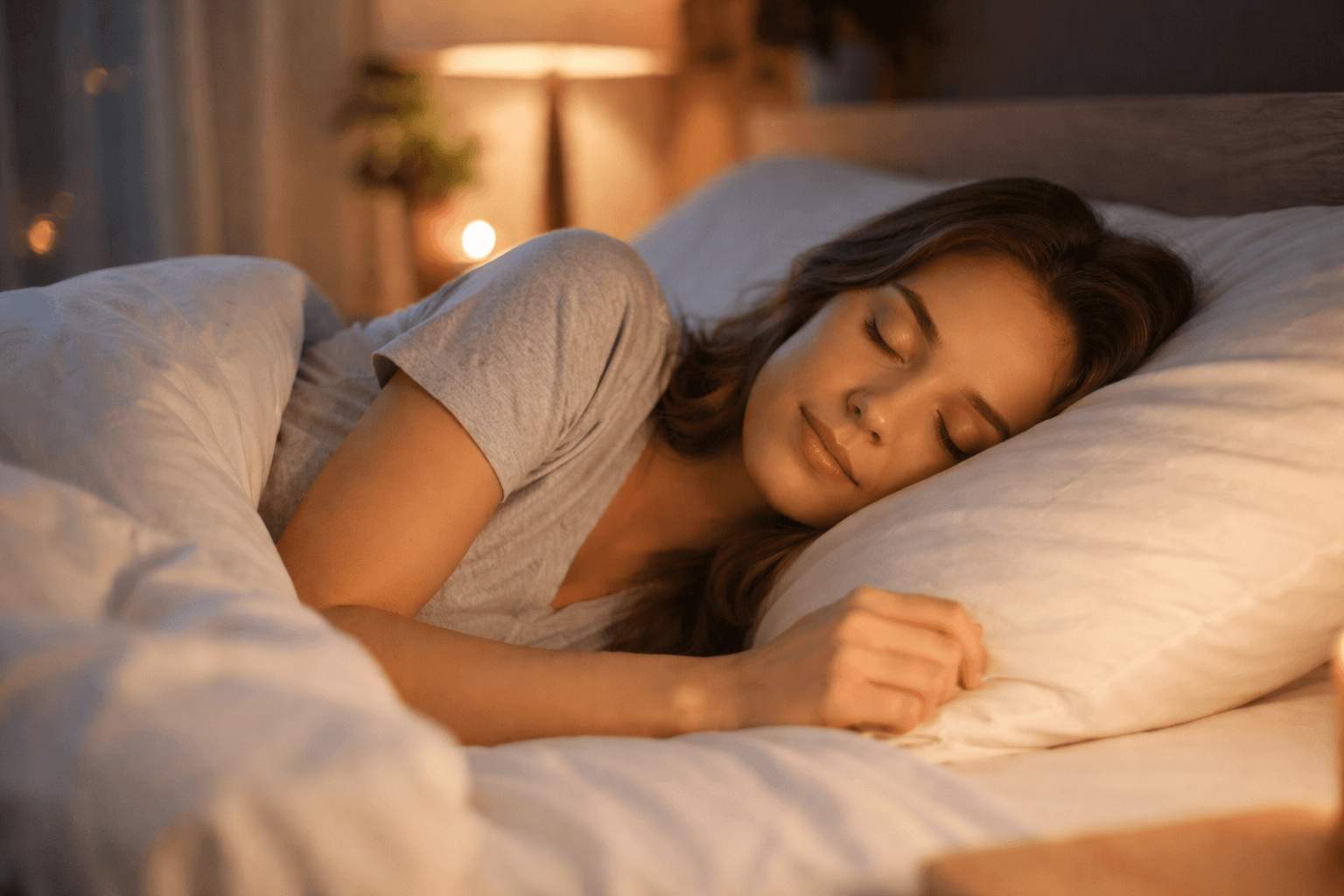
Why your brain needs more rest than your phone does, what to eat, what to skip, and why that nightcap is an absolutely terrible idea
If you are reading this at 2 in the morning because you cannot sleep, congratulations. You have already found the problem this guide is here to solve. Put down your phone, read this tomorrow, and go stare at the ceiling some more. We will wait.
Sleep is not just the boring part that happens between episodes of your favorite show. It is one of the three big pillars of good health, sitting right next to eating well and moving your body. And here is the part that makes no sense: unlike kale or jumping jacks, sleep is something your body was built to love. So if you are struggling with it, something has gone sideways.
This guide covers everything. What normal sleep looks like. When to worry. What helps. What hurts. Which people need extra attention and care. And when to stop Googling at 3 AM and actually call a doctor.
Part One: What Does Normal Sleep Look Like?
Your Brain's Nightly Construction Crew
Sleep is not just "being unconscious for eight hours." Your brain moves through a series of stages, cycling through them roughly every 90 minutes across the night. Think of it as four different work crews taking shifts to do different jobs. Here is who does what:
The Four Stages of Sleep
Stage N1 (Light Sleep, about 5% of the night): You are just drifting off. Your body might jerk like you just stepped off a curb. That is normal. Your brain is testing the emergency brakes.
Stage N2 (about 50% of the night): Deeper sleep. Your brain produces patterns called sleep spindles that help lock in memories. Not as exciting as it sounds, but very important.
Stage N3 (Deep Sleep, about 20% of the night): The real deal. Your body repairs tissue, strengthens your immune system, and releases growth hormones. Most of this happens in the first half of the night. This is why a few extra hours in the morning does not fully make up for lost sleep.
REM Sleep (about 20 to 25% of the night): Rapid Eye Movement sleep. Your brain is almost as active as when you are awake. Your body is temporarily paralyzed so you do not act out your dreams. REM sleep increases toward morning, which is why your alarm always interrupts the good dream.
How Much Sleep Do You Actually Need?
Most adults need 7 to 9 hours per night. Adults 65 and older need about 7 to 8 hours. Sounds simple enough. And yet nearly 40 percent of Americans regularly get 6 hours or less. That is like trying to drive across the country on half a tank of gas. You might technically get there, but you will not enjoy a single mile.
A small number of people genuinely function well on 6 hours. Scientists call them short sleepers. They are about as common as people who actually enjoy going to the dentist. Most people who claim they are totally fine on 6 hours are running on fumes and have simply forgotten what feeling rested actually feels like.
"Worrying about sleep is often worse for you than the lost sleep itself. Your brain is not doing great math at 3 in the morning."
Normal Quirks vs. Real Red Flags
Totally Normal
Taking 10 to 20 minutes to fall asleep
Waking briefly once or twice at night (you usually will not remember)
Sleeping lighter and waking more often as you get older
An occasional rough night after stress or big news
Needing to use the bathroom once if you are over 50
Time to Pay Attention
Taking more than 30 minutes to fall asleep regularly
Waking up 3 or more times per night
Lying awake for more than 20 minutes during the night
Waking up an hour early and being unable to return to sleep
Feeling wiped out after 7 or 8 hours in bed
Falling asleep during conversations, at your desk, or while driving
Part Two: When Sleep Goes Wrong — The Three Big Troublemakers
Insomnia: The Most Common Culprit
About 10 percent of adults have full-blown insomnia disorder. Another 15 to 20 percent deal with occasional symptoms. Women are more likely to have it than men. The older you get, the more common it becomes.
To officially qualify as insomnia, you need all of the following: trouble falling or staying asleep, happening at least 3 nights per week, for at least 3 months, despite having enough time and opportunity to sleep, and it has to be causing real problems during the day.
What keeps insomnia going is usually not the same thing that started it. Maybe a stressful week left you sleeping badly. Then you started worrying about the bad sleep. Now you are spending 9 hours in bed hunting for 5 hours of sleep, checking the clock at 2 AM, and convincing yourself tomorrow will be a disaster. Congratulations. You have accidentally built a perfectly functioning insomnia machine.
Sleep Apnea: The Loud and Dangerous One
With sleep apnea, your airway collapses while you sleep. You stop breathing. Your brain wakes you just enough to breathe again, and you do not remember any of it. Meanwhile your bed partner has relocated to the couch.
Signs You May Have Sleep Apnea
Loud snoring with gasping or choking sounds
Witnessed pauses in breathing during sleep
Waking up with headaches
Feeling exhausted no matter how long you sleep
High blood pressure that is hard to control
Falling asleep very easily and inappropriately during the day
Sleep apnea increases your risk of heart disease, stroke, and car accidents. It is not just annoying snoring. It needs a real medical evaluation, not a different pillow.
Restless Legs Syndrome: The Creepy Crawly One
An overwhelming need to move your legs, usually at night, usually when you are lying still. It feels like bugs under the skin, itching, pulling, or an aching pressure. Moving helps. Staying still feels impossible. You will find yourself pacing your bedroom at midnight like a tiger in a very small cage.
Other Conditions Worth Knowing
Narcolepsy: Sudden, uncontrollable attacks of sleep during the day. Sometimes includes sudden muscle weakness triggered by strong emotions like laughter. Needs medical evaluation.
REM Sleep Behavior Disorder: You physically act out your dreams, sometimes violently. This can hurt you or a partner. It is also sometimes an early warning sign of Parkinson's disease and requires prompt medical attention.
Circadian Rhythm Disorders: Your internal clock is set to the wrong time zone. Includes delayed sleep phase (the night owl stuck in an early-bird world), shift work disorder, and jet lag.
Parasomnias: Sleepwalking, sleep eating, night terrors. Usually more upsetting than dangerous, unless you sleepwalk near the staircase.
Get Medical Help Right Away If You Have
Gasping or choking that startles you awake in a panic
Chest pain or racing heart during the night
Sleepwalking or sleep behaviors that could cause injury
Acting out dreams in a way that could hurt you or someone else
Thoughts of harming yourself (poor sleep and depression make each other worse)
Part Three: What Chronic Sleep Loss Actually Does to Your Body
Being tired is the least of your problems. Here is what is actually happening when you shortchange your sleep night after night.
40% of American adults regularly get 6 hours or less per night. That is like running a marathon with one shoe. On gravel.
Short-Term Effects
After 17 hours awake, your thinking and reaction time are similar to someone who is legally drunk
Mood swings, irritability, and anxiety ramp up quickly
Your immune system weakens. You catch colds more easily.
You get hungrier, especially for sugary and high-fat foods
Your blood sugar control gets worse, even after just one bad night
Stress hormones go up
Reaction time slows and your risk of accidents rises noticeably
Long-Term Effects
Chronic poor sleep raises your risk of heart disease, stroke, high blood pressure, and irregular heart rhythm. It increases your odds of developing type 2 diabetes. It is linked to obesity, depression, anxiety, and cognitive decline including dementia. It can even make vaccines less effective because your immune system is not operating at full strength.
Here is the part nobody talks about: sleeping too much is also linked to health problems and higher death rates. The sweet spot for most adults is about 7 hours. Sleeping only 5 hours raises your overall mortality risk by about 22 percent. But sleeping 9 or more hours raises it by over 40 percent. More is not always better. Long sleepers are often dealing with an underlying illness that is the real culprit, but the pattern is consistent enough to pay attention to.
Part Four: Food and Sleep — Your Kitchen Is a Sleep Lab
Foods That Help You Sleep
The Mediterranean diet — rich in vegetables, fruit, whole grains, fish, and healthy fats — is associated with better sleep quality. People who eat this way tend to fall asleep faster and sleep more soundly.
Foods With Real Sleep Benefits
Tart cherry juice: Contains natural melatonin. Studies show it can reduce the time to fall asleep and increase total sleep time. About 8 ounces in the morning and again in the evening seems to work best.
Kiwi fruit: Two kiwis eaten an hour before bed improved how quickly people fell asleep, how long they slept, and how well they slept in clinical studies. The mechanism likely involves serotonin and antioxidants.
Fatty fish: Salmon, mackerel, and sardines are high in omega-3 fats and vitamin D, both linked to better sleep.
Complex carbohydrates: Oats, whole grain bread, and brown rice eaten 3 to 4 hours before bed may help by making tryptophan more available in the brain.
Higher protein intake overall: People who eat more protein consistently show better sleep quality and longer total sleep time.
Magnesium-rich foods: Leafy greens, nuts, seeds, beans, and whole grains. Low magnesium is linked to insomnia.
Timing Is Everything
Eating a large meal within 2 hours of bedtime is linked to worse sleep quality regardless of what the meal contains. Your body is busy with digestion instead of winding down. Try to finish your biggest meal at least 3 to 4 hours before bed. If you need a late snack, something small with both protein and complex carbs works well, like whole grain crackers with a bit of cheese.
Foods That Hurt Your Sleep
Ultra-processed foods, added sugars, and saturated fats: Linked to shorter sleep, more nighttime waking, and worse overall sleep quality
High glycemic index foods at night: White bread, sugary snacks, and refined carbs cause blood sugar spikes followed by crashes that can wake you up at 3 AM
Salty diets with few fruits and vegetables: High sodium and low potassium intake are linked to shorter and more fragmented sleep
Eating too close to bedtime: Consistently eating within 2 hours of sleep makes things worse no matter what the food is
Part Five: Caffeine, Alcohol, and Other Sneaky Sleep Wreckers
Caffeine: Your Friendly Enemy
Caffeine has a half-life of 5 to 6 hours. That means if you drink a cup of coffee at 3 PM, half of that caffeine is still running through your system at 9 PM. It increases the time it takes to fall asleep, cuts into your deep sleep, and increases nighttime waking.
The general rule: no caffeine after 2 PM if you go to bed around 10 PM. Some people break down caffeine much more slowly due to their genetics and need to cut off even earlier in the day. Do not forget the hidden sources: tea, energy drinks, soda, chocolate, and certain pain relievers all contain caffeine.
Alcohol: The Most Deceptive Sleep Aid in Your Cabinet
Yes, alcohol makes you drowsy. No, it absolutely does not help you sleep well. This is one of the most widespread and most harmful myths about sleep.
What Alcohol Actually Does to Your Sleep
First half of the night: Sedation, faster sleep onset, more deep sleep
Second half of the night: Fragmented sleep, frequent waking, reduced REM sleep, anxious or vivid dreams, and often a 4 AM wide-awake moment
Overall result: Non-restorative sleep. You wake feeling like you did not sleep at all. Because effectively, you did not sleep well at all.
With regular use: Tolerance builds fast. You need more to fall asleep, but your sleep quality keeps getting worse.
When stopping heavy use: Severely disrupted sleep for weeks to months as your brain readjusts. This is genuine withdrawal.
Avoid alcohol for at least 4 to 6 hours before bed. If you drink, limit it to 1 to 2 drinks and finish early in the evening.
Other Substances That Harm Sleep
Nicotine: A stimulant. Disrupts sleep architecture and reduces total sleep time. Smokers wake more often during the night.
Cannabis: May shorten the time to fall asleep in the short term. With regular use, your brain adapts and the benefit disappears. When you stop, expect rebound insomnia and vivid dreams for several weeks.
Opioids: Reduce deep sleep and REM sleep. Can also cause a type of sleep apnea where the brain forgets to signal the lungs to breathe.
Part Six: Supplements That Actually Work (And Some That Do Not)
Melatonin: The Most Studied Option
Melatonin is a hormone your brain produces naturally when darkness sets in. Taking it as a supplement can help under the right circumstances, but most people take it the wrong way.
How to Actually Use Melatonin Effectively
Best dose: 4 mg — not the tiny 0.5 mg microdose and not the 10 mg mega-dose most stores sell
Best timing: 3 hours before your desired bedtime, not 30 minutes before like the box usually suggests
Best for: Adults 55 and older, jet lag, shift work, delayed sleep phase, and children with neurodevelopmental conditions like autism
Not great for: Primary insomnia in younger adults. The effect on sleep onset is real but small, roughly 5 to 7 fewer minutes to fall asleep.
Safe duration: Up to 3 months is considered safe in older adults
Critical warning: OTC melatonin is not regulated by the FDA. Some products contain 83 percent less than the label states. Others contain nearly 5 times more. Always choose a USP-verified product.
Use Caution With Melatonin If You Have
Epilepsy or seizures: Case reports suggest a possible risk of worsening seizures, particularly at higher doses
Diabetes: Melatonin can impair blood sugar control, especially in women
Heart conditions or blood pressure problems: Melatonin affects both in a dose-dependent way
Depression: May worsen mood in some people
Autoimmune conditions: Melatonin affects the immune system and may aggravate certain autoimmune diseases
Warfarin or bleeding disorders: Possible interactions with blood clotting. Talk to your doctor first.
Pregnancy or breastfeeding: Avoid. Not enough human safety data exists.
Fluvoxamine (Luvox) use: This antidepressant dramatically raises melatonin blood levels — a potentially dangerous interaction.
Magnesium: The Quiet Helper
Magnesium deficiency is very common and is directly linked to insomnia. Supplementing can genuinely improve sleep quality in people who are low in it. A dose of 200 to 400 mg of magnesium glycinate before bed works well for most people. The glycinate form is easiest on your stomach.
Vitamin D: Get Your Levels Checked
Deficiency in vitamin D is linked to poor sleep. Correcting low levels through supplementation can improve sleep quality. Get your blood level tested before taking a random dose rather than guessing.
Other Options With Some Evidence
Glycine (3 grams before bed): May improve sleep quality and reduce how groggy you feel the next morning
L-theanine (200 to 400 mg): Promotes relaxation without sedation, often combined with other sleep support ingredients
Valerian root (300 to 600 mg): The most studied herbal sleep supplement. Evidence is mixed. If it works for you, it may take 2 to 4 weeks to notice the benefit.
Supplements NOT Recommended for Sleep
Diphenhydramine (Benadryl) and doxylamine (Unisom): These antihistamines stop working within days. Side effects include next-day grogginess, dry mouth, urinary retention, and confusion. In older adults, regular use is linked to increased dementia risk.
Herbal blends (valerian, chamomile, lavender): No consistent benefit for chronic insomnia per major clinical guidelines. Chamomile tea is pleasant and harmless, but it is not a treatment for a real sleep disorder.
Alcohol: Not a supplement. Not a sleep aid. Already covered. Just stop.
Part Seven: Proven Interventions That Actually Work
CBT-I: The Best Treatment Nobody Has Heard Of
Cognitive Behavioral Therapy for Insomnia (CBT-I) is the single most effective treatment for chronic insomnia — more effective than any sleep medication, for any age group, including people with other health conditions. About 70 to 80 percent of people improve significantly. Those improvements last for years without side effects.
Component 1: Sleep Restriction
You limit the amount of time you are allowed to spend in bed to match how much you are actually sleeping. This builds sleep drive — the biological pressure to sleep — until your body is sleeping efficiently again.
How to Do Sleep Restriction
Keep a sleep diary for 2 weeks
Calculate your average total sleep time (example: 5.5 hours)
Set your allowed time in bed to match this number. Never less than 5 hours.
Pick a fixed wake time and stick to it every single day including weekends. This is non-negotiable.
Once you are sleeping at least 85 percent of your time in bed, add 15 minutes to your window
Repeat until you reach a sleep window that leaves you feeling genuinely rested
Do NOT Use Sleep Restriction If You Have
A seizure disorder (sleep deprivation can trigger seizures)
Bipolar disorder (sleep deprivation can trigger a manic episode)
A job requiring full alertness during the initial weeks of adjustment, such as piloting aircraft or performing surgery
Component 2: Stimulus Control
Your brain may have learned to associate your bed with lying awake and worrying. This technique breaks that connection over 2 to 4 weeks.
The Rules of Stimulus Control
Only go to bed when you feel genuinely sleepy, not just tired or bored
If you cannot fall asleep within 15 to 20 minutes, get up and leave the bedroom
Do something quiet in another room: read something dull, do gentle stretching, or sit in dim light
Return to bed only when you feel sleepy again. Repeat as needed throughout the night.
Get up at the same time every single morning regardless of how the night went
No napping during the day
Use your bedroom only for sleep and sex. No phones, no TV, no working from bed.
Component 3: Cognitive Restructuring
The Unhelpful Thought | A More Accurate Version |
|---|---|
"I must get 8 hours or I will be completely useless tomorrow." | Most people function reasonably well after one rough night. One night is not a disaster. |
"I will never fall back asleep after waking up." | Almost everyone eventually falls back to sleep. Your body wants to sleep. |
"This insomnia is destroying my health." | Anxiety about sleep often causes more harm than the sleep loss itself. Worrying makes it worse. |
"I need to try harder to fall asleep." | Trying to force sleep is the fastest way to stay awake. Sleep comes when you stop fighting it. |
Component 4: Sleep Hygiene
Temperature: Keep your bedroom between 60 and 67°F. Your core body temperature needs to drop to fall asleep.
Light: Use blackout curtains or an eye mask. Even small amounts of light disrupt melatonin production.
Noise: A white noise machine or earplugs help if you are a light sleeper.
Screens: No phones, tablets, or computers for 30 to 60 minutes before bed. If you cannot help yourself, at least use a blue light filter.
Consistent schedule: Same bedtime and wake time every day, including weekends. Yes, even Saturday.
No clock-watching: Turn the clock face away from you. Watching the minutes go by makes anxiety worse.
Note: Sleep hygiene alone will not cure chronic insomnia. It is the foundation, not the whole house.
Where to Find CBT-I
In-person therapist: The most effective option. Find a trained provider at behavioralsleep.org
Digital programs: Sleepio and SHUTi are evidence-based online programs that work nearly as well as face-to-face therapy
Free app: Insomnia Coach from the VA — free, evidence-based, and well-designed
Books: Say Good Night to Insomnia by Gregg Jacobs and The Insomnia Workbook by Stephanie Silberman
Group therapy: Works well and costs significantly less than individual sessions
Exercise: The Underrated Sleep Medicine
Regular physical activity has moderate to strong evidence for improving sleep quality, reducing the time to fall asleep, increasing total sleep time, and boosting deep sleep.
Exercise Prescription for Better Sleep
How much: 150 minutes per week of moderate activity, or 75 minutes per week of vigorous activity
What kind: Aerobic exercise like walking, jogging, cycling, or swimming. Resistance training. Yoga and tai chi also work well.
When: Finish vigorous exercise at least 3 to 4 hours before bedtime. Morning and afternoon are ideal.
How long before it works: Most people notice real improvement after 2 to 4 weeks of consistent activity
Modify Exercise If You Have
Unstable heart disease, uncontrolled heart rhythm problems, or a recent heart attack or stroke: avoid vigorous exercise until medically cleared
Chronic fatigue syndrome, fibromyalgia, or a post-viral illness: reduce intensity significantly. Pushing too hard can make these conditions worse.
Light Therapy
A bright light box delivering 10,000 lux for 30 minutes in the morning can gradually shift your internal clock. It works best for circadian rhythm problems. If you are a night owl who cannot fall asleep until 2 AM, morning light exposure can shift your body clock earlier over several weeks.
Mind-Body Approaches
Meditation and mindfulness have moderate evidence for improving sleep quality and reducing insomnia severity. Progressive muscle relaxation and slow diaphragmatic breathing can help reduce physical tension before bed. One important caution: trying too hard to relax — putting enormous mental effort into forcing calmness — can actually backfire and increase arousal. The goal is gentle winding down, not intense effort.
Part Eight: Medications — What Works, What to Avoid, and Who Should Get What
Medications are considered second-line for insomnia. Try CBT-I first. But medications have a real and legitimate role when behavioral treatment is not available, is not enough on its own, or during acute bad stretches.
The Preferred Options
Dual Orexin Receptor Antagonists (DORAs)
Lemborexant (Dayvigo), daridorexant (Quviviq), and suvorexant (Belsomra) work by blocking the brain chemicals that keep you awake. They do not force sleep. They simply quiet the "stay awake" signal so sleep can happen naturally.
Low potential for abuse. Not scheduled controlled substances.
Work for both falling asleep and staying asleep
Do not suppress breathing. Safer for people with asthma or COPD.
Remain effective with long-term use beyond 3 months
Absolute contraindication: Narcolepsy
Caution: Avoid driving within 8 to 12 hours of taking a dose
Low-Dose Doxepin (Silenor)
At 3 to 6 mg, doxepin blocks histamine receptors to help you stay asleep. Particularly good for sleep maintenance problems. Well-tolerated in older adults. No abuse potential.
Short-Term Options (Use Carefully)
Z-Drugs: Eszopiclone (Lunesta), zolpidem (Ambien), and zaleplon (Sonata) are effective but come with more risks. Recommended for short-term use only, generally no more than 4 weeks. The FDA has issued warnings about complex sleep behaviors including sleepwalking and sleep-driving with no memory of any of it.
Medication | Best For | Key Notes |
|---|---|---|
Eszopiclone (Lunesta) | Both falling and staying asleep | Strongest evidence among Z-drugs. A metallic taste is very common. |
Zolpidem (Ambien) | Falling asleep | Lower dose of 5 mg recommended for women and older adults |
Zaleplon (Sonata) | Falling asleep only | Very short-acting. Can take it in the middle of the night if at least 4 hours remain before your alarm. |
Ramelteon (Rozerem): Mimics melatonin. Zero abuse potential. Good for falling asleep and for circadian rhythm problems. Very safe in older adults and people with substance use history.
Medications to Actively Avoid
Benzodiazepines (Valium, Xanax, Ativan, Klonopin, Restoril): High dependence and tolerance risk. Cause falls, memory problems, and respiratory suppression. Never stop suddenly — taper slowly with medical supervision.
OTC antihistamines (Benadryl, Unisom): Not recommended by any major sleep guideline. In older adults, regular use is associated with increased dementia risk, falls, and confusion.
Antipsychotics (quetiapine, olanzapine) for sleep: The metabolic side effects are not worth the benefit when safer options exist.
Alcohol: See Part Five.
Medication Choices by Patient Type
Older adults (65+): Prefer low-dose doxepin, DORAs, or ramelteon. The American Geriatrics Society Beers Criteria explicitly names benzodiazepines, Z-drugs, and antihistamines as medications to avoid in this age group.
Liver disease: Melatonin 3 mg or hydroxyzine 25 mg may be safer options. Avoid zolpidem and benzodiazepines.
Respiratory disease or sleep apnea: DORAs and ramelteon do not suppress breathing. Benzodiazepines should be avoided.
Substance use history: Strongly prefer ramelteon, melatonin, doxepin, or DORAs. CBT-I is especially important in this group.
Pregnancy and breastfeeding: CBT-I only. Most sleep medications lack adequate human safety data.
Part Nine: Who Needs the Most Attention and Why
Older Adults (65 and Up)
Sleep naturally becomes lighter and more fragmented with age. But insomnia disorder, sleep apnea, and restless legs all become more common in this group too. Medication interactions are more dangerous. Fall risk with sedating medications is a serious concern. CBT-I works just as well in older adults as in younger ones and should always be tried first.
People With Mental Health Conditions
Depression and insomnia have a deeply circular relationship. Bad sleep makes depression worse. Depression makes sleep worse. About 80 percent of people with depression have sleep problems. Sleep problems often appear before the depression does, meaning that addressing sleep early may help prevent a full depressive episode. CBT-I works effectively alongside depression and anxiety treatment.
People in Recovery From Substance Use
Sleep problems are extremely common during recovery from alcohol or drug use. Insomnia in early recovery is one of the most frequently cited triggers for relapse. CBT-I should not be delayed until someone has been sober for months — research shows it works while recovery is ongoing and actually reduces drinking in people with alcohol use disorder.
Shift Workers
Working nights, rotating shifts, or extremely early mornings puts you in a daily battle with your circadian rhythm. Over time this raises your risk of metabolic disease, cardiovascular disease, depression, and immune problems. Strategic light therapy, careful melatonin timing, and protecting a consistent sleep schedule on days off can help.
Pregnant and Postpartum Women
Hormonal shifts, physical discomfort, frequent trips to the bathroom, and anxiety can make sleep very challenging during pregnancy. Postpartum insomnia is extremely common and dramatically underdiagnosed. CBT-I adapted for this population works well. Almost all sleep medications lack adequate safety data during pregnancy and breastfeeding.
Cancer Survivors
Sleep disorders are among the most common and least treated symptoms following cancer treatment. Regular screening for sleep problems should be a standard part of cancer survivorship care. CBT-I works well in this population.
People With Chronic Pain
Pain and sleep have a miserable relationship. Pain makes it harder to sleep. Poor sleep makes pain worse. Treating both together is consistently more effective than treating either one alone. Avoid long-term benzodiazepine use in people who are also on opioids for pain — the combination significantly increases the risk of fatal respiratory depression.
Part Ten: How to Know If You Are Actually Getting Better
The Numbers That Matter
Metric | How to Calculate It | Target |
|---|---|---|
Sleep Efficiency | (Total sleep time ÷ total time in bed) × 100 | 85% or higher |
Sleep Onset Latency | Minutes from lights out to falling asleep | Under 30 minutes |
Wake After Sleep Onset | Total minutes awake during the night after first falling asleep | Under 30 minutes |
Total Sleep Time | Total hours actually asleep, not just in bed | 7 to 9 hours for most adults |
The Insomnia Severity Index
This 7-question questionnaire is free and widely available online. It gives you a score from 0 to 28. A score of 15 or higher indicates clinically significant insomnia. A drop of 8 or more points after treatment means the treatment is working. A score below 8 counts as remission. Track it monthly to see your progress.
Realistic Timelines for Improvement
CBT-I: May feel worse for the first 1 to 2 weeks. Noticeable improvement at 4 to 6 weeks. Full benefits at 2 to 3 months. Those benefits often last for years.
Medications: Acute effect within 1 to 7 days. Maximum benefit at 2 to 4 weeks. DORAs continue working effectively beyond 3 months.
Exercise: Noticeable sleep improvement after 2 to 4 weeks of consistent activity.
Dietary changes: Initial effects within 1 to 2 weeks. Better results at 4 to 8 weeks with sustained changes.
When to Stop and Get More Help
If you have genuinely followed CBT-I techniques for 6 to 8 weeks without meaningful improvement, or used an appropriate medication for 4 weeks without adequate benefit, reassess. Consider whether there is an untreated underlying condition, whether you actually have a different sleep disorder like sleep apnea, or whether a referral to a sleep medicine specialist is needed.
Your Sleep Action Plan in Plain Language
Start Doing These Things
Aim for 7 to 9 hours per night
Keep the same wake time every day, including weekends
Keep your room cool (60 to 67°F), dark, and quiet
Eat mostly whole foods and finish eating 3 to 4 hours before bed
Cut off caffeine after 2 PM
Exercise 150 minutes per week, finished at least 3 hours before bed
Try CBT-I before reaching for medications
If you use melatonin: 4 mg, 3 hours before bed, USP-verified product
If problems last more than 3 months, see a doctor
Stop Doing These Things
Using alcohol to help you fall asleep
Spending hours lying awake in bed
Watching the clock at night
Using antihistamines for sleep regularly
Sleeping in on weekends to try to catch up
Taking long naps after 3 PM
Scrolling your phone in bed
Telling yourself one bad night will ruin your health
Convincing yourself you are fine on 6 hours when you are not
"Sleep is not what happens after everything else is done. It is the thing that makes everything else possible."
Sleep is not a luxury. It is not laziness. It is the biological maintenance your brain and body require to keep working properly. Decades of solid research have made this unambiguous. The excellent news is that most sleep problems respond very well to consistent behavioral changes. You do not need an expensive prescription to start. You need a plan and some patience.
Pick one or two things from this guide. Start tonight. Your heart, your brain, your immune system, and your much-better-rested future self will thank you.
Now close this tab and go to sleep.
This article is for educational purposes only and is not a substitute for medical advice, diagnosis, or treatment. If you have persistent sleep problems, symptoms that may suggest sleep apnea or another sleep disorder, or questions about medications, please speak with a qualified healthcare provider.
Based on clinical practice guidelines and peer-reviewed research. Sources include the New England Journal of Medicine, the Lancet, JAMA, American Family Physician, Journal of Sleep Research, American Geriatrics Society Beers Criteria, and others.
HSA/FSA Eligible
Doctors Are Human.
That's Why There's Medome.
Start your free trial today. No credit card required.
Start Your Free Trial
Join thousands protecting their health with AI that never forgets
Critical details get missed when your health information is scattered. Medome connects the dots across your complete record.
Start Your Free Trial
Quick Links
Medome Men
Home
Pricing
About
Health News
HealthSigns
FAQ
Contact Us
Terms of Service
Privacy Policy
Get In Touch
Email: service@medome.ai
Phone: (617) 319-6434
This is Dr. Steven Charlap’s cell. Please text him first, explaining who you are and how he can help you. Use WhatsApp outside the US.
Hours: Mon-Fri 9:00AM - 9:00PM ET