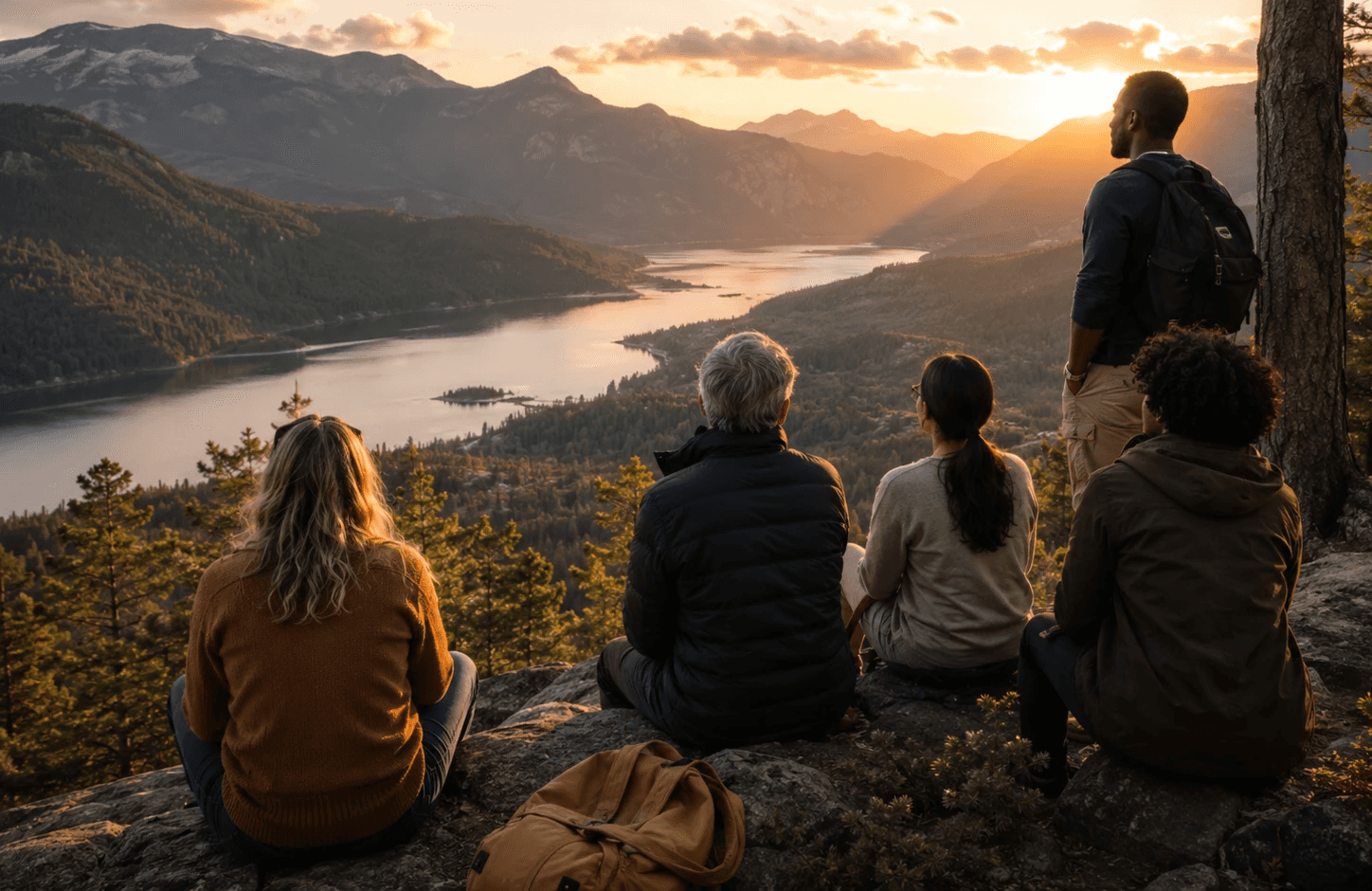
Let's be honest. Somebody has probably told you to "go outside and touch grass" as an insult. Turns out the joke is on them, because science says touching grass might be one of the smartest things you can do all week. Trees don't send you passive-aggressive texts. Rivers never leave you on read. And a walk in the woods will not ask you to like and subscribe.
A big new study says that even watching nature on a screen can calm you down. Yes, you read that right. You do not always have to hike a mountain to feel better. Sometimes you just have to watch a forest do its thing on your phone. So let's dig into the surprisingly enormous pile of evidence that nature is basically free medicine, and then, because we are responsible people, let's also talk about the ways nature can absolutely mess you up if you are not careful.
The Study That Started This Whole Article
Scientists led by Aaron Hipp at North Carolina State University wanted to test something people have believed for years. Does looking at nature help you bounce back from stress?
To find out, they gathered almost 1,000 volunteers across labs in Europe and the United States. First, they stressed everybody out on purpose. (Rude, but for science.) The volunteers watched ten straight minutes of gruesome workplace accident footage. Sensors confirmed that people got genuinely tense. Heart rates jumped, palms got sweaty, and moods dropped like a phone with a cracked screen.
Then everyone watched a calming ten-minute video. Some got a forest. Some got a bubbling stream. Others got city scenes full of traffic and crowds. The results were clear. People who watched nature felt more positive and way less angry than the people stuck watching city streets. Bodies calmed down over time no matter what, but the forest watchers relaxed a little faster.
Funny twist: the stream video did not help as much as you would think. Scientists guessed the water was just too loud. Even nature can be a bit much when it will not stop babbling.
This study was a modern remake of a famous 1991 experiment. That original work convinced hospitals, schools, and offices around the world to slap nature pictures on their walls. The new study basically confirmed the old one with better tools and a much bigger crowd. Nature: still undefeated after 35 years.
Your Mind on Nature
Here is where things get impressive, so buckle up.
When it comes to mental health, nature is a heavyweight champ. A 2026 review pulled together 36 careful studies with 2,925 people from 17 countries. It found that digital nature (yes, including videos) noticeably lowered stress, anxiety, and depression. Green spaces beat mixed scenery for calming people down, and nature sounds were especially powerful for easing anxiety and sadness. So maybe do not mute that forest video after all.
Another giant review published in a top psychiatry journal looked at 25 other reviews stacked together. It found that nature boosted good feelings and energy while shrinking bad feelings, mental fog, tiredness, and tension. When researchers zoomed in on people already struggling with anxiety or depression, the improvements were even bigger.
During the COVID pandemic, nature became a lifeline. A review of 113 studies found that people with garden access had about 29% lower odds of depression and 27% lower odds of anxiety. More time in green spaces meant lower stress. Meanwhile the rest of us were stress-baking bread and yelling at video games.
And you do not need much. In one study, teenagers who watched just six minutes of virtual woodland felt calmer, happier, and more focused. Six minutes. That is shorter than most arguments about what to watch next.
Nature Videos: Cheap, Easy, and Basically Everywhere
If you cannot get to a real forest, a fake one on a screen still works surprisingly well.
A 2025 review of 26 studies found that nature videos reliably helped people manage emotions, cut stress, and feel refreshed. Bonus effects included more energy, better coping skills, and, no joke, less procrastination. A tree cannot do your homework, but apparently it can nudge you to start.
The best part is how easy these videos are to use. They cost almost nothing. You can stream them on YouTube or TikTok, play them in a waiting room, or put them up in a classroom. There was even a virtual reality nature program for depression that helped people feel better during a single session while staying safe to use. Fancy goggles, real results.
Nature Makes Your Brain Sharper
Nature does not just calm you down. It also tunes up your thinking.
There is a whole idea called Attention Restoration Theory. The short version is that busy modern life drains your focus, and nature helps refill the tank. Brain scans show that natural scenes quiet down the stressed-out and overthinking parts of your brain and shift it into a calmer, more restful state.
In one experiment, people took a 40-minute walk. The ones who walked in nature showed stronger brain signals for self-control afterward. The ones who walked through a city did not. Nature literally upgraded their focus.
Studies also show better memory, sharper thinking, and steadier attention after nature time. And here is the wild part. Even digital nature scenery helped restore tired brains better than city scenes or a blank screen. Your worn-out brain apparently cannot tell the difference and just gratefully soaks up the trees.
Nature Is Good for Your Heart (Literally)
This part might save your life, so pay attention.
A massive review of 143 studies found that spending time around green space was linked to lower stress hormones, slower heart rate, lower blood pressure, and a lower risk of dying from all causes. It was also tied to lower risk of heart disease, diabetes, stroke, and more. That is not a smoothie. That is greenery.
Another review looked at data covering more than 100 million people. It found that greener neighborhoods came with lower rates of deadly heart and stroke problems. Living somewhere leafy is quietly one of the healthiest choices around.
Nature Powers Up Your Immune System
Ever heard of forest bathing? It has nothing to do with soap. It is a Japanese practice called shinrin-yoku, which just means soaking in the forest with all your senses.
Research shows forest bathing can boost your natural killer cells. Those are immune cells that hunt down sick and dangerous cells in your body, and yes, that is their actual name. They sound like superheroes and they kind of are.
In one study, men spent three days in a bamboo forest. Their natural killer cell activity went up, and their stress hormones went down. Scientists think part of the magic comes from breathing in phytoncides, which are natural chemicals that trees release to protect themselves. You breathe in tree defense spray and your immune system throws a party.
Nature Turns Down Your Stress Chemistry
Your body makes a stress hormone called cortisol. Too much of it over time is bad news. Nature helps dial it back.
A review of 22 studies found that people in forests had lower cortisol than people in cities. In a 2026 study in Brazil, forest bathing lowered blood pressure and cortisol so much that the share of people counted as "low stress" jumped from about 17% to 52%. That is people literally chilling out in real time.
Nature also flips on the calming side of your nervous system, the part that tells your body it is safe to relax. Watching nature after a stressful task helped people recover faster than watching city scenes.
Nature Can Ease Pain
This one sounds fake, but it is real.
A 2025 review of 62 studies with 4,439 people found that nature exposure gave a real reduction in pain. And before you say it is all in their heads, brain scans proved otherwise. Virtual nature actually calmed the pain-processing areas of the brain. Your brain is not pretending. Nature genuinely turns down the volume on pain.
That is why hospitals are catching on. Adding plants, garden views, natural materials, and nature videos helps patients feel less pain and anxiety, sleep better, and even use less pain medicine in some cases. Turns out a nice view is basically a health feature.
Nature Helps You Sleep
If you toss and turn at night, nature might help there too.
A review of 13 studies found that most linked green space to better sleep quality and quantity. An 18-country study of over 16,000 adults found that people who could see nature from home or visited parks and beaches slept better. And a study of nearly 20,000 people in China found that greener neighborhoods were tied to longer sleep and a slower slide into bad sleep as people aged. Counting trees may beat counting sheep.
Nature Cools Down Inflammation
Inflammation is your body's alarm system. Helpful in small bursts, harmful when it never shuts off.
One study found that people living around lots of trees, especially those spending 3 or more hours outside daily, had dramatically lower inflammation and physical stress on their bodies. Other research linked regular positive time in nature to lower levels of several inflammation markers in the blood. In plain English, nature helps your body stop freaking out at itself.
Nature Is Great for Kids
Children get a huge share of the benefits.
Doctors point out that green space near home may lower hyperactivity, inattention, and depression in kids. In a study of nearly a million Danish children, those who grew up around the most green space had close to half the rate of mental health diagnoses later in life. Green space is also linked to better grades, better stress recovery, and stronger focus. Nature-based school programs can boost self-esteem, resilience, and kindness. So recess outside is not wasted time. It is basically a brain vitamin.
Okay, So How Much Nature Do You Actually Need?
Good news. You do not have to move into a cabin.
A study of almost 20,000 adults in England found the sweet spot. People who spent at least 120 minutes a week in nature were much more likely to report good health and happiness. That is only about 17 minutes a day. Benefits kept climbing up to around 200 to 300 minutes a week and then leveled off.
Even better, it did not matter how you split it up. One long adventure or several short strolls both worked. So whether you take a big Saturday hike or just a few quick laps around a park, your body keeps score in your favor.
The Fine Print: Nature Can Also Try to Hurt You
Now for the part your overly cheerful wellness influencer forgets to mention. Nature is amazing, but it is not a cuddly cartoon. It has opinions, and some of them are pointy.
Bugs with agendas. Ticks can carry serious diseases like Lyme disease, and they are tiny freeloaders that latch on without asking. Mosquitoes can spread illness too. Wear bug spray, check your skin after hikes, and do not let the forest turn into an all-you-can-eat buffet with you as the meal.
Plants that hold grudges. Poison ivy, poison oak, and poison sumac can leave you with an itchy, miserable rash. The old rule helps: leaves of three, let it be. Some berries and mushrooms look tasty and are actually poison. If you did not plant it and cannot 100% name it, do not eat it.
The sun is not your friend on purpose. Too much sun causes painful burns and, over time, raises skin cancer risk. Sunscreen, hats, and shade are not optional extras. They are the entry fee.
Water can be sneaky. Remember that loud stream from the study? Moving water is stronger than it looks. Rivers, lakes, and oceans have currents that can pull people under fast. Respect the water, know your limits, and never assume you are a stronger swimmer than a river.
Weather does not care about your plans. Heat can cause dangerous heatstroke and dehydration. Cold can cause frostbite and hypothermia. Storms roll in quickly. Check the forecast, bring water, and dress for the actual weather instead of the weather you wished for.
Getting lost is real. People wander off trails all the time. Tell someone where you are going, stay on marked paths, and do not rely only on a phone that loves to die at the worst moment.
Allergies. For some people, all that lovely pollen means sneezing, itchy eyes, and misery. Nature does not mean to be rude. It is just aggressively fertile.
And one more honest note. Scientists themselves admit their research is not perfect. Some studies were small. Some measured nature in different ways. Many did not follow people for very long. The evidence is strong and growing, but it is not flawless. Also, watching nature videos is wonderful, yet it should not fully replace real parks, real trees, and real fresh air whenever you can get them. A screen is a great backup, not a total swap.
The Bottom Line
Here is the deal. Nature is one of the cheapest, easiest, and most powerful health boosters we have. It calms your mind, sharpens your thinking, protects your heart, powers up your immune system, lowers your stress chemistry, eases pain, improves sleep, cools inflammation, and helps kids thrive. And when you cannot reach the real thing, even a video of a forest can help.
Sadly, more than 100 million Americans, including 28 million kids, do not have a park within a ten-minute walk of home. That is a real problem, and nature videos in schools, clinics, and offices can help close that gap for people who need it most.
So the next time someone tells you to go touch grass, smile politely, put on some sunscreen, dodge the poison ivy, and actually do it. Your brain, your heart, and your immune system will quietly thank you. Just watch out for the ticks.
This article is general education, not medical advice. The honest caveat the research itself makes: most of these studies show a link, not proof, many were short, and "spend time in nature" is far easier to prescribe than to access when 100 million people don't have a park nearby. Nature is a genuine, cheap addition to your health, not a replacement for treatment. If you're dealing with real anxiety or depression, a forest video is a fine supplement but not a substitute for a doctor or therapist. And if you're heading outdoors, the fine print above is the medical advice that matters most: sun protection, tick checks, and respect for water and weather.
HSA/FSA Eligible
Doctors Are Human.
That's Why There's Medome.
Start your free trial today. No credit card required.
Start Your Free Trial
Join thousands protecting their health with AI that never forgets
Critical details get missed when your health information is scattered. Medome connects the dots across your complete record.
Start Your Free Trial
Quick Links
Medome Men
Home
Pricing
About
Health News
HealthSigns
FAQ
Contact Us
Terms of Service
Privacy Policy
Get In Touch
Email: service@medome.ai
Phone: (617) 319-6434
This is Dr. Steven Charlap’s cell. Please text him first, explaining who you are and how he can help you. Use WhatsApp outside the US.
Hours: Mon-Fri 9:00AM - 9:00PM ET