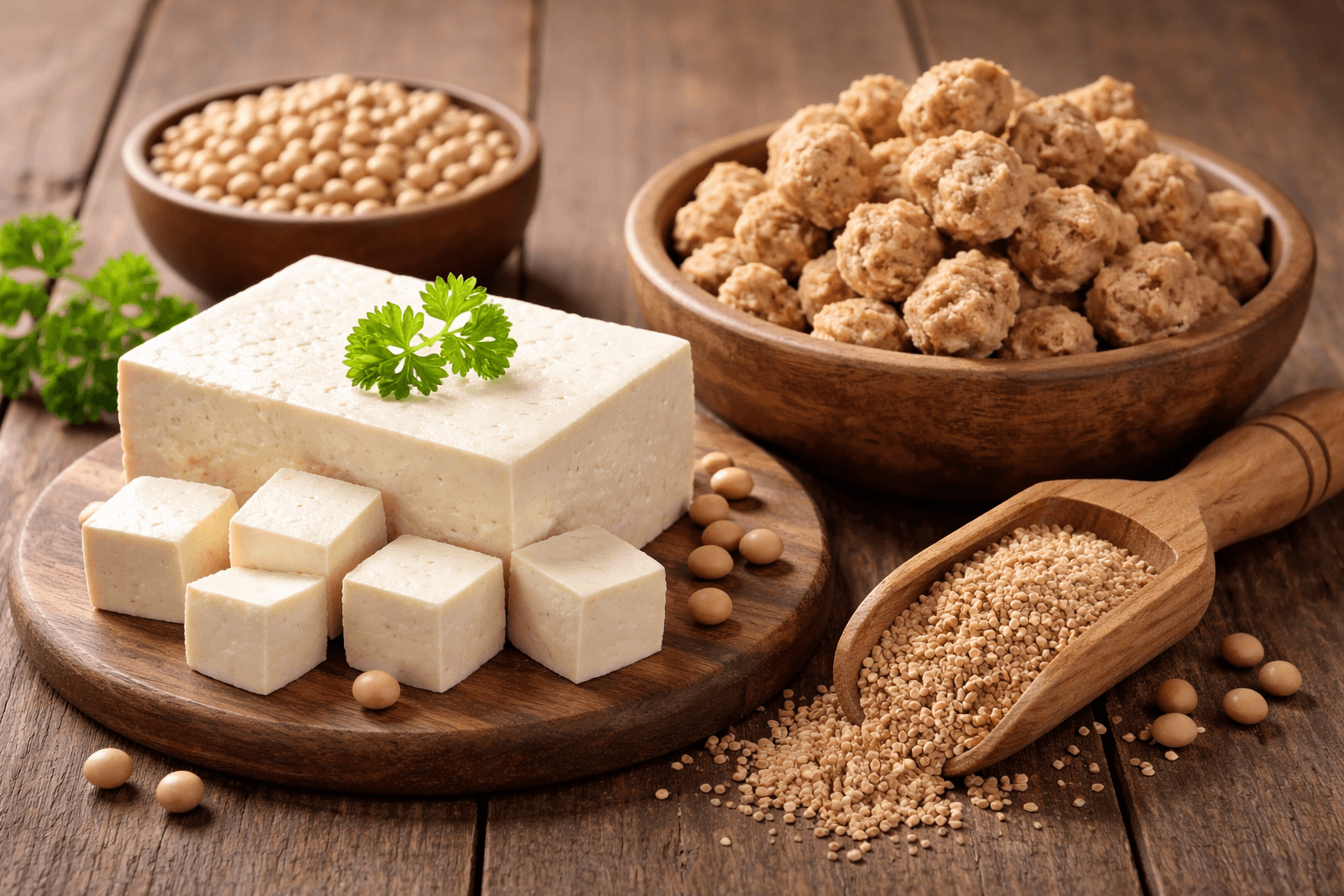
Everything You Never Knew You Needed to Know About That Wobbly White Block
A science-based, plain-language, occasionally silly guide to one of nature's most underrated superfoods
Based on systematic reviews, meta-analyses, and randomized controlled trials
1. Introduction: What Is Tofu, and Why Should You Care?
Picture this: you are staring at a white, jiggly block in the refrigerator section of your grocery store. It looks like a soap bar had a baby with a marshmallow. That, my friend, is tofu. And it just might be one of the healthiest foods on the planet.
Tofu comes from soybeans, which are one of the oldest crops in the world. People in Asia have been eating soy foods for thousands of years. China started growing soybeans over 3,000 years ago, and Japan has been making tofu for centuries. So before you call it weird, just remember that your afternoon snack probably has less history behind it.
This guide will walk you through everything science knows about tofu and soy protein. We will cover who should eat it, who should be careful, how much to eat, what forms to buy, how it interacts with common medicines, and a whole lot more. By the end, you will know more about soy than most adults. You are welcome.
Fun Fact One cup of cooked soybeans gives you about 29 grams of protein. That is more protein per calorie than most meats, plus you get fiber, vitamins, and none of the saturated fat. Not bad for a humble bean.
What Makes Soy Special?
Most plant proteins are incomplete. That means they are missing some of the amino acids your body needs. Soy is different. It is a complete protein, meaning it has all the essential amino acids, just like meat, eggs, and dairy. This is a big deal for vegetarians and vegans.
Soy also contains special compounds called isoflavones. These are natural plant chemicals that act a little bit like estrogen in the body, but in a much, much weaker way. This is where a lot of the confusion and debate about soy comes from. But as we will see, the science is mostly reassuring.
2. A Menu of Soy Foods: What Are Your Options?
Soy comes in many forms. Not all of them are equal. Here is your starter guide to the soy universe.
Soy Food | What It Is | Best For | Notes |
|---|---|---|---|
Firm Tofu | Pressed soy curds, chewy texture | Stir-fries, grilling, baking | Most studied form; 100-150 g per serving |
Soft or Silken Tofu | Smooth, creamy texture | Smoothies, soups, desserts | Great for people who dislike textures |
Edamame | Young green soybeans in pods | Snacking, salads | Easy, fun, and delicious |
Soy Milk | Blended soybeans plus water | Cereal, coffee, baking | Choose unsweetened, calcium-fortified |
Tempeh | Fermented whole soybean cake | Sandwiches, tacos, stir-fries | High in protein, fiber, and probiotics |
Natto | Fermented soybeans, sticky and pungent | Traditional Japanese breakfast | Very high in vitamin K; avoid on warfarin |
Miso | Fermented soybean paste | Soups, sauces, marinades | Very salty; limit to 1 cup per day |
Soy Nuts | Roasted soybeans | Trail mix, snacking | High in protein; watch sodium in salted versions |
Isolated Soy Protein / Supplements | Highly processed powder or pill | Only under medical supervision | Less evidence than whole foods; some risks |
Rule of Thumb The closer to the whole soybean, the better. Tofu, edamame, tempeh, and soy milk are the gold standard. Supplements and highly processed soy products are the least recommended.
3. How Much Should You Eat? Serving Sizes Made Simple
One serving of soy food is not as complicated as it sounds. Here is what one serving looks like:
100 to 150 grams of tofu (about the size of a deck of cards, give or take)
Half a cup to one cup of edamame (shelled)
One cup (240 mL) of soy milk
85 to 100 grams of tempeh
One quarter cup of soy nuts
For most healthy adults, the research says one to three servings per day is the sweet spot. That gives you enough isoflavones and protein to see health benefits without going overboard.
For people with specific health conditions, we will give you more detailed guidance in later sections.
A Note on Portions More is not always better. Research on very high soy intake (more than 50 grams of soy protein per day) is still limited. Stick to one to three servings unless your doctor tells you otherwise.
4. The Good Stuff: Proven Health Benefits of Soy
Heart Health
Your heart likes soy. Here is why.
A large review of 46 studies found that eating 25 grams of soy protein per day lowers LDL cholesterol, which is the bad kind, by about 3 to 4 percent. That might not sound huge, but it adds up over time. Another review of 17 observational studies found that people who regularly ate soy had a 16 percent lower risk of cardiovascular disease overall, a 17 percent lower stroke risk, and an 18 percent lower coronary heart disease risk.
The American Heart Association says soy products are good for cardiovascular health because they are high in polyunsaturated fats, fiber, vitamins, and minerals, and low in saturated fat. The key is that soy works best when it replaces animal foods that are high in saturated fat, like red meat or full-fat dairy.
Practical Tip Swapping a hamburger for a tofu stir-fry a few nights a week is exactly the kind of change that adds up to a healthier heart over years and decades.
Bone Health
Soy isoflavones help your bones hang on to calcium and slow down the breakdown of bone tissue. This matters most for women after menopause, when estrogen drops and bones can get weaker faster.
A massive review of 63 randomized controlled trials found that soy isoflavones significantly improved bone mineral density at the lumbar spine (your lower back), femoral neck, and hip. The key conditions for it to work: you need to take it for at least 12 months, aim for around 100 mg of isoflavones per day (about two to three servings of soy foods), and prefer genistein, which is one of the main isoflavones in soy.
Bone Site | Change With Soy | What That Means |
|---|---|---|
Lumbar Spine | Significant improvement | Lower back stays stronger longer |
Femoral Neck | Significant improvement | Hip fracture risk decreases |
Total Hip | Modest improvement | Overall hip strength maintained |
Distal Radius (wrist) | Significant improvement | Wrist fractures less likely |
Cancer Prevention and Survivorship
This is where things get really interesting. Soy has a surprisingly good track record when it comes to cancer.
Breast Cancer
Eating soy during childhood and teenage years may protect against breast cancer later in life. Women in Asian countries who eat soy their whole lives have lower breast cancer rates, and scientists believe this lifelong habit, started young, is a big reason why.
For women who already have breast cancer, soy is not just safe, it may actually help. A study of 9,514 breast cancer survivors found that those who ate the most soy after their diagnosis had a 25 percent lower chance of their cancer coming back. The current National Comprehensive Cancer Network guidelines say that breast cancer survivors can safely eat up to three servings of whole soy foods per day.
A review of multiple studies found that each additional 10 grams of tofu per day was associated with a 10 percent lower breast cancer risk.
Important Distinction Whole soy foods (tofu, tempeh, edamame, soy milk) are safe and potentially helpful for breast cancer survivors. Isolated isoflavone supplements in pill form are a different story. Those should be avoided, especially if you have a family history of breast cancer or have estrogen receptor-negative disease. Always check with your oncologist.
Other Cancers
Soy consumption is linked to lower risks of gastric, colorectal, lung, ovarian, and prostate cancers in observational studies. A large dose-response review found that for every 10 mg per day increase in soy isoflavones, all-cancer mortality dropped by 7 percent and breast cancer mortality dropped by 9 percent.
Menopause and Hot Flashes
If menopause makes your life feel like a sauna, soy might take the edge off. A review of 21 randomized controlled trials found that soy isoflavones reduced the daily number of hot flash episodes by about 1.31 fewer occurrences. It also helped with vaginal dryness. The benefits are modest, not miraculous, but real. Soy isoflavones work as weak, selective estrogen receptor modulators (basically, they talk to estrogen receptors but only whisper, not shout). This means they do not cause the problems associated with estrogen therapy, like thickening the uterine lining.
Diabetes and Metabolic Health
Soy is great news if you have type 2 diabetes or are at risk. Multiple reviews show soy is linked to lower type 2 diabetes risk and better blood sugar control. A four-year study in diabetic patients with kidney disease showed that replacing part of their animal protein with soy protein dramatically improved fasting blood sugar, LDL cholesterol, triglycerides, inflammation markers, and protein in the urine.
Cognitive Function
A 2026 meta-analysis of 16 randomized trials found that soy isoflavones significantly improved overall cognitive function and memory in adults. A UK Biobank study of over 307,000 people found that regular soy milk drinkers had a 31 percent lower risk of all-cause dementia and a 30 percent lower risk of Alzheimer's disease compared to people who never drank it.
The Tofu-and-Dementia Puzzle
Here is a strange twist: while soy milk appears protective against dementia, several studies in older Asian adults found that frequent tofu consumption was linked to worse memory and higher dementia risk. The likely reason? Tofu in some Asian countries may contain formaldehyde preservatives. Tofu in the United States and Europe does not have this problem. Also, unlike fermented soy like tempeh, tofu lacks folate, which may help protect brain cells. Bottom line: tofu made by reputable brands in Western countries appears safe. Tempeh and soy milk have the strongest evidence for brain protection. Limit tofu to once a week if you are over 70 and want to be extra cautious.
5. Who Should Eat What: Population-Specific Guidance
Not everyone needs the same amount of soy. Here is a comprehensive breakdown of who benefits most and how much to eat.
Population | Daily Servings | Best Forms | Key Benefit | Watch Out For |
|---|---|---|---|---|
Healthy Adults | 1 to 3 servings | Tofu, edamame, soy milk | Heart health, protein | Nothing at typical intake |
High LDL Cholesterol | 2 to 3 servings (25 g protein) | Tofu, soy nuts, soy milk | Lowers LDL by 3 to 4% | Must replace saturated fat to work |
Postmenopausal Women (bone health) | 2 to 3 servings for 12+ months | Tofu, tempeh, soy milk | Stronger bones | Benefit lower if overweight |
Postmenopausal Women (hot flashes) | 2 to 3 servings for 6 to 12 weeks | Whole soy foods | Fewer hot flashes | Modest, possibly temporary |
Breast Cancer Survivors | 2 to 3 servings | Tofu, edamame, tempeh | 25% lower recurrence | Avoid isoflavone supplements |
Children and Teenagers | 1 to 2 servings | Tofu, edamame, soy milk | Long-term cancer prevention | Avoid supplements |
Infants (when breastfeeding not possible) | Per pediatric guidance | Soy-based infant formula | Safe growth and development | Consult pediatrician |
Men (general) | 1 to 3 servings | Tofu, edamame, soy milk | Heart health, cancer prevention | No hormonal concerns at this level |
Men Trying to Conceive | No more than 2 servings | Whole soy foods | Safe at moderate intake | Precautionary only; no proven harm |
Type 2 Diabetes | 2 to 3 servings (25 to 50 g protein) | Tofu, tempeh, soy milk | Better glucose and lipid control | Replace animal protein |
Hypothyroidism on Levothyroxine | 1 to 2 servings | Whole soy foods | Safe with precaution | Separate from medication by 4+ hours |
Males (gastric cancer concern) | Limit miso soup to under 1 cup | Non-fermented preferred | Reduce gastric cancer risk | Fermented soy risk for men |
Older Adults (70+) | 1 to 2 servings; limit tofu to 1x/week | Tempeh, soy milk, edamame | Cognitive protection | Tofu caution for brain health |
Children and Teens: Start Them Young
Kids who eat soy regularly grow up with benefits. Research shows that girls who eat soy during childhood and adolescence have a lower risk of breast cancer as adults. A large Chinese study of nearly 5,000 children found that higher soy intake was linked to later puberty in both girls and boys, which may actually be good news, since early puberty is associated with some health problems later in life.
Soy formula is safe for babies when breastfeeding is not possible. Studies have followed these children into adulthood and found no long-term problems with hormones, puberty, or reproductive health.
Men: Setting the Record Straight
If you have heard that soy will lower your testosterone, raise your estrogen, or give you man boobs, here is the science: that is not what the research shows.
A 2021 meta-analysis looked at 41 studies involving 1,753 men and found that soy protein and isoflavone intake had zero significant effect on total testosterone, free testosterone, estradiol, estrone, or sex hormone-binding globulin. Period. An earlier meta-analysis found the exact same thing.
However, animal studies do show that extremely high doses, far beyond anything a person would normally eat, can affect testosterone in rodents. And one human trial using a very high dose (about 19 grams of soy protein per day for 18 months in men who had undergone prostate surgery) did reduce total testosterone slightly. But that is a medical-level dose, not a tofu-with-your-dinner level dose.
The Short Version for Men Eating one to three servings of soy foods per day is safe for men. Your testosterone will be fine. Your fertility will be fine. Your muscles will be fine. Enjoy the tofu.
6. When to Say No: Contraindications and Cautions
Soy is safe for most people. But there are some situations where you need to be careful, or even avoid it entirely.
Absolute Contraindications: Do Not Eat Soy If...
Absolute Stop These situations call for avoiding soy completely. Talk to your doctor if any of these apply to you.
You have a soy allergy. Soy is one of the top eight food allergens. Most people who are allergic to soy as children outgrow it by age ten, but adult soy allergies do exist.
You are taking isolated isoflavone supplements and you have estrogen receptor-negative breast cancer or a strong family history of breast cancer. The supplements (not whole foods) carry a potential risk in this case.
Your infant has congenital hypothyroidism and is on thyroid medication. Soy formula interferes with thyroid hormone absorption in this specific group.
Relative Cautions: Eat Less or Be More Careful If...
Proceed with Caution These situations do not mean no soy ever, but they do mean be mindful of how much and when.
You are on warfarin (a blood thinner). Soy can reduce how well warfarin works. Keep your soy intake consistent and talk to your doctor about monitoring.
You have hypothyroidism and take levothyroxine. Soy does not ruin your thyroid medication, but it can reduce how much the pill absorbs if you take them at the same time. Always separate soy consumption from your thyroid pill by at least four hours.
You have subclinical hypothyroidism (mild, under-active thyroid not yet requiring medication). One study found that soy phytoestrogens tripled the risk of progressing to full hypothyroidism. Limit to one to two servings per day and make sure you get enough iodine.
You are a man and consume very high amounts of fermented soy like miso soup. Drinking one to five cups per day is linked to a 17 to 22 percent higher gastric cancer risk in men. Non-fermented soy foods like tofu and edamame do not carry this risk.
You are pregnant. Whole soy foods are fine at one to two servings per day. High-dose isoflavone supplements are not recommended during pregnancy due to possible effects on fetal development based on animal studies.
You have a mineral deficiency (iron, zinc, calcium). Soy contains phytic acid, which reduces mineral absorption. Limit to no more than two servings per day and eat soy with vitamin C-rich foods to help your body absorb iron better.
You are taking immunosuppressant drugs (like tacrolimus or cyclosporine after a transplant). Soy can affect the enzymes that process these medications. Keep your soy intake consistent and let your doctor know.
7. Medication Interactions: What You Need to Tell Your Doctor
Soy interacts with several common medications. Most of the time, the interaction is manageable rather than dangerous, but you should always tell your healthcare provider if you eat significant amounts of soy foods.
Medication / Drug Class | Specific Concern | Mechanism | What to Do |
|---|---|---|---|
Warfarin (blood thinner) | Soy reduces anticoagulation | Affects drug transport proteins | Check INR more often. Keep soy intake consistent. Separate doses. Avoid natto (very high vitamin K). |
Levothyroxine (thyroid hormone) | Reduced pill absorption | Soy binds drug in the gut | Take thyroid pill on empty stomach. Eat soy at least 4 hours later. Monitor TSH every 6 to 8 weeks. |
Tamoxifen (breast cancer drug) | Theoretical competition, not confirmed in humans | Estrogen receptor binding overlap | Whole soy foods (2 to 3 servings/day) appear safe. Avoid supplements over 100 mg isoflavones. |
Aromatase inhibitors (anastrozole, letrozole) | Possible weak interference | Isoflavones mildly inhibit aromatase enzyme | Whole foods appear safe. Avoid high-dose supplements. |
SSRIs / antidepressants (many) | Possible CYP2D6 enzyme interaction | Isoflavones affect liver enzymes | Dietary amounts safe. Avoid supplements above 100 mg. |
Statins (cholesterol drugs) | Generally additive benefit, not harm | Both lower LDL via different paths | Soy plus statins may lower cholesterol more. Keep soy consistent. |
Cyclosporine / Tacrolimus (transplant drugs) | Potential altered drug blood levels | CYP3A4 enzyme modulation | Monitor drug levels. Keep soy intake very consistent. Do not suddenly start or stop large amounts. |
Iron and Calcium Supplements | Reduced mineral absorption | Phytic acid in soy binds minerals | Separate supplement from soy by 2 to 3 hours. Eat soy with vitamin C foods. |
Phenytoin (seizure medication) | Possible CYP2C9 interaction | Isoflavones affect enzyme activity | Dietary amounts generally safe. Discuss with neurologist if eating large amounts of soy. |
Always Tell Your Doctor If you are on warfarin, thyroid medication, transplant drugs, or cancer treatments, always mention your soy intake. A simple conversation can prevent serious drug interaction problems.
The Natto-Warfarin Problem: A Special Warning
Natto is a Japanese fermented soy food that is extremely high in vitamin K. Vitamin K directly counteracts warfarin. If you are on warfarin, eating natto even occasionally can make your blood dangerously not thin enough, which means you could have a stroke or clot. This is not a minor concern. If you are on warfarin, do not eat natto without talking to your doctor first.
8. Soy in Specific Diseases: A Clinical Deep Dive
Chronic Kidney Disease (CKD)
Soy protein is one of the best food changes a person with CKD can make. Multiple meta-analyses confirm that shifting from animal protein to soy protein significantly reduces creatinine (a waste product that builds up when kidneys fail), phosphorus levels, inflammation, and protein in the urine (a sign of kidney damage). It also slows the rate at which kidney function declines.
One landmark clinical trial showed that patients with moderate to severe CKD who replaced animal protein with soy protein had their kidney function decline by only 5.9 percent over 12 months, compared to 11.3 percent in the control group. That is a meaningful difference.
Why does soy help kidneys? Because plant protein creates less acidic byproducts, is easier on glomerular (kidney filter) blood pressure, has lower bioavailable phosphorus than animal protein, and has anti-inflammatory effects.
CKD Stage | Recommended Protein Intake | Soy Proportion |
|---|---|---|
CKD Stages 3 to 4 (Pre-Dialysis) | 0.6 to 0.8 g per kg body weight per day | 50 to 60% of protein from soy and other plants |
On Dialysis | 1.0 to 1.2 g per kg body weight per day | 30 to 50% from soy |
Diabetic Nephropathy | 0.8 g per kg body weight per day | 30 to 50% from soy |
Non-Alcoholic Fatty Liver Disease (NAFLD)
NAFLD (fat building up in the liver without alcohol being the cause) is increasingly common, and soy is one of the best dietary tools to fight it. A large Chinese study of over 24,000 people found that eating soy four or more times per week was linked to a 25 percent lower rate of NAFLD.
Clinical trials confirm the benefit. Soy significantly lowers liver enzymes (ALT), triglycerides, and oxidative stress markers. It also reduces insulin resistance, which is a key driver of NAFLD. The effect on fat in the liver (steatosis) is clear and real. The evidence for reversing scarring (fibrosis) is less strong, but improvements in liver fat and metabolism are well-documented.
Target: Two to three servings per day for at least 12 weeks, combined with a Mediterranean diet and exercise.
Rheumatoid Arthritis (RA)
Soy isoflavones, particularly genistein and a compound called equol, have real anti-inflammatory powers that may help people with rheumatoid arthritis. Laboratory studies show they block the inflammatory pathways that drive joint damage, reduce inflammatory chemicals like TNF-alpha and IL-6, and even inhibit the enzymes that destroy cartilage.
Human studies confirm that soy supplementation significantly reduces C-reactive protein (CRP), a standard blood marker of inflammation. Benefits are most pronounced when soy is used for at least 12 weeks and when the dose is under 100 mg of isoflavones per day.
Use soy as an adjunct to your rheumatoid arthritis medications, not as a replacement. Target: two to three servings per day for at least 12 weeks.
Polycystic Ovary Syndrome (PCOS)
Soy is genuinely impressive for PCOS. A rigorous randomized controlled trial gave women with PCOS 50 mg of soy isoflavones per day for 12 weeks. Compared to women who got a placebo:
Insulin resistance significantly improved
Free androgen index (a measure of male-hormone excess) decreased
Triglycerides dropped by 13 mg per deciliter
Antioxidant levels went up by 96 micromoles per liter
Markers of cell damage went down significantly
A network meta-analysis of 79 trials comparing supplements for PCOS found that soy isoflavones were the best supplement for improving glutathione (the body's master antioxidant) and reducing malondialdehyde (a marker of oxidative stress). Two to three servings of whole soy foods per day, targeting 50 to 100 mg of isoflavones, is the evidence-based recommendation.
Endometriosis
A 2025 landmark study from the Nurses' Health Study II followed over 82,000 women for 30 years and found that each additional serving of soy per week was linked to an 8 percent lower risk of developing laparoscopically confirmed endometriosis. That is substantial data from a huge, long-term study.
For women who already have endometriosis, particularly advanced stages (Stage III to IV), a Japanese study found that the highest urinary genistein levels were associated with a 79 percent lower risk of advanced disease. Laboratory studies show that daidzein-rich soy compounds actually inhibit the growth of endometriotic tissue and block the enzymes that promote local estrogen production in those lesions.
One animal study did find that feeding very high amounts of soy from a young age might worsen endometriosis, but this used 10 percent or more of the total diet as soy, which is far beyond normal human intake. Moderate adult consumption, especially for advanced disease, appears beneficial.
Multiple Sclerosis (MS)
This is brand new science, but it is exciting enough to mention. A 2021 study published in Science Advances found that an isoflavone-rich diet dramatically reduced the severity of an MS animal model by changing the gut bacteria. Mice fed an isoflavone diet had gut microbiome profiles similar to healthy people, while mice on isoflavone-free diets had gut profiles similar to people with MS. The isoflavone diet worked by promoting bacteria that produce a compound called equol, which turns down inflammation.
A follow-up study in 2022 confirmed that isoflavone diets alter lipid-building processes in gut bacteria, reducing the inflammatory signals that can trigger immune attacks on nerve tissue.
No human clinical trials have tested this in MS patients yet, so this cannot be called proven. But the science is promising enough that eating two to three servings of soy per day to support gut health seems like a reasonable, safe choice for people with MS.
Inflammatory Bowel Disease (IBD)
The evidence for soy in IBD (Crohn's disease and ulcerative colitis) is more mixed. Laboratory studies show that genistein reduces the inflammatory processes that drive colitis. However, one animal study found that whole soybeans actually worsened experimental colitis, possibly because the complex carbohydrates in soybeans altered gut bacteria in a harmful way during active disease.
Current guidelines from the American Gastroenterological Association recommend a Mediterranean diet for IBD, which naturally includes legumes. They do not specifically restrict soy in the absence of individual intolerance.
General approach:
During remission: One to two servings of well-tolerated soy foods. Tofu, tempeh, well-cooked edamame, and soy milk tend to be easiest to tolerate.
During a flare: Reduce or eliminate whole soy foods temporarily. If you can tolerate anything, silken tofu or soy milk are the gentlest options.
Crohn's with strictures: Avoid whole soybeans and edamame due to fiber and blockage risk. Silken tofu and soy milk are safer.
Osteoporosis
We covered bone health briefly earlier, but osteoporosis deserves its own section because the evidence is so strong. A 2024 updated meta-analysis of 63 randomized controlled trials confirmed significant bone mineral density improvements at the lumbar spine, femoral neck, and wrist with soy isoflavone supplementation.
The effective dose is genistein at or above 54 mg per day, from whole foods or supplements, for at least 12 months. Normal-weight women benefit more for bone density, while overweight women see greater reductions in bone resorption markers.
Soy should be used alongside, not instead of, calcium, vitamin D, and weight-bearing exercise.
9. How to Incorporate Soy Into Your Diet
Soy in Popular Dietary Patterns
Dietary Pattern | Recommended Daily Soy | Best Forms | Key Purpose | Special Tips |
|---|---|---|---|---|
Mediterranean Diet | 2 to 3 servings | Tofu, edamame, tempeh | Replace fish or poultry on plant days | Marinate tofu in olive oil, lemon, and herbs |
DASH Diet | 1 to 2 servings | Tofu, fortified soy milk, edamame | Plant protein alternative to lean meat | Choose low-sodium preparations |
Vegetarian Diet | 2 to 4 servings | Tofu, tempeh, edamame, soy milk | Complete protein source | Add vitamin C foods for iron absorption |
Vegan Diet | 2 to 4 servings | All whole soy foods | Critical complete protein and calcium source | Avoid ultra-processed soy burgers as main protein |
Portfolio Diet (cholesterol-lowering) | 2 to 3 servings (25 g protein) | Tofu, soy milk, soy nuts | Maximize LDL reduction alongside nuts and plant sterols | Combine with oats, almonds, plant sterols |
Traditional Asian Diet | 1 to 3 servings | Tofu, edamame, natto, miso (in moderation) | Lifelong healthy protein pattern | Limit miso to under 1 cup per day; limit natto if on warfarin |
Standard American Diet (transition) | 1 to 2 servings, 3 to 5 days per week | Tofu, edamame, soy milk | Reduce saturated fat; increase plant protein | Introduce gradually to avoid bloating |
Sample Meal Plans: A Week of Soy the Delicious Way
Breakfast Ideas
Tofu scramble (150 g firm tofu crumbled with turmeric, nutritional yeast, spinach, mushrooms) on whole grain toast
Soy milk smoothie with banana, frozen berries, peanut butter, and chia seeds
Overnight oats made with unsweetened soy milk, chia seeds, walnuts, and berries
Silken tofu blended into a smoothie bowl topped with granola and fresh fruit
Lunch Ideas
Mediterranean tofu bowl with 150 g grilled tofu, quinoa, roasted vegetables, olives, and tahini
Tempeh tacos with black beans, salsa, avocado, and corn tortillas
Miso soup (1 cup only) with silken tofu, wakame seaweed, and green onions, alongside a sushi bowl
Tofu banh mi sandwich with marinated tofu, pickled vegetables, and cilantro
Dinner Ideas
Tofu stir-fry (120 g firm tofu) with broccoli, carrots, snap peas, and brown rice
Tempeh kebabs marinated in olive oil, lemon, and herbs, grilled with bell peppers and onions
Mapo tofu (soft tofu in savory sauce) over rice with stir-fried greens
Baked tofu steaks with quinoa, roasted Brussels sprouts, and tahini drizzle
Snack Ideas
One cup of steamed edamame, lightly salted
One quarter cup of roasted soy nuts with dried fruit
Edamame hummus (blended edamame with lemon, garlic, and olive oil) with vegetable sticks
Soy yogurt parfait with chia seeds, granola, and fresh berries
10. Thyroid Health, Mineral Absorption, and Other Concerns
Soy and Your Thyroid
Soy gets a lot of blame for thyroid problems, and the fear is partially warranted but also partially overblown. Here is the truth.
For people with normal, healthy thyroid function: A meta-analysis of 18 randomized trials found no significant changes in active thyroid hormones (free T3 or free T4). There was a very slight increase in TSH (thyroid stimulating hormone) of about 0.25 mIU/L, which is clinically insignificant for most people. People with normal thyroid function and adequate iodine intake can eat soy freely.
For people on levothyroxine: Soy can bind to the medication in your gut and reduce how much gets absorbed. The solution is simple: take your thyroid pill first thing in the morning on an empty stomach, then wait at least four hours before eating soy foods. This problem is manageable with timing, not abstinence.
For people with subclinical hypothyroidism: One study found that 16 mg of soy phytoestrogens per day tripled the rate of progression to overt hypothyroidism. Until more research clarifies this, limit soy to one to two servings per day and make sure you are getting at least 150 mcg of iodine per day (found in iodized salt, seafood, and dairy).
For people with Hashimoto's thyroiditis (autoimmune hypothyroidism): Interestingly, a double-blind trial found that genistein supplementation actually improved thyroid function and reduced the antibodies that attack the thyroid. But other data suggests high soy intake may promote thyroid autoimmunity. Limit to one to two servings per day and monitor your TSH regularly.
Soy and Mineral Absorption
Soybeans contain phytic acid (also called phytate). This compound binds to minerals like iron, zinc, calcium, and magnesium in your gut, making them harder to absorb. This is called mineral chelation, and it is a real concern if you eat a lot of soy every single day and your mineral levels are already low.
Who Needs to Be Careful People with iron deficiency anemia, zinc deficiency, or osteoporosis who are relying on soy as their primary food source should be cautious. Limit soy to no more than two servings per day and eat it alongside vitamin C-rich foods (bell peppers, citrus, tomatoes, broccoli) to enhance iron absorption. Separate iron or calcium supplements from soy by two to three hours.
Good news: fermentation (tempeh), soaking (dried soybeans), and cooking all significantly reduce phytic acid content. So tempeh is actually better than raw soybeans for mineral absorption.
11. Fermented vs. Non-Fermented Soy: Does It Matter?
Yes, it matters. The research on fermented and non-fermented soy foods points in somewhat different directions.
Soy Food | Fermented? | Cardiovascular | Cancer Notes |
|---|---|---|---|
Tofu | No | Beneficial: improves lipid profile | Protective for breast, prostate, and other cancers |
Edamame | No | Beneficial | High in fiber and protein; generally protective |
Soy Milk | No | Beneficial | Associated with 31% lower dementia risk in one large study |
Tempeh | Yes | Beneficial; cardiovascular benefits confirmed | Contains folate; potentially protective for brain health |
Natto | Yes | Beneficial in women; reduces AF risk by 56% in women | Safe for most; NOT safe if you are on warfarin |
Miso (over 1 cup per day) | Yes | Mixed; high sodium is a concern | Linked to 17 to 22% higher gastric cancer risk in men at high doses |
The bottom line: non-fermented soy foods have more consistent evidence of benefit. Among fermented options, tempeh and modest natto (for women without warfarin) look good. Miso is the one to watch: use it as a seasoning, not a beverage.
12. Whole Foods vs. Supplements: Why Real Food Wins
Nearly every major health organization, including the American Heart Association, the American Cancer Society, and the National Comprehensive Cancer Network, recommends whole soy foods over isolated isoflavone supplements. Here is why.
Whole soy foods come with fiber, vitamins, minerals, and multiple bioactive compounds that work together. Supplements give you one isolated compound.
The safety record for whole soy foods spans thousands of years and hundreds of millions of people in Asia. The safety record for high-dose isoflavone supplements is much shorter and much less studied.
Some studies in animals and humans suggest that high-dose isoflavone supplements carry risks that whole foods do not, especially for breast cancer patients, pregnant women, and children.
Ultra-processed soy products like many plant-based meat alternatives often contain added sugars, saturated fats, sodium, and preservatives. These erase the benefits. Read your labels.
Choose This | Not That | Why |
|---|---|---|
Tofu (firm, soft, silken) | Isolated soy protein powder | Whole food has more nutrients and is better studied |
Edamame | Soy-based candy bars | Processing adds sugars and fats |
Unsweetened fortified soy milk | Heavily sweetened soy beverages | Sugar negates cardiovascular benefits |
Tempeh | Textured vegetable protein (TVP) | Tempeh is minimally processed and contains probiotics |
Home-marinated tofu | Ultra-processed soy-based deli meats | Heavy sodium and additives negate benefits |
13. Quick Reference Summary
Green Light: Strong Evidence of Benefit
Modest LDL cholesterol reduction (3 to 4%) when replacing animal protein
Cardiovascular disease risk reduction of 16% in observational studies
Breast cancer recurrence reduction of 25% in survivors eating whole soy foods
Significant bone mineral density improvement in postmenopausal women over 12 months
Safe for children, adolescents, and men at one to three servings per day
No adverse effects on male reproductive hormones at dietary intake levels
Improved kidney function markers in CKD and diabetic nephropathy
Reduced liver fat and enzymes in non-alcoholic fatty liver disease
Significant metabolic improvement in PCOS
Yellow Light: Moderate or Emerging Evidence
Breast cancer prevention with childhood and adolescent soy consumption
Modest improvement in menopausal hot flashes (about 1.3 fewer episodes per day)
Possible gut microbiome benefits for multiple sclerosis
Anti-inflammatory benefits for rheumatoid arthritis and systemic lupus erythematosus
31% lower dementia risk with regular soy milk consumption
8% lower endometriosis risk per weekly serving
Red Light: Confirmed or Possible Harms
Increased gastric cancer risk with over 1 cup of miso soup per day in men
Interference with levothyroxine absorption if taken at the same time
Reduced mineral (iron, zinc, calcium) absorption at very high intake
Possible risks from isolated isoflavone supplements in breast cancer patients, children, and pregnant women
Possible progression to overt hypothyroidism in subclinical hypothyroidism
Significant INR destabilization with natto in patients on warfarin
A Final Word
The evidence is overwhelming: for most people, eating one to three servings of whole soy foods per day is more beneficial than harmful. Soy has been eaten safely by billions of people for thousands of years. The main things to remember are to choose whole foods over supplements, to watch your fermented soy intake (especially miso) if you are male, to separate soy from your thyroid medication if you take one, and to tell your doctor if you are on warfarin. Everything else is mostly good news for your heart, bones, cancer risk, kidneys, liver, and even your brain.
So next time you see that wobbly white block in the grocery store, give it a little nod of respect. It has earned it.
This document is for educational purposes only and is not a substitute for professional medical advice. Always consult your physician, registered dietitian, or pharmacist before making significant changes to your diet, especially if you have a medical condition or take prescription medications.
HSA/FSA Eligible
Doctors Are Human.
That's Why There's Medome.
Start your free trial today. No credit card required.
Start Your Free Trial
Join thousands protecting their health with AI that never forgets
Critical details get missed when your health information is scattered. Medome connects the dots across your complete record.
Start Your Free Trial
Quick Links
Medome Men
Home
Pricing
About
Health News
HealthSigns
FAQ
Contact Us
Terms of Service
Privacy Policy
Get In Touch
Email: service@medome.ai
Phone: (617) 319-6434
This is Dr. Steven Charlap’s cell. Please text him first, explaining who you are and how he can help you. Use WhatsApp outside the US.
Hours: Mon-Fri 9:00AM - 9:00PM ET