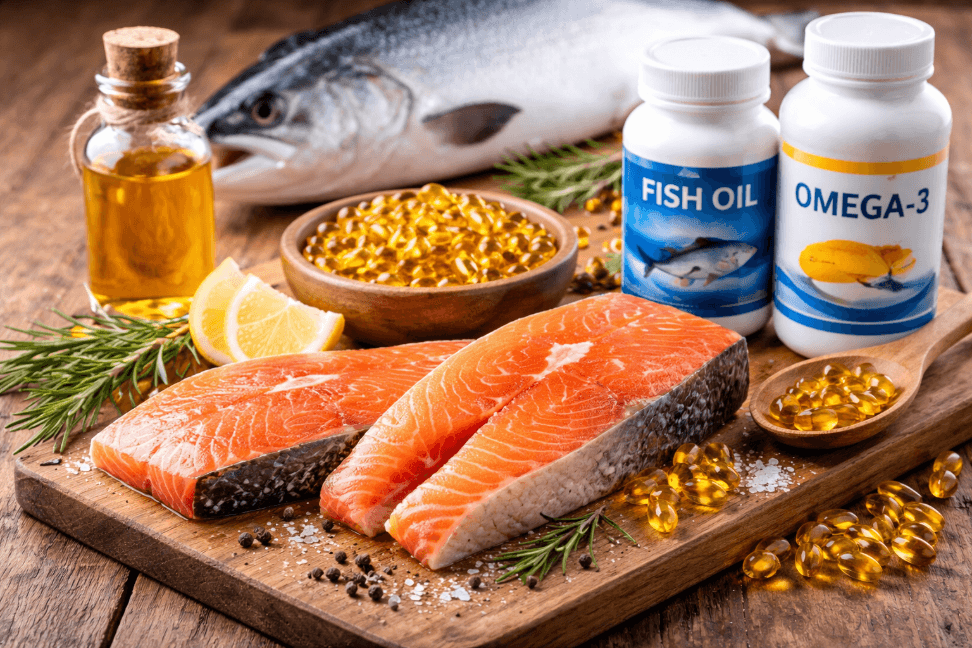
A Medically Accurate, Occasionally Funny Guide for Real People
Why Is Everyone Talking About Omega-3s?
You have probably heard it before: eat more fish. Your doctor says it. The internet says it. Even that guy at the gym who only eats chicken says it. But why? What is actually in fish that makes it so special? And do those fish oil capsules that smell like the inside of a tackle box actually do anything?
The short answer is yes, but with some important fine print. The long answer is this entire article. Let us dig in.
What Exactly Are Omega-3s?
Omega-3 fatty acids are a type of healthy fat. Your body needs them to work properly, but here is the catch: your body cannot make them on its own. You have to eat them. That puts omega-3s in a special category called essential fatty acids, meaning they are essential to get from food.
There are three main types of omega-3s you will hear about:
EPA (eicosapentaenoic acid): The anti-inflammatory superstar. Found mostly in fatty fish and fish oil.
DHA (docosahexaenoic acid): The brain-building powerhouse. Also from fatty fish. Your brain is about 60 percent fat, and DHA makes up a huge chunk of it.
ALA (alpha-linolenic acid): The plant-based version, found in flaxseeds, walnuts, and chia seeds. Your body can convert ALA into EPA and DHA, but only a tiny amount, roughly 5 to 10 percent. So plant sources alone are a pretty inefficient way to get your omega-3s.
Brain Fact Worth Knowing
DHA makes up about 30 percent of the structural fat in your brain's gray matter and almost 97 percent of the omega-3 fats in your brain. Calling DHA a brain food is not just marketing fluff. It is biology.
What Happens If You Don't Get Enough?
Omega-3 deficiency is not talked about as much as, say, vitamin C deficiency, but that does not mean it is harmless. Most Americans eat far too few omega-3s and way too many omega-6 fatty acids, which are found in processed and fried foods. This imbalance drives up inflammation throughout the body.
Signs and effects of low omega-3 intake include:
Dry, rough, or flaky skin that does not improve no matter how much lotion you use
Joint pain and stiffness, especially in the morning
Fatigue and difficulty concentrating
Mood changes, including increased anxiety or mild depression
Poor memory and brain fog
High triglycerides (a type of fat in your blood)
Increased risk of heart disease over time
Severe deficiency, which is rare in the developed world, can cause dermatitis, poor wound healing, and neurological problems. But most people are not severely deficient. They are just chronically under-fueled, like a car that always runs on a quarter tank.
Who Is Most at Risk for Low Omega-3 Levels?
People who rarely eat fish, people who follow strict vegan diets without supplementation, pregnant and breastfeeding women with poor fish intake, and elderly individuals who eat limited variety of food are all at higher risk of low omega-3 status. Children who do not eat fish are also frequently under-supplied.
The Best Natural Sources: Let's Talk Fish
If you want omega-3s from food, fatty cold-water fish are your best friends. These fish store energy as fat in their flesh rather than just around their organs, and that fat is loaded with EPA and DHA. The colder the water and the fattier the fish, the more omega-3s you tend to get.
The Hall of Fame: Best Fish for Omega-3s
Fish | EPA+DHA per 100g | Mercury Risk | Best For | Notes |
Alaskan Sockeye Salmon (wild) | 1.2 to 1.9 g | Very Low | Everyone | Highest astaxanthin of any fish |
Atlantic Mackerel | 2.3 g | Very Low | Adults, max omega-3 | Best bang per bite |
Anchovies (canned) | 2.1 g | Very Low | Everyone | Tiny fish, huge nutrition |
Sardines (canned) | 1.0 g | Very Low | Everyone, pregnancy | Budget friendly, bones = calcium |
Atlantic Herring | 1.6 g | Very Low | Adults | Smoked or pickled, very rich |
Farmed Atlantic Salmon | 1.5 to 2.3 g | Very Low | Those needing high dose | More total fat, more EPA+DHA per bite |
Rainbow Trout | 0.7 g | Very Low | Children, pregnancy | Mild flavor, widely available |
Albacore Tuna (canned) | 0.7 g | Moderate | Adults only | Limit in pregnancy |
Swordfish | 0.6 g | HIGH | Avoid | Especially avoid in pregnancy |
King Mackerel | 0.4 g | HIGH | Avoid | Do NOT eat during pregnancy |
Sources: Hamilton et al., 2005; Henriques et al., 2014; Sprague et al., 2026; FDA/EPA fish advisory data.
Wild vs. Farmed Salmon: The Great Fish Debate
Ask this question at a dinner party and watch friendships crumble. People have surprisingly strong feelings. Here is what the science actually says:
Wild Alaskan Salmon
Wild Pacific salmon, especially from Alaska, is often considered the gold standard. Here is why:
Lower total fat, but a higher proportion of that fat is omega-3 (up to 40 percent of total fat).
Much higher astaxanthin content: sockeye salmon packs about 14 mg per kg of this powerful antioxidant, compared to under 1 mg/kg in most farmed fish. More on astaxanthin in a moment.
Better omega-3 to omega-6 ratio, roughly 10 to 1, compared to 3 or 4 to 1 in farmed salmon.
Consistently very low mercury levels. Even Alaskans who eat salmon far more than the recommended weekly amount show hair mercury levels well below the level of concern.
Very low PCBs and other environmental pollutants, especially compared to farmed Atlantic salmon from older studies.
Farmed Atlantic Salmon
Farmed salmon gets a bad reputation it does not always deserve. Here is the rest of the story:
Higher total fat content (up to 17 percent vs. 6 percent in wild), which means more absolute EPA and DHA per bite, often 2 or more grams per 100g serving.
A single 200g portion of farmed salmon can deliver nearly twice the weekly omega-3 intake recommended by European nutrition guidelines.
Norwegian farmed salmon, in particular, has dramatically reduced its contamination levels since the early 2000s. Between 1999 and 2011, PCB and dioxin levels dropped by more than 50 percent due to cleaner fish feed.
Mercury levels in farmed salmon are extremely low, averaging about 0.021 micrograms per gram, well under any safety threshold.
The main downside is a lower omega-3 to omega-6 ratio, which may matter less than the absolute omega-3 content for most people.
Bottom Line on Wild vs. Farmed
For maximum astaxanthin and the best omega-3 to omega-6 ratio, choose wild Alaskan (especially sockeye). For maximum total omega-3 delivery per portion, farmed Atlantic salmon often wins. For budget-conscious shoppers who need reliable omega-3 intake, farmed salmon is an excellent and often affordable choice. Both are safe for nearly everyone, including pregnant women.
A Note on Norwegian, Canadian, and Chilean Farmed Salmon
Not all farmed salmon is created equal. Regional farming practices, especially feed composition, have the biggest influence on both nutrition and contamination.
Norwegian farmed salmon (post-2011): Lowest contaminant levels of any farmed source, now often lower than wild Atlantic salmon. Safe for consumption up to more than a kilogram per week before reaching any regulatory limit.
British Columbia (Canadian) farmed salmon: Intermediate contamination with significant improvement in recent years. Mercury levels are very low. EPA and DHA content is similar to other farmed sources.
Chilean farmed salmon: Less published comparative data, but studies suggest contaminant levels similar to other farmed Atlantic sources, generally well below safety thresholds.
The Secret Weapon in Wild Salmon: Astaxanthin
If omega-3s are the headliner at the health concert, astaxanthin is the underrated opening act that everyone ends up loving. It is the pigment that turns salmon flesh that beautiful orange-red color, and it is one of the most powerful antioxidants found in nature.
Astaxanthin is between 100 and 500 times more potent as an antioxidant than vitamin E.
Unlike most antioxidants, it never becomes a pro-oxidant, meaning it does not backfire and cause damage at high doses.
It crosses the blood-brain barrier, so it can protect your brain directly.
It protects LDL cholesterol from oxidation, which is one of the key steps that turns cholesterol into artery-clogging plaque.
Clinical trials have shown that astaxanthin supplementation at 12 mg per day reduces LDL cholesterol, total cholesterol, and multiple cardiovascular risk markers in people with prediabetes and abnormal lipids. Animal studies show it reduces atherosclerotic plaque size and makes existing plaques more stable and less likely to rupture.
For people with inflammatory conditions, metabolic syndrome, or cardiovascular risk, the higher astaxanthin content in wild salmon is a real bonus on top of the omega-3 benefits. Wild sockeye salmon contains approximately 14 mg of astaxanthin per kilogram of flesh. Farmed salmon may contain less than 1 mg/kg from synthetic sources, and the biologically active form is absorbed much better from wild salmon (43 percent absorption) than from farmed (12 percent absorption).
Fish Oil Supplements: When Food Is Not Enough
Look, ideally you would eat fatty fish twice a week, no problem. But life happens. You hate fish. You travel constantly. You are vegetarian. Or you need a therapeutic dose that would require eating a small whale. That is where supplements come in.
Prescription vs. Over-the-Counter: This Matters More Than You Think
Here is a surprise for many people: not all fish oil supplements are created equal, and some over-the-counter products may not do what you think they do. The difference between a prescription omega-3 and a drugstore fish oil capsule is significant.
Prescription omega-3 products are FDA-regulated drugs. They must prove they work, contain exactly what they claim, and meet strict manufacturing standards.
Over-the-counter fish oil supplements are classified as food. No pre-market approval required. Quality varies wildly between brands.
Studies testing OTC supplements have found that roughly 24 to 28 percent of popular products exceed international quality limits for oxidation. Oxidized fish oil not only loses its benefits but may actually be harmful. One study found that two-thirds of tested supplements contained aldehydes, which are toxic byproducts of fat oxidation.
To achieve the 4 gram per day dose used in the major cardiovascular trials using standard fish oil capsules, you would need to take 8 to 40 capsules per day depending on the brand. That is not practical and adds a lot of unnecessary fat and calories.
The Four FDA-Approved Prescription Omega-3 Products
Icosapent ethyl (Vascepa): Pure EPA, 4 g/day, the only product with proven heart attack and stroke reduction. Omega-3 ethyl esters (Lovaza): EPA + DHA combined, FDA-approved for severe high triglycerides. Omega-3 ethyl esters (Omtryg): Similar to Lovaza. Omega-3 carboxylic acids (Epanova): Withdrawn from the US market for business reasons, not safety issues.
Dosing Guide by Condition
Condition | Recommended Dose | Source | Notes |
General health / prevention | 250 to 500 mg/day EPA+DHA | 2 or more fish meals per week | Eat the fish; skip the pill |
Elevated triglycerides (200 to 499) | 2 to 4 g/day EPA+DHA | Rx omega-3 or high-dose supplement | Talk to your doctor |
Severe high triglycerides (500+) | 4 g/day EPA+DHA | Prescription only (FDA-approved) | Prescription required |
Heart disease, high risk + elevated TG | 4 g/day pure EPA | Vascepa (Rx only) | Only icosapent ethyl proven in trials |
Pregnancy / preterm risk reduction | 200 to 600 mg DHA/day | Low-mercury fish or supplement | Reduces early preterm birth |
Rheumatoid arthritis | 2 to 6 g/day EPA+DHA | Animal-source omega-3 | Modest help with joint pain |
Depression (adjunct only) | 1 to 2 g/day EPA-dominant | EPA enriched (at least 60% EPA) | May help mild cases; not a replacement for treatment |
Bioavailability: Does Form Matter?
The chemical form omega-3s come in affects how well your body absorbs them, especially on an empty stomach or with a low-fat meal.
Monoglyceride forms absorb 2 to 3 times better than standard ethyl esters.
Free fatty acid forms (like the now-withdrawn Epanova) absorb up to 4 times better than ethyl esters.
Phospholipid forms (such as krill oil) absorb dramatically better when fasted.
Standard ethyl ester fish oil absorbs up to 25 times better when taken with a high-fat meal versus on an empty stomach. So if you take fish oil capsules, take them with food that contains some fat.
The good news is that these acute absorption differences tend to even out with long-term daily use, so do not lose too much sleep over which form you pick as long as you are taking it consistently with meals.
The Health Benefits: What Fish Oil Can (and Cannot) Do For You
Heart Health
This is the big one. Here is the honest picture:
Triglyceride lowering: Rock solid. Omega-3s at 2 to 4 grams per day reduce triglycerides by 20 to 50 percent. The more elevated your triglycerides, the bigger the drop. This is FDA-approved and guideline-recommended.
Reducing heart attacks and strokes: Only proven at 4 grams per day of pure EPA (Vascepa) in high-risk patients on statin therapy who also have elevated triglycerides. A 25 percent reduction in major cardiovascular events. That is impressive and clinically meaningful.
General cardiovascular protection for healthy people: A Cochrane review of 86 trials found little to no effect on overall mortality or cardiovascular events with standard-dose fish oil in the general population. The effect in healthy people at normal risk is small at best.
Heart failure: 1 gram per day EPA plus DHA modestly reduced mortality and hospitalizations in heart failure patients in the large GISSI-HF trial.
Inflammation and Joint Pain
For people with rheumatoid arthritis, omega-3s at doses of 3 to 6 grams per day provide real but modest benefits. Studies show reductions in tender joint count, decreased reliance on anti-inflammatory medications, and lower triglycerides. The benefits take 3 to 6 months to appear and are most pronounced with animal-source omega-3s rather than plant oils. Do not expect omega-3s to replace your rheumatology treatment, but they are a reasonable add-on.
Brain Health and Mood
Here the evidence gets more nuanced, which is science-speak for complicated.
For adults with existing major depression, EPA-dominant omega-3 formulas at 1 to 2 grams per day may provide a small but real improvement in symptoms when added to standard treatment. EPA-enriched products work better than DHA-dominant ones for mood.
For preventing depression in healthy people: a large 5-year trial found no benefit from 1 gram per day omega-3.
For cognitive decline and dementia prevention: observational studies are promising. Higher dietary DHA is linked to about 20 percent lower dementia risk. Long-term supplement users showed a 64 percent lower Alzheimer's risk in one major cohort study. But when you give omega-3s to people who already have dementia, the trials show no benefit. The window of opportunity may be before significant damage occurs.
The bottom line for brain health: eat fatty fish regularly starting young. Supplementing after the fact is much less effective.
Pregnancy: One of the Strongest Indications
This is one area where the evidence is genuinely impressive. Omega-3 supplementation during pregnancy:
Reduces preterm birth before 37 weeks by 11 percent.
Reduces early preterm birth before 34 weeks by 42 percent. That is huge for infant outcomes.
Increases birth weight and gestational length.
Reduces risk of preeclampsia.
May improve infant cognitive development, especially memory.
The recommended dose is 200 to 600 mg of DHA per day during pregnancy and breastfeeding. Low-mercury fish like salmon, sardines, trout, and anchovies are excellent sources. Both wild and farmed salmon are on the FDA's safe list for pregnant women.
Cancer: Promising but Not Ready for Prime Time
Omega-3s are being studied in several areas of cancer medicine. Here is where things stand:
Cancer prevention: Large randomized trials like VITAL found no reduction in new cancer diagnoses with 1 gram per day fish oil supplements. Disappointing but honest.
Cancer-related weight loss (cachexia): Omega-3 supplements modestly improve body weight and quality of life in cancer patients losing weight from their illness, particularly in pancreatic cancer. ASCO guidelines mention this as a reasonable option.
Cancer survival: Observational data suggest higher fish intake is linked to 13 percent lower overall cancer mortality and a 38 percent lower prostate cancer death risk. More research is needed.
Reducing chemotherapy side effects: Some studies show omega-3s reduce severe mouth sores during chemotherapy. Evidence is still being gathered.
Safety, Side Effects, and Contraindications
Fish oil is generally very safe, but it is not completely side-effect-free. Here is what you need to know:
Common Side Effects
Fishy burps and aftertaste: The most common complaint. Taking capsules with food, using enteric-coated formulas, or keeping capsules in the freezer helps significantly.
Nausea and loose stools: Usually mild and often improve after the first week.
Skin rashes or itching: Occurs in a small number of users and typically resolves.
LDL cholesterol increase: DHA-containing products can raise LDL cholesterol by 4 to 10 mg/dL. Pure EPA products (icosapent ethyl) do not have this effect and may actually lower LDL slightly.
The Atrial Fibrillation Concern
This is the most important safety issue with high-dose omega-3 supplementation, and it deserves a serious mention.
At doses of 2 to 4 grams per day, omega-3 supplements increase the risk of developing atrial fibrillation (an irregular heart rhythm) by about 24 percent compared to placebo. In the large cardiovascular trials, this translated to about 5 percent of the omega-3 group developing AF compared to about 4 percent in the placebo group. The risk appears dose-dependent.
Important: Atrial Fibrillation Risk at High Doses
If you are taking prescription omega-3s at 4 grams per day, discuss atrial fibrillation risk with your doctor, especially if you have a history of heart rhythm problems, are older, or have other risk factors for AF. At dietary intake levels (eating fish twice a week), this risk is not a concern. Interestingly, dietary omega-3 from food is actually associated with lower AF risk.
Bleeding: Probably Not a Problem
You may have heard that fish oil thins the blood. This is partially true. Omega-3s do have antiplatelet effects and can slightly prolong bleeding time. However, a comprehensive analysis of 120,000 patients from 11 major trials found no meaningful increase in bleeding events, including hemorrhagic stroke and gastrointestinal bleeding, even when fish oil was combined with blood thinners or antiplatelet medications like aspirin or clopidogrel.
The current scientific consensus does not support stopping fish oil before surgery or avoiding it with anticoagulants based on bleeding risk alone. However, your surgeon or cardiologist may have specific protocols, so always tell your healthcare team what supplements you take.
Contraindications: When to Be Careful
Fish or shellfish allergy: Highly purified prescription omega-3 products do not contain allergenic proteins and are generally safe, but use under medical supervision if you have a known allergy.
History of atrial fibrillation or flutter: Use high-dose omega-3s with caution and discuss with your cardiologist.
Active or recent significant bleeding: Relative caution given antiplatelet effects, though clinical bleeding risk is low.
Patients on warfarin (Coumadin): Safe to use but monitor INR when starting or stopping omega-3s, as they may have a small additive effect.
Diabetes: Omega-3s may slightly raise fasting blood sugar. The effect is small, but glucose monitoring is reasonable when starting high-dose therapy.
Wild Alaskan Salmon vs. Farmed: Who Benefits Most from Which?
Different people have different needs. Here is a practical matchup:
Pregnant women and young children: Either source. Both are low mercury, high omega-3, and safe. Choose based on budget and preference.
Heart disease patients who need maximum omega-3 per bite: Farmed salmon delivers more total EPA and DHA per serving due to higher fat content.
People with rheumatoid arthritis or inflammatory conditions: Wild salmon provides a better omega-3 to omega-6 ratio and far higher astaxanthin, which adds anti-inflammatory benefits.
People with cardiovascular risk, high LDL oxidation, or metabolic concerns: Wild salmon, especially sockeye, for its superior astaxanthin content and antioxidant protection.
Budget-conscious families needing reliable weekly omega-3: Farmed salmon or canned sardines and anchovies. Equally nutritious and much cheaper.
Very frequent fish eaters (5 or more servings per week): Wild Alaskan or verified clean-farmed sources to minimize cumulative contaminant exposure, though both remain well within safety limits.
How Often Should You Eat Fish?
For most healthy adults, the answer from every major health organization on the planet is:
Universal Recommendation
Eat at least 2 servings of fish per week, totaling at least 8 ounces total, with at least one serving being a fatty fish like salmon, sardines, mackerel, or herring. This provides roughly 500 mg per day of EPA and DHA averaged over the week, which meets general cardiovascular health targets.
For pregnant women: 8 to 12 ounces of low-mercury fish per week, focusing on varieties like salmon, sardines, trout, anchovies, and shrimp. Avoid high-mercury fish entirely.
For people with high triglycerides or heart disease: Your doctor may recommend higher intake or prescription-grade supplements in addition to dietary fish.
Quick Word on Supplement Quality
If you buy over-the-counter fish oil supplements, here are smart shopper tips:
Look for third-party testing seals: USP, NSF International, or ConsumerLab on the label means an independent organization has verified the product contains what it claims and tested for contaminants.
Check the actual EPA and DHA per capsule on the supplement facts panel, not just the total fish oil amount. A 1000 mg fish oil capsule might only contain 300 mg of actual EPA and DHA.
Store fish oil supplements in the refrigerator or freezer. Omega-3s oxidize (go rancid) when exposed to heat, light, and oxygen. A rancid supplement is worse than useless.
Smell test: A fresh, quality fish oil capsule should have a mild fishy smell or no smell at all. If it smells like a dumpster behind a seafood restaurant, throw it out.
Take with food: Standard ethyl ester fish oil absorbs dramatically better with a meal that contains fat.
The Bottom Line: What Should You Actually Do?
Here is the practical summary, the kind your doctor might tell you if they had more than 15 minutes with you:
Eat fatty fish at least twice a week. This is the single best thing you can do for your omega-3 status, and it comes with bonus nutrients like protein, vitamin D, selenium, and astaxanthin that supplements cannot fully replicate.
For most healthy people, supplements are optional. If you eat fish regularly, you are probably getting enough. If you hate fish or rarely eat it, a moderate-quality fish oil supplement (500 to 1000 mg EPA plus DHA per day) is a reasonable backup.
If your triglycerides are high, talk to your doctor about prescription omega-3 therapy. Over-the-counter supplements will not give you the consistent, verified dose needed for therapeutic triglyceride lowering.
If you have established heart disease and elevated triglycerides and are already on a statin, ask your cardiologist about icosapent ethyl (Vascepa). It is the only omega-3 product with proven reduction in heart attacks and strokes.
If you are pregnant or planning to become pregnant, prioritize omega-3 intake now. The benefits for preterm birth prevention are real and meaningful.
Wild Alaskan salmon is excellent for inflammation, antioxidant protection, and anyone who values the highest astaxanthin content. Farmed salmon is equally excellent for maximizing total omega-3 delivery per meal and is safe for everyone including pregnant women.
Do not waste money on oxidized or low-quality supplements. Smell them. Check for third-party testing. Store them cold.
The One-Sentence Summary
Eat more fatty fish, especially wild or well-sourced salmon, sardines, mackerel, or anchovies, at least twice a week; supplement thoughtfully if you need to; and leave high-dose prescription omega-3s to the clinical situations where the evidence actually supports them.
Selected Clinical References
This article synthesizes evidence from: Abdelhamid et al., Cochrane Database Syst Rev 2020; Bernasconi et al., Mayo Clin Proc 2021; Weinberg et al., JACC 2021; Skulas-Ray et al., Circulation 2019 (AHA Science Advisory); Manson et al., NEJM 2019 (VITAL trial); Okereke et al., JAMA 2021 (VITAL-DEP); Albert et al., JAMA 2021 (VITAL-Rhythm); Middleton et al., Cochrane Database Syst Rev 2018; Lundebye et al., Environ Res 2017; Hamilton et al., Environ Sci Technol 2005; Nøstbakken et al., Environ Int 2015; Chitchumroonchokchai and Failla, Food Res Int 2017; Ciaraldi et al., Diabetes Obes Metab 2023; Javaid et al., J Am Heart Assoc 2024; Chang et al., Adv Nutr 2023; Heidenreich et al., VA/DOD CPG 2026; Virani et al., JACC 2021 (ACC Expert Consensus); Sprague et al., Sci Rep 2026; Musillo et al., Neurosci Biobehav Rev 2026.
Disclaimer: This article is for educational purposes only and does not constitute medical advice. Consult a qualified healthcare provider before starting any supplement regimen, particularly at higher doses.
HSA/FSA Eligible
Doctors Are Human.
That's Why There's Medome.
Start your free trial today. No credit card required.
Start Your Free Trial
Join thousands protecting their health with AI that never forgets
Critical details get missed when your health information is scattered. Medome connects the dots across your complete record.
Start Your Free Trial
Quick Links
Medome Men
Home
Pricing
About
Health News
HealthSigns
FAQ
Contact Us
Terms of Service
Privacy Policy
Get In Touch
Email: service@medome.ai
Phone: (617) 319-6434
This is Dr. Steven Charlap’s cell. Please text him first, explaining who you are and how he can help you. Use WhatsApp outside the US.
Hours: Mon-Fri 9:00AM - 9:00PM ET