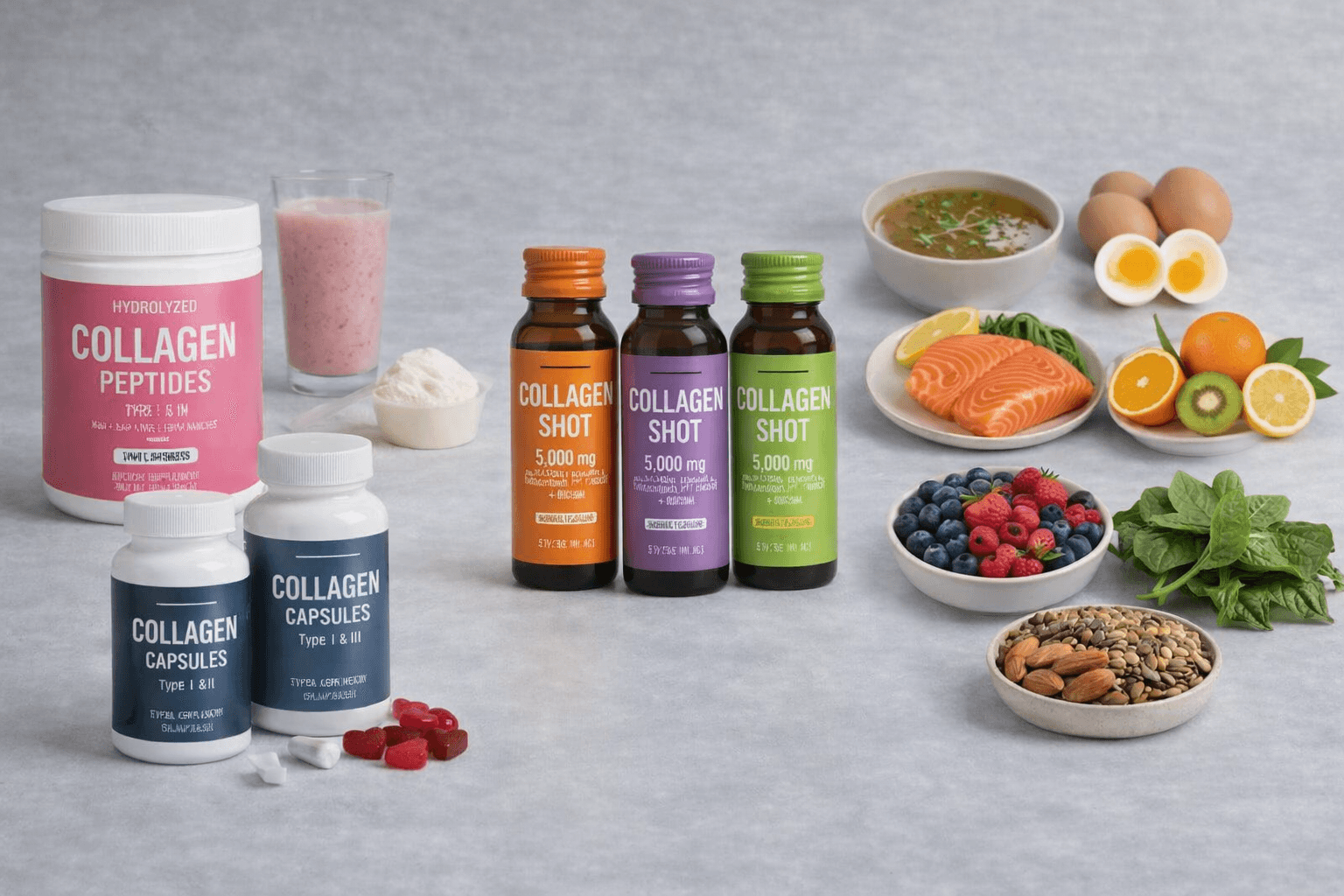
A Complete Guide to Supplements, Food Sources, and What the Science Really Says
Clinical Reference Edition | Evidence-Based | Fast Read
Wait, What Even IS Collagen?
Picture your body as a giant building. Collagen is the steel framework holding everything together. It is the most abundant protein in your entire body, making up roughly 30 percent of all your body's protein. Without collagen, your skin would sag like a deflated balloon, your joints would grind like rusty gears, and your bones would crumble like stale crackers. Not a pretty picture.
Collagen gives skin its springiness, helps joints glide smoothly, supports bones and muscles, speeds up wound healing, and even helps protect your organs. It is literally your body's super glue, scaffolding, and cushion all rolled into one amazing protein.
Here is the bad news: your body makes less collagen every single year after your mid-twenties. By the time you hit your forties, your body's collagen factory is running well below full capacity. This is why people start noticing wrinkles, achy joints, and slower healing as they get older.
The supplement industry noticed this problem and said, "We can sell you the answer!" Collagen supplements are now one of the bestselling wellness products in the world. But do they actually work? The answer is a very science-like: it depends. Let us break it all down.
How Collagen Supplements Actually Work
Most collagen supplements use something called hydrolyzed collagen or collagen peptides. This is collagen that has been broken down into tiny pieces called peptides. Think of it like chopping a very long rope into small, manageable pieces that your body can actually use.
When you swallow collagen peptides, your gut absorbs about 50 to 86 percent of them. That is actually quite good for a supplement. The tiny pieces travel through your bloodstream and have been detected in skin tissue within one to two hours after you take them. Once they arrive, they may stimulate your body's own collagen-making cells called fibroblasts to kick things up a gear.
THE SCIENCE BEHIND THE SUPPLEMENT
Collagen peptides may work by:
Telling fibroblast cells to make more collagen
Blocking enzymes that break down existing collagen
Activating a pathway called TGF-beta that promotes collagen production
Providing building blocks (amino acids) like glycine, proline, and hydroxyproline
Even tweaking your gut bacteria in ways that may help your skin
Bioavailability: 50 to 86 percent absorbed as peptides (especially Gly-Pro-Hyp)
Peak blood levels: 1 to 2 hours after taking supplement
Detected in: Skin tissue, bloodstream
Not All Collagen Is the Same
Collagen supplements come from several animal sources, and the source matters. Here is your quick cheat sheet:
Source | Where It Comes From | Best Known For | Watch Out If... |
|---|---|---|---|
Bovine (Beef) | Cow hides and bones | Skin, joints, bones | You avoid beef for religious or dietary reasons |
Marine (Fish) | Fish skin, scales, jellyfish, shellfish | Skin hydration, absorption | You have fish or shellfish allergies |
Porcine (Pork) | Pig skin and bones | Skin and joint support | You avoid pork for religious reasons |
Chicken | Chicken cartilage and skin | Joint support, type II collagen | You have poultry allergies |
Vegan alternatives | Yeast, bacteria (NOT actual collagen) | Collagen cofactors only | You expect actual collagen (these do not contain it) |
A quick important note on vegan collagen: there is no such thing as real plant-based collagen. Plants cannot make collagen. Products labeled vegan collagen typically contain vitamin C, amino acids, and other nutrients that support your body's own collagen production. They can still be helpful, but they are not the same thing as actual collagen peptides.
What Does the Science Actually Say?
Here is where things get interesting and a little complicated. A massive 2025 review pulled together 113 clinical trials involving nearly 8,000 people. The good news: collagen supplements are not just expensive sugar pills. The less good news: the science still has big gaps.
There is one very important thing to know before we dive into the research findings. A 2025 study found that when researchers looked only at high-quality, independently funded studies (meaning studies NOT paid for by the companies selling collagen), the results for skin aging largely disappeared. Studies funded by collagen companies showed great benefits. Studies funded by independent sources showed little to none. This is called industry sponsorship bias, and it is a major issue in supplement research. Always remember: who paid for the study matters a lot.
IMPORTANT: THE QUALITY PROBLEM
Out of 16 major reviews examined, 15 were rated low or critically low quality.
This does NOT mean collagen does not work. It means the studies had problems like:
Not being registered in advance
Poor reporting of biases
Short durations with few participants
Huge variety in doses and measurement methods
Mostly funded by supplement companies
Bottom line: More independent, high-quality research is still needed.
The Most Promising Benefits (With Evidence Grades)
Benefit | Strength of Evidence | Best Dose | Time Needed | Who Benefits Most |
|---|---|---|---|---|
Joint pain in osteoarthritis | Moderate (but inconsistent) | 10 g per day | 12 to 24 weeks | People with diagnosed osteoarthritis |
Muscle recovery in athletes | Low to moderate | 10 to 15 g per day | At least 8 weeks | Active adults with joint pain |
Skin hydration | Low (bias concerns) | 2.5 to 10 g per day | 4 to 12 weeks | Women aged 40 to 60 |
Skin elasticity | Low (bias concerns) | 2.5 to 10 g per day | 8 to 12 weeks | Women with photoaged skin |
Wrinkle reduction | Low (bias concerns) | 1.65 to 10 g per day | 12 weeks | Women with sun damage |
Cellulite reduction | Moderate | 2.5 g per day | 6 months | Normal-weight women |
Muscle mass in elderly | Moderate (with exercise) | 15 g per day | 12 weeks | Elderly men with muscle loss |
Hair diameter | Low | 1 g per day | 24 weeks | Adults with thinning hair |
When Should You Consider Collagen? (Indications)
An indication means a reason to use something. Here are the populations and situations where collagen supplementation has the most scientific support, along with honest explanations of how strong that support actually is.
1. Osteoarthritis and Joint Pain
This is where collagen gets its best report card. A 2024 study of 35 clinical trials involving more than 3,000 patients found that collagen supplements produced small to moderate improvements in joint pain and function. Another 2025 review of 11 trials confirmed significant improvements in both pain scores and movement.
However, it is not a slam dunk. A 2025 independent trial (not funded by the supplement industry) found that collagen was no better than a placebo for knee osteoarthritis over 12 weeks. The U.S. Department of Veterans Affairs guidelines note that collagen improved one type of pain scale but not another. So the evidence is real but inconsistent.
OSTEOARTHRITIS RECOMMENDATION
Strength: Weak to moderate
Who: Adults with diagnosed osteoarthritis or chronic joint pain
Dose: 10 g hydrolyzed collagen peptides daily
Duration: 12 to 24 weeks minimum
Timing: Can take any time; consistency matters more than timing
Caution: This is NOT a replacement for physical therapy, weight management, or prescribed medications
Note: Effects are modest; do not expect miraculous results
2. Athletes and Active People with Joint Pain
Collagen shines brightest in people who are physically active and experiencing exercise-related joint pain or injury. A 2024 review of 19 clinical trials found significant improvements in muscle and tendon health, body composition, and strength when collagen was combined with resistance training.
A 2023 clinical trial in middle-aged men found that 10 grams daily reduced exercise-induced muscle soreness and fatigue. For athletes, timing actually matters: taking collagen about 30 to 60 minutes before exercise may maximize how useful it is for repairing tissue during your workout.
ATHLETE RECOMMENDATION
Strength: Low to moderate
Who: Active adults with activity-related joint pain
Dose: 10 to 15 g hydrolyzed collagen peptides daily
Duration: At least 8 weeks
Best Timing: 30 to 60 minutes BEFORE exercise
Important: Combine with resistance training for best results
Caution: Collagen is a poor choice for building muscle compared to whey protein
3. Elderly Adults with Muscle Loss (Sarcopenia)
Sarcopenia is the medical word for age-related muscle loss. One well-designed clinical trial in elderly men with sarcopenia (average age 72) found that 15 grams of collagen peptides daily combined with three resistance training sessions per week for 12 weeks significantly improved muscle mass, muscle strength, and fat loss compared to placebo.
However, let us be honest: whey protein and leucine have stronger evidence for muscle building in the elderly. Collagen is a distant second choice because its amino acid profile is not as complete as other proteins. Think of it as a backup option, not the first call.
ELDERLY SARCOPENIA RECOMMENDATION
Strength: Moderate (but better options exist)
Who: Elderly adults experiencing muscle loss
Dose: 15 g daily combined with resistance training
Duration: At least 12 weeks
Training: 3 sessions per week of resistance exercise
Better alternatives: Whey protein or leucine should be tried first
Note: Works best as an add-on to, not replacement for, complete protein sources
4. Skin Aging (With Heavy Caveats)
This is the most popular reason people take collagen, and the science is the most controversial. Multiple clinical trials and a 2021 meta-analysis of 19 studies found improvements in skin hydration, elasticity, and wrinkles after 90 days of supplementation. The biological mechanism is real.
BUT: the 2025 quality-adjusted analysis found that high-quality, independently funded studies showed no significant benefits for skin. Industry-funded and lower-quality studies showed benefits. This is a big red flag. Until more independent high-quality studies are done, the honest answer is: maybe it helps, maybe it does not.
SKIN AGING RECOMMENDATION
Strength: LOW (serious bias concerns in existing research)
Who: Adults interested in skin hydration or elasticity
Dose: 2.5 to 5 g hydrolyzed peptides daily (if choosing to try)
Duration: At least 12 weeks before assessing benefit
PROVEN ALTERNATIVES: Topical tretinoin increases collagen by 80 percent
Daily SPF sunscreen prevents photoaging (most evidence-based approach)
Adequate vitamin C intake supports natural collagen production
Bottom line: Cannot be recommended as evidence-based practice for skin aging
5. Cellulite Reduction
This is one area where collagen has surprisingly decent evidence. A 6-month clinical trial of 105 women found that 2.5 grams per day of bioactive collagen peptides significantly decreased cellulite and skin waviness in normal-weight women. The same effects were much weaker in overweight women.
Another 24-week trial found improvements in cellulite severity and skin roughness with 1 gram per day of low-molecular-weight collagen peptides. The catch: you need to be close to your healthy weight for this to work well.
When Should You NOT Take Collagen? (Contraindications)
Contraindications are reasons to avoid something. Unlike many supplements, collagen has very few absolute contraindications, but there are important ones to know.
Absolute Contraindications (Do Not Use)
Known allergy to the collagen source: If you are allergic to fish, shellfish, beef, pork, or chicken, you MUST avoid collagen derived from those animals. Allergic reactions can range from hives and stomach upset to serious anaphylaxis. Always read the label carefully.
Vegetarian or vegan dietary practice: Collagen is animal-derived. Plant-based alternatives exist but do not contain actual collagen.
Confirmed allergy to collagen products: Rare but documented. If you had a reaction to collagen before, do not try again without medical supervision.
Relative Contraindications (Use With Caution)
People needing high-quality protein for muscle building: Collagen is an INCOMPLETE protein. It is missing key amino acids like tryptophan and is low in branched-chain amino acids. If your goal is building muscle, choose whey protein, casein, or other complete proteins instead.
Patients with phenylketonuria (PKU): Collagen contains phenylalanine. People with PKU must manage their intake of this amino acid very carefully.
Pregnant or breastfeeding women: Not enough safety data exists. Check with your doctor first.
Children under 18: No established safety data for collagen supplementation in children or adolescents.
People with hypercalcemia: Some marine collagen products contain calcium. This is generally minimal, but people with high calcium levels should be cautious.
Who Should Not Expect Benefits
General population for anti-aging or preventive health: No high-quality independent evidence supports routine supplementation
People expecting dramatic results: Effects in positive studies are modest
Overweight individuals for cellulite: The benefit is significantly reduced compared to normal-weight individuals
Anyone with nail disorders: Biotin or silicon have better evidence for brittle nails
People with hair loss using collagen alone: Only shows benefit as an addition to standard treatments, not as a standalone therapy
Special Populations and Restrictions
Who Gets the Least Dietary Collagen and Why It Matters
Even before we talk about supplements, certain populations barely get any collagen from their diet. This matters because understanding who is already running low helps us think about who might benefit from supplementation the most.
Population | Average Daily Collagen Intake | Key Problem | Risk Level |
|---|---|---|---|
Adult males | 4.0 g per day | Usually adequate dietary intake | Low |
Adult females (all ages) | 2.3 g per day | 42.5% less than males; lower food/meat intake | Moderate |
Middle-aged adults (40 to 64) | 3.3 g per day | Collagen turnover increases in menopause | Moderate |
Older adults (65 and older) | 2.9 g per day | Consume least when they need most | High |
Vegetarians and vegans | 0 g per day | No dietary collagen at all; 10% less collagen gene activity | High |
Malnourished individuals | Severely reduced | Even mild restriction slashes collagen synthesis | Very High |
Note: The recommended therapeutic dose from clinical trials is 10 to 15 grams per day. The average person gets 2 to 4 grams from food. This gap is why supplements exist, but it does not automatically mean supplements produce clinical benefits.
Populations at Highest Risk for Impaired Collagen Synthesis
Several medical conditions and life situations create collagen deficiency even when someone eats a reasonable diet. This is important because the problem is not just low intake but also the body's inability to make collagen properly.
Women Around Menopause
Women experience increased collagen breakdown in the years around menopause (roughly ages 40 to 60). At the same time, they already consume about 42 percent less dietary collagen than men. This double hit of reduced intake and increased breakdown makes perimenopausal women one of the key populations discussed in skin and joint collagen research.
Elderly Adults with Malnutrition
Here is a startling fact: cutting food intake to just 80 percent of normal for only 8 days significantly decreases collagen production. Cutting it to 20 percent drops collagen synthesis to less than 10 percent of normal levels. Collagen synthesis is more sensitive to undernutrition than almost any other protein in the body. Elderly adults in care facilities or with poor appetite are at serious risk.
Vegetarians and Vegans
People who eat no animal products get zero dietary collagen. Research shows vegetarians have about 10 percent lower collagen gene activity compared to meat eaters. Vegans also tend to have lower levels of key collagen-building amino acids like lysine and methionine. If you follow a plant-based diet, prioritizing vitamin C, lysine, and proline from plant sources becomes especially important for supporting your body's own collagen production.
People with Diabetes
Diabetes creates a functional collagen problem through two mechanisms. First, it causes a kind of vitamin C deficiency that reduces the activity of an enzyme (prolyl hydroxylase) needed to build collagen. Second, high blood sugar causes a process called glycation where sugar molecules stick to collagen proteins and make them stiff and dysfunctional. Managing blood sugar is the most important step for protecting collagen in diabetic patients.
People with Chronic Kidney Disease
Kidney disease causes a process called carbamylation where waste products from the kidney attach to collagen and change its structure. This competes with glycation for collagen modification and disrupts normal collagen function. At the same time, kidneys affected by chronic disease also accumulate too much collagen (fibrosis), creating a complicated situation.
People with Inflammatory Bowel Disease
Active Crohn's disease and ulcerative colitis cause dramatically increased collagen breakdown. The inflammation releases enzymes that literally chop up collagen. People with active IBD show collagen breakdown levels many times higher than healthy people. Even during remission, collagen breakdown markers remain abnormal. Paradoxically, IBD also causes collagen to build up in the wrong places (fibrosis).
Genetic Conditions Affecting Collagen
Some people are born with genetic mutations that directly affect collagen production or structure. These are not helped by collagen supplements because the problem is in the gene itself, not the diet:
Ehlers-Danlos Syndrome (EDS): 13 different types caused by mutations in 20 different genes. Affects types I, III, and V collagen. Causes joint hypermobility, skin hyperextensibility, and abnormal wound healing. One form (vascular EDS) causes life-threatening artery ruptures.
Osteogenesis Imperfecta (Brittle Bone Disease): Mutations in the genes for type I collagen cause fragile bones that break easily. Affects 10 to 30 percent of patients' hearts and blood vessels too.
Natural Food Sources of Collagen
Before you spend money on supplements, you might wonder: can I just eat my way to better collagen levels? The short answer is: sort of, but probably not enough to hit therapeutic doses.
Collagen Content in Foods
Food | Collagen Content Per Serving | Notes |
|---|---|---|
Beef tendon | 7.6 to 13.3 g | One of the highest food sources available |
Eel with skin | 7.6 to 13.3 g | Traditional Japanese food; excellent source |
Shark fin/tail with skin | 7.6 to 13.3 g | High content but sustainability concerns |
Chicken with skin and cartilage | 0.2 to 2.5 g | Common and accessible |
Pork with skin | 0.2 to 2.5 g | Good source; chicharrones are high |
Fish with skin | 0.2 to 2.5 g | Widely available; marine type |
Most meat dishes | 0.2 to 2.5 g | Average contribution from typical meals |
Bone broth (homemade or commercial) | Highly variable and unreliable | See important note below |
Gelatin (plain, unflavored) | Moderate | Collagen precursor; cheaper alternative |
Plant foods | 0 g | No collagen; contains precursor amino acids only |
THE BONE BROTH MYTH
Bone broth has become enormously popular as a collagen source. Here is the truth:
Studies show bone broth is an UNRELIABLE and INSUFFICIENT source of collagen precursors.
The amount of collagen-building amino acids (hydroxyproline, glycine, proline) varies wildly
between different preparations and brands.
Even the best bone broth provides far less collagen than supplement doses used in trials.
If you love bone broth, drink it for enjoyment. Just do not count on it as your collagen therapy.
Bioavailability: Supplements Win Hands Down
Here is an important comparison. Your body absorbs only about 30 percent of collagen from whole foods after digestion. Hydrolyzed collagen supplements have 50 to 86 percent bioavailability. This means to get the same amount of usable collagen from food that you get from one 10-gram supplement scoop, you would need to eat significantly more food collagen. This makes hitting therapeutic doses through diet alone very difficult for most people.
Collagen Cofactors: What Your Body Needs to MAKE Collagen
Even if you take collagen supplements, your body needs helper nutrients to process and use it. These are sometimes called collagen cofactors. If you are deficient in any of these, your collagen supplement may not work as well:
Nutrient | Why It Matters | Best Food Sources |
|---|---|---|
Vitamin C | Absolutely required for collagen production; deficiency causes scurvy and collagen collapse | Citrus fruits, bell peppers, strawberries, broccoli |
Glycine | Most abundant amino acid in collagen; may be deficient in osteoarthritis | Meat, fish, dairy, beans, spinach |
Proline | Structural amino acid in collagen; needed in large amounts | Egg whites, dairy, meat, wheat germ |
Lysine | Needed for collagen cross-linking and strength | Meat, fish, dairy, legumes |
Copper | Essential enzyme cofactor for collagen cross-linking | Shellfish, nuts, seeds, whole grains |
Zinc | Required for collagen synthesis enzyme activity | Meat, shellfish, legumes, nuts |
Iron | Needed for prolyl hydroxylase enzyme activity | Red meat, beans, fortified cereals, spinach |
Vitamin C deserves special mention. Without adequate vitamin C, your body literally cannot build collagen properly. The collagen it makes without vitamin C cannot fold into its correct shape and gets destroyed inside the cell. This is exactly why sailors with scurvy (severe vitamin C deficiency) experienced skin breakdown, joint pain, and wounds that would not heal. Taking collagen supplements without enough vitamin C is like trying to build a house without a hammer.
How to Use Collagen Supplements
Choosing the Right Form
Not all collagen supplements are created equal. Here is what to look for:
Form | What It Is | Best For | Recommendation |
|---|---|---|---|
Hydrolyzed collagen peptides (collagen hydrolysate) | Collagen broken into small peptides; 50-86% bioavailable | Most uses; skin, joints, athletes | PREFERRED FORM |
Undenatured type II collagen (UC-II) | Intact collagen with original structure; works differently | Joint-specific use only | Inconsistent results; not first choice |
Gelatin | Partially processed collagen; cooking grade | Dietary collagen boost; cooking | Cheaper alternative; lower bioavailability |
Marine collagen | From fish skin/scales; small peptides | Skin applications; absorption | Good option; avoid if fish allergic |
Bovine collagen | From cattle hides and bones; types I and III | Skin and joints | Most widely studied |
Chicken collagen | From cartilage; type II collagen | Joint-specific support | Less data than bovine |
Dosing Guide
Here are the evidence-based doses used in clinical trials. Remember: consistency over time matters far more than the exact dose.
Goal | Recommended Daily Dose | Duration | With or Without Food |
|---|---|---|---|
Osteoarthritis pain relief | 10 g hydrolyzed peptides | 12 to 24 weeks | Either; consistency is key |
Athletic joint support | 10 to 15 g hydrolyzed peptides | 8 weeks or more | 30 to 60 minutes before exercise |
Muscle mass (elderly with exercise) | 15 g hydrolyzed peptides | 12 weeks minimum | Combine with resistance training |
Skin hydration (if choosing to try) | 2.5 to 5 g hydrolyzed peptides | At least 12 weeks | With vitamin C for best results |
Cellulite reduction | 2.5 g bioactive peptides | 6 months | Consistent daily timing helps |
Hair diameter (adjunct) | 1 g low-molecular-weight peptides | 24 weeks | With cofactors; not as sole treatment |
Practical Tips for Using Collagen Supplements
Mix powder into coffee, smoothies, soups, or oatmeal. Quality hydrolyzed collagen dissolves well in both hot and cold liquids.
Take collagen at the same time each day to build a consistent habit. Morning coffee is a popular choice.
Add a source of vitamin C at the same time: a glass of orange juice, a kiwi, or a vitamin C supplement.
If taking for athletic recovery, time your dose 30 to 60 minutes before your workout session.
Give it real time. Do not judge results at two weeks. Meaningful changes take at least 8 to 12 weeks minimum.
Look for third-party tested products. Supplement quality is not regulated the same way medications are.
Check the source if you have allergies or dietary restrictions (fish, beef, pork, chicken).
Store powder in a cool, dry place. Follow the manufacturer's storage guidelines.
Medication Interactions and Drug Effects on Collagen
This is critically important information. Some common medications dramatically reduce collagen production, and some may interact with collagen supplements. This section is organized into two parts: medications that hurt your collagen, and what we know about interactions with collagen supplements themselves.
Medications That Reduce Collagen Production
Several medication classes significantly impair the body's ability to make collagen. If you are on these medications, you may be experiencing collagen-related side effects even without realizing it.
1. Corticosteroids (Prednisone, Dexamethasone, Hydrocortisone, and Others)
Corticosteroids are the most powerful pharmaceutical suppressors of collagen. Taking prednisone at a typical dose can reduce collagen synthesis by up to 95 percent. Topical steroid creams, when overused, cause skin thinning and stretch marks because they deplete skin collagen.
Mechanism: Corticosteroids make procollagen messenger RNA (the genetic instructions for making collagen) unstable, so it breaks down before the body can use it. They also reduce levels of TGF-beta, a key signal that tells cells to make more collagen.
CORTICOSTEROID COLLAGEN IMPACT
Systemic steroids (oral or injectable): Reduce collagen production by up to 95%
Topical steroids (chronic use): Cause skin atrophy, thinning, stretch marks
Risk factors for topical steroid harm: Higher potency, skin folds, older age, prolonged use
If you need long-term steroids: Discuss bone protection, wound healing support,
and connective tissue monitoring with your doctor
Do NOT stop prescribed steroids because of collagen concerns without medical guidance
2. Fluoroquinolone Antibiotics (Ciprofloxacin, Levofloxacin, Moxifloxacin, and Others)
Fluoroquinolone antibiotics carry a black box warning (the most serious FDA warning level) for tendon damage. The reason is collagen. These antibiotics are powerful iron chelators, meaning they grab onto iron, and iron is a necessary ingredient for an enzyme (prolyl 4-hydroxylase) that builds collagen properly. Without that enzyme working, collagen cannot form its correct shape.
A study of over 19 million people found that fluoroquinolone use significantly increased the risk of aortic aneurysm and rupture (OR 2.20), tendon disorders (OR 1.89), and retinal detachment (OR 1.25). Levofloxacin and ofloxacin appear to carry the highest tendon risk.
FLUOROQUINOLONE WARNING
Risk is HIGHEST when combined with:
Corticosteroids taken at the same time
Age over 60
Kidney disease
Organ transplant history
Prior tendon problems
Signs of tendon damage: New tendon pain, swelling, or difficulty using a joint
STOP the antibiotic and contact your doctor immediately if this occurs
Tendon rupture can occur even weeks after stopping the medication
3. Chemotherapy Drugs
Multiple cancer medications impair collagen production in different ways:
Drug Class | Examples | How It Hurts Collagen | Clinical Result |
|---|---|---|---|
Anthracyclines | Doxorubicin, Daunorubicin | Blocks two key enzymes needed for collagen production | Impaired wound healing after treatment |
Platinum compounds | Cisplatin | Suppresses TGF-beta signaling pathway | Skin thinning, accelerated aging |
Vinca alkaloids | Vincristine | Suppresses collagen gene expression | Skin thinning, aging effects |
Dexamethasone (antiemetic) | Used with chemo | Adds steroid-related collagen suppression | Bone loss, increased collagen breakdown |
4. Other Medications with Collagen Effects
Medication | Effect on Collagen | Clinical Significance |
|---|---|---|
Doxycycline (antibiotic) | Reduces collagen production; inhibits prolidase enzyme | May slow wound healing; used therapeutically in osteoarthritis |
Pentoxifylline (blood flow drug) | Reduces collagen gene activity by 40 to 50% | Useful in fibrosis treatment; may affect healing |
Interferon alpha/beta/gamma | Reduces collagen production via same pathway as pentoxifylline | Useful in fibrosis; may slow wound healing |
Colchicine (gout drug) | Suppresses collagen mRNA and blocks TGF-beta collagen stimulation | Therapeutic in fibrosis; may affect wound healing |
Aspirin (high doses) | Inhibits collagen synthesis by blocking prolidase | Relevant for patients on high-dose aspirin therapy |
Nintedanib and pirfenidone (lung fibrosis drugs) | Intentionally reduce collagen as their mechanism of action | Therapeutic for fibrosis; should not add collagen supplements |
Tretinoin topical (Retin-A) | INCREASES collagen synthesis by 80% | Evidence-based anti-aging collagen booster; beneficial effect |
Statins (in liver) | Reduce collagen synthesis in liver stellate cells by 40 to 45% | May be protective against liver fibrosis |
Known Interactions with Collagen Supplements
Here is the honest answer: there are very few documented drug-collagen supplement interactions because this has not been well studied. Collagen supplements have an excellent safety profile in clinical trials with no serious adverse events reported. However, there are some practical cautions:
Blood thinners (warfarin, apixaban, rivaroxaban): No confirmed interactions, but marine collagen contains omega-3 fatty acids in some forms which have mild blood-thinning properties. Discuss with your doctor.
Calcium supplements or medications for hypercalcemia: Some marine collagens contain calcium. Monitor total calcium intake.
Phenylketonuria (PKU) management: Collagen contains phenylalanine. People with PKU managing their amino acid intake carefully should account for this.
Immunosuppressants in transplant patients: These patients are already high-risk for fluoroquinolone-collagen damage. No specific collagen supplement interaction, but discuss all supplements with your transplant team.
If you are currently on drugs that intentionally reduce collagen (nintedanib, pirfenidone for fibrosis): Adding a collagen supplement works against the medication's purpose. Discuss with your doctor.
When to Limit or Stop Collagen Supplementation
Time-Based Limitations
Most clinical trials run 8 to 24 weeks. We do not have reliable data on long-term use beyond six months. Here are practical guidelines:
Stop and reassess after 12 to 24 weeks. If you notice no benefit after this time, continuing is unlikely to help.
Long-term safety data beyond 6 months is limited. This does not mean it is unsafe, just unstudied.
Effects may plateau. The improvements seen in positive studies tend to build over weeks and may not continue indefinitely.
Situations That Call for Stopping or Pausing
You develop any allergic reaction: hives, difficulty breathing, throat swelling, severe stomach upset. Stop immediately and seek medical care.
You are about to have surgery. Discuss all supplements with your surgical team at least 2 weeks before any procedure.
You become pregnant or are trying to conceive. Consult your doctor before continuing any supplement.
You are diagnosed with a condition that includes fibrosis (kidney, liver, lung): Adding collagen may worsen fibrotic conditions. Discuss with your specialist.
Your kidney function declines significantly. Adjust total protein intake (including supplements) in consultation with your nephrologist.
You start a medication that intentionally reduces collagen production for therapeutic purposes (like nintedanib or pirfenidone).
Situations Where Collagen Simply Is Not the Right Tool
Nail disorders: Save your money. Biotin (2.5 mg daily) or silicon (10 mg daily) have better evidence for brittle nails.
General protein supplementation for muscle building: Whey protein, casein, or other complete proteins are significantly superior. Collagen lacks tryptophan and has a poor branched-chain amino acid profile.
Wound healing in patients on steroids or chemotherapy: Address the underlying medication effect with your doctor rather than adding collagen supplements, which have not been proven helpful in this context.
As a replacement for physical therapy or weight management for joint pain: These interventions have far stronger evidence. Collagen at best is an add-on, never a replacement.
Safety Profile and Side Effects
Here is some genuinely good news: collagen supplements are very well tolerated. In clinical trials involving thousands of participants, the rate of side effects has been remarkably low.
Side Effect | How Common | Severity | What to Do |
|---|---|---|---|
Feeling full or bloated | 2 to 5% of users | Mild | Reduce dose temporarily; take with food |
Unpleasant taste | 2 to 5% of users | Mild | Mix with flavored drinks or smoothies |
Occasional constipation | 2 to 5% of users | Mild | Increase water intake |
Occasional loose stools | 2 to 5% of users | Mild | Reduce dose; spread over the day |
Allergic reaction (source-specific) | Rare | Potentially serious | Stop immediately; seek medical care |
Serious adverse events | None reported in trials | N/A | N/A |
No laboratory abnormalities or serious health problems have been reported in well-designed clinical trials of collagen supplementation at standard doses. The safety profile is one of the strongest arguments for a carefully monitored trial of collagen in appropriate populations.
The Bottom Line: A Quick Reference Summary
COLLAGEN SUPPLEMENTATION: EVIDENCE SUMMARY CARD
BEST SUPPORTED USES:
Osteoarthritis pain: Weak to moderate support (10 g/day for 12 to 24 weeks)
Athletic joint pain: Weak to moderate support (10 to 15 g/day before exercise)
Elderly muscle loss WITH exercise: Moderate support (15 g/day for 12+ weeks)
Cellulite in normal-weight women: Moderate support (2.5 g/day for 6 months)
NOT SUPPORTED BY HIGH-QUALITY INDEPENDENT RESEARCH:
Skin anti-aging (bias concerns in existing studies)
General preventive health in healthy people
Nail health (biotin or silicon are better options)
Hair loss as a standalone treatment
PREFERRED FORM: Hydrolyzed collagen peptides
BEST FOOD SOURCES: Beef tendon, eel with skin, chicken with skin, fish with skin
DO NOT COUNT ON: Bone broth (unreliable collagen content)
MEDICATIONS THAT HURT YOUR COLLAGEN: Corticosteroids (up to 95% reduction),
fluoroquinolone antibiotics (FDA black box warning), anthracycline chemotherapy
SAFETY: Excellent. Very rare mild GI side effects. No serious events in trials.
ALWAYS CHECK FOR: Allergies to source animal; drug interactions; no data in pregnancy
The Honest Cost-Benefit Analysis
Collagen supplements are not cheap. A month's supply at therapeutic doses typically costs between 30 and 80 dollars. Before spending that money, consider:
Are you eating enough vitamin C? If not, fix that first. It is far cheaper and more proven for collagen production.
Are you doing resistance exercise? For joint pain and muscle health, exercise alone has better evidence than collagen alone.
Are you at a healthy body weight? For joint pain and cellulite, weight management has stronger evidence than any supplement.
Do you smoke? Smoking degrades collagen significantly. Quitting is the most evidence-based "collagen supplement" that exists.
Are you sleeping well? Poor sleep accelerates collagen breakdown. Better sleep may do more for your skin than any supplement.
Are you protecting your skin from the sun? UV radiation is one of the biggest destroyers of skin collagen. Daily SPF sunscreen is non-negotiable for skin collagen protection.
If you have checked all of those boxes and still want to try collagen, the evidence is good enough to support a trial run in appropriate people, with appropriate expectations, and for an appropriate duration. Just do not expect miracles, and do give it at least 12 weeks before deciding whether it is working.
Final Word: What Your Doctor Wishes You Knew
Collagen supplements represent one of the more nuanced supplement categories. Unlike some supplements with essentially no evidence at all, and unlike prescription medications with very strong evidence, collagen occupies a middle ground: biologically plausible, occasionally supported by research, often complicated by study quality issues, and overall safe to try in the right people.
The most important thing to take from this guide is not whether to take or avoid collagen, but rather to make an informed decision based on your specific situation, your goals, your medical history, your medications, and realistic expectations about what the science can and cannot promise.
Talk to your doctor before starting any new supplement, especially if you have chronic health conditions or take prescription medications. Collagen supplements are generally safe, but the best results come from using them as part of a comprehensive approach that includes a nutrient-rich diet, regular physical activity, adequate sleep, sun protection, and avoidance of smoking.
Your body has been making collagen for your entire life. Give it the tools it needs, and it will do the best job it can.
References and Evidence Quality
This article synthesizes evidence from 113 clinical trials, 16 systematic reviews, and multiple meta-analyses including publications from Osteoarthritis and Cartilage, The American Journal of Medicine, Sports Medicine, The British Journal of Nutrition, Journal of Agricultural and Food Chemistry, Drug Safety, Nature Reviews Disease Primers, The Lancet, JAMA, and other peer-reviewed sources through 2025. All dosing recommendations reflect protocols used in published clinical trials.
This document is intended as a clinical educational reference.
It does not replace individualized medical advice from a qualified healthcare provider.
HSA/FSA Eligible
Doctors Are Human.
That's Why There's Medome.
Start your free trial today. No credit card required.
Start Your Free Trial
Join thousands protecting their health with AI that never forgets

Critical details get missed when your health information is scattered. Medome connects the dots across your complete record.
Start Your Free Trial
Get In Touch
Email: service@medome.ai
Phone: (617) 319-6434
This is Dr. Steven Charlap's cell. Please text him first, explaining who you are and how he can help you. Use WhatsApp outside the US.
Hours: Mon-Fri 9:00AM - 9:00PM ET