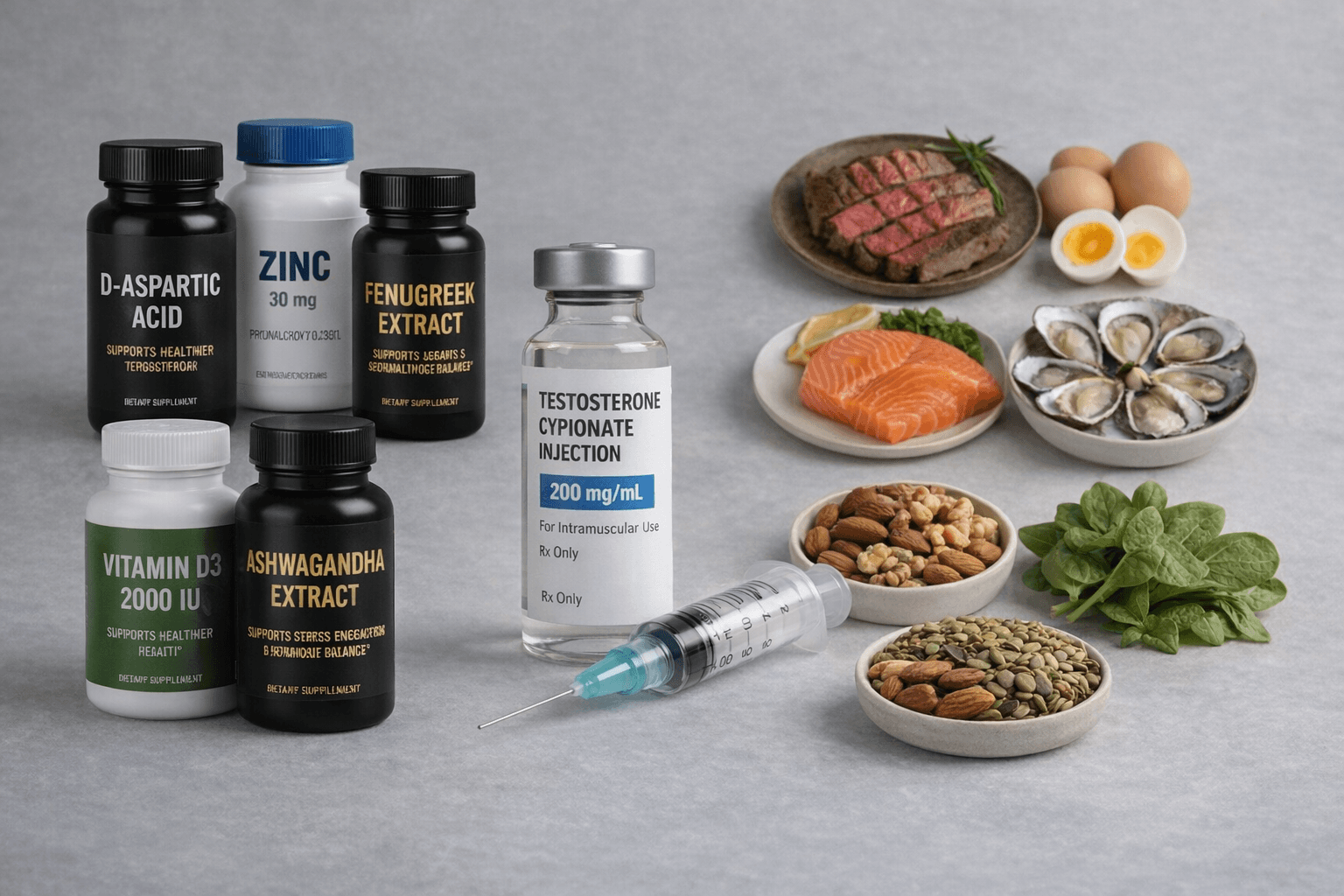
A Comprehensive, Evidence-Based Patient Education Guide
IMPORTANT DISCLAIMER
This guide is for education only. It is NOT medical advice. Always talk to a real doctor before starting, stopping, or changing any treatment. Seriously.
Chapter 1: What Is Testosterone, Anyway?
Let's start with the basics. Testosterone is a hormone, which is basically a tiny chemical messenger that travels through your blood and tells different parts of your body what to do. Think of it like a group text from your body's control center.
In men, testosterone is made mainly in the testicles (about 95%) and a small amount in the adrenal glands (the little hats that sit on top of your kidneys). Women also make testosterone, but in much smaller amounts.
What Does Testosterone Actually Do?
Testosterone is the hormone behind a lot of what makes male bodies look and act the way they do, especially starting in puberty. Here is what it is responsible for:
Growing facial hair, body hair, and pubic hair
Deepening the voice
Building muscle mass and bone strength
Producing sperm
Controlling sex drive (libido)
Helping with erections
Regulating mood and energy (kind of, more on this later)
Helping red blood cells form
Keeping body fat in check
Normal Testosterone Levels
Testosterone is measured in nanograms per deciliter, written as ng/dL. Think of it like measuring a tiny pinch of salt dissolved in a big cup of water.
Group | Testosterone Level |
|---|---|
Normal adult men | 300 to 1,000 ng/dL |
Low (hypogonadism) | Below 300 ng/dL |
Unequivocally low | Below 200 to 275 ng/dL |
Optimal treatment target | 450 to 600 ng/dL |
Normal adult women | 15 to 70 ng/dL |
Timing Matters!
Blood tests for testosterone should be done in the morning, when levels are at their highest. An afternoon test can make a normal person look low. Tests should be done while fasting (no food for several hours). Most experts recommend two separate fasting morning tests before making any diagnosis.
The Brain Connection: How Your Body Controls Testosterone
Your body does not just make testosterone randomly. It follows a chain of command:
The hypothalamus (deep in your brain) releases a signal called GnRH.
GnRH tells the pituitary gland (a pea-sized gland behind your nose) to release two more signals: LH and FSH.
LH travels to the testicles and tells them to make testosterone.
When testosterone levels get high enough, it sends a message back up to the brain to slow down.
This system is called the HPG axis (Hypothalamic-Pituitary-Gonadal). It is like a thermostat for your testosterone. This matters a lot when we talk about testosterone supplements, because adding testosterone from outside disrupts this loop.
Chapter 2: Low Testosterone, or "Hypogonadism"
"Hypogonadism" is the medical word for when the gonads (testicles in men) do not make enough testosterone. It sounds scary, but the word just means the glands are underperforming.
Fun Fact
The word hypogonadism comes from Greek roots: "hypo" means under, and "gonad" refers to the reproductive glands. So it literally just means "underactive glands."
Two Types of Hypogonadism
Not all low testosterone is the same. Doctors put it in two main categories:
Type 1: Primary Hypogonadism (The Testicles Are the Problem)
Here, the testicles themselves are not working right. The brain is sending the right signals (LH and FSH are high), but the testicles are not responding. Causes include:
Klinefelter syndrome (a genetic condition where men have an extra X chromosome)
Injury or trauma to the testicles
Cancer treatment (chemotherapy or radiation aimed at the pelvis)
Infections like mumps that damage testicular tissue
Undescended testicles at birth
Type 2: Secondary Hypogonadism (The Brain or Pituitary Is the Problem)
Here, the testicles are fine, but the brain is not sending the right signals. Causes include:
Pituitary tumors or damage
Injury to the hypothalamus
Opioid pain medication (long-term use strongly suppresses testosterone signals from the brain)
Obesity (fat cells convert testosterone into estrogen)
Type 2 diabetes and metabolic syndrome
Long-term use of steroid medications like prednisone
Important Distinction
Organic (or classical) hypogonadism means there is a real physical cause. Age-related or obesity-related low testosterone is sometimes called functional hypogonadism. These two groups often respond differently to treatment.
Symptoms of Low Testosterone
Here is where things get tricky. Low testosterone causes some symptoms, but many symptoms people blame on low T actually have other causes. Researchers at the University of Gothenburg found that the connection between testosterone and symptoms like fatigue and depression is much weaker than most people think.
The symptoms most reliably linked to low testosterone are sexual symptoms. Everything else is much less certain.
Symptom | Connection to Low T |
|---|---|
Reduced sex drive (libido) | Strong link to low T |
Poor morning erections | Strong link to low T |
Difficulty with erections (erectile dysfunction) | Moderate link, but many other causes |
Reduced sperm production | Strong link to low T |
Loss of body or facial hair | Moderate link to low T |
Reduced muscle mass | Moderate link to low T |
Increased body fat, especially belly fat | Moderate link to low T |
Decreased bone density | Moderate link to low T |
Anemia (low red blood cells) | Moderate link to low T in older men |
Fatigue and tiredness | Weak link; usually other causes |
Depression and mood changes | Weak link; usually other causes |
Difficulty concentrating | Very weak link |
The Gothenburg Research Warning
A major university study found that fatigue and depression in men lack a clear connection to testosterone deficiency. Age, lifestyle, obesity, and belly fat are stronger drivers of these symptoms than testosterone levels. Treating fatigue and depression with testosterone when the real cause is something else is unlikely to help and could cause harm.
The Diagnosis: It Is Not Just a Number
This is critically important: a single low testosterone number is NOT enough to diagnose hypogonadism. The diagnosis requires both of these things together:
Two separate fasting morning blood tests both showing testosterone below 300 ng/dL
Symptoms that are consistent with low testosterone, especially sexual symptoms
Routine screening of all men (checking testosterone in men with no symptoms) is NOT recommended. There is no evidence that treating asymptomatic men with low testosterone does any good.
Chapter 3: Who Should Get Their Testosterone Checked?
Testing should only happen when there is a good reason to suspect low testosterone. Doctors call these "clinical indications."
Symptoms That Should Prompt Testing
Decreased sexual desire or libido
Erectile dysfunction, especially with loss of morning erections
Reduced testicular size
Loss of body or facial hair
Breast tissue growth in men (gynecomastia)
Hot flashes in men
Medical Conditions That May Require Testing
Unexplained anemia (low red blood cell count)
Low bone density or osteoporosis
Type 2 diabetes
HIV infection
Long-term opioid pain medication use
Infertility
Pituitary gland disorders
Long-term corticosteroid use (like prednisone)
History of chemotherapy or radiation to the pelvis
Who Should NOT Be Routinely Tested?
Men with no symptoms, men who are just tired or stressed, men who want to "optimize" without any symptoms, and men who heard about low T from a TV commercial. Mass screening is not supported by medical evidence.
Chapter 4: Testosterone Therapy: The Big Picture
Testosterone therapy means adding testosterone to the body from an outside source, usually through a skin gel, injection, pellet under the skin, or pill. Let us look at the big overview before getting into the details.
What Testosterone Therapy Is FDA Approved For
The US Food and Drug Administration (FDA) has officially approved testosterone therapy for men with primary or secondary hypogonadism that comes from a real physical disorder of the hypothalamus, pituitary gland, or testicles. This is sometimes called organic or classical hypogonadism.
A large part of the increase in testosterone prescriptions in the United States over the past 20 years has been in men with nonspecific symptoms and age-related low testosterone. This is a grayer area where the evidence is less strong.
NOT an Anti-Aging Drug
Testosterone therapy is not approved and not recommended as a general anti-aging treatment. Being older is not a medical diagnosis. The evidence does NOT support testosterone for asymptomatic men, men with borderline-low testosterone, or men who just want to feel younger.
Chapter 5: Indications: Who Should Actually Use Testosterone Therapy?
An "indication" is a medical reason to use a treatment. Here are the groups for whom testosterone therapy is supported by evidence, ranked from strongest to weakest evidence.
Group 1: Men With Organic (Classical) Hypogonadism
Recommendation: OFFER TREATMENT
Men with confirmed organic hypogonadism have the clearest indication for lifelong testosterone replacement.
If there is a real, identifiable cause of low testosterone (like Klinefelter syndrome, a pituitary tumor, testicular damage from cancer treatment), testosterone therapy is considered standard care. These men benefit clearly in:
Sexual function and libido
Bone density and bone strength
Muscle mass and body composition
Quality of life and well-being
Group 2: Older Men (Age 65+) With Severe Hypogonadism and Sexual Symptoms
Recommendation: INDIVIDUALIZED DECISION
Therapy may be considered only for symptomatic men with consistently low testosterone (below 200 to 275 ng/dL), after a careful discussion of risks and benefits.
The Endocrine Society recommends AGAINST routinely prescribing testosterone to ALL older men with low testosterone. However, in men over 65 with specific symptoms (especially low libido or unexplained anemia) and unequivocally low morning testosterone levels, individual therapy may be discussed.
Research from the Testosterone Trials (790 men, average age 72, average testosterone 234 ng/dL) showed:
Moderate improvements in sexual function
Small improvements in walking distance and mood
Correction of anemia in 58% of anemic participants
Increased bone density
Who benefits most in this group: men with testosterone below 200 ng/dL, those with anemia, and those with prominent sexual symptoms. Men with obesity and metabolic conditions who are only slightly below normal are less likely to benefit.
Group 3: Hypogonadal Men With Unexplained Anemia
Recommendation: CONSIDER TREATMENT
Testosterone is highly effective for correcting anemia in hypogonadal men and may be the only proven treatment for unexplained anemia in older hypogonadal men.
Among hypogonadal men with anemia, clinical trial data showed:
54% achieved a hemoglobin increase of 1.0 g/dL or more with testosterone (versus only 15% with placebo)
58% were no longer anemic at 12 months (versus 22% with placebo)
Benefits included improved energy and walking distance
Testosterone fights anemia by suppressing a protein called hepcidin, which unlocks iron stores in the body so they can be used to make more red blood cells.
Group 4: Men With Hypogonadism and Low Bone Density
Men with hypogonadism and documented low bone density or osteoporosis benefit from testosterone's effects on bone. Studies show increases of 3 to 7% in cortical bone density and 8.5% in estimated spine bone strength over 1 to 2 years. However, there is an important safety catch covered in Chapter 7.
Group 5: Men With Obesity and Metabolic Syndrome (Adjunctive Only)
Recommendation: LIFESTYLE FIRST
Testosterone therapy is NOT a substitute for weight loss. It may be considered as add-on therapy only in symptomatic men with confirmed low free testosterone who have already tried lifestyle changes.
About one-third of men with obesity or type 2 diabetes have low free testosterone. This represents a functional problem, not a permanent one. Research shows that in these men, testosterone therapy can produce:
Weight loss of about 3.9 kg (8.6 lbs) and waist reduction of 2.8 cm (1.1 inches)
Reduction in HbA1c (blood sugar marker) of 0.67%
Improved insulin sensitivity and cholesterol levels
Reduced progression from prediabetes to diabetes
However, low testosterone in obesity is often reversible just with weight loss. The priority should be lifestyle changes, with testosterone as support only for truly hypogonadal, symptomatic men.
Chapter 6: Contraindications: Who Should NOT Use Testosterone Therapy?
A contraindication is a reason NOT to use a treatment. Some contraindications are absolute (never, ever, under any circumstances). Others are relative (be very careful and discuss with a specialist).
Absolute Contraindications: Hard No's
ABSOLUTE NO
If ANY of these apply to you, testosterone therapy must NOT be used.
Contraindication | Why It Matters |
|---|---|
Active breast cancer or prostate cancer | Testosterone can fuel growth of certain cancer cells |
Planning to have children soon | Testosterone completely shuts down sperm production |
Hematocrit above 50 to 54% | Testosterone thickens the blood, increasing clot risk |
Uncontrolled severe heart failure | Added fluid retention can worsen heart failure |
Heart attack or stroke within the last 6 months | Too dangerous during recent cardiovascular events |
Severe untreated sleep apnea | Testosterone worsens breathing during sleep |
Thrombophilia or recent blood clot (without anticoagulation) | High clot risk becomes higher |
Palpable prostate nodule or PSA above 4 ng/mL (without urology evaluation) | Must rule out prostate cancer first |
Severe urinary symptoms (IPSS score above 19) | Testosterone can worsen urinary blockage |
Desire for fertility NOW | Testosterone is absolutely contraindicated; use alternative medications |
Relative Contraindications: Use With Extreme Caution
These do not automatically rule out testosterone therapy but require very careful discussion with a specialist:
Controlled sleep apnea
Prior blood clots on anticoagulation medication
PSA between 3 and 4 ng/mL in men over 40
Men with a family history of prostate cancer
Borderline erythrocytosis (hematocrit 48 to 50%)
Chapter 7: Benefits of Testosterone Therapy (The Good News)
When used in the right person for the right reason, testosterone therapy provides real, measurable benefits. Here is what the evidence actually shows:
1. Sexual Function
This is where testosterone therapy works best. Studies consistently show improvements in:
Sexual desire and libido
Frequency of sexual activity
Quality of erections (morning erections particularly)
Overall sexual satisfaction
A major analysis combining results from 1,779 patients found small but statistically significant improvements in libido, erectile function, and sexual satisfaction. The benefits are most pronounced in men whose testosterone was below 200 ng/dL. Men with levels only slightly below normal, or those who have obesity or metabolic conditions, see much less benefit.
Erectile Dysfunction Caution
If erectile dysfunction is your only symptom and your sex drive is perfectly fine, testosterone is unlikely to help much. Erectile dysfunction has many causes including blood vessel disease, nerve damage, stress, and medications. Testosterone is most effective when low libido is part of the picture.
2. Anemia Correction
In older hypogonadal men with anemia, testosterone therapy is highly effective. In clinical trials:
54% of treated men achieved meaningful hemoglobin improvement versus only 15% on placebo
58% of treated men were no longer anemic at 12 months versus 22% on placebo
Associated improvements in energy levels and walking ability
3. Body Composition (Muscle and Fat)
Testosterone consistently produces the following effects on body composition:
Increases lean body mass by approximately 2 kg (4.4 lbs)
Reduces fat mass, especially dangerous visceral (belly) fat
In men with obesity and hypogonadism, long-term therapy (6 to 8 years) produces sustained weight loss of 13 to 14% with reductions in waist size
Researchers also found that muscle health and testosterone are linked in a specific way: higher testosterone is connected to both higher total muscle mass and less fat stored inside the muscles. This matters because intramuscular fat is bad for metabolism and longevity. Interestingly, estradiol (a type of estrogen that men also have in small amounts) was also positively linked to muscle area, showing that hormones work in a complex team.
4. Metabolic Effects (Blood Sugar and Cholesterol)
In hypogonadal men with type 2 diabetes or metabolic syndrome, testosterone therapy shows:
Reduction in HbA1c (the 3-month blood sugar average) of 0.67%
Improved insulin sensitivity
Decreased LDL cholesterol and triglycerides
Reduced waist circumference
Reduced progression from prediabetes to full diabetes
Long-term registry data show that with sustained treatment over 6 years, HbA1c dropped from an average of 8.1% to 6.1%, which is a clinically meaningful improvement.
5. Bone Density and Bone Strength
Testosterone increases volumetric bone mineral density by 3 to 7% in cortical bone and estimated bone strength by 8.5% in trabecular (spongy) spine bone over 1 to 2 years. Effects are most pronounced in the spine and hip, which are common fracture sites.
6. Mood and Energy
Here is where the evidence gets weaker. Testosterone does produce:
Small improvements in mood (3 to 4% improvement)
Modest reductions in depressive symptoms (6 to 10% reduction), especially in men without a full major depressive disorder
Modest energy improvements (4 to 5% greater improvement than placebo)
Not a Cure for Depression or Fatigue
The University of Gothenburg research confirmed that fatigue and depression in men are usually caused by other factors: age, lifestyle, belly fat, and coexisting medical conditions. Testosterone is not a reliable treatment for these symptoms and should not be the first-line approach.
Chapter 8: Risks and Side Effects (The Honest Truth)
Every medication has risks. Here is an honest look at what we know:
1. Cardiovascular Risk (Heart Attacks and Strokes): GOOD NEWS
This was the big scary question about testosterone therapy for years. The landmark TRAVERSE trial (5,198 men, followed for an average of 22 months) definitively answered it: testosterone therapy does NOT increase the risk of heart attack, stroke, or cardiovascular death.
The hazard ratio was 0.96 with a confidence interval of 0.78 to 1.17, meaning there was essentially no difference compared to placebo. This finding is backed up by 19 separate meta-analyses and multiple large trials. The Androgen Society has stated it has been conclusively determined that testosterone is not associated with increased cardiovascular risk.
Bottom Line on Heart Safety
Major cardiovascular events (heart attack, stroke, cardiovascular death) are NOT increased by testosterone therapy in appropriately selected men. This fear has been largely put to rest by the evidence.
2. Blood Clots (Venous Thromboembolism): REAL RISK
Here, there is a real but small increased risk. In the TRAVERSE trial:
24 pulmonary embolism (lung blood clots) events occurred in the testosterone group
Only 12 events occurred in the placebo group
The hazard ratio was 1.46 (about 46% higher risk)
Absolute risk: 0.9% with testosterone versus 0.5% with placebo
The absolute risk is still low, but it is real. Men with prior blood clots should not use testosterone without anticoagulation, and this history is an absolute contraindication.
3. Fracture Risk: THE BIG SURPRISE (and Concern)
UNEXPECTED FINDING - MAJOR SAFETY CONCERN
Despite improving bone density, testosterone therapy increased clinical fracture risk by 43% in the TRAVERSE trial. This was completely unexpected and remains under active investigation.
Most fractures involved the ankle, wrist, and ribs, which are classic osteoporosis-type fracture sites. The fractures happened early in treatment, suggesting that the increased fracture risk is NOT related to the bone density changes, since bone density takes much longer to improve. The exact mechanism remains unknown.
What this means for patients:
Careful patient selection is now even more important
Annual fracture risk assessment is recommended for older men on testosterone therapy
Men with obesity who are already at increased fracture risk need extra caution
4. Blood Thickening (Erythrocytosis): MOST COMMON SIDE EFFECT
This is the most common side effect of testosterone therapy. Testosterone stimulates the bone marrow to make more red blood cells. Too many red blood cells makes the blood thick and sluggish, increasing the risk of clots.
Risk statistics: Men on testosterone have an 8-fold increased risk of developing erythrocytosis compared to men not on testosterone. This is why hematocrit (the percentage of blood that is red blood cells) must be monitored.
Timing | Action |
|---|---|
Baseline (before starting) | Measure hematocrit |
3 to 6 months | Recheck hematocrit |
Annually | Continue monitoring |
If hematocrit exceeds 54% | STOP testosterone therapy immediately |
5. Prostate Effects
Testosterone does NOT increase the risk of prostate cancer based on current evidence, though long-term data are still limited. PSA (a prostate cancer marker in the blood) does increase modestly. Men at high risk for prostate cancer were excluded from major trials, so extra caution is needed in those men.
6. Infertility: CERTAIN HARM
DEFINITE FERTILITY HARM
Exogenous (outside) testosterone completely suppresses the brain signals that drive sperm production. Men on testosterone therapy become infertile. This effect is usually reversible if testosterone is stopped, but it can take months to years for sperm production to recover.
7. Atrial Fibrillation (Irregular Heartbeat)
There is some evidence that testosterone may increase risk of atrial fibrillation (an irregular heart rhythm), though the evidence here is not definitive yet. Men with known atrial fibrillation or risk factors should discuss this carefully with their doctor.
8. Other Side Effects
Acne and oily skin
Breast tissue growth (gynecomastia)
Testicular shrinkage (because the testicles slow down natural production)
Skin irritation at application site (for gels)
Transfer of testosterone gel to partners or children (serious safety concern)
Chapter 9: How to Take Testosterone: All the Options
There are several ways to get testosterone into your body. Each has pros and cons. The best option depends on your lifestyle, preferences, and medical situation.
Method | Dose | Frequency | Key Notes |
|---|---|---|---|
Transdermal Gel | 50 to 100 mg daily | Daily | Most natural levels; risk of transferring to others via skin contact; apply to clean dry skin |
Injectable Testosterone Cypionate or Enanthate | 50 to 100 mg weekly or 100 to 200 mg every 2 weeks | Weekly or biweekly | Inexpensive; levels fluctuate (high after injection, low before next) |
Injectable Testosterone Undecanoate | 750 mg every 10 weeks | 4 to 5 times per year | Stable levels; fewer injections; must be given in a medical office |
Subcutaneous Pellets | 600 to 900 mg every 3 to 6 months | 2 to 4 times per year | Stable levels; requires a minor office procedure to implant |
Oral Testosterone Undecanoate | 237 to 396 mg twice daily | Twice daily | Convenient; must be taken with fatty food; requires blood pressure monitoring |
Testosterone Patch | 2 to 4 mg daily | Daily | Applied to skin; can cause skin irritation; steady levels |
Nasal Testosterone Gel | 11 mg three times daily | 3 times daily | Low transfer risk; nasal irritation possible; frequent application |
Transfer Warning for Gels
Testosterone gel on your skin can transfer to your partner, children, or pets. This is a serious risk because testosterone in children can cause early puberty. Always wash hands thoroughly, cover the application site, and avoid skin contact until the gel dries completely.
Which Formulation Is Best?
The American College of Physicians (ACP) suggests considering intramuscular (injectable) formulations when starting testosterone therapy, because costs are considerably lower compared to gels, and the clinical effectiveness and side effect profiles are similar. The ACP notes that in their analysis, the effect of testosterone did not differ significantly between injection and transdermal formulations.
Chapter 10: Monitoring on Testosterone Therapy
Starting testosterone therapy is not a set-it-and-forget-it situation. Regular monitoring is essential for safety and effectiveness.
What to Monitor | When to Monitor |
|---|---|
Testosterone level | 3 to 6 months after starting (timing depends on formulation), then every 6 to 12 months |
Hematocrit (blood thickness) | Baseline, then 3 to 6 months, then annually |
PSA (prostate marker) | Baseline, then 3 to 12 months, then per age-appropriate screening guidelines for men aged 40 to 69 |
Digital rectal exam (prostate check) | Baseline and periodically per screening guidelines |
Fracture risk assessment | Annually for older men (new recommendation based on TRAVERSE trial findings) |
Hemoglobin (if treating anemia) | Monthly until stable, then every 3 months |
Blood pressure (oral formulation) | Monitor regularly if taking oral testosterone |
HbA1c and lipids (if diabetic or metabolic syndrome) | Every 3 to 6 months initially |
Treatment Goals
The target testosterone level during therapy is the mid-normal range: 450 to 600 ng/dL. Going higher is not better and may increase risks. Going lower means the treatment is not working well.
When to Stop Therapy
Testosterone therapy should be reassessed at 12 months. The American College of Physicians recommends discontinuing treatment in men with age-related low testosterone who show no improvement in sexual function. Therapy should continue only as long as benefits outweigh risks, with annual reassessment.
Chapter 11: Medication Interactions
Testosterone can interact with other medications in important ways. Always tell your doctor and pharmacist about everything you take, including supplements.
Medication | Interaction Details |
|---|---|
Warfarin (Coumadin) and other blood thinners | Testosterone can increase the anticoagulant effect of warfarin, raising bleeding risk. Requires more frequent INR monitoring and possible warfarin dose reduction. |
Insulin and diabetes medications | Testosterone can increase insulin sensitivity. Blood sugar may drop too low (hypoglycemia) in diabetic men on insulin or oral diabetes drugs. Dose adjustments may be needed. |
Corticosteroids (prednisone, etc.) | Both steroids and testosterone can cause fluid retention. Combination increases risk of edema and worsening heart conditions. |
Opioid pain medications | Opioids themselves lower testosterone. This is not necessarily an interaction that worsens with treatment, but it is important context. |
Cyclosporine (immunosuppressant) | Testosterone may increase cyclosporine levels in the blood, potentially causing toxicity. |
ACTH and adrenocorticoids | May increase risk of fluid retention and edema when combined with testosterone. |
Propranolol and other beta-blockers | Some evidence of increased propranolol levels when used with testosterone. |
Herbal supplements (saw palmetto, etc.) | Can affect PSA readings and prostate, complicating monitoring. |
Anastrozole and other aromatase inhibitors | Sometimes used alongside testosterone to reduce conversion of testosterone to estrogen; can cause excessively low estrogen. |
GnRH analogs (leuprolide, etc.) | These drugs lower testosterone; combining with testosterone would be counterproductive. |
Always Disclose
Tell every doctor and pharmacist about testosterone therapy. This includes emergency room doctors, surgeons, dentists, and anyone else who prescribes medications for you. Drug interactions can be serious.
Chapter 12: Population-Specific Guidance
Testosterone therapy is not one-size-fits-all. Here is a breakdown of recommendations for different groups:
Men With Organic Hypogonadism
INDICATION: Lifelong Testosterone Replacement
Formulation: Patient preference (gel 50 to 100 mg daily, injectable cypionate 50 to 100 mg weekly, or undecanoate 750 mg every 10 weeks). Target: 450 to 600 ng/dL. Monitor testosterone and hematocrit at 3 to 6 months, then every 6 to 12 months. Monitor PSA annually if age 40 or older.
Older Men (Age 65+) With Symptomatic Hypogonadism
INDIVIDUALIZED DECISION REQUIRED
Therapy only if testosterone is below 200 to 275 ng/dL with sexual symptoms or anemia. Prefer short-acting transdermal formulations initially for easier dose adjustment. Target 300 to 600 ng/dL. Annual fracture risk assessment required based on TRAVERSE trial findings. Contraindicated if recent heart attack or stroke, uncontrolled heart failure, or prior blood clot without anticoagulation.
Men With Obesity and Metabolic Syndrome
LIFESTYLE FIRST, ALWAYS
First-line treatment: weight loss targeting 5 to 10% of body weight, resistance exercise 3 to 4 times per week, Mediterranean diet. Testosterone therapy: only if free testosterone is low AND symptoms persist after 6 months of lifestyle changes. Target 450 to 600 ng/dL. Monitor HbA1c, lipids, and hematocrit every 3 to 6 months initially.
Men With Unexplained Anemia
INDICATION: Consider Testosterone Therapy
If testosterone is below 275 ng/dL and hemoglobin is below 12.7 g/dL. Any formulation achieving mid-normal levels is acceptable. Target hemoglobin increase of 1.0 g/dL or more. Monitor hemoglobin monthly until stable, then every 3 months. Watch hematocrit closely; stop if above 54%.
Men Seeking Fertility
ABSOLUTE CONTRAINDICATION: DO NOT USE
Testosterone therapy completely suppresses sperm production. Men planning to conceive should NEVER take testosterone. Alternative treatments exist: refer to reproductive endocrinology for clomiphene citrate or hCG therapy. These can raise testosterone while preserving or even improving fertility.
Asymptomatic Men With Low-Normal Testosterone
DO NOT TREAT
There is no evidence of benefit and potential for harm. Recommendation: lifestyle optimization, reassess if symptoms develop.
Chapter 13: Natural Ways to Optimize Testosterone
Before reaching for a prescription, lifestyle changes can meaningfully impact testosterone levels, especially for men whose low testosterone is related to obesity, poor diet, inactivity, or poor sleep.
1. Weight Loss and Exercise
In overweight and obese men, increased physical activity has a GREATER effect on testosterone than just cutting calories. A 12-week program combining aerobic exercise and calorie restriction significantly raised testosterone, with men in the high physical activity group showing greater improvements than those in the low activity group.
Resistance training (lifting weights, body weight exercises) and hypertrophy-focused exercise are particularly effective. Exercise also reduces belly fat and inflammation, both of which suppress testosterone.
2. Sleep
Sleep deprivation is a significant negative predictor of testosterone. Research shows a strong statistical relationship (beta = -18.2, p < 0.001) between poor sleep and low testosterone. Aim for 7 to 9 hours of quality sleep per night. Addressing sleep apnea (which must be treated before starting testosterone anyway) also helps.
3. Diet
Dietary Factor | Effect on Testosterone |
|---|---|
Mediterranean diet | Supports testosterone through antioxidants (including resveratrol and oleocanthal from olive oil), healthy fats, and cholesterol pathway support |
Ketogenic diet | May enhance testosterone through increased cholesterol availability (needed for testosterone synthesis) and reduced inflammation |
Vegetarian or very low-fat diets | Frequently associated with reduced testosterone due to low fat intake and high fiber reducing cholesterol availability |
Ultra-processed food (chips, fast food) | Negatively impacts testosterone (beta = significant) |
Daily carbonated beverages | Negatively associated with testosterone (beta = -10.2, p = 0.01) |
Tobacco use | Significant negative predictor (beta = -15.6, p < 0.001) |
4. Sunlight
Sunlight exposure greater than 60 minutes per day is positively associated with testosterone (beta = 10.3, p = 0.03), likely through vitamin D production. This is a good reason to get outside and be active.
5. Inflammation Reduction
The University of Gothenburg research found that low testosterone goes hand in hand with increased low-grade inflammation, regardless of age and body size. Higher levels of inflammatory markers like CRP and interleukin-6 are associated with lower testosterone and a greater odds of developing hypogonadism over 10 years. Managing chronic inflammation through diet, exercise, sleep, and treating underlying conditions is as important as any supplement.
6. Supplements With Some Evidence
The following supplements have some research support, particularly in men who are deficient. Effects are modest and do not equal the effects of testosterone therapy:
Supplement | Evidence |
|---|---|
Vitamin D | In men with vitamin D deficiency, supplementation may correct associated low testosterone. Has no effect in men who are not deficient. |
Zinc | Essential for testosterone synthesis. Supplementation helps in zinc-deficient men, not in men with normal zinc. |
Ashwagandha root extract (5,000 mg per day) | Increased testosterone by approximately 143 ng/dL over 12 weeks in men with low sperm counts in one study. |
Fenugreek seed extract | Positive effects on testosterone levels reported in multiple clinical trials. |
Mucuna pruriens (5,000 mg per day) | Increased testosterone by approximately 151 ng/dL in men with low sperm counts in one study. |
Supplement Limitations
The effects of supplements are modest and do NOT directly translate to clinical benefits comparable to prescription testosterone therapy. They are not a substitute for real treatment in men with confirmed hypogonadism. They should be considered adjunctive, not primary treatment.
7. Supplements WITH NO Good Evidence (Avoid These)
Tribulus terrestris (a very popular supplement with almost no good human evidence)
DHEA (weak and inconsistent evidence, may convert to estrogen)
Most marketed "T-boosters" (little to no peer-reviewed evidence; often just zinc, vitamin D, and herbs in overpriced packaging)
Chapter 14: The Testosterone and Well-Being Myth
This chapter is dedicated to separating the real science from the hype, especially for the many men who think testosterone is the key to feeling great.
The University of Gothenburg Research Summary
Researchers used data from large studies in the US and Sweden involving thousands of men. They concluded: The connection between testosterone and well-being is weaker than many people think. A higher testosterone level is not always the key to well-being.
What Testosterone IS Clearly Linked To
Sexual desire and libido (strong link)
Poor morning erections (strong link)
Erectile function, but only partially (moderate link)
Some muscle and joint pain (surprisingly weak link even here)
What Testosterone IS NOT Reliably Linked To
Fatigue and energy levels (weak link; age, belly fat, and lifestyle matter more)
Depression and mood (weak link; other factors dominate)
Cognitive function and memory (very weak link)
General sense of well-being
What Actually Drives Fatigue and Depression in Men?
According to the Gothenburg researchers, the real drivers of fatigue and depression in the male population are:
Age itself
Lifestyle factors (physical activity, sleep quality, diet)
Coexisting medical conditions (diabetes, heart disease, sleep apnea)
Amount of abdominal fat
The researchers stated clearly: Abdominal fat and age seem to be stronger drivers of future symptoms than an individual's baseline testosterone level. This is a crucial finding. It means that treating the testosterone number without addressing these underlying factors is unlikely to make a man feel significantly better.
Why Do Men Feel Better on Testosterone (Sometimes)?
Some men who start testosterone therapy report feeling much better. This is real, but it may be explained by:
Genuine improvement in sexual function (the most reliable effect)
Genuine correction of anemia (which really does cause fatigue)
Genuine improvement in muscle strength and body composition
Placebo effect (very real and documented in testosterone trials)
Lifestyle changes that often accompany starting treatment
Chapter 15: Summary and Clinical Directives by the Numbers
Here is a quick reference summary of the key clinical decision points:
When to Test
Two or more sexual symptoms (low libido, poor morning erections, erectile dysfunction)
Unexplained anemia
Low bone density
Type 2 diabetes with symptoms
Known organic cause (Klinefelter, pituitary disease, chemotherapy history)
When NOT to Test
No symptoms
Only fatigue or depression (without sexual symptoms)
Routine wellness exam with no relevant symptoms
When to Treat
Two fasting morning testosterone levels below 300 ng/dL PLUS compatible symptoms
Organic hypogonadism (always)
Anemia in hypogonadal men (strong indication)
Sexual dysfunction with testosterone below 200 to 275 ng/dL
When NOT to Treat
Asymptomatic men
Men seeking fertility
Active prostate or breast cancer
Heart attack or stroke within 6 months
Hematocrit above 50 to 54%
Borderline-low testosterone with obesity (try lifestyle first for 6 months)
Target Level
Mid-normal range: 450 to 600 ng/dL. Do not aim higher.
When to Stop
No improvement in sexual function at 12 months
Hematocrit exceeds 54%
New diagnosis of prostate or breast cancer
Blood clot develops
Patient desires fertility
Index
This index lists key topics and the chapter where they are discussed.
Topic | Chapter |
|---|---|
Absolute contraindications | Chapter 6 |
Anemia, testosterone-related | Chapters 5, 7, 8 |
Ashwagandha | Chapter 13 |
Atrial fibrillation | Chapter 8 |
Blood clots (DVT/PE) | Chapter 8 |
Blood pressure monitoring | Chapter 10 |
Blood tests, timing of | Chapter 2 |
Body composition benefits | Chapter 7 |
Bone density | Chapters 7, 8 |
Brain-testicle connection (HPG axis) | Chapter 1 |
Breast cancer contraindication | Chapter 6 |
Cardiovascular safety (TRAVERSE trial) | Chapter 8 |
Cholesterol and diet | Chapter 13 |
Corticosteroids interaction | Chapter 11 |
Cyclosporine interaction | Chapter 11 |
Depression and testosterone | Chapters 7, 14 |
Diabetes, testosterone in | Chapters 5, 7, 12 |
Dietary patterns | Chapter 13 |
Erythrocytosis | Chapter 8 |
Estradiol and muscle mass | Chapters 7, 14 |
Exercise and testosterone | Chapter 13 |
Fatigue, causes of | Chapters 2, 14 |
FDA approval indications | Chapter 4 |
Fenugreek | Chapter 13 |
Fertility contraindication | Chapters 5, 6, 12 |
Fracture risk (TRAVERSE finding) | Chapter 8 |
Free testosterone | Chapters 2, 5 |
Gel transfer risk | Chapter 9 |
GnRH analogs interaction | Chapter 11 |
Gothenburg research | Chapters 2, 7, 13, 14 |
HbA1c, testosterone effects on | Chapters 5, 7 |
Heart failure contraindication | Chapter 6 |
Hematocrit monitoring | Chapters 8, 10 |
Hepcidin suppression | Chapters 5, 7 |
HPG axis | Chapter 1 |
Hypogonadism, diagnosis | Chapters 2, 3 |
Hypogonadism, organic | Chapters 2, 5, 12 |
Hypogonadism, primary vs secondary | Chapter 2 |
Inflammation and testosterone | Chapters 2, 13, 14 |
Injectable testosterone | Chapter 9 |
Insulin interactions | Chapter 11 |
Klinefelter syndrome | Chapters 2, 5 |
Libido | Chapters 5, 7, 14 |
Mediterranean diet | Chapter 13 |
Metabolic syndrome | Chapters 5, 7, 12 |
Medication interactions | Chapter 11 |
Monitoring on therapy | Chapter 10 |
Morning erections | Chapters 2, 14 |
Morning testing requirement | Chapter 2 |
Mucuna pruriens | Chapter 13 |
Natural testosterone optimization | Chapter 13 |
Normal testosterone ranges | Chapter 1 |
Obesity, functional hypogonadism | Chapters 2, 5, 12 |
Older men recommendations | Chapters 5, 12 |
Opioid use and testosterone | Chapters 2, 11 |
Oral testosterone undecanoate | Chapter 9 |
Pellet implants | Chapter 9 |
Prostate cancer contraindication | Chapter 6 |
PSA monitoring | Chapters 8, 10 |
Relative contraindications | Chapter 6 |
Sexual function benefits | Chapters 5, 7 |
Sleep and testosterone | Chapter 13 |
Sleep apnea contraindication | Chapter 6 |
Sperm production suppression | Chapters 6, 8 |
Stopping therapy, when to | Chapters 10, 15 |
Sunlight and testosterone | Chapter 13 |
Supplements | Chapter 13 |
Testing indications | Chapter 3 |
Testosterone levels, target | Chapters 1, 9, 10 |
Testosterone undecanoate injectable | Chapter 9 |
TRAVERSE trial | Chapter 8 |
Venous thromboembolism | Chapter 8 |
Vitamin D | Chapter 13 |
Warfarin interaction | Chapter 11 |
Weight loss and testosterone | Chapters 5, 13 |
Well-being myth | Chapter 14 |
Zinc | Chapter 13 |
References and Evidence Base
This guide is based on the following clinical sources and research:
Heidelbaugh JJ, Belakovskiy A. Testosterone Replacement Therapy for Male Hypogonadism. American Family Physician. 2024.
Mulhall JP et al. Evaluation and Management of Testosterone Deficiency: AUA Guideline. Journal of Urology. 2018.
Bhasin S et al. Testosterone Therapy in Men With Hypogonadism: Endocrine Society Clinical Practice Guideline. Journal of Clinical Endocrinology and Metabolism. 2018.
Lincoff AM, Bhasin S et al. Cardiovascular Safety of Testosterone-Replacement Therapy. New England Journal of Medicine. 2023.
Snyder PJ et al. Testosterone Treatment and Fractures in Men with Hypogonadism. New England Journal of Medicine. 2024.
Roy CN et al. Association of Testosterone Levels With Anemia in Older Men. JAMA Internal Medicine. 2017.
Pencina KM et al. Efficacy of Testosterone Replacement Therapy in Correcting Anemia. JAMA Network Open. 2023.
Li SY et al. Metabolic Effects of Testosterone Replacement Therapy. International Journal of Endocrinology. 2020.
Osmancevic A. Testosterone Level Not a Sure Sign of Well-Being. University of Gothenburg Thesis. 2025.
Bhasin S, Snyder PJ. Testosterone Treatment in Middle-Aged and Older Men with Hypogonadism. New England Journal of Medicine. 2025.
Morgentaler A et al. Androgen Society Position Paper on Cardiovascular Risk With Testosterone Therapy. Mayo Clinic Proceedings. 2024.
Diem SJ et al. Efficacy and Safety of Testosterone Treatment in Men. Annals of Internal Medicine. 2020.
HSA/FSA Eligible
Doctors Are Human.
That's Why There's Medome.
Start your free trial today. No credit card required.
Start Your Free Trial
Join thousands protecting their health with AI that never forgets
Critical details get missed when your health information is scattered. Medome connects the dots across your complete record.
Start Your Free Trial
Quick Links
Medome Men
Home
Pricing
About
Health News
HealthSigns
FAQ
Contact Us
Terms of Service
Privacy Policy
Get In Touch
Email: service@medome.ai
Phone: (617) 319-6434
This is Dr. Steven Charlap’s cell. Please text him first, explaining who you are and how he can help you. Use WhatsApp outside the US.
Hours: Mon-Fri 9:00AM - 9:00PM ET