(But Were Too Embarrassed to Ask)
Introduction: Let's Talk About Periods (Yes, Really)
Okay, let us just say it out loud: periods are a normal, healthy part of life for people with ovaries and a uterus. They are not gross, they are not shameful, and they are absolutely not something you need to hide under a trench coat. Your menstrual cycle is actually one of the most amazing systems your body has. Think of it like your body's monthly newsletter, updating you on what is going on inside.
Here is the deal: understanding your cycle is like having a superpower. When you know what is normal for YOUR body, you will notice pretty quickly when something seems off. And that is when you can get help before a small problem becomes a big one.
This guide covers everything. Normal vs. not normal cycles, what foods and medicines can mess with your cycle or help it, which treatments actually work, and which groups of people need extra attention. We wrote it so that a seventh grader can follow along, but the information is totally based on real medical science.
So grab a snack (maybe some dark chocolate, because as you will learn, that is basically medicine), and let us get started.
Section 1: Your Cycle 101 — What Is Actually Happening in There?
The Big Picture
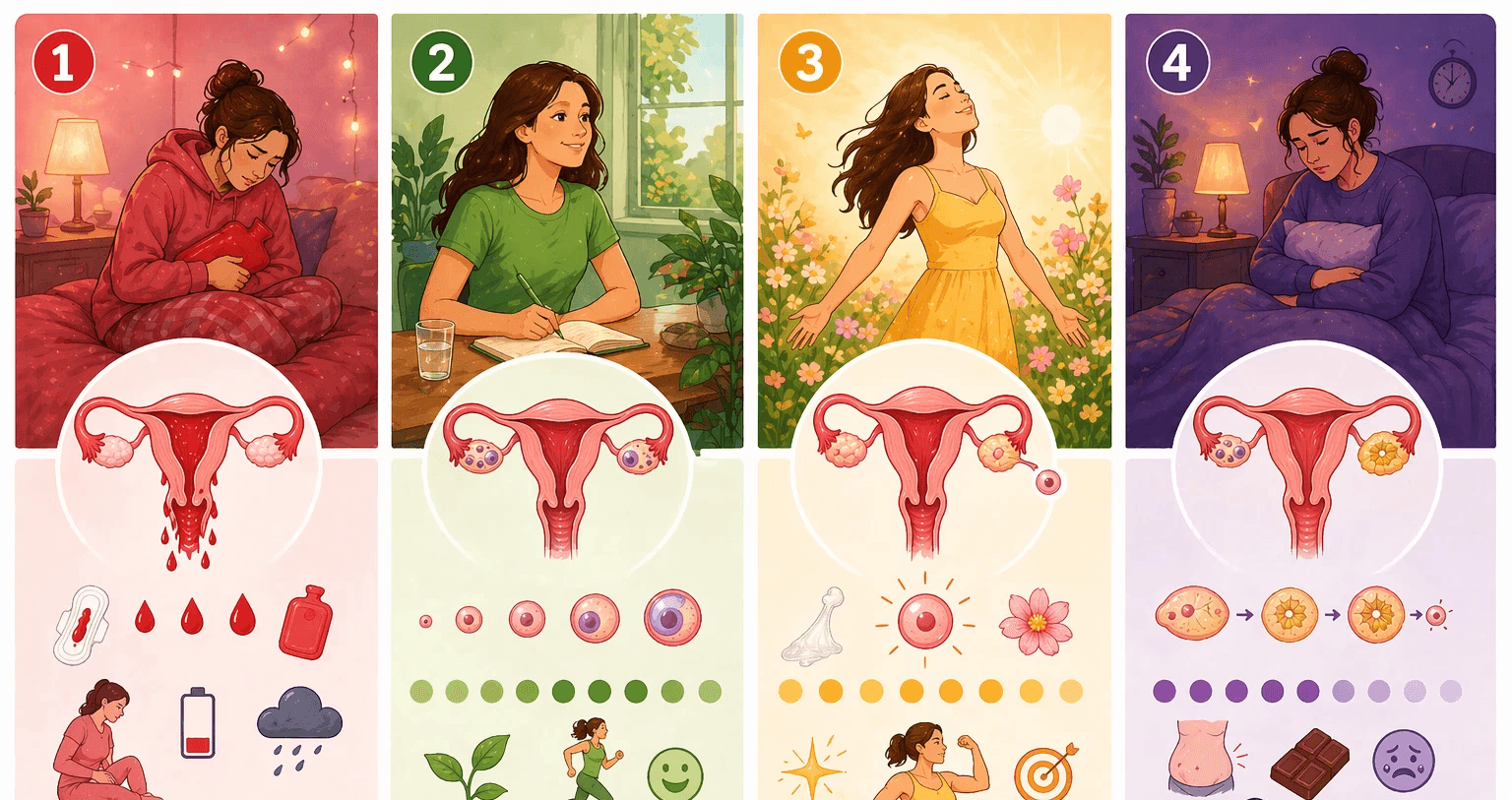
The menstrual cycle is a monthly loop your body runs to prepare for a possible pregnancy. If pregnancy does not happen, the lining of the uterus sheds. That shedding is your period. Then the whole process starts over.
Your cycle is counted from Day 1 of one period to Day 1 of the next period. It has four phases, kind of like the seasons of the year.
The Four Phases: A Quick Tour
Phase 1: Menstruation (Days 1 to 5)
This is the part everyone calls a period. The uterine lining breaks down and leaves the body. Hormone levels are at their lowest point, which is partly why some people feel tired or emotional at this time.
Normal bleeding lasts 2 to 7 days. Most people use about 3 to 6 regular pads or tampons per day. The average total blood loss is only about 2 to 3 tablespoons. Yes, it looks like more, but that is normal.
Phase 2: The Follicular Phase (Days 1 to 14)
This phase overlaps with menstruation and keeps going after bleeding stops. The brain sends out a hormone called FSH (follicle stimulating hormone), which tells the ovaries to start growing egg follicles. One follicle becomes the winner and grows bigger. As it grows, it releases estrogen. Estrogen thickens the uterine lining.
This phase can vary in length, and that is the main reason cycle lengths differ from person to person.
Phase 3: Ovulation (Around Day 14)
This is the main event! A surge of LH hormone causes the mature egg to burst out of its follicle. The egg travels to the fallopian tube, where it could meet sperm. This is the most fertile time of the month.
Signs you might be ovulating: clear, stretchy discharge (think raw egg white), and sometimes a small twinge of pain on one side of your lower belly.
Phase 4: The Luteal Phase (Days 15 to 28)
After the egg is released, the empty follicle transforms into something called the corpus luteum, which produces progesterone. Progesterone keeps the uterine lining thick and ready. This phase is very consistent and almost always lasts exactly 14 days.
If no pregnancy happens, progesterone drops, the lining sheds, and the cycle starts again. Many people feel premenstrual syndrome (PMS) symptoms during this phase, like breast tenderness, bloating, mood changes, headaches, and food cravings. Blame the dropping hormones.
Section 2: What Is Normal at Different Ages?
Teens (Ages 12 to 20): Welcome to the Chaos Years
Surprise: irregular periods are completely normal for the first one to three years after your first period (called menarche). Your hormone system is literally still learning how to do its job. Think of it like a new employee on their first week. Things will get smoother.
Normal for teens in the first few years:
Cycles anywhere from 21 to 45 days long
Skipping a period occasionally
Flow that varies a lot from month to month
By the third year after your first period, about 60 to 80 percent of people have more regular cycles in the 21 to 34 day range.
🩺 WHEN TO SEE A DOCTOR as a teen: No period by age 15. Cycles shorter than 21 days or longer than 45 days after the first year. No period for 90 or more days after cycles have started. Bleeding so heavy you need to change a pad or tampon every 1 to 2 hours. Severe pain that stops you from doing normal things.
Reproductive Years (Ages 20 to 40): The Steady Season
This is usually when cycles are most regular and predictable. Most people settle into a pattern and can expect their period within a few days of when they expect it. People in their 30s may notice cycles getting slightly shorter as they get older. That is normal.
Perimenopause (Ages 40 to 55): Things Get Spicy Again
As the ovaries start to run low on eggs, cycles get unpredictable again. Periods might come 7 or more days later than usual. Some months might be skipped. Some cycles might be longer and some shorter.
Menopause is official when you have gone 12 months without a period. The average age for this is 51, but anywhere from 40 to 60 is considered normal.
⚠️ IMPORTANT: Any bleeding after 12 full months without a period (confirmed menopause) needs to be checked by a doctor right away to rule out serious problems including cancer.
Section 3: Normal vs. Not Normal — Your Cheat Sheet
Doctors use the term "abnormal uterine bleeding" (or AUB) for bleeding that is outside the normal range. Here is a simple breakdown:
Type of Bleeding | What It Means | When to Act |
|---|---|---|
Heavy bleeding | Soaking a pad/tampon every 1 to 2 hours or passing large clots | See a doctor |
Periods longer than 7 days | Bleeding that just will not stop | See a doctor |
Cycles shorter than 21 days | Periods coming too frequently | See a doctor |
Cycles longer than 35 days | Periods coming too infrequently | Track and discuss with doctor |
Bleeding between periods | Spotting or bleeding at unexpected times | See a doctor |
No period for 3 months | Amenorrhea (when not pregnant) | See a doctor |
Any bleeding after menopause | Any amount, even spotting | See a doctor urgently |
Mild cycle variation (plus or minus 7 days) | Normal variation | Track but no action needed |
Occasional skip in first year of periods | Normal in teens | Monitor |
🚨 RED FLAGS that need same day or urgent attention: Sudden severe pelvic pain. Fever with pelvic pain. Feeling dizzy, faint, or very weak from blood loss. Foul smelling vaginal discharge. Any sign of pregnancy complications.
Section 4: Medical Conditions That Can Mess With Your Cycle
Polycystic Ovary Syndrome (PCOS): The Overachiever's Nightmare
PCOS is the most common hormone disorder in people of reproductive age, affecting 8 to 15 percent of this population. It is also the leading cause of irregular periods and difficulty getting pregnant.
With PCOS, the ovaries do not release eggs regularly, and the body often has higher levels of androgens (male hormones) than normal.
Signs of PCOS include:
Irregular cycles (fewer than 8 per year, or cycles longer than 35 days)
Extra hair growth on the face, chest, or back
Acne that does not respond to regular treatment
Weight gain, especially around the belly
Thinning hair on the scalp
Dark patches of skin in body folds
The good news: PCOS can absolutely be managed with lifestyle changes and medications. See Section 7 for treatments.
Endometriosis: When the Lining Goes Rogue
Endometriosis happens when tissue similar to the uterine lining grows outside the uterus, on the ovaries, tubes, or other pelvic organs. This causes inflammation, pain, and scarring.
Signs include very painful periods, pain during sex, pain with bowel movements or urination during periods, heavy bleeding, and difficulty getting pregnant. If your cramps are so bad they take you out of normal activities, that is not something to just tough out. Talk to a doctor.
Thyroid Problems: The Neck Gland That Runs the Whole Show
The thyroid is a butterfly shaped gland in your neck that controls your metabolism and has a huge effect on your cycle.
Hypothyroidism (underactive): Can cause heavier, more frequent periods and irregular cycles
Hyperthyroidism (overactive): Can cause lighter, less frequent periods and irregular cycles
Thyroid problems become more common with age and should be screened for in anyone with unexplained cycle changes. A simple blood test (called a TSH test) can check your thyroid.
Bleeding Disorders: When Your Blood Does Not Clot Properly
Some people have conditions that make their blood slow to clot. The most common is von Willebrand disease, which affects about 1 percent of the population. Many people do not know they have it until their first period makes it obvious.
Signs you might have a bleeding disorder:
Very heavy periods since your very first period
Needing to change pads or tampons every 1 to 2 hours
Passing large blood clots (bigger than a quarter)
Easy bruising
Frequent nosebleeds
Heavy bleeding after dental work or surgery
Up to 20 percent of people with very heavy periods have an undiagnosed bleeding disorder. This is worth checking for.
Other Conditions Linked to Cycle Disruption
Condition | Effect on Cycle |
|---|---|
Uterine fibroids (non cancerous growths) | Heavy bleeding and pain |
Endometrial polyps | Irregular or heavy bleeding, common in perimenopause |
Eating disorders | Periods may stop completely |
Excessive exercise | Periods may stop (called athletic triad) |
Severe stress | Periods can be delayed or skipped |
Obesity | Irregular cycles, increased PCOS risk |
Diabetes (uncontrolled) | Chronic anovulation, irregular bleeding |
Liver disease | Affects clotting factors, can cause heavy bleeding |
Chronic kidney disease | Platelet dysfunction, can cause heavy bleeding |
Section 5: Foods and Supplements — What Helps, What Hurts
Foods That Support a Healthy Cycle
Your diet has a real effect on your hormones, your flow, and how much pain you feel. Here is what the science says:
Iron Rich Foods (Your Period's Best Friend)
Every period, you lose iron. If you lose a lot, you can become anemic (low iron), which causes fatigue, dizziness, pale skin, and weakness. Eating iron rich foods helps replace what you lose.
Red meat, chicken, turkey
Beans, lentils, tofu
Spinach and dark leafy greens
Fortified cereals
Pumpkin seeds
Pro tip: Eat iron rich foods with vitamin C (like orange juice or bell peppers) to help your body absorb the iron better. Avoid coffee or tea right after eating iron rich foods because they block absorption.
Omega 3 Fatty Acids (Nature's Ibuprofen)
Omega 3s reduce inflammation in the body, which directly reduces period cramps. Studies show they can be as effective as ibuprofen for some people.
Fatty fish: salmon, sardines, mackerel, herring
Flaxseeds and flaxseed oil
Walnuts
Chia seeds
Magnesium (The Cramp Crusher)
Low magnesium is linked to worse PMS symptoms and more intense cramps. Foods high in magnesium:
Dark chocolate (yes, really — 70 percent cacao or higher)
Nuts and seeds, especially almonds and pumpkin seeds
Avocado
Beans and lentils
Whole grains
Leafy greens like spinach
Calcium (The PMS Mood Stabilizer)
Research shows that getting enough calcium can significantly reduce PMS symptoms including mood swings, bloating, and food cravings. Aim for 1,000 to 1,200 mg per day, especially in the luteal phase.
Dairy products: milk, yogurt, cheese
Fortified plant milks
Canned salmon or sardines with bones
Broccoli, kale, bok choy
Vitamin D
Low vitamin D is linked to heavier periods and worse PMS. Many people are deficient without knowing it. Sunlight is the best source, but fortified foods and fatty fish also help.
Foods That Can Make Symptoms Worse
These are not forbidden, but if your symptoms are bad, cutting back might help:
Food/Drink | Why It Can Cause Problems |
|---|---|
Excess salt | Causes water retention and bloating during the luteal phase |
Sugar and refined carbs | Spikes and crashes in blood sugar worsen mood swings and energy |
Caffeine | Can worsen breast tenderness, anxiety, and sleep disruption premenstrually |
Alcohol | Disrupts sleep, worsens mood, dehydrates, and can make bleeding heavier |
Trans fats and fried foods | Increase inflammation, which worsens cramps |
Very high fiber diets | Can reduce estrogen levels significantly (relevant to those with PCOS trying to balance hormones) |
Supplements With Real Evidence
Always talk to your doctor before starting supplements, especially if you take medications. But here is what the research actually supports:
Supplement | Benefit | Evidence Level | Notes |
|---|---|---|---|
Magnesium (250 to 400 mg) | Reduces cramps, PMS symptoms, migraines | Good | Take daily, especially in second half of cycle |
Calcium (1,000 mg) | Reduces PMS mood and physical symptoms | Good | More effective with vitamin D |
Vitamin D (1,000 to 2,000 IU) | Reduces dysmenorrhea, supports mood | Moderate | Get levels checked first |
Omega 3 fish oil (1 to 2 g) | Reduces cramps and inflammation | Good | Can replace or reduce need for ibuprofen |
Vitamin B6 (50 to 100 mg) | Reduces PMS mood symptoms | Moderate | Do not exceed 100 mg daily long term |
Iron (as directed) | Treats or prevents anemia from heavy periods | Essential if anemic | Only if deficient; too much iron is harmful |
Vitex (chaste tree berry) | May help PMS and irregular cycles | Limited | Can interact with hormonal meds; avoid in PCOS with elevated LH |
Evening primrose oil | May reduce breast tenderness | Limited | Generally safe, not proven for all symptoms |
Zinc (25 to 30 mg) | May reduce cramps and blood loss | Emerging | Do not exceed upper limits |
Section 6: Medications That Change Your Cycle
Hormonal Birth Control: The Great Cycle Reshaper
These are the medications most intentionally designed to change your cycle. They are also used to treat many menstrual problems:
Combined Hormonal Contraceptives (Pills, Patch, Ring)
These contain estrogen and progestin. They prevent ovulation, thin the uterine lining, and usually cause lighter, more regular bleeding. They are often prescribed for:
Heavy menstrual bleeding
Painful periods
PCOS
Endometriosis
PMS and PMDD (severe PMS with mood symptoms)
Irregular spotting in the first 3 to 6 months is common and usually resolves on its own.
Progestin Only Methods (Mini Pill, Implant, Shot, Hormonal IUD)
These contain only progestin. They can cause very irregular bleeding at first, but many people eventually have very light periods or none at all.
The levonorgestrel IUD (such as Mirena) is considered the most effective non surgical treatment for heavy periods, reducing blood loss by up to 90 percent. This is strongly supported by research including large clinical trials and multiple Cochrane reviews.
⭐ FUN FACT: Clinical trials showed that the hormonal IUD performed better than oral medication treatments for heavy bleeding AND improved quality of life more over 2 years. It is the gold standard for heavy period management.
Other Prescription Medications for Menstrual Problems
Medication | What It Treats | How It Works | Notes |
|---|---|---|---|
NSAIDs (ibuprofen, naproxen) | Cramps, heavy bleeding | Reduces prostaglandins that cause cramping and bleeding | Reduce bleeding 20 to 50%; most effective when started before pain begins |
Tranexamic acid (Lysteda) | Heavy bleeding | Helps blood clot more effectively | Reduces bleeding by up to 50%; not hormonal |
Metformin | PCOS with insulin resistance | Improves insulin sensitivity, helps regulate cycles | Often used alongside lifestyle changes |
GnRH agonists (Lupron) | Fibroids, endometriosis | Causes temporary menopause by stopping ovarian function | Short term use only due to bone density effects |
High dose estrogen (IV) | Acute very heavy bleeding in teens | Rapidly rebuilds uterine lining to stop bleeding | Hospital use for emergencies |
Thyroid medication | Cycle disruption from thyroid disease | Restores normal thyroid hormone levels | Cycle often normalizes once thyroid is treated |
Medications That Can Disrupt Your Cycle (And How)
Many medications have cycle changes as a side effect. This does NOT mean you should stop taking them — always talk to your doctor. But it helps to know:
Medication Class | Effect on Cycle | Who Is Most Affected |
|---|---|---|
Antipsychotics (risperidone, haloperidol, etc.) | Irregular periods or no periods; about 50 percent of users have cycle changes | All ages; teens especially vulnerable |
Valproate (seizure and mood medication) | Irregular cycles, PCOS like features in about 7 percent of users | Adolescents especially at risk |
Anticoagulants (warfarin, blood thinners) | Heavier periods due to impaired clotting | Reproductive age and perimenopausal women |
Antidepressants (SSRIs, SNRIs) | Variable cycle changes via effects on hormone signaling | Reproductive age adults |
Carbamazepine, phenytoin (seizure meds) | Irregular periods; reduce effectiveness of hormonal birth control | All ages; affects contraceptive choices |
Chemotherapy (especially alkylating agents) | Irregular periods to permanent no periods; risk increases with age | Reproductive age women; higher risk over 35 |
Corticosteroids (prednisone, etc.) | Irregular or absent periods from HPA axis suppression | All ages |
Tamoxifen (breast cancer treatment) | Stimulates the uterine lining, can cause irregular bleeding | Perimenopausal and postmenopausal women |
Lithium, quetiapine | Menstrual irregularity via secondary thyroid effects | Reproductive age adults |
💡 IMPORTANT: If you are taking any of these medications and notice menstrual changes, do NOT stop taking them without talking to your doctor. Mention the cycle changes at your next appointment instead. Most side effects can be managed without stopping the medication.
Section 7: Treatments That Actually Work
For Heavy Periods: The Evidence Rankings
From most to least effective for heavy menstrual bleeding based on clinical trials and Cochrane reviews:
Levonorgestrel IUD (52 mg): Reduces bleeding up to 90 percent. Top rated treatment.
Combined oral contraceptives: Very effective; also helps with pain and irregular cycles.
Tranexamic acid: Reduces bleeding 40 to 50 percent. Non hormonal option.
Oral progestins (cyclic or continuous): Effective for anovulatory bleeding.
NSAIDs (ibuprofen, naproxen): Reduce bleeding 20 to 50 percent AND treat cramps.
GnRH agonists: Very effective but for short term use only due to side effects.
Surgical options (for when medications do not work or are not wanted):
Hysteroscopic polypectomy or myomectomy: Removes polyps or fibroids.
Endometrial ablation: Destroys the lining; not for those who want future pregnancies.
Hysterectomy: Permanent and definitive; removes the uterus entirely.
For Period Cramps: What Helps Most
NSAIDs (ibuprofen, naproxen): Start before cramps begin for best effect. Most effective first line treatment.
Hormonal contraceptives: Prevent the buildup of the uterine lining and reduce prostaglandins.
Heat therapy: Heating pads on the lower abdomen work well, especially in combination with NSAIDs.
Exercise: Light to moderate exercise releases natural pain relieving chemicals called endorphins.
Omega 3 supplements: Can be as effective as ibuprofen for some people.
Magnesium supplements: Help relax uterine muscle cramping.
TENS machines (transcutaneous electrical nerve stimulation): Some evidence of benefit.
For PCOS: A Multi Pronged Approach
Lifestyle modification (first line): Regular exercise and a healthy diet can restore regular ovulation in many people with PCOS. Even a 5 to 10 percent weight loss in those with overweight can significantly improve cycle regularity.
Combined oral contraceptives: Regulate cycles and treat hirsutism and acne.
Metformin: Improves insulin resistance, helps regulate cycles, may reduce risk of type 2 diabetes.
Spironolactone: Reduces androgen effects like hirsutism and acne.
Clomiphene or letrozole: Used to trigger ovulation when pregnancy is the goal.
For Irregular Cycles (Anovulatory Dysfunction)
The right treatment depends on the cause. Always find the root cause first:
Thyroid problems: Treated with thyroid medication. Cycles often normalize on their own once thyroid levels are corrected.
Stress or overexercise: Reducing training intensity, eating enough calories, and managing stress can restore cycles.
Eating disorder recovery: Weight restoration is essential for cycle return; medical and psychological support is needed.
PCOS: See above.
Hormonal contraceptives: Can regulate cycles, though this masks the underlying issue rather than fixing it.
Section 8: Who Needs Extra Attention and Monitoring?
Teens in the First Three Years After Their First Period
This group gets a lot of grace when it comes to irregular cycles, but they also need the most vigilance about a few specific things:
Heavy bleeding from the very first period can be a sign of an undiagnosed bleeding disorder like von Willebrand disease. About 20 to 30 percent of teens hospitalized for heavy periods turn out to have a clotting disorder.
Teens on valproate or antipsychotic medications have a higher risk of cycle disruption and PCOS like changes because their hormone systems are still developing.
Teens with PCOS need monitoring for metabolic problems including pre diabetes and high cholesterol, not just cycle problems.
The menstrual cycle is considered a vital sign in teens, just like blood pressure. Doctors should ask about it at every checkup.
Women With PCOS
PCOS requires ongoing monitoring because of its many long term health effects:
Blood sugar and insulin levels: PCOS significantly raises risk of type 2 diabetes and metabolic syndrome.
Cardiovascular health: Cholesterol and blood pressure should be checked regularly.
Mental health: Depression and anxiety are significantly more common in people with PCOS.
Endometrial health: Long periods without a period means the uterine lining is not shedding regularly. This increases risk of endometrial hyperplasia and cancer over time. Regular progestin treatment or monitoring is needed.
Perimenopausal and Postmenopausal Women
This group needs the most caution about distinguishing normal hormonal changes from warning signs:
Endometrial cancer risk increases with age and is highest in those with obesity, diabetes, PCOS history, or long term irregular cycles with no progesterone.
Any bleeding after 12 months with no period is abnormal and must be evaluated.
Heavy perimenopausal bleeding often needs imaging and sometimes biopsy, not just reassurance.
Thyroid disease becomes more common in this age group and should be checked regularly.
People on High Risk Medications
Anyone taking the following medications needs regular monitoring of their cycle and hormonal health:
Anticoagulants: Need monitoring for blood loss and anemia.
Antipsychotics and mood stabilizers: Prolactin levels and cycle regularity should be tracked.
Valproate: Particularly in adolescent girls, monitor for signs of PCOS.
Chemotherapy: Discuss fertility preservation BEFORE starting treatment whenever possible.
GnRH agonists: Monitor bone density with long term use.
Anyone With Heavy Bleeding: Screen for Bleeding Disorders
Research published in 2025 confirmed that up to 20 percent of people with heavy menstrual bleeding have an underlying coagulation disorder. Yet many go undiagnosed for years. If you have had heavy periods since your first period, or you have a family history of bleeding or clotting problems, push for a full evaluation including von Willebrand factor testing.
Section 9: Self Monitoring vs. When to Seek Help — A Practical Guide
What You Can Track at Home
Tracking your cycle is genuinely useful. Think of it as giving your doctor a month by month report card. Here is what to note:
First day of each period
How many days bleeding lasts
How heavy the flow is (light, medium, heavy, or soaking through protection)
Any spotting between periods
Pain level (use a 1 to 10 scale)
Mood changes and PMS symptoms
Any other physical symptoms
Even a free period tracking app works well for this. After 3 months, you will start to see patterns.
Safe to Monitor at Home by Age Group
Age Group | Safe to Monitor at Home | See a Doctor If... |
|---|---|---|
Teens (12 to 20) | Cycles varying within 21 to 45 days in first 1 to 3 years. Occasional skipped period in first year. Mild PMS. | No period by age 15. Cycles shorter than 21 or longer than 45 days after first year. Gaps of 90 days or more. Bleeding more than 7 days. Soaking every 1 to 2 hours. Severe pain. |
Reproductive age (20 to 40) | Cycles varying a few days month to month. Mild spotting in first 3 to 6 months on new birth control. Mild PMS. | Sudden irregular cycles. Bleeding between periods. Bleeding after sex. Periods over 7 days. No period for 3 months. Heavy bleeding. Symptoms of anemia. |
Perimenopause (40 to 55) | Gradual lengthening of cycles. Occasional skipped period. Light spotting that stops. | Any bleeding after 12 months of no period. Heavy bleeding causing anemia. New bleeding between periods. Periods over 7 days. |
Postmenopause (55+) | Nothing — any bleeding needs evaluation | Any vaginal bleeding, spotting, or staining. No exceptions. |
🚨 UNIVERSAL RED FLAGS no matter your age: Fever with pelvic pain. Severe sudden pelvic pain. Dizziness, fainting, or very fast heartbeat from blood loss. Foul smelling discharge. Any suspected pregnancy complication.
Section 10: Fertility and Your Cycle
How Fertility and Cycles Connect
The whole point of the menstrual cycle, biologically speaking, is reproduction. Here is what that means in practice:
The fertile window is only about 5 to 6 days per cycle: the 5 days before ovulation and ovulation day itself.
Sperm can survive in the reproductive tract for up to 5 days.
An egg only lives 12 to 24 hours after ovulation.
Regular cycles (21 to 35 days) usually mean regular ovulation, which gives the best chance of pregnancy.
Irregular cycles mean unpredictable ovulation, which makes timing harder.
When to Seek Help Getting Pregnant
Under 35 years old: Seek help after 12 months of trying without success.
Age 35 to 40: Seek help after 6 months of trying.
Over 40, or with known PCOS, endometriosis, or very irregular cycles: Seek help right away.
Fertility Preservation for Women With PCOS
Women with PCOS who need chemotherapy or other gonadotoxic treatments face special challenges and have special options:
GnRH antagonist protocol with agonist trigger and freeze all is the preferred approach because it dramatically reduces the risk of a dangerous complication called ovarian hyperstimulation syndrome (OHSS).
Women with PCOS usually produce MORE eggs than average due to their high follicle count, which is actually an advantage for fertility preservation.
In vitro maturation (IVM) is a special technique where immature eggs are collected and matured in a lab. It eliminates OHSS risk entirely. It has slightly lower success rates than standard IVF but is a great option for urgent cases or those with very high OHSS risk.
Section 11: Living Well With Your Cycle
Daily Habits That Support Hormonal Health
Maintain a healthy weight: Both being underweight and overweight disrupts cycles. Even modest weight changes (5 to 10 percent) can restore regular ovulation in people with PCOS.
Exercise regularly but not excessively: Moderate exercise helps regulate hormones and reduces cramps. Over training (especially without eating enough) can stop periods entirely.
Sleep 7 to 9 hours: Sleep affects hormone production directly. Poor sleep worsens PMS.
Manage stress: Severe stress can delay or stop ovulation. Mind body practices like yoga, meditation, and therapy genuinely help.
Limit alcohol: Even moderate drinking can affect hormone levels and make bleeding heavier.
Quit smoking: Smoking affects estrogen levels and is linked to earlier menopause and worse cycle symptoms.
Period Products: Your Options
Product | How It Works | Key Notes |
|---|---|---|
Disposable pads | Worn in underwear, absorbs blood | Change every 4 to 8 hours. Good for heavy days. |
Tampons | Inserted in vagina, absorbs blood | NEVER leave in more than 8 hours (toxic shock risk). |
Menstrual cups | Inserted in vagina, collects blood | Reusable, can wear up to 12 hours. Eco friendly. |
Period underwear | Built in absorbent layers | Washable and reusable. Great for light days or backup. |
Liners | Thin pad for light days | Good for spotting or as backup with a tampon. |
Menstrual discs | Collects blood near cervix | Can be worn during sex. Up to 12 hours wear. |
Conclusion: Your Cycle Is Talking to You — Listen
Your menstrual cycle is not just a monthly inconvenience. It is one of your body's most important vital signs. When it changes without explanation, that is your body sending you a message.
The most important takeaway from all of this is: KNOW YOUR NORMAL. Track your cycle, notice patterns, and speak up when something changes. There is no such thing as a silly question when it comes to your reproductive health.
Do you have very heavy periods? There are excellent treatments. Painful cramps that take you out? Totally fixable. Irregular cycles that make you feel like your body is broken? There is a reason, and there is usually a solution.
Whether you are 13 or 53, your menstrual health matters. And now you have the knowledge to take charge of it.
💜 FINAL REMINDER: This guide is for educational purposes. It does not replace advice from your own doctor, who knows your full medical history. If something feels wrong, please reach out to a healthcare provider. You deserve to feel good every month of the year, not just the ones where Aunt Flo stays home.
Quick Reference Card: Your Cycle at a Glance
Normal Cycle Facts
Cycle length: 21 to 35 days for adults; 21 to 45 days for teens
Bleeding duration: 2 to 7 days
Normal blood loss: about 2 to 3 tablespoons total per period
Cycle variation: up to 7 to 9 days variation month to month is normal
Top 5 Foods for Menstrual Health
Fatty fish (salmon, sardines): omega 3s reduce cramps
Dark leafy greens: iron, magnesium, calcium
Dark chocolate (70 percent or higher): magnesium for cramps and mood
Beans and lentils: iron and magnesium
Nuts and seeds: magnesium, zinc, healthy fats
Top 5 Evidence Based Supplements
Magnesium: cramps and PMS
Calcium plus Vitamin D: PMS mood and physical symptoms
Omega 3 fish oil: cramps and inflammation
Iron: only if anemic from heavy periods
Vitamin B6: PMS mood symptoms
When to ALWAYS See a Doctor
No period by age 15
No period for 3 months when not pregnant
Any bleeding after confirmed menopause
Soaking a pad or tampon every 1 to 2 hours
Bleeding lasting more than 7 days
Fever with pelvic pain
Severe sudden pelvic pain
Symptoms of anemia: extreme fatigue, dizziness, pale skin, shortness of breath
Based on clinical guidelines from the American College of Obstetricians and Gynecologists, the International Evidence Based Guideline for PCOS (2023), Cochrane systematic reviews, and peer reviewed medical literature through 2025.
HSA/FSA Eligible
Doctors Are Human.
That's Why There's Medome.
Start your free trial today. No credit card required.
Start Your Free Trial
Join thousands protecting their health with AI that never forgets
Critical details get missed when your health information is scattered. Medome connects the dots across your complete record.
Start Your Free Trial
Quick Links
Medome Men
Home
Pricing
About
Health News
HealthSigns
FAQ
Contact Us
Terms of Service
Privacy Policy
Get In Touch
Email: service@medome.ai
Phone: (617) 319-6434
This is Dr. Steven Charlap’s cell. Please text him first, explaining who you are and how he can help you. Use WhatsApp outside the US.
Hours: Mon-Fri 9:00AM - 9:00PM ET