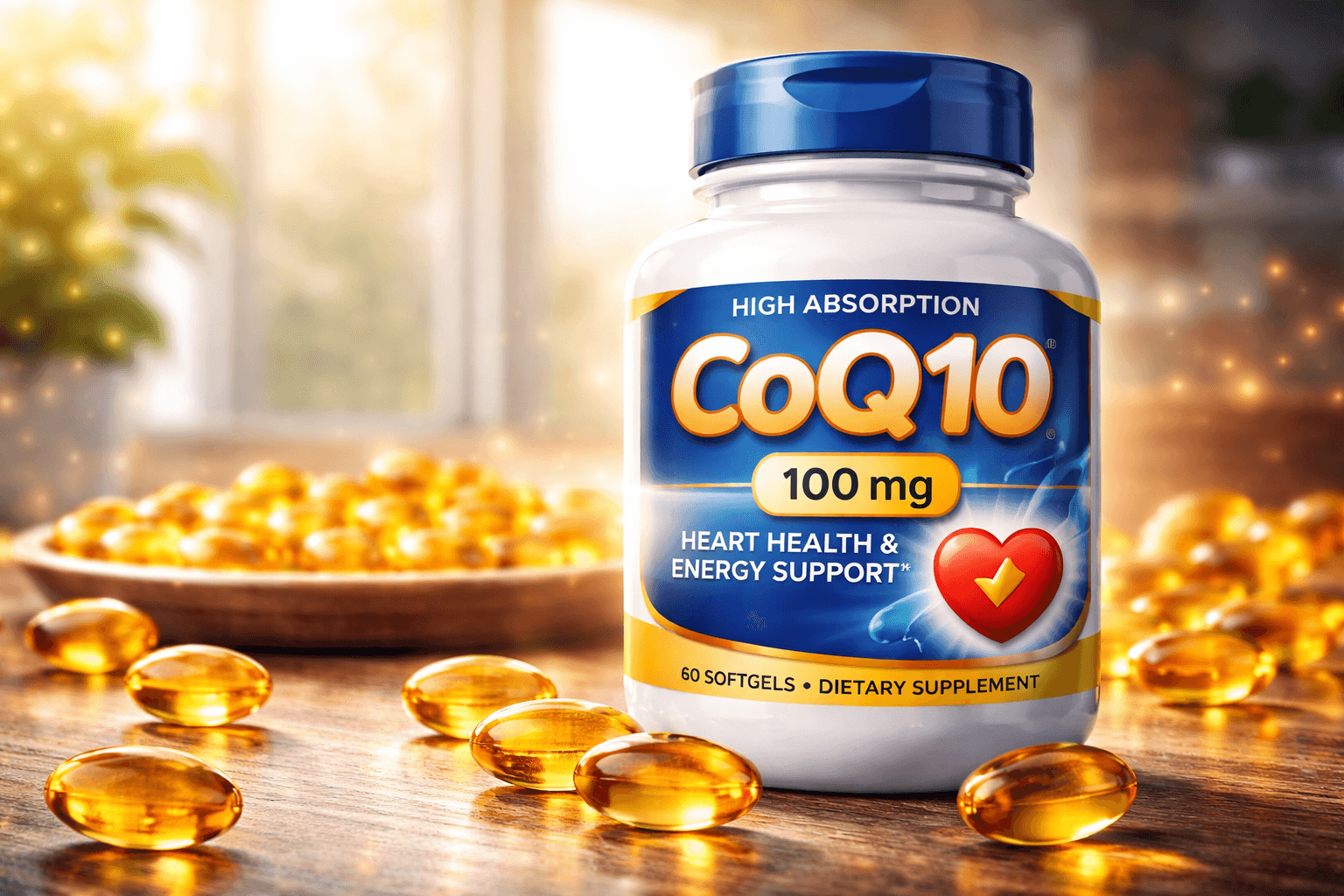
Um suplemento surpreendentemente importante com um nome surpreendentemente difícil de pronunciar
Sejamos honestos. Na primeira vez que a maioria das pessoas ouve as palavras "Coenzima Q10", elas presumem que se trata de um robô, um arquivo secreto do governo ou um videogame muito de nicho. Na realidade, a CoQ10 é algo que seu corpo vem produzindo silenciosamente desde antes de você conseguir andar, e pode ser uma das moléculas mais importantes sobre as quais você nunca pensou.
Pense nas suas células como pequenas fábricas. Toda fábrica precisa de energia para funcionar. A CoQ10 é o eletricista que mantém as luzes acesas. Sem ela, suas células mergulhariam na escuridão, e disso não sai nada de bom. Então vamos falar sobre o que a CoQ10 realmente é, quem precisa dela e por que seu médico pode tê-la mencionado.
O Que Exatamente É a CoQ10?
CoQ10 significa Coenzima Q10 e, sim, os cientistas realmente poderiam ter dado a ela um nome mais amigável. Ela é um composto lipossolúvel, o que significa que se dissolve em gorduras em vez de água, e vive dentro de quase todas as células do seu corpo. Seu coração, fígado, rins, cérebro e músculos concentram as maiores quantidades porque esses órgãos estão basicamente sempre trabalhando em ritmo acelerado.
A CoQ10 tem duas funções principais. Primeiro, ela atua como uma ajudante essencial nas suas mitocôndrias, que são as partes da célula que produzem energia. Ela transporta elétrons ao longo de uma cadeia de reações que cria ATP, que é o combustível que suas células usam. Sem a CoQ10 fazendo esse trabalho, suas mitocôndrias seriam como um motor de carro sem uma engrenagem-chave. Segundo, a CoQ10 é um poderoso antioxidante. Antioxidantes protegem suas células contra danos causados por moléculas instáveis chamadas radicais livres, que se formam durante funções normais do corpo e podem causar prejuízos reais se não forem controladas.
A CoQ10 vem em duas formas: ubiquinona, que é a forma oxidada, e ubiquinol, que é a forma reduzida. Seu corpo converte constantemente uma na outra, dependendo do que é necessário. O ubiquinol é a forma que está atuando ativamente como antioxidante, enquanto a ubiquinona está pronta para voltar ao processo de produção de energia. Basicamente, são o mesmo funcionário trabalhando em dois turnos diferentes.
Seu corpo produz CoQ10 por conta própria, e você também obtém pequenas quantidades por meio dos alimentos. No entanto, a quantidade vinda da alimentação é ínfima. A dieta média fornece apenas cerca de 3 a 6 miligramas por dia, principalmente de carne e aves. Isso é muito pouco para tratar qualquer condição médica, razão pela qual as pessoas recorrem aos suplementos quando precisam de mais.
A Queda da CoQ10: O Problema de Suprimento de Meia-Idade do Seu Corpo
Aqui vai uma notícia nada agradável, dita da forma mais suave possível: seu corpo começa a produzir menos CoQ10 à medida que você envelhece. Ela atinge um pico em algum momento dos seus vinte e poucos anos e depois começa a descer ladeira abaixo como um carrinho de supermercado com uma roda quebrada. Quando a maioria das pessoas está na casa dos sessenta ou setenta anos, os níveis de CoQ10 já caíram significativamente.
Isso não é apenas um pequeno incômodo. Menos CoQ10 significa produção de energia menos eficiente nas suas células, mais dano oxidativo e pior desempenho nos órgãos que mais precisam dela. Idosos são caracterizados por níveis reduzidos de CoQ10 e menor capacidade de converter o composto em sua forma antioxidante ativa. A boa notícia é que a suplementação pode ajudar a restaurar esses níveis, e pesquisas sugerem que isso pode realmente importar para os desfechos de saúde.
Para complicar ainda mais, vários medicamentos comuns também reduzem os níveis de CoQ10 do seu corpo. As estatinas, que estão entre os remédios mais prescritos no mundo para colesterol, são as maiores vilãs. Os betabloqueadores, usados para doença cardíaca e pressão alta, são outro culpado. Até os bisfosfonatos, tomados para densidade óssea, podem interferir na produção de CoQ10. Então, se você é mais velho e toma qualquer um desses medicamentos, pode estar funcionando com um suprimento de CoQ10 significativamente reduzido.
As Estatinas e o Grande Roubo da CoQ10
As estatinas são medicamentos que reduzem o colesterol bloqueando uma via do corpo chamada via do mevalonato. Isso é muito eficaz para diminuir o risco de doença cardíaca, mas há um efeito colateral infeliz que não recebe atenção suficiente: essa mesma via também produz CoQ10. Então, quando as estatinas a bloqueiam para reduzir o colesterol, elas acabam reduzindo a produção de CoQ10 ao mesmo tempo.
Isso importa porque uma das queixas mais comuns entre usuários de estatina é dor muscular, fraqueza, cãibras e fadiga. Esses sintomas até têm um nome médico próprio: sintomas musculares associados a estatinas, ou SAMS. Pesquisadores acreditam que a depleção de CoQ10 causada pelas estatinas pode desempenhar um papel nesses problemas musculares, já que os músculos são cheios de mitocôndrias e precisam de CoQ10 para funcionar corretamente.
As evidências para usar CoQ10 no tratamento de SAMS são mistas, o que significa que estudos diferentes mostram resultados diferentes. No entanto, muitos médicos consideram uma tentativa bastante razoável, especialmente porque a CoQ10 é segura, acessível e tem quase nenhum efeito colateral sério. Uma abordagem típica é suplementar com 200 a 400 miligramas por dia em pacientes com problemas musculares relacionados às estatinas confirmados.
CoQ10 e o Coração: Onde as Evidências Ficam Sérias
Entre todas as condições em que a CoQ10 foi estudada, a insuficiência cardíaca tem as evidências mais fortes e convincentes. Insuficiência cardíaca não significa que o coração para de funcionar. Significa que o coração não bombeia com a eficiência que deveria, deixando o corpo com menos circulação do que precisa. Os pacientes muitas vezes se sentem exaustos, com falta de ar e incapazes de fazer coisas que antes faziam facilmente.
O coração é um dos órgãos que mais consomem energia no corpo. Ele bate cerca de 100.000 vezes por dia e nunca tira folga. Pacientes com insuficiência cardíaca muitas vezes têm níveis reduzidos de CoQ10 no tecido cardíaco, e quanto mais grave a insuficiência cardíaca, maior a depleção. Isso cria um argumento biológico convincente para a suplementação.
Um estudo marcante chamado ensaio Q-SYMBIO recrutou 420 pacientes com insuficiência cardíaca moderada a grave e deu a metade deles 300 miligramas de CoQ10 por dia durante dois anos. Os resultados foram impressionantes. Os pacientes do grupo CoQ10 tiveram taxas significativamente menores de morte por qualquer causa, com um número necessário para tratar de 13. Isso significa que, para cada 13 pacientes tratados com CoQ10, uma morte foi evitada. Eles também tiveram menos hospitalizações relacionadas à insuficiência cardíaca.
No entanto, é importante deixar claro que a CoQ10 não é um tratamento aprovado para insuficiência cardíaca, e a American Heart Association observa que ainda são necessários estudos maiores. Ela é considerada um adjuvante, ou seja, algo adicionado ao tratamento médico padrão, e não um substituto. Mas esses números do Q-SYMBIO são difíceis de ignorar.
Pressão Arterial, Glicose e Outros Benefícios
Além do coração, a CoQ10 mostra efeitos promissores em várias outras áreas. Para a pressão arterial, análises de múltiplos estudos sugerem que a CoQ10 pode reduzir a pressão sistólica, que é o número de cima, em cerca de 4 a 5 pontos. Isso pode não parecer muito, mas até pequenas reduções na pressão arterial podem diminuir de forma significativa o risco de AVC e infarto ao longo do tempo. O ponto ideal para os benefícios sobre a pressão arterial parece ser de 100 a 200 miligramas por dia.
Para pessoas com diabetes tipo 2, a CoQ10 parece especialmente promissora. Estudos mostram que ela pode reduzir a glicemia de jejum em cerca de 13 pontos, reduzir a HbA1c, que é o marcador da média da glicose nos três meses anteriores, e diminuir os níveis de insulina em jejum. Pacientes com diabetes parecem apresentar as respostas mais robustas à suplementação com CoQ10 em comparação com outros grupos. Qualquer pessoa com diabetes que começar a tomar CoQ10 deve monitorar a glicemia com cuidado, porque pode ser necessário reduzir os medicamentos para diabetes para evitar queda excessiva.
Também há pesquisas emergentes sugerindo que a CoQ10 pode ajudar na prevenção de enxaquecas, na infertilidade masculina por meio da melhora da contagem e da movimentação dos espermatozoides, na doença de Parkinson, nos distúrbios mitocondriais e até na prevenção de pré-eclâmpsia na gravidez. Essas áreas ainda estão sendo estudadas e as evidências ainda não são tão fortes, mas os pesquisadores estão prestando muita atenção.
Quem Mais Se Beneficia? Um Guia de Campo para Candidatos à CoQ10
Nem todo mundo precisa de CoQ10. Pessoas jovens e saudáveis, sem condições médicas e sem medicamentos que esgotem a CoQ10, provavelmente estão bem. O corpo delas produz bastante. Mas certos grupos têm um argumento muito mais forte para a suplementação:
Pessoas com insuficiência cardíaca, especialmente aquelas com fração de ejeção (uma medida da eficiência de bombeamento) igual ou superior a 30%
Usuários de estatina que apresentam dor muscular, fraqueza ou fadiga
Pessoas acima de 65 anos, especialmente aquelas com doença cardiovascular
Pacientes com diabetes tipo 2 combinado com complicações cardíacas ou renais
Quem tem doença arterial coronariana e altos níveis de estresse oxidativo
Pacientes raros com deficiência primária de CoQ10, uma condição genética que pode ser devastadora sem tratamento precoce
Pesquisas também mostram de forma consistente que pacientes com marcadores inflamatórios elevados, como TNF-alpha, IL-6 e PCR, ou com estresse oxidativo mensurável, tendem a responder melhor à suplementação de CoQ10. Quanto mais depletado e inflamado estiver o estado basal de uma pessoa, mais espaço haverá para a CoQ10 fazer uma diferença significativa.
É Seguro? (Spoiler: Muito)
A CoQ10 tem um excelente perfil de segurança, o que é raro no mundo dos suplementos. Não há contraindicações absolutas, o que significa que não existe um grupo de pessoas que nunca deva tomá-la de forma categórica. Estudos identificaram um limite superior seguro de 1.200 miligramas por dia, e algumas condições neurológicas foram estudadas com doses tão altas quanto 3.000 miligramas sem problemas sérios.
Efeitos colaterais existem, mas são leves e pouco frequentes. As queixas mais comuns envolvem o sistema digestivo: náusea, mal-estar estomacal, diarreia e diminuição do apetite. Uma dica útil da pesquisa: dividir as doses para não tomar mais de 100 miligramas por vez e sempre tomar a CoQ10 com uma refeição que contenha gordura, já que ela é lipossolúvel, pode reduzir bastante esses problemas estomacais.
Algumas pessoas também relatam uma espécie de insônia por ativação, em que a CoQ10 lhes dá energia demais e atrapalha o sono. A solução é simples: tome sua dose pela manhã, e não à noite. Um pequeno número de pessoas sente tontura. Casos raros de elevação das enzimas hepáticas foram relatados. Nenhum desses efeitos é perigoso, e eles geralmente desaparecem quando a dose é ajustada.
Interações Medicamentosas: O Que Observar
Aqui está a parte encorajadora: não há interações medicamentosas sérias documentadas com a CoQ10. No entanto, existem algumas interações que vale a pena conhecer, principalmente porque envolvem a CoQ10 funcionando tão bem que outros medicamentos precisam de ajuste.
A varfarina é a interação mais frequentemente discutida. A varfarina é um anticoagulante, e como a CoQ10 tem semelhança estrutural com a vitamina K, contra a qual a varfarina age, há relatos de casos sugerindo que a CoQ10 poderia reduzir a eficácia da varfarina. No entanto, um ensaio controlado não encontrou interação real. A conclusão é monitorar os níveis de INR, que medem o quanto o sangue está afinando, ao iniciar ou interromper a CoQ10 se você usa varfarina.
Medicamentos para pressão arterial podem precisar de ajuste de dose porque a CoQ10 adiciona seu próprio efeito de redução da pressão. Medicamentos para diabetes também podem precisar ser reduzidos porque a CoQ10 melhora o controle da glicemia. Essas não são interações perigosas. Na verdade, são complicações bem-vindas que exigem uma conversa com seu médico sobre ajustar os medicamentos que você já usava.
Como Tomar: Posologia Simplificada
Não existe uma dose universal única para a CoQ10 porque ela varia conforme a condição. Aqui está um resumo prático das faixas de dose comuns usadas em pesquisas:
Condição | Dose Diária | Observações |
Insuficiência Cardíaca | 150 a 300 mg | O ensaio Q-SYMBIO usou 300 mg |
Sintomas Musculares por Estatinas | 200 a 400 mg | Em doses divididas |
Pressão Alta | 100 a 200 mg | Resposta à dose em forma de U |
Diabetes Tipo 2 | 100 a 200 mg | Monitorar a glicemia |
Suplementação Geral | 60 a 200 mg | Nível de manutenção |
Condições Neurológicas | 600 a 3.000 mg | Doses mais altas em pesquisa |
Algumas regras práticas valem para todo mundo. Tome sempre a CoQ10 com uma refeição que inclua alguma gordura, pois isso melhora significativamente a absorção. Divida a dose para não tomar mais de 100 miligramas de uma vez e reduzir o desconforto estomacal. Se a insônia virar um problema, antecipe as doses para mais cedo no dia. E tenha paciência: a CoQ10 precisa de várias semanas para se acumular nos tecidos antes que você note efeitos clínicos.
Fontes Alimentares: Um Capítulo Breve e Levemente Decepcionante
Você pode obter alguma CoQ10 dos alimentos, mas não fique muito animado. As fontes mais ricas são carnes de órgãos como coração, fígado e rim, seguidas por carne bovina, suína, aves e peixes gordurosos como sardinha e cavala. Nozes, sementes e óleos vegetais como óleo de soja e de canola também contêm quantidades relevantes. Laticínios, frutas, verduras e grãos ficam para trás, com níveis mal detectáveis.
O problema é que até uma dieta repleta desses alimentos fornecerá apenas cerca de 3 a 6 miligramas de CoQ10 por dia. As doses terapêuticas usadas em pesquisas com insuficiência cardíaca são de 300 miligramas por dia. Você precisaria comer o equivalente à produção de uma pequena fazenda de miúdos todos os dias para igualar isso, o que não é exatamente o estilo de vida que a maioria das pessoas está buscando. Para fins terapêuticos, a suplementação é, essencialmente, inegociável.
Em Resumo
A CoQ10 não é um suplemento milagroso que vai curar tudo o que está errado no seu corpo. Quem a vende dessa forma está exagerando. Mas ela também não é charlatanismo. Ela desempenha um papel real, documentado e fisiologicamente essencial na saúde humana, e há grupos específicos de pessoas, particularmente aquelas com insuficiência cardíaca, problemas musculares associados a estatinas, diabetes combinado com doença cardiovascular e idade avançada, para quem a suplementação tem uma base de evidências razoável.
Seu perfil de segurança é genuinamente excelente, o que torna um teste terapêutico uma decisão de baixo risco no paciente certo. Ela está disponível como suplemento alimentar, e não como medicamento aprovado pela FDA, então não passa pelo mesmo processo de aprovação que os remédios. Mas os ensaios clínicos por trás dela, especialmente em insuficiência cardíaca, são reais e publicados em importantes revistas médicas.
Se você usa estatinas e seus músculos doem, ou se você tem insuficiência cardíaca e quer discutir opções adjuvantes com seu médico, ou se você é mais velho e quer apoiar sua produção de energia celular, a CoQ10 merece uma conversa. Apenas tome-a com a refeição mais gordurosa do seu dia, divida as doses, dê algumas semanas e não se surpreenda se o seu coração, literalmente, agradecer por isso.
Lembrete Rápido: Converse Sempre com Seu Médico
A CoQ10 não é aprovada pela FDA para nenhuma condição médica e é vendida como suplemento alimentar. Este artigo é apenas para fins educacionais. Se você toma anticoagulantes, medicamentos para diabetes ou remédios para pressão arterial, a CoQ10 pode afetar a forma como esses medicamentos funcionam. Converse com seu profissional de saúde antes de iniciar a suplementação, especialmente se você tiver condições médicas já existentes.
Fontes: Journal of the American College of Cardiology (2021), Q-SYMBIO Trial (JACC Heart Failure, 2014), Cochrane Database of Systematic Reviews (2021), American Heart Association Scientific Statement (Circulation, 2023), Advances in Nutrition (2022), EClinicalMedicine (2022), Antioxidants (2022, 2019), Molecular Nutrition and Food Research (2023).
Elegível para HSA/FSA
Médicos são humanos.
É por isso que existe a Medome.
Comece seu teste grátis hoje. Não é necessário cartão de crédito.
Comece seu teste gratuito
Junte-se a milhares de pessoas protegendo sua saúde com uma IA que nunca esquece
Detalhes críticos passam despercebidos quando suas informações de saúde estão dispersas. A Medome conecta os pontos em todo o seu histórico médico completo.
Comece seu teste gratuito
Links rápidos
Entre em contato
E-mail: service@medome.ai
Telefone: (617) 319-6434
Este é o celular do Dr. Steven Charlap. Envie uma mensagem de texto para ele primeiro, explicando quem você é e como ele pode ajudá-lo. Use o WhatsApp fora dos EUA.
Horário: Seg-Sex 9h00 - 21h00 ET