A Complete Guide to Tiny Plastic Troublemakers, Your Health, and What You Can Actually Do About It
QUICK FACT: The Average Person Eats a Credit Card Worth of Plastic Every Week
Scientists estimate that people consume roughly 5 grams of microplastics every week through food, water, and air. That is about the weight of a credit card. You did not ask for it. Nobody ordered it off a menu. But here we are. This guide explains exactly what is happening, why it matters, and most importantly, what you can do to protect yourself and your family.
Section 1: What Even ARE Microplastics?
The Tiny Plastic Party Nobody Invited
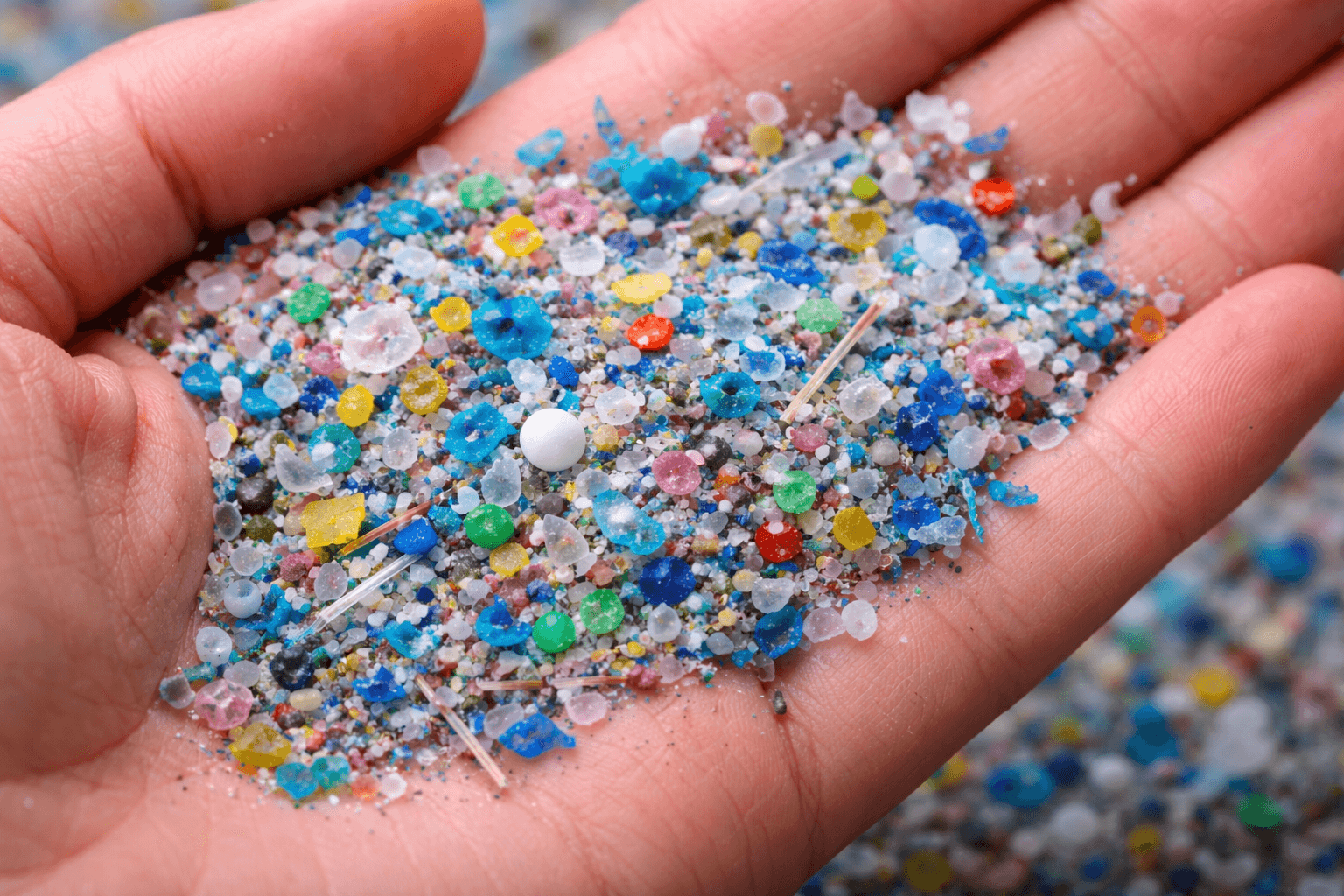
Imagine you have a plastic water bottle. One day it falls apart, breaks down, and crumbles into millions of teeny-tiny pieces. Some of those pieces are so small you cannot see them without a microscope. Congratulations, you have just imagined microplastics.
Officially, microplastics (MPs) are plastic particles smaller than 5 millimeters in diameter. For reference, 5 millimeters is about the size of a sesame seed. Some are even tinier and are called nanoplastics (NPs), which are smaller than 1 micrometer. A human hair is about 70 micrometers wide, so nanoplastics are much, much smaller than a strand of hair.
Type | Size |
|---|---|
Microplastics (MPs) | Less than 5 mm (smaller than a sesame seed) |
Nanoplastics (NPs) | Less than 1 micrometer (much smaller than a hair) |
For comparison: Human hair | About 70 micrometers wide |
For comparison: A grain of sand | About 500 micrometers |
For comparison: A period on this page | About 500 micrometers |
Where Do Microplastics Come From?
Microplastics come from two main places:
Primary microplastics: These are intentionally made tiny. Think of the little beads in some face scrubs, toothpastes, and industrial products. They are designed to be microscopic from the start.
Secondary microplastics: These start big and get small. A plastic bag, bottle, or container sits in the sun, gets wet, and slowly breaks apart into millions of tiny pieces over months and years.
The Most Common Types Found in People
Scientists have found these plastics most often in human bodies:
Plastic Type | Abbreviation | Common Uses |
|---|---|---|
Polyethylene | PE | Plastic bags, bottles, food packaging |
Polypropylene | PP | Bottle caps, straws, food containers |
Polystyrene | PS | Styrofoam cups, food trays, packaging |
Polyethylene Terephthalate | PET | Water bottles, food containers |
Polyvinyl Chloride | PVC | Pipes, flooring, window frames |
Section 2: How Do Microplastics Get Inside You?
The Three Unwanted Delivery Methods
Microplastics are basically incredibly dedicated delivery drivers. They will find a way in through three main routes, whether you like it or not.
ROUTE #1: EATING AND DRINKING (Ingestion)
This is the most common route. Microplastics have been found in food and drinks including tap water and bottled water (yes, bottled water is WORSE), sea salt and table salt, seafood (especially shellfish like mussels and oysters), beer and honey, food stored or heated in plastic containers, and highly processed packaged foods.
Important: Microwaving food in plastic containers makes things MUCH worse. Heat causes plastic to release far more particles into your food.
ROUTE #2: BREATHING (Inhalation)
The air around you contains floating microplastic particles. Sources include synthetic clothing (polyester, nylon, and fleece shed fibers when worn or washed), rubber tire dust from cars on roads, industrial emissions from factories, household dust containing plastic fibers from furniture, carpets, and clothes, and plastic packaging torn or handled nearby.
ROUTE #3: SKIN CONTACT (Dermal)
This is the least studied route, but microplastics can reach your skin through cosmetics containing microbeads (many are now banned but some products still exist), skincare products, sunscreens, and personal care items, and handling plastic packaging and consumer products all day long.
Where Have Scientists Actually Found Microplastics in Human Bodies?
Scientists have found microplastics in some very surprising places inside humans. They are not just sitting in your stomach. They travel.
Body Location | Found? | Why It Matters | What It Means |
|---|---|---|---|
Poop (feces) | YES | Shows we eat and pass them | Confirms ingestion pathway |
Blood | YES | They travel through the body | Can reach any organ |
Breast milk | YES | Passes to nursing babies | Infants are exposed |
Placenta | YES | Found in 87% of tested women | Babies exposed before birth |
Lungs and sputum | YES | Confirms inhalation route | Lung health risk |
Heart arteries (plaques) | YES | Major cardiovascular risk | Increases heart attack risk |
Liver tissue | YES | Liver damage possible | Metabolic effects |
Colon tissue | YES | Direct gut contact | Digestive health risk |
Semen | YES | Reproductive concerns | Fertility implications |
Blood clots (thrombi) | YES | Clot formation risk | Stroke and clot risk |
WOW FACT: Microplastics Have Been Found EVERYWHERE
Scientists have now found microplastics in Arctic snow, deep ocean trenches, the top of Mount Everest, rainwater, and even inside human brains. There is essentially no place on Earth that is completely free of microplastic contamination. This does not mean we should give up. It means we need to be smart about reducing exposure.
Section 3: What Are Microplastics Doing to Your Body?
The Not-So-Fun Science of Tiny Plastic Troublemakers
Once microplastics are inside your body, they do not just sit there quietly. They are more like unwanted houseguests who rearrange all your furniture, break things, and refuse to leave. Let us go through the damage they can cause, system by system.
Your Heart and Blood Vessels (Cardiovascular System)
This is where the science gets genuinely alarming. In a landmark 2024 study published in the prestigious New England Journal of Medicine, researchers looked at patients who had surgery to clean out clogged neck arteries. They found that patients who had detectable microplastics stuck in their artery plaques had a 4.5 times higher risk of having a heart attack, stroke, or dying over the next 34 months compared to patients without microplastics in their arteries.
THE BIG HEART STUDY: What Scientists Found
Study: Microplastics in Carotid Artery Plaques, New England Journal of Medicine, 2024
What they looked at: Patients who had surgery to remove fatty buildup in neck arteries
What they found: Microplastics and nanoplastics were detected in artery plaques
The scary result: Patients WITH microplastics in their plaques had 4.5x higher risk of heart attack, stroke, or death over 34 months
Bottom line: Microplastics in your arteries are a serious cardiovascular risk factor, not just a curiosity
How do microplastics hurt your heart? Several ways at once:
They cause inflammation inside blood vessel walls
They disrupt how your body processes fats and cholesterol
They promote the buildup of plaques (fatty deposits) in arteries
They interfere with blood clotting
They damage the delicate inner lining of blood vessels
Animal studies show they can cause heart rhythm problems, heart enlargement, and scarring of heart muscle even at LOW exposure levels
Your Cells and Molecules (The Microscopic Level)
Here is what microplastics actually do inside your cells:
Problem | What Happens | Simple Explanation |
|---|---|---|
Oxidative Stress | Microplastics damage mitochondria (cell power plants) and create reactive oxygen species (ROS) | Imagine tiny sparks setting fire to things inside your cells |
DNA Damage | The excess ROS damages your genetic code | Your cell instruction manual gets torn up |
Inflammation Signals | MPs activate NF-kB, MAPK, Nrf2, and other pathways | Your immune system gets stuck in the 'ON' position |
Cell Death | MPs trigger apoptosis and pyroptosis (types of cell death) | Cells start dying off in ways they should not |
Autophagy Problems | The cell's 'recycling system' gets disrupted | Cellular garbage does not get cleaned up properly |
Your Lungs (Respiratory System)
Every time you breathe in air containing microplastic particles, those particles travel into your airways. Scientists have found MPs in lung tissue, sputum (mucus you cough up), and nasal passages. The health effects include:
Reduced lung function over time
Lung inflammation and injury
Chronic (long-term) airway irritation
Possible increased risk of lung cancer with prolonged high exposure
Worsening of asthma and other breathing conditions
Your Gut (Digestive System)
Your digestive system meets microplastics head-on since most exposure is through food and water. The effects include:
Gut inflammation (your intestines get irritated and inflamed)
Disruption of your gut microbiome (the billions of helpful bacteria living in your intestines)
Immune suppression in the gut
Changes in how your digestive enzymes work
Physical damage to the lining of the colon and small intestine
Possible connection to colon cancer with very high or prolonged exposure
Your Gut Microbiome: A Quick Explainer
You have about 38 TRILLION bacteria living in your gut. That is more bacterial cells than human cells in your body! These bacteria help you digest food, make vitamins, train your immune system, and even affect your mood. Microplastics can disrupt this entire ecosystem by killing off beneficial bacteria and allowing harmful ones to grow. Think of it like someone bulldozing a healthy rainforest.
Your Reproductive System
This is an area of serious scientific concern, especially for anyone who wants to have children someday. Evidence shows microplastics can:
Damage sperm quality, motility (ability to swim), and quantity in males
Disrupt female reproductive hormones including estrogen and progesterone
Damage egg (follicle) development in females
Act as endocrine disruptors (chemicals that mess with hormone signals)
Cause reproductive toxicity and potentially affect future generations
A systematic review rated the evidence quality for reproductive harm as HIGH, particularly for sperm quality damage. This is one of the most well-documented harms of microplastic exposure.
Your Brain (Nervous System)
Microplastics have been found in human brain tissue, which is alarming because the brain has a special protective barrier called the blood-brain barrier designed to keep harmful substances out. Potential effects include:
Neurotoxicity (damage to nerve cells)
Behavioral changes seen in animal studies
Possible effects on memory and cognitive function
Still being actively researched in humans
Your Kidneys and Liver
These organs serve as your body's filter and detox systems. Microplastics can cause:
Kidney toxicity and reduced kidney function
Liver damage and inflammation
Metabolic disturbances (how your body processes fats, sugars, and proteins)
How Strong Is the Evidence? A Report Card for Microplastic Research
Not all health evidence is equally strong. Here is where the research currently stands, based on a major systematic review of 133 studies:
Body System | Health Effect | Evidence Quality | Conclusion |
|---|---|---|---|
Reproductive | Sperm quality damage | HIGH | Strongly suspected harm |
Digestive | Immune suppression in gut | HIGH | Strongly suspected harm |
Reproductive | Female hormone disruption | MODERATE | Suspected harm |
Digestive | Gut inflammation | MODERATE | Suspected harm |
Respiratory | Lung function impairment | MODERATE | Suspected harm |
Cardiovascular | Heart attack and stroke risk | EMERGING HIGH | Major concern |
Nervous | Neurotoxicity | LOW (in humans) | Still being studied |
Renal/Hepatic | Kidney and liver damage | MODERATE | Suspected harm |
Note: Of 133 studies reviewed, 117 (88%) reported adverse health effects. Only 16 studies found no significant impact.
Section 4: Who Is Most at Risk?
While nobody is completely safe from microplastic exposure, some groups face much higher risks than others. Think of it like sun exposure: everyone should wear sunscreen, but people with fair skin need to be extra careful.
Group #1: Pregnant Women and Their Babies
This is the highest-risk group. Researchers have found microplastics in placentas, amniotic fluid (the fluid surrounding the baby), cord blood, and even the first poop (meconium) of newborn babies. Microplastics were found in the placentas of approximately 87% of pregnant women studied.
PREGNANCY RISKS: The Numbers
5x higher risk: Eating food in plastic containers increases microplastic contamination in pregnant women by over 5 times (odds ratio: 5.39)
5x higher risk: Placentas with microplastics are linked to a 5-fold increased risk of intrauterine growth restriction (IUGR), meaning the baby does not grow properly
87%: Percentage of pregnant women studied who had microplastics detectable in placental tissue
Reduced gestational age: Higher microplastic levels in placentas are associated with babies being born earlier than expected
How do microplastics harm pregnancy specifically? They disrupt the placenta's normal development by interfering with hormones progesterone and estradiol, reduce the placenta's size and function, and can transfer from mother to baby through the placenta and even through breast milk.
Group #2: Infants and Children
Children are even more vulnerable than adults for several important reasons:
They breathe faster relative to their body size, so they inhale more particles per pound of body weight
Their immune and detox systems are still developing and less able to fight off the damage
Babies frequently put hands and objects in their mouths, increasing ingestion
Plastic feeding bottles can release MILLIONS of microplastic particles during normal use
Breast milk, infant formula, and baby food can all contain microplastics
Plastic toys shed microplastics continuously
The health effects of childhood exposure are particularly concerning because they happen during critical developmental windows:
Disrupted puberty timing and potential long-term fertility effects
Neurodevelopmental problems and behavioral changes
Higher risk of asthma and other respiratory diseases
Obesity and insulin resistance (a pre-diabetes condition)
Immune system disruption that can last a lifetime
The damage from early-life exposure may carry through to the next generation
Group #3: People with Heart or Vascular Disease
If you already have cardiovascular disease, high blood pressure, high cholesterol, or other heart risk factors, microplastics can make things significantly worse. The 2024 New England Journal of Medicine study showed that microplastics in artery plaques dramatically increased the risk of life-threatening events. Microplastics accelerate existing inflammation, worsen plaque buildup, promote dangerous blood clots, and directly injure heart muscle tissue.
Group #4: Workers with Heavy Exposure
Some workers face extraordinarily high microplastic exposure through their jobs:
Job Type | Exposure Level | Particles Inhaled Per Shift | Main Risk |
|---|---|---|---|
Plastic waste segregation | EXTREME | Up to 5,460 particles/8 hrs | Lung disease, inflammation |
Plastic manufacturing (crushing) | EXTREME | 43.57 micrograms/cubic meter | Respiratory and systemic disease |
Market waste segregation | VERY HIGH | Up to 3,301 particles/8 hrs | Lung and immune effects |
Housekeepers (indoor) | MODERATE | About 899 particles/shift | Indoor air exposure |
Van drivers | MODERATE | About 721 particles/shift | Tire dust, exhaust exposure |
Wastewater treatment | MODERATE | About 668 particles/shift | Mixed polymer exposure |
Laundromat workers | LOW-MODERATE | About 454 particles/shift | Fiber shedding from clothes |
Group #5: Low-Income and Disadvantaged Communities
People with fewer financial resources face higher microplastic exposure because they often rely more on packaged and processed foods, live in areas with higher air pollution, are located near plastic disposal sites, have limited access to clean filtered water, and have less ability to purchase plastic-free alternatives. This creates an environmental justice problem where those with the least resources face the greatest harm.
Section 5: How to Protect Yourself and Your Family
The most important message: Reducing exposure is your #1 priority. No pill or supplement can fully undo the damage from high exposure. Prevention comes first. Here is a practical, prioritized guide.
TIER 1: The Most Important Changes (Do These First)
Stop Heating Food in Plastic
This is the single biggest dietary change you can make. Heat dramatically increases how many microplastics and chemical additives leach from plastic into your food. A plastic container heated in the microwave can release millions more particles than the same container used cold.
Never microwave food in plastic containers or plastic wrap
Transfer food to glass, ceramic, or stainless steel before heating
Never use plastic containers with scratches or damage (they release more particles)
Let hot food cool before putting it in plastic storage containers
Switch Your Water Containers
Replace plastic water bottles with reusable stainless steel or glass bottles
Use a water filter for drinking water (pitcher filters with activated carbon or reverse osmosis filters reduce microplastics significantly)
Surprisingly, bottled water often contains MORE microplastics than filtered tap water
Reduce Plastic Food Packaging
Buy fresh, unpackaged fruits and vegetables instead of pre-packaged
Choose products in glass, paper, or metal packaging over plastic
Avoid food sealed in plastic pouches (those flexible pouches can leach directly into food)
Bring your own reusable bags and containers to the grocery store
TIER 2: Important Supporting Changes (Do These Next)
Improve Your Home Air Quality
Vacuum regularly with a HEPA-filter vacuum to reduce microplastic dust
Use a HEPA air purifier in bedrooms and main living areas
Open windows when weather allows to reduce concentration of indoor particles
Wash synthetic clothing (polyester, fleece, nylon) in a laundry bag designed to catch microfibers
Choose natural fiber clothing (cotton, linen, wool) when possible, especially for items worn close to the body
Smart Food Choices
Choose whole, fresh foods over ultra-processed packaged alternatives
When buying seafood, choose fish over shellfish when microplastic exposure is a concern (shellfish filter-feed and concentrate more particles)
Use a salt shaker with sea salt stored in glass rather than plastic salt pouches
Choose coffee made with paper filters rather than plastic pod systems
Baby and Child Safety (Extra Important)
SPECIAL GUIDANCE FOR INFANTS AND YOUNG CHILDREN
Baby bottles: Consider glass bottles instead of plastic whenever possible. When using plastic bottles, never heat formula or breast milk in them.
Formula prep: Allow boiled water to cool to room temperature before adding formula, and use a glass or stainless steel container if possible.
Breast milk storage: Use glass storage containers instead of plastic bags when possible.
Teething toys: Choose natural rubber or silicone teethers rather than hard plastic ones.
Food: Start with fresh, unpackaged baby food rather than food in plastic pouches.
Carpets and rugs: Vacuum frequently as microplastics concentrate in floor dust where babies crawl.
TIER 3: Extra Steps for High-Risk Individuals
For pregnant women: Follow all Tier 1 and 2 recommendations strictly. These carry the highest importance during pregnancy. Discuss your concerns with your obstetrician and focus especially on avoiding plastic food packaging and heated plastics.
For people with cardiovascular disease: Ask your cardiologist to factor environmental exposures including microplastics into your risk assessment. Follow strict dietary changes. Use HEPA air purification at home. This is especially important because microplastics in artery plaques dramatically increase heart attack and stroke risk.
For workers in high-exposure jobs: Advocate for proper personal protective equipment including well-fitted face masks, gloves, and protective clothing. Eat lunch away from the work area. Shower and change clothes before going home. Ask your employer about engineering controls like HEPA ventilation systems.
Your Master Microplastic Avoidance Checklist
DO THIS | INSTEAD OF THIS |
|---|---|
Use glass, ceramic, or stainless steel containers | Plastic food storage containers |
Microwave food on glass or ceramic plates | Microwaving in plastic containers |
Use a stainless steel or glass water bottle | Single-use plastic water bottles |
Filter your tap water with HEPA or reverse osmosis | Drinking unfiltered water or bottled water |
Buy fresh, loose vegetables and fruits | Pre-packaged produce in plastic bags |
Choose glass or can packaging when possible | Flexible plastic pouches for food and drink |
Vacuum with a HEPA filter regularly | Infrequent vacuuming that lets dust accumulate |
Wash synthetic clothes in a microfiber filter bag | Washing polyester and fleece freely |
Use wooden or glass cutting boards | Plastic cutting boards (they shed particles) |
Choose paper-filtered coffee methods | Coffee pod machines with plastic capsules |
Use glass baby bottles when possible | Plastic baby bottles heated with formula |
Eat mostly fresh whole foods | Highly processed foods in plastic packaging |
Open windows and use air purifiers | Keeping windows closed with no filtration |
Wear natural fiber clothing (cotton, linen) | All-synthetic clothing especially for exercise |
Use a stainless steel lunch container | Plastic zip bags and disposable containers |
Section 6: Can Food and Supplements Actually Help?
Short answer: Yes, some dietary strategies can reduce the damage microplastics cause. But they work best alongside exposure reduction, not instead of it. Think of them as your body's defense team, not a cure.
The Best Evidence: Polyphenols
In 2026, scientists published the first ever human clinical trial testing whether a dietary intervention could reduce microplastic-related harm in people. This was a randomized, double-blind, placebo-controlled trial, which is the gold standard of medical research.
THE POLYPHENOL TRIAL: First Human Evidence for Dietary Protection
Study type: Randomized, double-blind, placebo-controlled trial (the strongest type of evidence)
Participants: 98 people with confirmed microplastic exposure
What they tested: Composite (mixed) polyphenol supplement vs. placebo
Results: Polyphenols significantly reduced blood levels of inflammatory cytokines IL-1beta, IL-6, and IL-8 (these are proteins your body makes during inflammation)
How it worked: The polyphenols improved gut bacteria composition, boosted protective metabolic pathways, and directly reduced inflammation signals
Bottom line: This is the first human proof that something you eat can meaningfully reduce microplastic-related inflammation in your body
What Are Polyphenols and How Do You Eat More of Them?
Polyphenols are natural plant chemicals that act as powerful antioxidants and anti-inflammatory agents. Here is your polyphenol shopping list:
Polyphenol Source | Specific Examples |
|---|---|
Berries | Blueberries, strawberries, blackberries, raspberries, cranberries |
Other fruits | Grapes (especially red/purple), apples, citrus fruits, cherries, pomegranate |
Vegetables | Onions, broccoli, spinach, kale, artichokes, red cabbage |
Beverages | Green tea (very high), black tea, coffee, red wine (in moderation for adults) |
Nuts | Walnuts, almonds, pecans, pistachios |
Spices and herbs | Turmeric (curcumin), cinnamon, cloves, oregano, rosemary, thyme |
Chocolate | Dark chocolate (70%+ cacao), cocoa powder |
Legumes | Black beans, kidney beans, lentils, soybeans (edamame) |
Other Antioxidants with Promise
While the polyphenol study is the only human clinical trial so far, other antioxidants show promise based on animal and laboratory studies. Talk to your doctor before starting any supplement program.
Antioxidant | How It Helps | Best Food Sources | Supplement Notes |
|---|---|---|---|
Vitamin C | Scavenges harmful free radicals, protects cell membranes, reduces oxidative stress | Citrus fruits, bell peppers, strawberries, broccoli, kiwi | Generally safe; excess excreted in urine |
Curcumin (Turmeric) | Activates Nrf2 protective pathway, blocks NF-kB inflammation, regulates cell cleanup | Turmeric spice, curry dishes | Poor absorption alone; take with black pepper (piperine) to improve by up to 2000% |
Quercetin | Strong antioxidant, reduces free radicals, protects mitochondria, anti-inflammatory | Onions, apples, berries, kale, green tea, capers | Generally safe at food doses; high doses need medical supervision |
Vitamin E | Protects cell membranes from oxidative damage, fat-soluble antioxidant | Nuts, seeds, olive oil, leafy greens, avocado | Fat-soluble; do not exceed recommended doses |
N-Acetylcysteine (NAC) | Precursor to glutathione, the master cellular antioxidant; directly neutralizes free radicals | No good food sources; supplement only | Clinically used for other purposes; discuss with doctor |
Omega-3s (EPA/DHA) | Reduces cardiovascular inflammation, stabilizes cell membranes, pro-resolving effects | Fatty fish, algae, flaxseed, walnuts | Consider algae-based to avoid fish-sourced microplastics |
Dietary Fiber: Your Gut's Cleanup Crew
Dietary fiber does more than just keep your digestive system regular. When it comes to microplastics, fiber may actually help your body eliminate them and protect your gut barrier.
Fiber may physically bind to microplastic particles in the gut and help carry them out in stool
Fiber speeds up gut transit time, meaning microplastics spend less time in contact with your intestinal lining
Prebiotic fibers (specific types that feed good bacteria) help restore the gut microbiome disrupted by microplastics
Animal studies show high-fiber diets reduce microplastic accumulation in tissues
Goal: Aim for 25 to 35 grams of fiber per day from varied sources:
Fiber Type | Best Food Sources |
|---|---|
Soluble fiber (dissolves in water) | Oats, beans, lentils, apples, citrus fruits, psyllium, barley |
Insoluble fiber (adds bulk) | Whole wheat, vegetables, nuts, seeds, bran |
Prebiotic fiber (feeds good bacteria) | Garlic, onions, leeks, asparagus, bananas, chicory, Jerusalem artichokes |
Probiotics: Rebuilding Your Gut Team
Since microplastics disrupt your gut bacteria, strategies to restore beneficial bacteria make good sense. The 2026 polyphenol trial showed that gut microbiome changes were part of how polyphenols reduced inflammation from microplastic exposure.
Eat probiotic-rich fermented foods: yogurt, kefir, sauerkraut, kimchi, kombucha, miso, and tempeh
Multi-strain probiotic supplements containing Lactobacillus and Bifidobacterium species may help restore gut health
Combine with prebiotic fiber foods for best results (this is called a synbiotic approach)
The Mediterranean Diet: The Full Package
The Mediterranean diet essentially brings all of these protective elements together in one eating pattern. It is high in polyphenols from olive oil, vegetables, and fruits; rich in fiber from whole grains and legumes; provides omega-3s from fish; and is naturally low in heavily packaged processed foods. This diet has the strongest evidence base for reducing cardiovascular disease and inflammation, both of which are directly relevant to microplastic harm.
THE MEDITERRANEAN DIET AT A GLANCE
EAT PLENTY: Vegetables, fruits, whole grains, legumes (beans and lentils), nuts, seeds, olive oil, herbs, and spices
EAT REGULARLY: Fish and seafood (2 to 3 times per week), poultry, eggs, dairy in moderation
EAT RARELY: Red meat, sweets, and processed foods
DRINK: Water, herbal tea, coffee, green tea; wine only in moderation for adults
BONUS MICROPLASTIC BENEFIT: This diet is naturally low in processed packaged foods, which also reduces plastic packaging exposure
Section 7: When Should You Talk to a Doctor?
Right now, there is no approved medical test that measures your personal microplastic burden, and there is no specific drug treatment to remove microplastics from your body. However, your doctor should be aware of this emerging health issue.
TALK TO YOUR DOCTOR IF YOU:
Work in high-exposure occupations (plastic manufacturing, waste management) and have breathing problems, unusual fatigue, or inflammatory symptoms
Are pregnant and want to discuss specific exposure reduction strategies and how microplastics might affect your pregnancy
Have cardiovascular disease and want to discuss whether microplastic exposure may be contributing to your risk
Are experiencing unexplained infertility and want to explore whether environmental exposures including microplastics may be a factor
Have persistent gut symptoms (inflammation, microbiome disruption) without a clear diagnosis
Want to consider antioxidant supplements as part of a protective strategy (always discuss before starting)
What Doctors Can Do Right Now
While specific microplastic treatments do not exist yet, doctors can:
Assess and optimize your cardiovascular risk factors, which overlap significantly with microplastic risks
Test and treat gut inflammation and microbiome disruption
Order relevant blood tests for inflammatory markers (CRP, IL-6) to establish your baseline
Counsel you on evidence-based exposure reduction and dietary strategies
Monitor occupationally exposed workers for respiratory and inflammatory conditions
Support efforts to reduce exposures during pregnancy
THE HONEST TRUTH: What We Do NOT Yet Know
Science is still catching up to this new threat. Important things researchers are still working on:
What is the minimum amount of exposure that causes harm?
Do all plastic types cause the same damage, or are some worse than others?
How can we accurately measure someone's total plastic burden?
What are the exact long-term effects over decades of exposure?
What is the best combination of supplements and at what doses?
Can the body ever naturally eliminate accumulated microplastics?
Most research so far has used polystyrene microplastics in labs. Real-world exposure involves dozens of different polymer types simultaneously, which makes findings harder to generalize.
Section 8: The Bigger Picture
Can We Actually Fix This Problem?
Individual action helps, but the microplastic problem is ultimately a society-wide challenge. Here is what larger-scale solutions look like:
Solution Type | Examples | Impact |
|---|---|---|
Better water treatment | Membrane bioreactors, sand filtration, coagulation systems in wastewater plants | Removes significant plastic particles before water reaches environment |
Cleaning up waterways | Removing plastic debris from rivers and oceans | Removing 90% of aquatic plastic could reduce human dietary microplastic intake by 48% in high-exposure regions |
Policy and laws | Plastic bag bans and taxes, international agreements like the Basel Convention | Plastic bag restrictions have reduced use by 8 to 85% in various countries |
Source reduction | Redesigning products to use less plastic, improving recycling | Prevents new plastic entering the environment |
Better stormwater management | Filtration systems, bioretention areas, constructed wetlands | Captures tire dust and other plastics before reaching waterways |
Microbead bans | Laws banning plastic microbeads in personal care products (already passed in many countries) | Directly removes an intentional source of microplastics |
A Note on Perspective: Fear vs. Action
It would be easy to read all of this and feel completely overwhelmed or panicked. That is not the goal. Here is some important perspective:
Microplastics are a genuine and significant health concern supported by strong and growing scientific evidence
The health effects, while serious, are not instant. They accumulate over time with exposure
You have real, meaningful power to reduce your exposure through the choices described in this guide
The dietary strategies described here are all healthy regardless of microplastics (more fruits, vegetables, fiber, and less processed food is always a good idea)
Science is actively working on this problem. The 2026 polyphenol trial is just the beginning of human clinical trials
Society is beginning to act. Plastic bans, cleaner water treatment, and product redesign are all accelerating
THE BOTTOM LINE
Microplastics are tiny, ubiquitous, and genuinely harmful. The best-documented risks include cardiovascular disease, reproductive harm, and gut dysfunction. Pregnant women, infants, children, and people with heart disease face the greatest risks. Your most powerful tool is reducing exposure, especially by avoiding plastic food packaging, never heating food in plastic, and filtering your water. Supporting your body with a polyphenol-rich, high-fiber diet and a healthy gut microbiome provides meaningful additional protection. No treatment exists to remove microplastics once inside you, but evidence-based prevention and dietary strategies give you real ways to fight back. Work with your doctor to address related cardiovascular and inflammatory risk factors. And remember: every choice you make to reduce unnecessary plastic use protects not just yourself, but the next generation too.
Quick Reference: Your Action Plan
PRIORITY ACTIONS (Do These Now)
NEVER microwave in plastic. Use glass or ceramic.
Switch to stainless steel or glass water bottles.
Filter your tap water (HEPA or reverse osmosis).
Buy fresh, unpackaged foods over heavily packaged ones.
NEVER heat formula or breast milk in plastic.
DIETARY DEFENSE (Eat More Of These)
Colorful fruits and berries (polyphenols)
Vegetables, especially onions, broccoli, and leafy greens
Green tea daily (powerful polyphenol source)
High-fiber foods: oats, beans, lentils, whole grains
Probiotic foods: yogurt, kefir, kimchi, sauerkraut
Turmeric with black pepper (curcumin + piperine)
MOST AT RISK (Extra Caution Needed)
Pregnant women and developing fetuses
Infants and young children
People with cardiovascular or heart disease
Workers in plastic manufacturing and waste management
Sources: Peer-reviewed medical literature through 2026, including studies published in the New England Journal of Medicine, Nature Communications, Nature Reviews Cardiology, The Lancet Child and Adolescent Health, Environmental Science and Technology, JAMA, and multiple systematic reviews and meta-analyses.
This article is for educational purposes. Please discuss any health concerns or supplement use with a qualified healthcare provider.
HSA/FSA Eligible
Doctors Are Human.
That's Why There's Medome.
Start your free trial today. No credit card required.
Start Your Free Trial
Join thousands protecting their health with AI that never forgets

Critical details get missed when your health information is scattered. Medome connects the dots across your complete record.
Start Your Free Trial
Get In Touch
Email: service@medome.ai
Phone: (617) 319-6434
This is Dr. Steven Charlap's cell. Please text him first, explaining who you are and how he can help you. Use WhatsApp outside the US.
Hours: Mon-Fri 9:00AM - 9:00PM ET