A Note on the Evidence
This guide leans heavily on randomized controlled trials (RCTs) — the gold standard of medical research — and the systematic reviews built on them. Anything else is just a guess in a fancy outfit.
So What Is IVF, Really?
In vitro fertilization (IVF) is a fancy way of saying "we're going to help an egg and sperm meet outside the body, then put the resulting embryo back where it belongs." The phrase "in vitro" literally means "in glass" — a nod to the lab dishes where the magic happens.
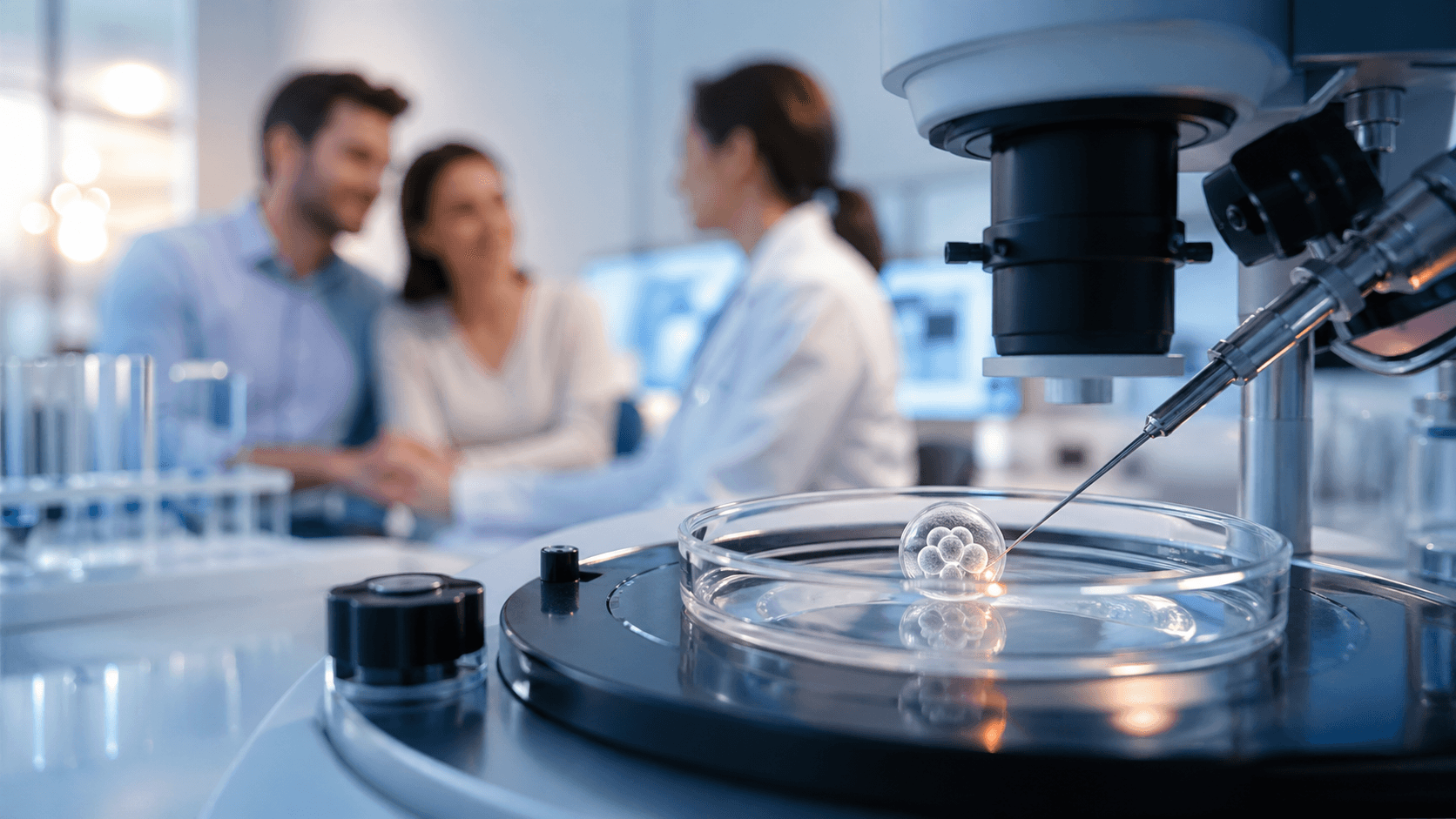
Here's the basic idea: doctors take eggs out of the ovaries, mix them with sperm in a lab, let the embryos grow for a few days, and then place a healthy embryo back into the uterus. Think of it as nature getting a high-tech assist from a really well-organized team of scientists.
Since the very first "test tube baby" was born back in 1978, more than 5 million babies have been born this way around the world. The technology has gotten so much better that what was once a long-shot experiment is now a routine medical treatment.
The Five-Act Play: How IVF Actually Happens
IVF isn't one quick thing — it's a carefully timed performance with five acts. Miss your cue and the whole show gets thrown off, so doctors plan it down to the hour.
Act 1: Ovarian Stimulation
Normally, your ovaries are pretty chill. They release just one egg a month — true minimalists. But IVF works better with more eggs to choose from, so doctors give injectable hormones called gonadotropins (you might hear brand names like Gonal-F, Follistim, or Menopur) to wake up the ovaries and tell them, "Hey, we need ALL of you today."
The goal is usually 8 to 14 eggs. This act lasts about 10 days, and it involves a lot of daily shots in the belly or thigh, frequent ultrasounds, and blood draws to check hormone levels. You'll basically become best friends with your fertility clinic's front desk.
Act 2: Egg Retrieval
When the egg-containing follicles are ripe and ready, you get a trigger shot — usually hCG or a GnRH agonist — that tells the eggs, "Okay, finish growing up. You've got 36 hours."
Right around hour 36, the doctor uses a thin needle (guided by ultrasound through the vaginal wall) to gently suck out the eggs. You're sedated, so you won't feel a thing. It sounds dramatic, but serious complications are rare — about 1 in 1,000 procedures.
Act 3: Fertilization
In the lab, eggs meet sperm. There are two ways this can happen, and we'll explain those in the "Flavors" section below. Either way, eggs that get fertilized officially become embryos.
Act 4: Embryo Culture
Embryos hang out in a special incubator for 5 to 7 days, growing from a single cell into a blastocyst — a little ball of about 100 cells that looks like a tiny soccer ball under a microscope. Embryologists watch them carefully and pick the strongest one for transfer.
Act 5: Embryo Transfer
A single blastocyst is gently slipped into the uterus using a thin tube called a catheter, with ultrasound to guide it. The whole thing takes just a few minutes and feels a bit like a Pap smear.
Then comes Act 6, which nobody talks about: The Two-Week Wait. This is, by all accounts, the hardest part.
The Flavors of IVF
Not all IVF is the same. Doctors pick a "flavor" based on your age, your ovaries, your medical history, and sometimes your wallet.
Conventional IVF. The full Monty. High-dose hormones produce lots of eggs. This is the most common version and usually has the highest success rate per cycle.
ICSI (Intracytoplasmic Sperm Injection). Pronounced "ICK-see." Instead of letting sperm swim to the egg on their own (let's be honest, sometimes they're terrible at directions), an embryologist injects a single sperm directly into the egg with a microscopic needle. Originally invented for severe male infertility, ICSI is now used in most IVF cycles worldwide.
Natural Cycle IVF. No stimulation drugs at all. The doctor just monitors the one egg your body produces naturally and tries to retrieve it. Fun fact: the very first IVF baby was conceived this way. The pros are it's cheap, no risk of ovarian hyperstimulation, and way fewer shots. The cons are only one egg per try and a higher chance the cycle gets canceled.
Modified Natural Cycle IVF. A compromise. Doctors add a few minimal medications (like a GnRH antagonist to keep you from ovulating too early) but still aim for just one or a few eggs.
Mild Stimulation IVF (Mini IVF). Lower doses of hormones, sometimes mixed with oral pills like clomiphene or letrozole. You get fewer eggs, but you also get fewer side effects and lower bills.
Freeze-All Cycles. Instead of transferring an embryo right after retrieval, all the embryos get frozen (a process called vitrification) and saved for a later cycle. We dig into when this is and isn't a good idea further down.
Success Rates: The Numbers Nobody Loves But Everyone Needs
Here's the truth bomb: age is the single biggest predictor of IVF success. Eggs simply work better when they're younger.
Here's what the data shows for live birth rates per single IVF attempt:
Age Group | Live Birth Rate Per Cycle | After 3 Tries |
|---|---|---|
Under 35 | ~43% | ~80% |
35 to 37 | ~31% | ~62 to 69% |
38 to 40 | ~19% | ~41 to 52% |
41 to 42 | ~9% | Lower |
Over 42 | ~3% | Much lower |
The good news: success rates add up with multiple attempts. A 35-year-old with unexplained infertility has roughly a 48% chance after one try, 69% after two, and 80% after three retrievals. Patience pays.
The Challenges: Why IVF Isn't a Walk in the Park
We'd be lying if we pretended IVF was easy. Here's what to watch out for.
Ovarian Hyperstimulation Syndrome (OHSS)
This is the most feared complication. Your ovaries over-respond to the hormone shots, swell up like overinflated water balloons, and start leaking fluid into your abdomen.
Mild OHSS: Bloating, discomfort, "I look six months pregnant after one taco."
Severe OHSS: Blood clots, kidney problems, hospitalization (this happens in less than 1% of cycles).
The good news? Modern protocols have dramatically reduced this risk. Doctors now use GnRH antagonist protocols, GnRH agonist triggers instead of hCG, lower hormone doses, and freeze-all approaches to keep OHSS rare.
Multiple Pregnancies
Once upon a time, IVF was famous for triplets and quadruplets. Exciting for reality TV, scary for everyone's health. Today, 73.9% of US IVF cycles use single embryo transfer, which has knocked the multiple pregnancy rate down to about 4% — and triplets are nearly extinct.
Other Bumps in the Road
Cycle cancellation when the ovaries don't respond well or respond too much.
Ectopic pregnancy in about 9 per 1,000 women.
Miscarriage in about 42 per 1,000.
The emotional and financial toll. Real talk: IVF is exhausting and expensive.
Side Effects of the Hormone Shots
The gonadotropin medications can cause belly bloating and cramping (very common), headaches, nausea, bruising and soreness at injection sites, fatigue, sore breasts, mood swings (please warn your partner), and ovarian cysts.
⚠️ Rare but serious side effects include blood clots, ovarian torsion (when an enlarged ovary twists), and very rarely, allergic reactions. There have been concerns over the years about whether IVF medications might raise cancer risk. The current evidence does not prove they cause cancer, but FDA labels do mention rare reports of ovarian tumors with multiple stimulation cycles. Most experts consider IVF medications safe when used appropriately, but it's a conversation worth having with your doctor.
Treatments That Actually Work
These have strong RCT evidence behind them. Most are standard parts of a modern IVF cycle, but it's good to understand the why.
Gonadotropin Stimulation Done Right
The hormone shots that wake up your ovaries are the foundation of IVF. But the dose matters.
For women under 39 with normal responses: A meta-analysis of 14 RCTs found that 150 IU per day of recombinant FSH is the sweet spot — same pregnancy rates as higher doses, but fewer complications and lower cost.
For women 35 and older: Starting at 225 IU per day is recommended.
Personalized dosing based on AMH levels (a hormone that tells you about your egg supply) reduces OHSS risk without hurting live birth rates. The big ESTHER-1 trial of 1,329 women showed this works.
GnRH Antagonist Protocols
These are now preferred over older "long agonist" protocols for most patients. They mean fewer shots, shorter stimulation time, lower OHSS risk, and the same pregnancy rates. It's basically a win on every front.
Progesterone Support After Transfer
After egg retrieval, your body's natural progesterone production gets thrown off. Without enough progesterone, the lining of the uterus can't support a pregnancy. So progesterone supplements are essential.
A meta-analysis of 82 RCTs covering 26,726 women confirmed that progesterone supplementation substantially boosts pregnancy rates. The forms:
Intramuscular progesterone shots: Most effective (OR 4.57 vs. no treatment), but they hurt and you need someone to give you the injection.
Vaginal progesterone: Slightly less powerful (OR 3.34) but way more convenient — most clinics use this.
Oral dydrogesterone (30 mg/day): A newer option; some studies suggest it may even slightly outperform vaginal progesterone for live birth rates.
Start the day after egg retrieval and continue for 3 to 12 weeks.
Ultrasound-Guided Embryo Transfer
Sounds basic, but it matters. A meta-analysis of 24 RCTs found that using ultrasound during the transfer (rather than the doctor going by feel) increases pregnancy rates by about 27%.
Soft Catheters Beat Hard Catheters
A meta-analysis of 27 RCTs showed that softer transfer catheters work better than stiff ones (RR 1.12). Tiny detail, real difference.
Embryo Glue (Hyaluronic Acid)
Adding hyaluronic acid to the fluid the embryo is transferred in increases pregnancy rates by about 46% based on 9 RCTs. The nickname "embryo glue" makes it sound weird, but it just helps the embryo stick around.
Single Embryo Transfer at the Blastocyst Stage
Once upon a time, doctors transferred multiple embryos at once to boost the chances something would stick. The trade-off was a high rate of twins and triplets, which sounds cute until you remember that multiple pregnancies have higher risks of premature birth, low birth weight, and complications for both mom and babies.
Today, thanks to better embryo selection (especially growing them out to the blastocyst stage on day 5), doctors can pick the single strongest embryo and transfer just that one. Live birth rates stay excellent, and the multiple pregnancy rate has plummeted. It's one of the biggest safety wins in modern IVF.
Treatments to Skip (Even If Someone Offers Them)
🚫 The American Society for Reproductive Medicine (ASRM) has been very clear about these based on RCT data. If a clinic is pushing pricey add-ons, ask: "Is there RCT evidence this improves live birth rates?" If they hem and haw, you have your answer.
Routine low-dose aspirin. Doesn't improve live birth rates in the general IVF population. ASRM Grade A evidence: don't bother. (Your doctor may still recommend it for specific situations like high preeclampsia risk — that's different.)
Routine steroids. No benefit for live birth rates. ASRM Grade A: skip it.
Bed rest after transfer. This one's wild: bed rest after embryo transfer is actually associated with lower pregnancy rates (RR 0.86 across 6 RCTs). Get up and live your life. The embryo isn't going to fall out.
Routine PGT-A in women under 35. PGT-A (preimplantation genetic testing for aneuploidy) is genetic testing of embryos before transfer. Sounds like a great idea, right? Pick the chromosomally normal embryos. But a landmark NEJM RCT of 1,212 women found that conventional IVF was just as good as PGT-A for cumulative live birth (81.8% vs. 77.2%). PGT-A may help women over 35, but in younger women it doesn't improve outcomes — and it risks throwing out viable "mosaic" embryos that might have worked just fine.
Acupuncture on transfer day alone. A well-designed JAMA RCT of 848 women found no significant difference in live birth between real acupuncture and sham acupuncture on transfer day. A 2025 meta-analysis even flagged a potentially higher early miscarriage rate with acupuncture (RR 1.51). If you enjoy acupuncture for stress relief, fine — but don't expect it to boost IVF success.
IVIG, adalimumab, and lipid infusions. Used by some clinics for "immune-related infertility." Not enough evidence to recommend. ASRM says no.
Most "add-on" tests and procedures. This includes time-lapse imaging, assisted hatching, sperm DNA fragmentation testing, and mitochondrial DNA load measurement. A review in Human Reproduction concluded that most IVF add-ons are offered without solid RCT evidence — often at extra cost.
Supplements With Real Evidence
Now for the part everyone wants to know about. Spoiler: most supplements don't have great evidence. But a few actually do.
Coenzyme Q10 (CoQ10) — The Most Promising
CoQ10 is a natural antioxidant found in your cells. RCTs have shown it can really help, especially for women with poor ovarian response or diminished ovarian reserve.
Network meta-analysis of RCTs: Improved clinical pregnancy rates (OR 2.22) and was the best intervention for live birth rates (OR 2.36).
Meta-analysis of 6 RCTs (1,529 women) with diminished ovarian reserve: Higher pregnancy rates (OR 1.84), more eggs retrieved, fewer canceled cycles.
Typical dose: 400 to 600 mg/day, started 1 to 3 months before IVF.
DHEA (Dehydroepiandrosterone)
DHEA is a steroid hormone your body makes naturally — but levels drop with age. Multiple RCTs in women with poor ovarian response have shown higher clinical pregnancy rates (OR 1.92 to 2.46), more eggs retrieved, and better embryo quality. Typical dose: 75 mg/day (25 mg three times daily), started 6 to 12 weeks before IVF.
DHEA needs to be taken under a doctor's supervision because it can cause side effects like acne, oily skin, and hair changes.
Growth Hormone
Growth hormone (4 to 8 IU/day, given by injection during stimulation) has RCT evidence for higher live birth rates in poor responders (OR 1.80), improved clinical pregnancy rates (OR 1.92), and more eggs retrieved. This is expensive and requires a prescription, but for women with poor ovarian response, it can make a real difference.
Melatonin
Yes, the sleep hormone. Some RCTs suggest 3 mg at bedtime may improve egg quality through antioxidant effects. The evidence isn't as strong as CoQ10, but it's reasonable to consider.
Myo-Inositol
Particularly helpful for women with PCOS (polycystic ovary syndrome). RCTs suggest it improves egg quality and reduces how much hormone medication you need. Typical dose: 2 to 4 g/day.
Omega-3 Fatty Acids
Higher omega-3 intake is associated with better IVF outcomes. One striking observation: women in the highest quartile for EPA+DHA intake had a 54% live birth rate vs. 36% in the lowest. Most evidence is observational, but a small RCT did show improved embryo quality with a Mediterranean-style supplement. Aim for 1 to 2 g of EPA+DHA per day.
Vitamin D
If you're deficient, fix it. The RCT evidence for supplementation is still developing, but vitamin D sufficiency is associated with better IVF outcomes. Typical dose: 1,000 to 2,000 IU/day to reach normal blood levels.
Folic Acid (and B Vitamins)
Standard preconception advice: at least 400 µg of folic acid daily, ideally with vitamin B12. Higher serum folate plus B12 has been associated with double the live birth probability.
Antioxidants for Male Partners
Don't forget the sperm side. A systematic review found at least moderate-quality evidence that antioxidants for the male partner may improve live birth rates.
A Plain Old Multivitamin
Worth doing. Female multivitamin use has been associated with higher live birth rates (adjusted RR 1.22) in couples seeking fertility treatment.
Food and Lifestyle
The Mediterranean Diet
The strongest dietary evidence supports a Mediterranean-style diet: lots of vegetables and fruit, whole grains, olive oil, fish (especially fatty fish like salmon), nuts and seeds, less red meat, and less processed food.
Higher adherence is consistently associated with better IVF outcomes. Even though most evidence here is observational rather than RCT, it's pretty hard to argue against this kind of eating regardless.
Weight
Obesity (BMI over 30) is associated with lower IVF success rates. But here's the surprising part:
Two large RCTs (962 women): Pre-IVF weight loss did not significantly improve live birth rates from IVF itself.
But it DID increase the rate of spontaneous (no-IVF-needed) pregnancy.
A 2025 meta-analysis of 12 RCTs: Pre-IVF weight loss boosted total pregnancy rates (RR 1.21), driven mostly by unassisted conceptions (RR 1.47).
So weight loss before IVF is more about getting pregnant naturally — and reducing pregnancy complications — than improving the IVF cycle itself.
Things to Avoid
🚫 Tobacco (full stop), heavy alcohol (more than 2 drinks a day), and recreational drugs. A glass of wine here and there before treatment isn't going to ruin your chances, but during stimulation and early pregnancy, the safest amount is zero.
Embryo Selection
Why Blastocyst Transfer Wins
Growing embryos to day 5 to 6 (blastocyst stage) instead of transferring on day 3 lets embryologists see which ones are actually thriving. Day-3 embryos all kind of look the same. By day 5, the strong ones have clearly pulled ahead.
When PGT-A Makes Sense
PGT-A (chromosomal screening of embryos) genuinely helps some patients:
Women over 35: Meta-analyses show RR 1.29 for live birth.
Patients with recurrent pregnancy loss.
Patients with previous failed IVF cycles.
For women under 35 with good prognosis, the NEJM RCT showed it doesn't help — and might cause you to discard embryos that would have worked.
Frozen vs. Fresh: The Big Debate
Should embryos be transferred fresh (right after retrieval) or frozen for later? The honest answer: it depends on who you are.
Who Benefits Most From Freeze-All
Women with PCOS. A landmark NEJM RCT of 1,508 women showed frozen transfer gave higher live birth rates (49.3% vs. 42.0%), lower pregnancy loss (22.0% vs. 32.7%), and dramatically lower OHSS (1.3% vs. 7.1%).
High responders (15+ eggs retrieved). A SART registry analysis of 82,935 cycles confirmed: high responders did better with freeze-all (52.0% vs. 48.9% live birth).
Anyone doing PGT-A. Genetic testing requires time, so embryos have to be frozen anyway.
Patients with high progesterone on trigger day. Early progesterone rise can mess up the uterine lining, making fresh transfer less successful.
Who Does NOT Benefit From Freeze-All
Normal responders (6 to 14 eggs). Fresh transfer was actually better (49.6% vs. 44.2% pregnancy rate).
Low responders (1 to 5 eggs). Fresh was much better (33.2% vs. 15.9% pregnancy rate).
Ovulatory women without PCOS. Multiple NEJM RCTs found no live birth advantage for freeze-all, and time to pregnancy was longer.
The Hidden Trade-Off
Frozen embryo transfer reduces OHSS, but it can increase preeclampsia (1.7 to 2.2 times higher risk), high birth weight babies (large for gestational age), and hypertensive disorders of pregnancy. The American Heart Association issued a 2025 scientific statement specifically highlighting these cardiovascular and obstetric risks.
Natural vs. Programmed FET: Meet the Corpus Luteum
If you do a frozen transfer, how the doctors prepare your uterus matters a lot. There are two main ways.
Natural cycle FET. Your body ovulates on its own. Doctors track when ovulation happens and time the transfer accordingly. After ovulation, the follicle becomes a structure called the corpus luteum.
Programmed (artificial) cycle FET. Doctors use estrogen and progesterone pills/patches to "fake" a cycle and prepare the uterus. No ovulation happens, so no corpus luteum forms.
Why the Corpus Luteum Is a Big Deal
The corpus luteum isn't just a progesterone factory — it makes a hormone called relaxin. Relaxin causes blood vessels to relax and widen, helps your heart pump more blood (necessary in pregnancy), supports kidney function, and helps the placenta form properly.
When you skip ovulation (programmed cycle), there's no corpus luteum, so almost no relaxin. And it turns out this matters — a lot.
The Landmark 2026 RCT
A multicenter RCT of 4,376 ovulatory women across 24 centers in China found that live birth rates were the same (41.6% vs. 40.6%) — both protocols work. But among women who got pregnant, the natural cycle group had way fewer complications:
Preeclampsia: 2.9% vs. 4.6%
Early pregnancy loss: 12.1% vs. 15.2%
Placental accreta: 1.8% vs. 3.6%
Postpartum hemorrhage: 2.0% vs. 6.1% (a threefold reduction)
The trade-off: natural cycles got canceled more often (16.2% vs. 11.5%) because of the unpredictability of natural ovulation.
A separate prospective study found that women without any corpus luteum had a 2.73× higher risk of preeclampsia compared to those with at least one.
The Bottom Line for FET
For ovulatory women: Natural cycle FET (or modified natural cycle, where doctors give an hCG shot to time ovulation) is preferred when possible. Same pregnancy rates, way fewer maternal complications.
For anovulatory women (those who don't ovulate, like some PCOS patients): Programmed cycles may be the only option. In that case, careful preeclampsia screening and possibly low-dose aspirin become especially important.
Quick Dosing Reference Card
Medication / Supplement | Typical Dose | When to Take It |
|---|---|---|
Recombinant FSH (Gonal-F, Follistim) | 150 IU/day under 35; 225 IU/day 35+ | Cycle day 2 to 3 for ~10 days |
GnRH antagonist (Cetrotide, Ganirelix) | 0.25 mg/day SC | Mid-stimulation until trigger |
hCG trigger (Ovidrel) | 250 µg SC (or 5,000 to 10,000 IU) | When follicles reach ≥18 mm |
Vaginal progesterone | 90 mg gel/day or 200 mg suppository 2 to 3×/day | Day after retrieval, 3 to 12 weeks |
Oral dydrogesterone | 30 mg/day | Day after retrieval |
CoQ10 | 400 to 600 mg/day | 1 to 3 months before IVF |
DHEA | 75 mg/day (25 mg TID) | 6 to 12 weeks before IVF |
Melatonin | 3 mg at bedtime | During stimulation |
Folic acid | ≥400 µg/day | Preconception onward |
Omega-3 (EPA + DHA) | 1 to 2 g/day | Preconception and beyond |
Vitamin D | 1,000 to 2,000 IU/day | If deficient |
The Bottom Line
IVF has come a long way since 1978. Success rates have climbed, complications have dropped, and the technology keeps getting better. But the best outcomes don't come from fancy add-ons or expensive tests — they come from:
Individualized protocols based on your age, ovarian reserve, and diagnosis.
Evidence-based stimulation and luteal support.
Smart embryo selection (blastocyst, single transfer).
Picking the right transfer strategy (fresh vs. frozen) based on your specific situation.
Lifestyle basics — Mediterranean-ish eating, normal weight, no smoking, sensible drinking.
A few well-chosen supplements if you have specific issues (CoQ10 and DHEA for poor responders, vitamin D if deficient, folic acid for everyone).
Skipping unproven add-ons that just add cost and stress.
If a clinic offers you something not on the "what works" list, ask them: "What RCT evidence supports this?" You deserve real answers.
This article is for educational purposes only and is not medical advice. Every IVF journey is different. Always work with a board-certified reproductive endocrinologist to figure out the best approach for you.
HSA/FSA Eligible
Doctors Are Human.
That's Why There's Medome.
Start your free trial today. No credit card required.
Start Your Free Trial
Join thousands protecting their health with AI that never forgets
Critical details get missed when your health information is scattered. Medome connects the dots across your complete record.
Start Your Free Trial
Quick Links
Medome Men
Home
Pricing
About
Health News
HealthSigns
FAQ
Contact Us
Terms of Service
Privacy Policy
Get In Touch
Email: service@medome.ai
Phone: (617) 319-6434
This is Dr. Steven Charlap’s cell. Please text him first, explaining who you are and how he can help you. Use WhatsApp outside the US.
Hours: Mon-Fri 9:00AM - 9:00PM ET