
Today, we have more health information than ever before. Fitness trackers count our steps. Social media is full of people giving health advice. We can search any symptom online in seconds. In fact, last year nearly a trillion dollars was spent on wellness and longevity in the US alone. Taking care of your health is usually a good thing. But scientists have found something surprising: for some people, thinking too much about health can actually make them less healthy. This article looks at the science behind this strange problem

Orthorexia: When “Healthy Eating” Goes Too Far
Orthorexia is when someone becomes so focused on eating “pure” or “clean” foods that it starts to hurt them. A doctor named Steven Bratman first described this problem in 1997. People with orthorexia spend a lot of time thinking about food rules. They may cut out more and more foods that they think are “bad” or “impure.”
Here’s the irony: people with orthorexia are trying to be super healthy, but they often end up unhealthy. Medical research shows that trying too hard to eat perfectly can lead to not getting enough nutrients, losing friends and family relationships, and feeling worse overall. When you cut out too many foods, your body doesn’t get what it needs.
Studies show that orthorexia is pretty common. In some groups, like athletes and healthcare workers, it affects a lot of people. Scientists have found that people who are perfectionists or who worry a lot about how their body looks are more likely to develop this problem.
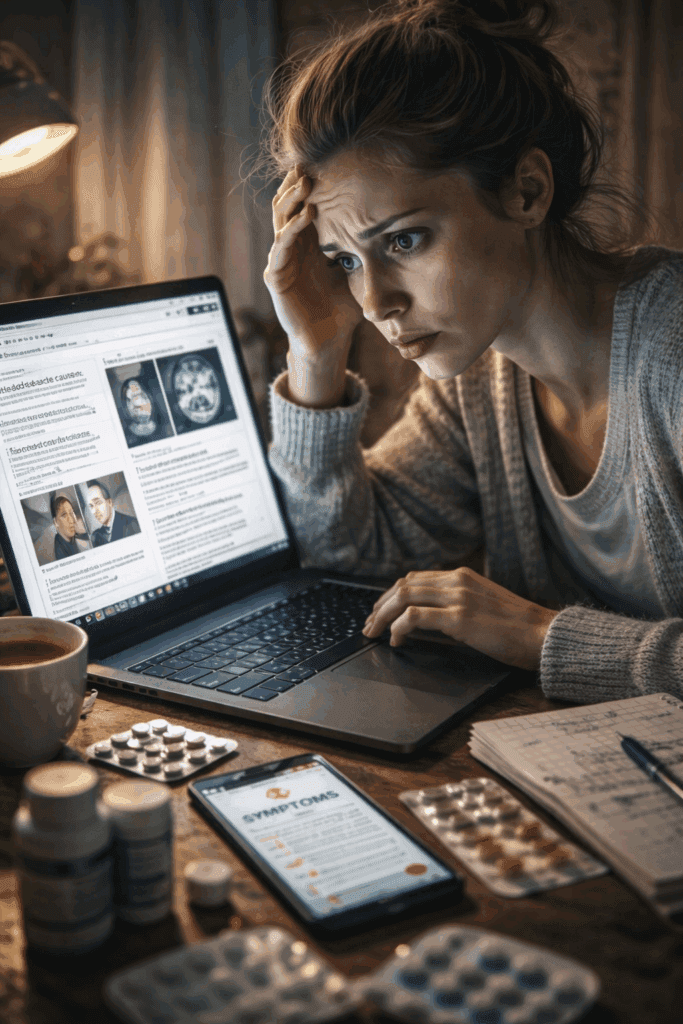
Cyberchondria: When Googling Symptoms Makes You Feel Worse
Have you ever looked up a symptom online and ended up convinced you had a serious disease? Scientists call this “cyberchondria.” The word combines “cyber” (for the internet) and “hypochondria” (which means worrying too much about being sick).
You might think that searching for health information would make people feel better. But research shows the opposite is often true. For people who already worry about their health, looking things up online usually makes them feel more scared, not less. One study found that the more time anxious people spent searching health topics, the worse they felt—both during and after searching.
Cyberchondria can create a loop that’s hard to escape. You feel worried, so you search online. The search makes you more worried, so you search more. Meanwhile, all this time spent worrying can hurt your schoolwork, friendships, and daily life.

Exercise Addiction: When Working Out Becomes a Problem
Everyone knows exercise is good for you. It makes your body stronger and helps your mood. But some people take it too far. Exercise addiction is when someone feels like they have to work out, even when it’s hurting them.
People with exercise addiction might work out even when they’re injured or sick. They feel terrible if they miss a workout. Exercise starts to take over their life, getting in the way of friends, family, and other activities. Researchers at Columbia University say this is similar to other addictions—people need more and more exercise to feel okay, and they feel bad when they can’t do it.
Studies have found that people with exercise addiction often have other mental health problems too, like depression, anxiety, or eating disorders. In one study, almost three out of four people with exercise addiction also had depression.

Illness Anxiety Disorder: Always Worrying You’re Sick
Some people worry about being sick all the time, even when doctors say they’re fine. When this worry is really serious and won’t go away, it’s called Illness Anxiety Disorder (IAD). This is an official diagnosis that doctors use.
People with IAD pay very close attention to their body. A normal stomach gurgle might make them think something is seriously wrong. Even after tests show they’re healthy, they can’t stop worrying. This constant fear is exhausting and can make daily life really hard.
Scientists have found something interesting: some people with IAD go to the doctor constantly looking for answers. Others avoid doctors completely because they’re too scared of what they might find out. Most people actually go back and forth between these two behaviors.
The Bigger Picture: When Wellness Culture Backfires
Beyond these specific conditions, there’s a bigger problem. Our culture tells us we should always be tracking and improving our health. Fitness watches measure our steps, sleep, and heart rate. Social media shows us “perfect” bodies and strict diets. This can create a lot of pressure.
Research shows that constantly watching your health numbers can make some people feel like failures when they don’t hit their goals. This stress and worry can actually hurt your health! Scientists have proven that long-term stress damages the body. So worrying too much about being healthy can make you less healthy, that’s the paradox.
What Actually Helps
The good news is that these problems can be treated. The most effective treatment is called Cognitive Behavioral Therapy (CBT). This is a type of talk therapy where a counselor helps you notice unhelpful thoughts and change them. CBT teaches people to challenge scary thoughts about health and become more comfortable with not knowing everything about their body.
For people with orthorexia, treatment focuses on “intuitive eating,” learning to listen to your body instead of following strict food rules. For exercise addiction, therapists help people find balance and understand why they feel driven to exercise too much.
Here are some tips from researchers for keeping a healthy relationship with health:
• Get health advice from doctors, not social media influencers
• Set limits on how much time you spend looking up health information
• Remember that nobody has “perfect” health, it’s not a real thing
• Focus on how you feel overall, not just numbers on a tracker
Conclusion
Science is clear: caring about your health is good, but obsessing over it can become a problem. Orthorexia, cyberchondria, exercise addiction, and illness anxiety disorder are the extreme versions. But even in smaller ways, worrying too much about health can backfire.
True wellness isn’t just about eating right and exercising. It’s also about being okay with uncertainty, being flexible, and knowing when health habits have become unhealthy obsessions. As I like to put it, we need “a wellness and longevity culture that is good for our overall health but not consumed by it.”
If you find yourself constantly worrying about your health, spending hours researching symptoms, or feeling controlled by health rules, talk to a trusted adult or a counselor. These problems are real, and help is available.
References
Cerea, S., et al. (2023). Orthorexia and Orthorexia Nervosa. PubMed Central.
Koven, N.S. & Abry, A.W. (2015). Orthorexia Nervosa: An Obsession With Healthy Eating. PubMed Central.
Fergus, T.A. (2013). Cyberchondria: Parsing health anxiety from online behavior. PubMed Central.
McMullan, R.D., et al. (2021). Cyberchondria and Anxiety. Journal of Medical Internet Research.
Szabo, A., et al. (2023). Exercise addiction research overview. PubMed Central.
Columbia University Department of Psychiatry. (2024). When Exercise Becomes Too Much.
Newby, J.M., et al. (2024). Illness Anxiety Disorder review. Current Psychiatry Reports.
StatPearls. (2023). Illness Anxiety Disorder. NCBI Bookshelf.
Pacific Neuroscience Institute. (2025). Is Health Tracking Making You Anxious?
Schneiderman, N., et al. (2005). Stress and Health. PubMed Central.
HSA/FSA Eligible
Doctors Are Human.
That's Why There's Medome.
Start your free trial today. No credit card required.
Start Your Free Trial
Join thousands protecting their health with AI that never forgets
Critical details get missed when your health information is scattered. Medome connects the dots across your complete record.
Start Your Free Trial
Quick Links
Medome Men
Home
Pricing
About
Health News
HealthSigns
FAQ
Contact Us
Terms of Service
Privacy Policy
Get In Touch
Email: service@medome.ai
Phone: (617) 319-6434
This is Dr. Steven Charlap’s cell. Please text him first, explaining who you are and how he can help you. Use WhatsApp outside the US.
Hours: Mon-Fri 9:00AM - 9:00PM ET