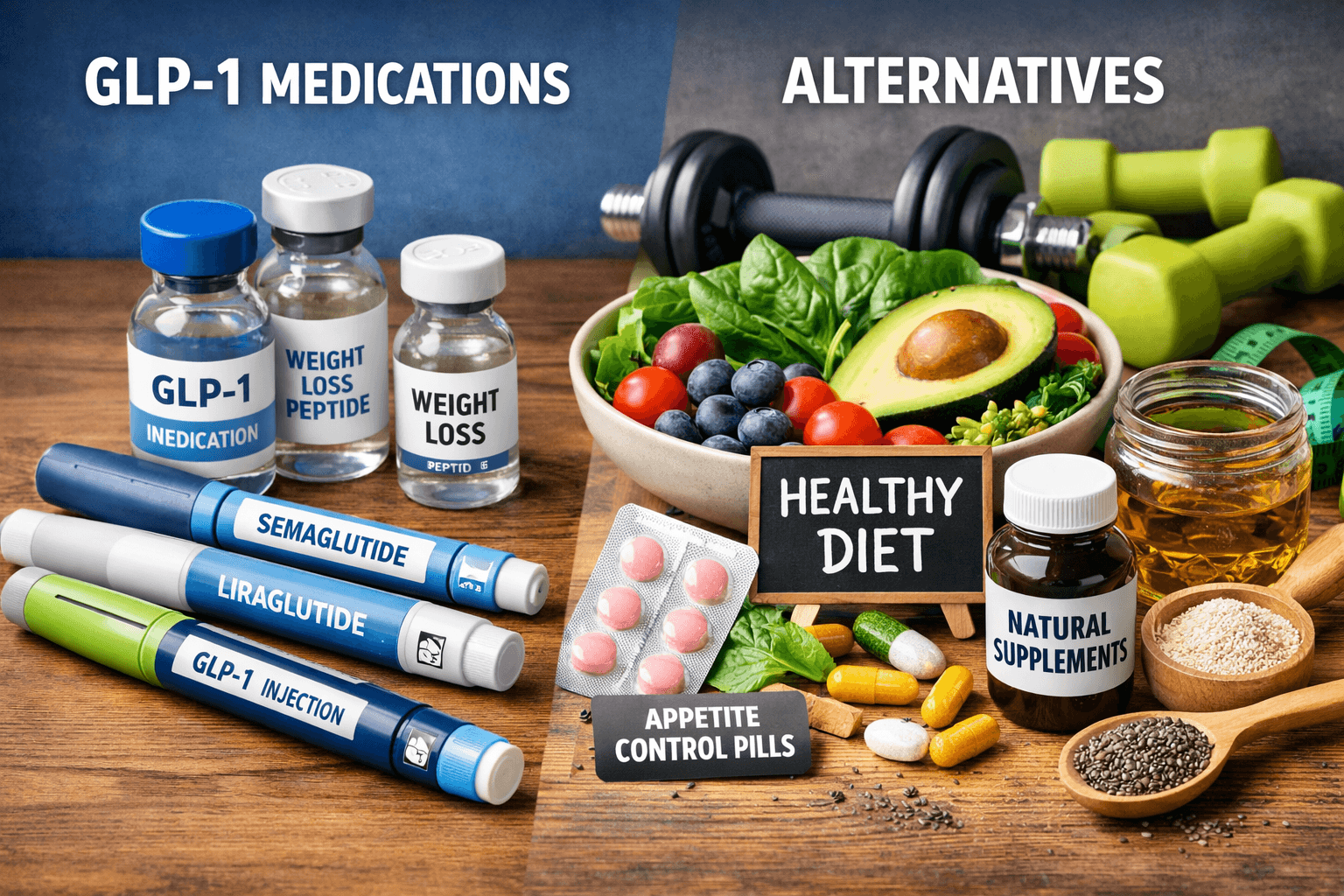
Everything You Ever Wanted to Know About GLP-1 Medications — And Their Alternatives, Too
A Science-Backed Guide Based on Clinical Evidence Through 2026
The Medication Everyone Is Talking About
You have probably heard the names. Ozempic. Wegovy. Mounjaro. Zepbound. These drugs are all over the news, all over social media, and maybe all over your doctor's waiting room. Your neighbor might be using one. Your coworker might be on one. Your celebrity crush almost certainly is.
But what exactly ARE these medications? Why is everybody so excited about them? And, more importantly, should YOU be taking one?
This guide is going to answer all of those questions in plain English, with a side of humor, because medicine does not have to be boring. We will walk you through what GLP-1 medications are, what they do, who they help the most, who should stay far away from them, and what the alternatives look like.
Part 1
What on Earth Is a GLP-1?
The Hormone Your Body Already Makes
Deep in your gut, you have special cells called L-cells. When you eat food, they release a hormone called glucagon-like peptide-1, or GLP-1 for short. Think of it as your body's natural signal that says, "Hey brain, hey pancreas, hey stomach: food is here, let's handle this properly."
Here is what happens when GLP-1 shows up to the party:
Your pancreas releases insulin, but only when blood sugar is actually high. This means GLP-1 is smart — it does not cause low blood sugar on its own.
Your pancreas puts the brakes on glucagon, the hormone that raises blood sugar.
Your stomach slows down how fast food moves through it. You feel full longer after eating.
Your brain's appetite control center gets a message saying "We are good here. Feeling full."
The problem is that natural GLP-1 lasts only about one to two minutes before it gets chewed up by an enzyme called DPP-4. The boost is real, but very brief.
The Medications: GLP-1 Superheroes
Scientists figured out how to make versions of GLP-1 that last much longer — hours, days, or even a full week. They attach to the same receptors as natural GLP-1 and do the same things, but much more powerfully and for much longer.
Tirzepatide (Mounjaro / Zepbound) is the new overachiever. It targets two receptors at once: GLP-1 AND another hormone called GIP, making it the most powerful medication in this class for weight loss.
Part 2
What GLP-1 Medications Are Approved to Treat
Type 2 Diabetes: The Original Reason
Every single GLP-1 medication was originally approved to help control blood sugar. Depending on the medication and dose, they lower HbA1c by about 0.8% to 2.5%.
Obesity and Weight Management
Liraglutide 3.0 mg daily (Saxenda): Approved for adults AND adolescents 12+. Average weight loss ~5.8%.
Semaglutide 2.4 mg weekly (Wegovy): Approved for adults AND adolescents 12+. Average weight loss ~15%.
Tirzepatide (Zepbound): Approved for adults 18+. Average weight loss up to 20.2%. The current heavyweight champion.
Cardiovascular Disease: Protecting the Heart
Several GLP-1 medications reduce the risk of major heart events by 13% to 26%. In the SELECT trial, semaglutide reduced cardiovascular events by 20% even in people WITHOUT diabetes.
Chronic Kidney Disease
In the landmark FLOW trial, semaglutide reduced the risk of serious kidney events by 24%.
Other Approved & Emerging Uses
Obstructive Sleep Apnea — tirzepatide approved for adults with obesity
Liver Disease (MASH) — semaglutide received accelerated FDA approval
Emerging: Heart failure (HFpEF), diabetes prevention, knee osteoarthritis, neurodegenerative diseases, addiction
Part 3
The Medications in Detail
Medication
Brand
Frequency
Route
Main Use
Best Weight Loss
Liraglutide
Victoza / Saxenda
Daily
Injection
Diabetes / Obesity
~5%
Semaglutide SC
Ozempic / Wegovy
Weekly
Injection
Diabetes / Obesity / Heart
~15%
Semaglutide Oral
Rybelsus / Wegovy
Daily
Pill
Diabetes / Obesity
~15%
Dulaglutide
Trulicity
Weekly
Injection
Diabetes / Heart
Modest
Tirzepatide
Mounjaro / Zepbound
Weekly
Injection
Diabetes / Obesity / Sleep Apnea
~20%
Exenatide
Byetta / Bydureon
2× daily / Weekly
Injection
Diabetes only
Modest
Dosing: Slow and Steady Wins the Race
You NEVER start at the full dose. These medications are always started low and gradually increased over weeks to months to reduce nausea and other side effects.
Medication
Starting Dose
Target/Max Dose
Escalation
Semaglutide (Ozempic/Wegovy)
0.25 mg weekly
2.4 mg weekly (obesity)
Every 4 weeks
Tirzepatide (Mounjaro/Zepbound)
2.5 mg weekly
15 mg weekly
+2.5 mg every 4 weeks
Liraglutide (Saxenda)
0.6 mg daily
3.0 mg daily
+0.6 mg every week
Oral Semaglutide (Rybelsus)
3 mg daily
14 mg (diabetes) / 50 mg (obesity)
Monthly increases
💡Pro Tip: The Art of Skipping Doses If you miss two doses in a row, you can resume at your current dose if you feel fine. If you miss three or more, your doctor may want you to restart from a lower dose. When in doubt, call your prescriber. |
Part 4
The Benefits — Why People Are So Excited
Weight Loss: The Numbers Are Jaw-Dropping
Before these medications, the best non-surgical options averaged 5–8% weight loss. Then semaglutide came along with 15%, and tirzepatide with 20%, and the conversation changed completely. A 250-pound person on tirzepatide could lose about 50 pounds over 72 weeks.
Heart Protection: More Than Just Blood Sugar
In meta-analyses of nearly 100,000 patients:
13–14% reduction in major cardiovascular events
12–13% reduction in cardiovascular death
12% reduction in all-cause mortality
13–17% reduction in stroke
10–15% reduction in heart attack
Additional Benefits
24% reduction in serious kidney events (semaglutide, FLOW trial)
Systolic blood pressure reduced ~4 mm Hg on average
Improved lipid profiles: lower triglycerides, higher HDL
Reduced inflammatory markers (C-reactive protein)
Improved bone mineral density at lumbar spine and hip
Part 5
The Side Effects — The Not-So-Fun Part
The Big Four GI Side Effects
Between 25% and 60% of people experience some combination of nausea, vomiting, diarrhea, and constipation. These are usually temporary and peak during dose escalation.
Side Effect | Frequency | Notes |
|---|---|---|
Nausea | Most common | Usually mild, improves with time |
Vomiting | 8–24% | More common with higher doses |
Diarrhea | Up to 30% | Especially common with semaglutide |
Constipation | Up to 24% | Can worsen with dehydration |
ℹ️ Key Insight The #1 reason people quit is GI side effects. The #1 way to avoid that is slow dose escalation and eating smaller, lower-fat meals. |
Other Important Side Effects
Gallbladder trouble — ~27 extra cases per 10,000 patients per year
Mild heart rate increase — insignificant for most people
Eye complications — only in pre-existing diabetic retinopathy with rapid blood sugar drops
Muscle loss — significant concern; mitigated by protein intake and resistance training
Rare but Serious
Pancreatitis — reports exist but large trials showed NO increased risk vs. placebo
Gastroparesis — extreme slowing of stomach emptying
Bowel obstruction — rare but real
Kidney injury — usually from dehydration, not the drug itself
What About Cancer?
In rodents given extremely high doses, GLP-1 medications caused C-cell thyroid tumors. In humans, there is no confirmed increased risk from decades of study with nearly 100,000 participants. However, these medications carry a warning and are contraindicated in people with medullary thyroid carcinoma history or MEN2.
Part 6
Who Should Absolutely NOT Use GLP-1 Medications
🚫Absolute Contraindications — Non-Negotiable
Personal or family history of medullary thyroid carcinoma
Multiple endocrine neoplasia type 2 (MEN2)
Serious allergic reaction to any GLP-1 medication
Pregnancy — reproductive toxicity in animal studies
Breastfeeding — not studied in humans
Proceed With Caution
Gastroparesis or significant gastric surgery history
Active or high-risk pancreatitis (history, very high triglycerides, heavy alcohol use)
Proliferative diabetic retinopathy with very high HbA1c
Bowel obstruction or recurrent ileus
Unexplained weight loss or malnutrition
Severely impaired kidney function (for older medications like exenatide)
Part 7
Who Benefits the Most — The Sweet Spot
Group | Profile | Why GLP-1 is Especially Beneficial |
|---|---|---|
1 | Type 2 Diabetes + Heart Disease | Strongest cardiovascular evidence; NNT of 66 over 2.5 years |
2 | Type 2 Diabetes + Chronic Kidney Disease | FDA-approved; benefits beyond weight loss |
3 | Obesity + Cardiovascular Disease (no diabetes) | SELECT trial: 20% MACE reduction without diabetes |
4 | Obesity + HFpEF | STEP-HFpEF: dramatic symptom improvement; SUMMIT: 38% risk reduction |
5 | Significant Weight Loss Needed | BMI ≥30 or ≥27 with comorbidities |
6 | Prediabetes Prevention | 84% achieved normal blood sugar at 68 weeks |
Part 8
High-Risk Patient Profiles for Side Effects
Higher Risk Group | Risk | Mitigation |
|---|---|---|
Pre-existing stomach problems | Worsening nausea, gastroparesis | Start at lowest dose; consult GI doctor |
Older adults (65+) | Dehydration, muscle loss, falls | Monitor weight, hydration, protein closely |
On insulin or sulfonylureas | Hypoglycemia | Reduce insulin 20–30%; reduce/stop sulfonylurea |
Weight loss at high doses | Gallbladder disease | Watch for right upper abdominal pain |
Pre-existing diabetic eye disease | Retinopathy worsening | Eye exam before starting; slow escalation |
Having surgery or endoscopy | Aspiration risk | Discuss stopping medication beforehand |
⚠️ A Special Note About Older Adults Older adults can lose disproportionate muscle mass, increasing fall risk. If you are over 65: aim for 1.2–1.6 g protein/kg/day, do resistance exercise 2×/week, monitor kidney function and electrolytes, and have medications reviewed for dose reduction. |
Part 9
Drug Interactions — What to Watch Out For
Medications That Need Closer Watching
Oral contraceptives — tirzepatide affects absorption; use backup contraception for 4+ weeks after dose changes
Levothyroxine — oral semaglutide can affect absorption; separate timing
Narrow therapeutic index drugs — warfarin, digoxin, seizure medications need monitoring
Insulin — reduce dose 20–30% when starting if HbA1c is at target
Sulfonylureas — reduce or stop as directed to prevent hypoglycemia
🚫Combinations to Avoid
Do NOT combine two different GLP-1 medications together. Do NOT combine a GLP-1 medication with a DPP-4 inhibitor (sitagliptin, saxagliptin, linagliptin) — overlapping pathways with no added benefit.
Part 10
GLP-1 vs. SGLT2 Inhibitors — The Showdown
Both reduce major cardiovascular events by about 11–14%, but they have different strengths.
Goal | Better Choice | Why |
|---|---|---|
Reduce heart failure hospitalizations | SGLT2 inhibitor | 31% reduction; GLP-1 has no significant effect |
Protect kidneys (hard outcomes) | SGLT2 inhibitor | Stronger on dialysis/kidney failure endpoints |
Prevent strokes | GLP-1 medication | 13–17% reduction; SGLT2 has none |
Significant weight loss | GLP-1 medication | 4–20% vs. 1–3% with SGLT2 |
Simple daily pill, no titration | SGLT2 inhibitor | Start at full dose immediately |
All three: diabetes + heart + kidney | Both together | Additive complementary benefits |
💡The Power Couple Observational studies suggest combining both may reduce major cardiovascular events by up to 44%, all-cause mortality by 50%, and serious kidney events by 52%. The catch is cost — both are expensive. |
Part 11
Tirzepatide vs. Semaglutide — The Head-to-Head
Category | Winner | Details |
|---|---|---|
Weight Loss | Tirzepatide | 20.2% vs. 13.7% (SURMOUNT-5); 3.2× more likely to hit ≥15% loss |
Cardiovascular Outcomes | Semaglutide (more data) | SELECT trial complete; tirzepatide data still emerging |
Tolerability | Roughly similar | Tirzepatide: more vomiting; Semaglutide: more abdominal pain, higher discontinuation |
ℹ️Bottom Line Maximum weight loss without specific CV indications → tirzepatide. Established cardiovascular disease without diabetes → semaglutide (only one with proven MACE reduction in that population). |
Part 12
Natural Alternatives — Can You 'Hack' GLP-1?
Berberine: The Most Evidence-Based Natural Option
Berberine activates AMPK (same enzyme as metformin), reduces fasting blood sugar by 9–16 mg/dL, lowers HbA1c by ~0.7%, and improves lipids. But it is NOT "nature's Ozempic" — weight loss is about 1 kg vs. 15–20 kg.
Dose: Typically 0.9–1.5 grams daily, divided into two or three doses with meals.
Foods That Help Your Body Make More GLP-1
Fiber & Resistant Starch — oats, legumes, green bananas, cooked-then-cooled potatoes
Healthy Fats — nuts, avocados, olive oil, fatty fish
Protein with Calcium — eggs, Greek yogurt, dairy products
Bioactive Compounds — quercetin (onions, apples), green tea catechins, curcumin, omega-3s
⚠️Reality Check on Natural GLP-1 Boosting Your body's natural GLP-1 lasts only 1–2 minutes. Even optimal dietary approaches cannot replace pharmaceutical GLP-1 therapy for people with significant disease. Think of diet as the foundation and medication as the specialized tool. |
The Mediterranean Diet: The Overall Winner
The Mediterranean diet combines many GLP-1 stimulating foods into a cohesive, proven dietary pattern with the most consistent evidence for metabolic health, cardiovascular protection, and insulin sensitivity.
Part 13
When Alternatives Are Better — The Full Guide
Alternative Diabetes Medications
Medication | HbA1c Drop | Weight Effect | Best For |
|---|---|---|---|
SGLT2 Inhibitors (Jardiance, Farxiga) | 0.5–1.0% | -2 to 3 kg | Heart failure, kidney disease |
DPP-4 Inhibitors (Januvia, Tradjenta) | <0.5% | Neutral | Older adults, mild hyperglycemia |
Sulfonylureas (Glipizide, Glimepiride) | 1–2% | +2 to 3 kg | Low cost, high efficacy needed |
Pioglitazone (Actos) | 1–2% | Gain | Insulin resistance, fatty liver |
Insulin | No ceiling | Gain | Severe/uncontrolled T2D, T1D |
Alternative Anti-Obesity Medications
Medication | Weight Loss | Cost/mo | Best For |
|---|---|---|---|
Phentermine-Topiramate (Qsymia) | 8.5–10.9% | ~$116 | Obesity + migraines; cost-conscious |
Naltrexone-Bupropion (Contrave) | 5–7% | Varies | Emotional/reward-driven eaters; depression |
Orlistat (Xenical/Alli) | ~3% | ~$78 OTC | No CV or psychiatric contraindications |
Setmelanotide (Imcivree) | Dramatic (genetic) | Specialty | Rare genetic obesity (POMC, LEPR, PCSK1, BBS) |
Bariatric Surgery: The Most Effective Intervention
Surgery produces 25–35% weight loss sustained long-term. No medication comes close. Consider for BMI ≥40, BMI ≥35 with comorbidities, or BMI 30–35 with poorly controlled T2D. Requires lifelong vitamin supplementation and carries unique risks including dumping syndrome and post-surgical hypoglycemia.
Part 14
What to Take Alongside GLP-1 Therapy
Protein — 1.2–1.6 g/kg/day; prioritize at every meal; use shakes if needed
Resistance training — non-negotiable, 2–3× per week minimum
Hydration — at least 8 cups daily; GLP-1 reduces thirst as well as hunger
Micronutrient monitoring — check iron, B12, vitamin D periodically
Fiber — supports gut health and naturally enhances GLP-1 signaling
Part 15
Monitoring — What Your Doctor Should Be Checking
What | How Often | Why |
|---|---|---|
HbA1c | Every 3 months → every 6 | Glycemic control, medication adjustment |
Weight & BMI | Every visit | Track progress |
Kidney function | Baseline + periodic | Dehydration risk, CKD monitoring |
Retinal exam | Before starting semaglutide | Screen for proliferative retinopathy |
Gallbladder symptoms | Every visit | Right upper abdominal pain screening |
Muscle mass (65+) | Every 3–6 months | Screen for sarcopenia |
Nutritional status | Every 6–12 months | Iron, B12, Vitamin D |
Blood pressure & heart rate | Every visit | HR elevation; BP improvement |
Insulin/sulfonylurea doses | Every visit initially | Prevent hypoglycemia |
Part 16
Eating Well on GLP-1 Therapy — Your Nutritional Game Plan
Losing weight quickly is NOT the same as losing weight healthily. GLP-1 therapy is a powerful tool, but your nutrition plan determines whether you come out healthier or just lighter.
The MEAL Framework
Letter | Priority | Risk if Ignored |
|---|---|---|
M | Muscle maintenance through protein | Muscle loss, weakness, slower metabolism |
E | Micronutrient intake | Vitamin and mineral deficiencies |
A | Avoiding GI side effects | Nausea, dropout from therapy |
L | Liquid intake and hydration | Dehydration, kidney injury, palpitations |
Priority M: Muscle Maintenance
In the STEP 1 trial, 38% of weight loss was lean body mass. Target 1.0–1.6 g protein per kg of ideal body weight daily. Eat protein first at every meal. Use shakes when solid food feels unappealing. Spread intake across all meals.
⚠️Critical Point Protein without resistance training does NOT preserve muscle. Your body will simply convert excess protein to energy. GLP-1 therapy should be paired with strength training at least 3× per week AND 150 minutes of moderate aerobic exercise per week. |
Priority E: Micronutrients
Users eat 16–39% fewer calories, making deficiencies likely. Many people with obesity were already deficient before starting GLP-1 therapy.
Nutrient | Deficiency Prevalence | Warning Signs |
|---|---|---|
Vitamin D | >50% | Fatigue, muscle weakness, bone pain |
Iron | Up to 45% | Fatigue, pale skin, poor wound healing |
Calcium | >50% inadequate | Muscle cramps, bone fragility |
Magnesium | >50% inadequate | Muscle cramps, constipation |
Vitamin B12 | 2–18% | Fatigue, numbness, brain fog |
Zinc | 24–28% | Hair loss, poor wound healing |
Priority A: Managing GI Side Effects
For nausea: eat smaller meals more frequently, avoid fried/greasy foods and carbonation, try ginger or peppermint tea, do not lie down for 2–3 hours after eating. For constipation: increase fiber gradually, drink 2–3 liters of water daily, consider magnesium citrate. For reflux: small portions, avoid spicy and high-fat foods, minimize alcohol.
Priority L: Hydration
GLP-1 medications suppress thirst as well as appetite. Dehydration can trigger acute kidney injury and heart palpitations. Target at least 2–3 liters daily. Watch for dark urine, headache, dizziness, or racing heart.
What to Eat & What to Minimize
✓ Embrace
Berries, apples, avocados
Leafy greens, broccoli, zucchini
Oats, quinoa, brown rice
Greek yogurt, cottage cheese
Fish, eggs, legumes
Nuts, seeds, olive oil
✗ Minimize
White bread, pastries, refined flour
Sugary beverages, juice, soda
Processed meats, bacon, hot dogs
Fast food
Ultraprocessed snacks
Best dietary frameworks: Mediterranean diet (strongest evidence), DASH diet (blood pressure focus), and plant-dominant approaches.
⚠️Special Situations Keto + GLP-1: Risk of dangerous hypoglycemia and ketoacidosis if on insulin/sulfonylureas. Discuss with your prescriber before combining. |
Part 17
The Future — What Is Coming Next
Therapy | Mechanism | Weight Loss | Status |
|---|---|---|---|
Retatrutide | Triple agonist (GLP-1 + GIP + Glucagon) | 24.2% at 48 weeks; 100% achieved ≥5% | Phase 3 |
CagriSema | Semaglutide + Amylin analogue | 20.4% (no diabetes); 15.6% (with T2D) | Phase 3 |
Orforglipron | Oral non-peptide GLP-1 agonist | 14.7% at 36 weeks | Phase 3 results expected soon |
MariTide | Monthly injectable (GIP antagonist + GLP-1 agonist) | 16.2% at 52 weeks | In development |
Conclusion — The Big Picture
GLP-1 receptor agonists represent one of the most significant advances in medicine in decades. They are not miracle drugs — they require lifestyle commitment, they have real side effects, and they are not right for everyone. But for the right people, they can reduce heart attacks and strokes, protect the kidneys, resolve sleep apnea, improve heart failure symptoms, and produce weight loss previously achievable only through surgery.
Key Takeaways
Combine with healthy diet, exercise, and adequate protein
Slow dose escalation is essential to minimize side effects
Absolutely contraindicated in MTC history, MEN2, pregnancy, breastfeeding
SGLT2 inhibitors preferred for heart failure or kidney disease when GLP-1 is not suitable
Bariatric surgery remains the most effective weight loss intervention
The next-generation pipeline (retatrutide, CagriSema, orforglipron) is extraordinary
ℹ️ Final Word If you think a GLP-1 medication might be right for you — or if you should use an alternative — talk to your doctor. The best health decision is an informed one, made in partnership with a healthcare provider who knows your full medical history. Your gut, heart, kidneys, and waistline may thank you. |
Based on peer-reviewed clinical research through 2026, including randomized controlled trials, systematic reviews, meta-analyses, and guidelines from the ADA, ACC, AHA, KDIGO, and leading medical publications.
HSA/FSA Eligible
Doctors Are Human.
That's Why There's Medome.
Start your free trial today. No credit card required.
Start Your Free Trial
Join thousands protecting their health with AI that never forgets
Critical details get missed when your health information is scattered. Medome connects the dots across your complete record.
Start Your Free Trial
Quick Links
Medome Men
Home
Pricing
About
Health News
HealthSigns
FAQ
Contact Us
Terms of Service
Privacy Policy
Get In Touch
Email: service@medome.ai
Phone: (617) 319-6434
This is Dr. Steven Charlap’s cell. Please text him first, explaining who you are and how he can help you. Use WhatsApp outside the US.
Hours: Mon-Fri 9:00AM - 9:00PM ET