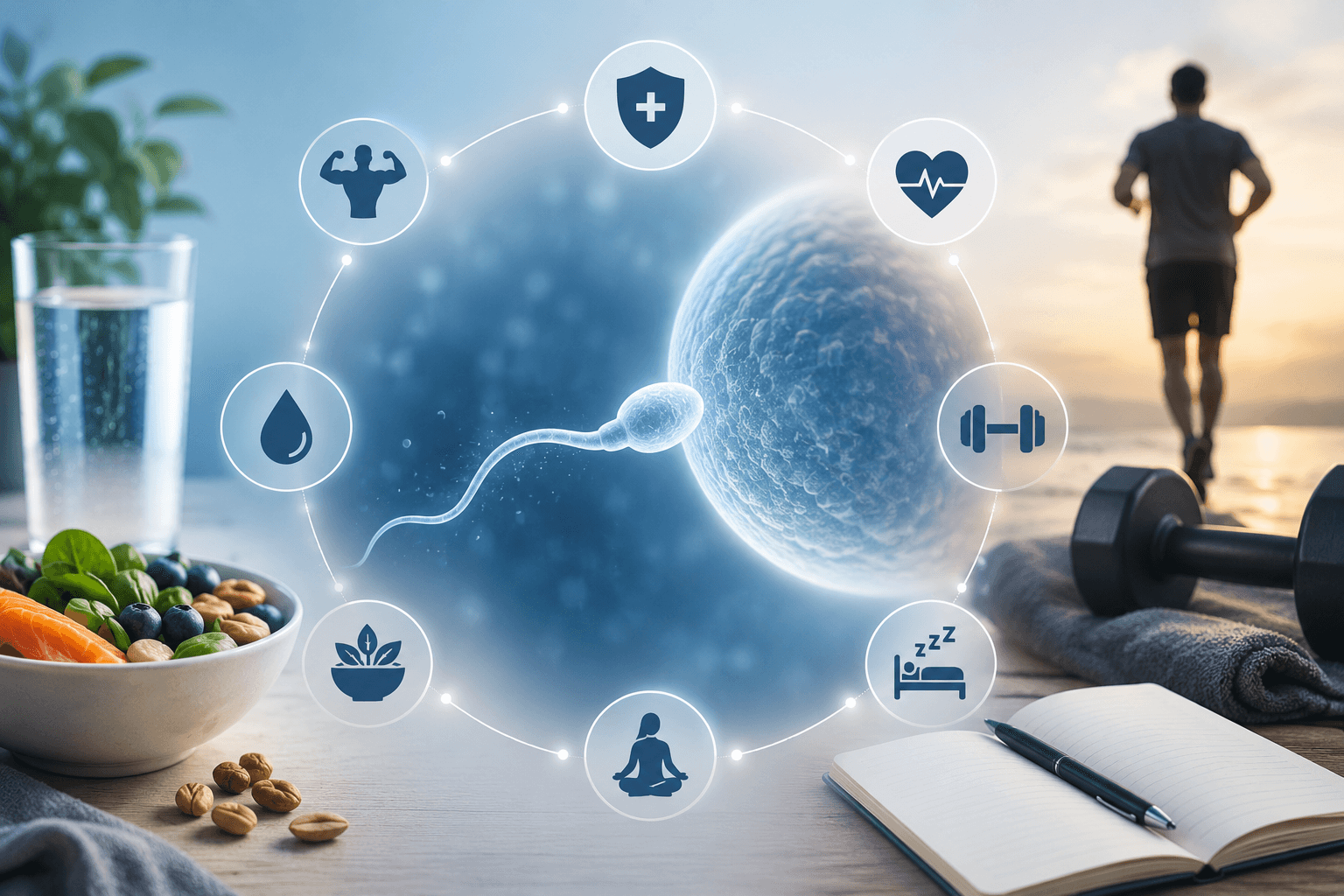
About half the planet does it. Almost no one talks about it with their doctor. The internet fills the void with a strange mix of ancient mysticism, supplement ads, religious guilt, and TikTok bros telling you that not ejaculating will turn you into Brad Pitt.
Let's fix that. Here's what the actual science says about how often is healthy, when it might be a problem, what helps, what doesn't, and why your body is much smarter than the internet.
Quick spoiler: most of what you've been told is wrong.
How It Actually Works (60-Second Version)
Ejaculation is a two-part reflex run by your nervous system.
Phase 1 — Emission. The prostate, seminal vesicles, and vas deferens (the tubes from your testicles) all contract and push semen into your urethra. The bladder neck closes off so semen heads out the front, not back into the bladder.
Phase 2 — Expulsion. Your pelvic floor muscles fire off rhythmic contractions — about 3 to 15 of them, every 0.8 seconds. Those contractions create the sensation we call orgasm.
Orgasm and ejaculation usually happen together, but they're actually different events on different nerve pathways. Some men can have one without the other.
The output? On average, about a teaspoon (1.5 to 5 mL) of fluid that's roughly 30% prostate juice, 60% seminal vesicle fluid, 10% other gland secretions. Carries 15 to 200 million sperm per milliliter, plus fructose, zinc, and a few other things your body easily replaces.
Important: The source — intercourse, masturbation, oral, whatever — does not change the biology. Same reflex, same chemistry, same health effects. Your prostate doesn't know how the signal got there. It doesn't care.
How Often Is Healthy?
The honest answer: there is no single correct number. But the evidence strongly suggests that more frequent ejaculation is associated with better health, not worse.
The Prostate Cancer Connection (This Is the Big One)
The single most important study on this topic followed 31,925 men for 18 years. Men who ejaculated 21 or more times per month had a 19 to 22% lower risk of prostate cancer than men who ejaculated 4 to 7 times a month. The pattern held whether the man was reporting his frequency in his 20s, his 40s, or in the year before the survey.
A 2025 meta-analysis combining 29 studies (over 315,000 men) confirmed it — significant protective effect with a 17% lower overall risk. A dose-response analysis pinpointed the sweet spot at 2 to 4+ times per week.
Why? The leading theory is called the prostate stagnation hypothesis. Regular ejaculation flushes out potentially carcinogenic stuff that builds up in prostate fluid. A gene-expression study even found that 409 different genes behave differently in prostate tissue based on ejaculation frequency. So this isn't a wishful association — something real is happening at the molecular level.
To be clear: this is not a guarantee. It is not a substitute for screening. It's just one of the very few modifiable risk factors known for a disease that mostly tracks with genetics and age.
The Longevity Data
The Caerphilly Cohort Study followed 918 men for 10 years and found that the group with the highest orgasm frequency had a 50% lower mortality risk than the lowest group. A separate analysis of over 15,000 American adults found that people with the most frequent sexual activity had 49% lower all-cause mortality and 69% lower cancer mortality.
Big caveat: These are observational studies. They can't prove that orgasms cause longer life. Healthier people tend to have more sex. The arrow probably runs both ways — being healthy enables a sex life, and a sex life may contribute to staying healthy.
But however you read it, the data clearly does not support the idea that more sex shortens your life. Quite the opposite.
The Real Health Benefits
Cardiovascular workout. Sexual activity counts as moderate exercise — about 3 to 5 METs, the same as brisk walking or climbing two flights of stairs. The American Heart Association notes that sex accounts for only about 1% of all heart attacks, and the absolute risk is roughly 2 to 3 events per 10,000 person-years of weekly activity. Translation: low risk, real exercise.
Better sleep, lower stress, better mood. A study of 8,452 people across 66,000+ check-ins found that the morning after sex, people reported better sleep, lower blood pressure, lower stress, and a more positive mood throughout the day. This applied to both partnered sex and solo sex — the body doesn't distinguish.
Mental health. Orgasm triggers a cocktail of dopamine (pleasure), oxytocin (bonding, released solo too), prolactin (the "ahh, I'm done" hormone), and endorphins (natural painkillers). These are real, measurable effects.
Pelvic floor. Regular ejaculation gives those muscles a workout — the same ones you'd train with Kegels.
Sperm quality (the counterintuitive one). Most men think frequent ejaculation drains the tank. The American Society for Reproductive Medicine is blunt: that's a "widely held misconception." A study of nearly 10,000 semen samples found that even daily ejaculation kept sperm concentration and motility normal. In men with already-low counts, daily was actually best.
A 2025 study of 1,349 men confirmed it: higher frequency = lower DNA damage in sperm, higher vitality, no drop in motility. Old sperm sitting around accumulate oxidative damage. Fresh sperm don't.
If you're trying to conceive, the advice is clear: aim for sex every 1 to 2 days during the fertile window. "Saving up" backfires — abstinence beyond 5 days starts hurting sperm quality, and beyond 10 days, it deteriorates noticeably.
Is There Such a Thing as "Too Much"?
The short answer: frequency itself isn't the problem. The body is great at self-regulating — if you ejaculate a lot, volume per session drops, then refills. Concentration, motility, and morphology stay normal even with two weeks of daily ejaculation.
What can be a problem is the relationship between you and the behavior. The World Health Organization recognizes something called Compulsive Sexual Behavior Disorder (CSBD). It's defined as:
A persistent pattern of failing to control intense sexual urges
For at least 6 months
That has become the focus of your life
Continues despite real negative consequences (relationships, work, health)
Or continues even when you no longer enjoy it
CSBD affects an estimated 3 to 6% of US adults. About 8.6% of men report some level of distress around controlling sexual urges.
Critical distinction: Feeling guilty about masturbation is not the same as having a disorder. Research has shown that many men who consider their masturbation "problematic" actually masturbate less often than average — the distress comes from a mismatch between their behavior and their moral or religious beliefs, not the behavior itself.
The WHO is explicit about this: distress from moral judgments alone is not enough to call something a disorder. If your only problem is that you grew up being told this was wrong, the answer isn't medical treatment — it's deciding what you actually believe and how you want to live.
Physical "side effects" of high frequency:
Temporary soreness (it's a muscle, it can get tired)
Skin irritation from friction (use lube)
Post-orgasm fatigue from the prolactin release
Temporarily lower ejaculate volume
None of these are dangerous. They're all self-limiting. Your body will tell you when it needs a break.
Is There Such a Thing as "Too Little"?
No. There is no minimum number of ejaculations required for health. Abstinence is not damaging. Monks, priests, and millions of people who choose celibacy or long stretches of abstinence are not destroying themselves. That myth needs to die.
That said, there are some measurable effects of prolonged abstinence:
Sperm quality drops after 5+ days, and gets noticeably worse after 10+
Testosterone may bump up modestly after about 3 weeks of abstinence in some men — but this finding is inconsistent, and another study actually found men with more orgasms had higher testosterone
Prostate cancer risk may be modestly higher with very low frequency, though that's a statistical association, not a personal sentence
"NoFap" and Semen Retention: What the Science Actually Shows
The internet is full of guys claiming that not ejaculating will boost testosterone, sharpen your mind, build muscle, raise your "vital energy," and basically rewire you into a more powerful version of yourself.
Here's the honest scientific picture:
Testosterone: One small study found a brief T spike around day 7 of abstinence. A 3-week abstinence study found modestly higher testosterone. But other studies have found the opposite — men who orgasm more have higher T, not lower. The relationship between ejaculation and testosterone is weak, inconsistent, and runs in both directions.
Energy, focus, "superpowers": No controlled study has shown that abstaining from ejaculation improves cognitive function, athletic performance, or productivity. The benefits people report are almost certainly a mix of placebo, the discipline boost of having a goal, and the gym time they suddenly have instead.
"Vital essence" loss: The ancient idea that semen is irreplaceable life-force shows up in Traditional Chinese Medicine, Ayurveda, and various religious traditions. It has zero basis in modern physiology. Semen is mostly water, protein, fructose, and minerals. An average ejaculate is about 5 to 25 calories. You lose more nutrients sneezing.
The honest take: If abstaining for a stretch makes you feel disciplined, focused, or aligned with your values — great. That's a real personal experience. But the physiological claims are not supported. And if you're choosing abstinence based on the idea that ejaculation is harming you, the science says the opposite — regular ejaculation is associated with the better health outcomes.
Drugs That Mess With Ejaculation
A large analysis of over 7,400 reports identified the most common medications that change how (or whether) you ejaculate.
Drugs that delay, weaken, or block ejaculation:
SSRIs (Prozac, Zoloft, Lexapro, Paxil). The biggest offender. Antidepressants increase the risk of ejaculation problems by about 7 times versus placebo. Paroxetine (Paxil) is the worst. This effect is so reliable that SSRIs are actually used to treat premature ejaculation. If your sex life changed after starting an SSRI — that's why.
SNRIs (Effexor, Cymbalta). Same family, similar issues.
Alpha-blockers (tamsulosin / Flomax). Cause retrograde ejaculation — orgasm happens, but semen goes backward into the bladder. Harmless, but startling the first time. Tamsulosin alone accounted for 35% of retrograde ejaculation reports in the database.
Finasteride and dutasteride. The hair-loss and prostate drugs. Top causes of ejaculation failure and painful ejaculation.
Opioids. Suppress testosterone and ejaculation.
Antipsychotics (risperidone, haloperidol). Spike prolactin, which kills sexual function. Aripiprazole is the exception — it's prolactin-sparing.
Heavy alcohol. Light drinking, mild effect. Heavy drinking, central nervous system depression, no ejaculation. Chronic heavy use causes lasting hormonal damage.
Cannabis. Delayed ejaculation and reduced orgasm intensity in some users.
Drugs that may help:
PDE5 inhibitors (Viagra, Cialis). Mostly for erections, but some men report better ejaculation sensation. (See our sexual health article.)
Bupropion (Wellbutrin). One of the few antidepressants that doesn't kill your sex life — and may actually improve it. Sometimes added on top of SSRIs to undo the sexual side effects.
Mirtazapine. Another antidepressant with low sexual side effect rates.
Testosterone replacement — but only in men with actually low testosterone. In men with normal levels, adding T does nothing positive and adds real risks. (See our testosterone article.)
Drugs that change volume:
Alpha-blockers (lower volume)
5-alpha reductase inhibitors (lower volume)
Adequate hydration is the only proven way to keep volume normal
No supplement has been shown in real trials to boost ejaculate volume, despite a billion internet ads claiming otherwise
Food and Nutrition: What Actually Affects This
A systematic review of dietary patterns and male reproductive health found consistent associations.
Helps:
Fish and seafood (omega-3s build into sperm cell membranes)
Fruits and vegetables (antioxidants protect sperm; vitamin C levels in semen are 10x higher than in blood)
Walnuts (one trial: 75g daily improved sperm vitality, motility, and shape)
Whole grains, poultry, low-fat dairy
Zinc-rich foods — oysters, red meat, pumpkin seeds (zinc levels in semen are among the highest anywhere in the body)
Selenium-rich foods — Brazil nuts, fish, eggs
Hurts:
Processed meat — consistently associated with lower sperm counts
Sugar-sweetened beverages — lower sperm count and motility
Trans fats and excess saturated fat
Heavy alcohol (light is fine)
Very high caffeine (more than 8 cups of coffee a day — moderate is fine)
Bottom line on diet: A Mediterranean-style pattern — fish, fruit, vegetables, nuts, whole grains, olive oil — is consistently linked to the best semen quality. Same pattern that's good for your heart, your brain, and your longevity. Your sperm are basically tiny health monitors reflecting what's going on in the rest of you.
The Method Doesn't Matter
Intercourse, masturbation, oral, nocturnal emission — the physiology is essentially the same. Prostate contracts, pelvic floor fires, same neurochemical cascade.
A few practical notes:
Intercourse is more total-body exertion. Peak heart rate during sex averages 110 to 130 bpm, lasting a few minutes. Real but modest cardiovascular workout.
Masturbation is lower physical exertion but produces the same orgasm reflex and neurochemicals. Zero STI risk, zero pregnancy risk. For prostate cancer prevention, the studies say it counts equally.
Oral sex is in between. STI transmission is possible — barrier methods matter with new or multiple partners.
Nocturnal emissions ("wet dreams") are completely normal. Your body cycling out older sperm. More common in adolescence; decrease with regular waking ejaculation.
The prostate cancer research specifically found that total ejaculation frequency was what mattered. Your prostate doesn't care about the source.
When to See a Doctor
Most ejaculation patterns are normal. These changes are worth a real conversation with a doctor:
Pain during ejaculation — possible prostatitis, infection, or medication side effect
Blood in semen — usually benign and self-resolving, but in men over 40, get it checked
Sudden retrograde ejaculation — often a side effect of tamsulosin or a sign of diabetes
Premature ejaculation — ejaculating consistently within about a minute of penetration, without being able to delay. Affects 20 to 30% of men. Highly treatable.
Delayed ejaculation — consistently 25 to 30+ minutes, or unable to finish. Often medication-related.
Complete inability to ejaculate — needs evaluation for nerve, hormonal, or structural causes.
Behavior that feels out of control — if sexual behavior is wrecking your relationships, work, or health, an evaluation for CSBD makes sense.
The Whole Picture in One Page
What's solidly evidence-based:
Regular ejaculation (by any method) is associated with lower prostate cancer risk
Sexual activity is associated with lower all-cause mortality (though cause-and-effect is uncertain)
Frequent ejaculation does not harm sperm quality — usually improves it
A Mediterranean-style diet supports semen quality
Sexual activity is safe for most men with heart disease (3 to 5 METs)
Method (intercourse, masturbation, oral) doesn't matter for health purposes
What's myth:
Ejaculation "drains vital energy" or weakens you
Semen retention reliably boosts testosterone long-term, builds muscle, or sharpens your mind
Masturbation causes blindness, hair loss, acne, or mental illness (yes, some people still believe these)
There's a specific number of ejaculations that's "too many" for a healthy person
Any supplement reliably increases ejaculate volume
Healthy looks like:
A frequency that feels natural to you and doesn't interfere with your life
No distress, no compulsion, no loss of control
Daily life and relationships unaffected
Satisfaction (solo or partnered)
Potentially worth attention:
Sexual behavior that feels out of control for 6+ months and is causing real damage
Pain, blood, or sudden change in pattern
Significant distress not explained by moral or religious conflict alone
The Bottom Line
Ejaculation is a normal, healthy biological function. There's a wide range of "normal" — once a day, once a week, once a month. The data suggests 2 to 4+ times a week is a reasonable sweet spot for prostate cancer protection, but the right frequency for you is the one that fits comfortably into your life without causing distress, problems, or compulsion.
If you grew up being told this was shameful, the science says otherwise. If you've been told online that abstaining is a cheat code to higher testosterone and superpowers, the science says otherwise there too. The body works just fine when you let it do what it evolved to do.
The right amount of anything in your life — food, sleep, exercise, sex — is the amount that lets you feel good, do your work, love your people, and stay healthy. Not the number prescribed by an internet guru, an ancient text, or a supplement company trying to sell you something.
Your body is smarter than the internet. Trust it.
This article is for general education and isn't medical advice. If you have persistent pain, sudden changes, blood in semen, or sexual behavior causing significant distress or life problems, talk to a qualified doctor.
HSA/FSA Eligible
Doctors Are Human.
That's Why There's Medome.
Start your free trial today. No credit card required.
Start Your Free Trial
Join thousands protecting their health with AI that never forgets

Critical details get missed when your health information is scattered. Medome connects the dots across your complete record.
Start Your Free Trial
Get In Touch
Email: service@medome.ai
Phone: (617) 319-6434
This is Dr. Steven Charlap's cell. Please text him first, explaining who you are and how he can help you. Use WhatsApp outside the US.
Hours: Mon-Fri 9:00AM - 9:00PM ET