
A Medically Accurate, Mildly Sarcastic, and Thoroughly Researched Guide to One of the Most Studied Supplements on Earth
Let us talk about creatine. Not the mystery powder your friend from the gym swears saved his biceps, and not the thing your grandmother thinks is steroids. Creatine is actually one of the most studied supplements in sports science history, and the science says: it works. Like, actually works. Peer reviewed, randomized trial, Cochrane database approved works.
This guide will tell you what creatine is, what it does, who should use it, who should be very careful with it, what happens when it meets certain medications, and why you should stop believing the rumors your cousin started in 2003.
Section 1: What Even Is Creatine?
Creatine is a natural compound your body makes from three amino acids: arginine, glycine, and methionine. Your liver, kidneys, and pancreas produce it, and it lives mostly in your muscles and brain. You also get small amounts from eating meat and fish.
Your muscles use creatine to make something called ATP, which is basically your body's energy currency. When you sprint, lift, or do anything that requires a short, hard burst of effort, your muscles burn through ATP in about 10 seconds. Creatine helps refill that tank faster. Think of it as a turbo boost for your muscle fuel.
Vegetarians and vegans get zero dietary creatine, which means their muscle stores are naturally lower. That is important later, and good news for them: they tend to benefit the most from supplementation.
Fun Fact: Your body contains about 120 grams of creatine if you weigh around 155 pounds. About 95% of it lives in your muscles, and the rest is in your brain, heart, and other tissues.
Section 2: What Creatine Actually Does (The Good Stuff)
Athletic Performance
This is where creatine absolutely shines. Research consistently shows it helps with:
Repeated short bursts of high intensity activity like sprinting and weightlifting
Increased muscle force and power output
Reduced fatigue during repeated exercise bouts
Increased muscle mass over time
Faster recovery between sets and sessions s
It also helps with endurance sports that involve surges of intensity, like rowing, kayaking, cycling, and cross country skiing. Basically, anything that asks your muscles to go from cruise to overdrive repeatedly is a good candidate for creatine benefits.
Brain Health and Thinking
Your brain uses a lot of energy. Creatine helps it work better when it is under stress, like during sleep deprivation, high altitude, or intense mental effort. Studies in older adults (ages 66 to 76) show creatine improves memory significantly. Younger people see smaller benefits, but vegetarians and vegans who supplement often notice sharper mental performance.
The European Food Safety Authority reviewed the evidence in 2024 and said the link between creatine and cognitive improvement still needs more research. So the jury is not fully in, but the early reports are promising.
Medical Conditions Where Creatine Helps
Beyond the gym, creatine has real clinical uses. Here is a summary of the conditions with the strongest evidence:

The standout winner here is muscular dystrophies. A Cochrane review of 364 patients found creatine increased muscle strength by 8.47%, and patients were 4.5 times more likely to report feeling better overall. That is a big deal.
Section 3: How to Take It (Dosing)
There are two main ways to load up on creatine. Neither one is wrong. They just get you to the finish line at different speeds.
The Fast Lane: Loading Protocol
Take 20 grams per day for 5 to 7 days, split into 4 doses of 5 grams each
Your muscles fill up about 20% faster
Then drop to a maintenance dose of 2 to 5 grams per day
Side effect: more likely to cause stomach upset during the loading phase
The Slow Lane: No Loading Needed
Take 3 grams per day for 28 days
Achieves the same 20% increase in muscle creatine
Gentler on your stomach
Just takes a little longer to feel the effects
Maintenance
Once your muscles are loaded up, 2 to 5 grams per day keeps them there. Some research says 0.1 grams per kilogram of body weight daily is a good target. A 180-pound person would aim for about 8 grams per day to maintain.
Tips for Better Absorption
Take creatine with carbohydrates or protein. Insulin helps push creatine into your muscles.
Taking it during or right after exercise may improve how well your body uses it.
Drink plenty of water. Creatine pulls water into your muscles.
Long-Term Safety
Studies have tested creatine at 30 grams per day for up to 5 years with no safety issues in healthy adults. Most experts agree that regular low dose use of about 3 grams per day throughout life is probably safe and may offer ongoing health benefits.
Section 4: Which Kind Should You Buy?
Walk into any supplement store and you will see creatine in 47 forms with dramatic names. Here is the honest truth:
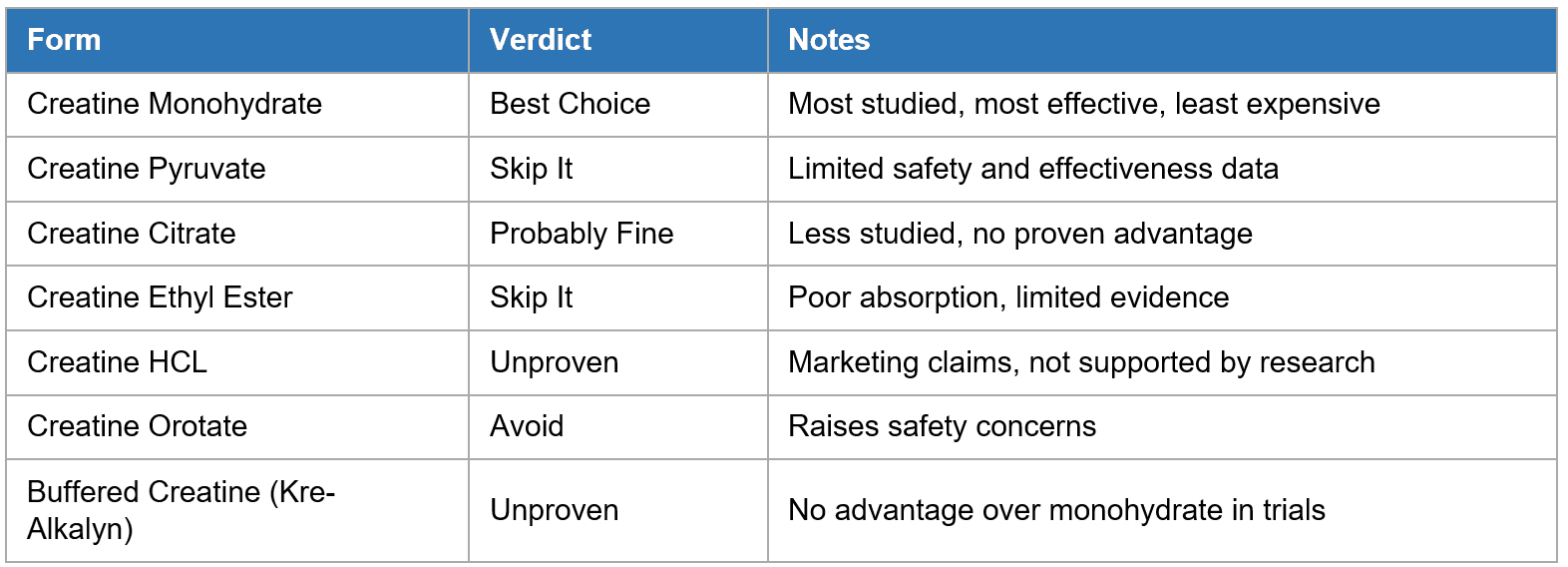
The bottom line: buy plain creatine monohydrate from a reputable brand. It is the cheapest option and the only one with decades of solid research behind it. Look for pharmaceutical grade. Also note that creatine powder is stable on a shelf, but it starts to break down if you mix it into a liquid and let it sit. Mix it fresh.
Section 5: Side Effects (Real vs. Made Up)
Real Side Effects
Weight gain of 1 to 2 kilograms in the first week or two, mostly from water retention in muscles. This is expected and normal.
Gastrointestinal discomfort, like nausea or loose stools, especially during the loading phase. Taking smaller doses with food usually fixes this.
Things That Are NOT Proven (Despite What People Say)
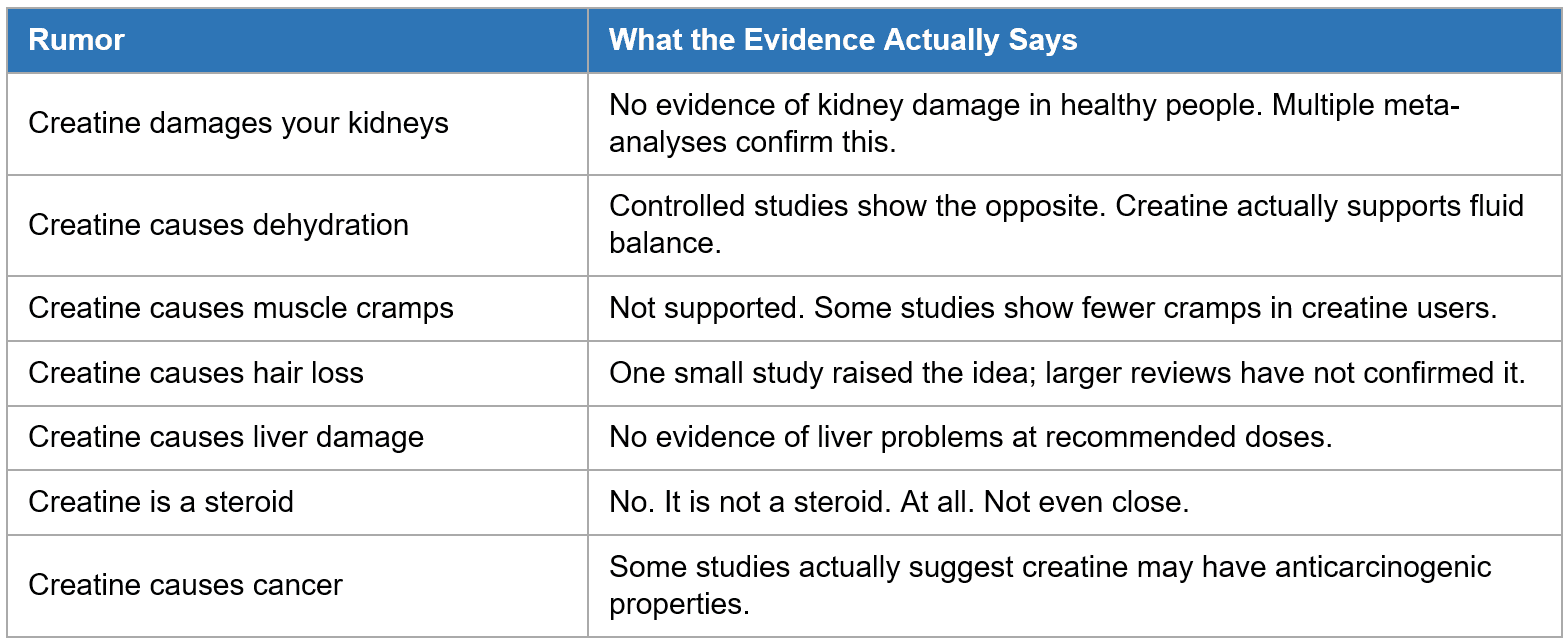
A 2025 meta-analysis looked at creatine's effect on creatinine levels (the kidney marker). Creatine does raise serum creatinine slightly, but this reflects normal creatine metabolism, not kidney damage. Actual kidney filtration rate was unchanged.
Section 6: Drug Interactions (Pay Attention Here)
This section matters. Creatine has very few real drug interactions, but the ones that exist deserve attention. Plus, there are some sneaky lab result issues that can confuse doctors.
Caffeine: The One Documented Interaction
This is the only interaction backed by substantial research, and it is complicated.
An older study found that daily caffeine intake during creatine loading wiped out creatine's benefits for muscle performance.
More recent reviews show mixed results. Taking caffeine as a one-time boost after you have already loaded creatine may actually add to the effect.
The safest approach: finish your creatine loading phase first, then use caffeine strategically before workouts rather than every single day.
Metformin: A Case Worth Knowing
One case report described a patient who developed severe lactic acidosis and kidney failure while taking both creatine and metformin together. This is just one report, but it is enough to warrant caution, especially in people with diabetes, high blood pressure, or reduced kidney function.
Separate research has actually shown creatine may help with blood sugar control when used alongside metformin. But that single dangerous case means people with diabetes or kidney concerns should absolutely talk to their doctor before adding creatine.
Nephrotoxic Medications: Theoretical Caution
No studies have directly tested creatine alongside drugs that stress the kidneys, but common sense and theoretical pharmacology suggest caution when combining creatine with:
NSAIDs used chronically (like ibuprofen taken every day for months)
Aminoglycoside antibiotics (like gentamicin)
Cyclosporine and other immunosuppressants
Certain blood pressure medications in people who already have reduced kidney function
These are not proven interactions. They are precautions based on how these drugs work.
Cyclosporine: May Reduce Creatine's Effect
Lab studies show cyclosporine (used in organ transplant patients) blocks creatine from entering muscle cells. This would not harm the patient but might make creatine supplementation pointless. No human studies have confirmed this in transplant recipients.
The Lab Result Trap: Drugs That Fake Kidney Problems
This one is really important for anyone on the following medications. Several drugs raise serum creatinine levels without actually hurting your kidneys. They block the same transport proteins that handle creatine waste. When you add creatine supplementation on top, the numbers look even scarier, but the kidneys are fine.
Drugs that can do this include:
Trimethoprim (a common antibiotic), which can raise creatinine by 25 to 40%
Cimetidine (an acid reducer)
Dolutegravir and cobicistat (HIV medications)
If your doctor sees a high creatinine and you are taking one of these drugs plus creatine, request a cystatin-C test or a measured GFR to get the real picture before anyone panics.

Section 7: Who Should NOT Use Creatine (Contraindications)
Hard Stops (Use With Great Caution or Not At All)
People with pre-existing kidney disease or reduced kidney filtration rate: Creatine is processed by the kidneys. If your kidneys are already struggling, avoid it or discuss very carefully with a nephrologist first.
McArdle Disease (a rare muscle enzyme disorder): High dose creatine has been shown to worsen daily activities and increase muscle pain in this condition. Low doses may be acceptable but require medical supervision.
People with bipolar disorder or on a mood spectrum: In depression trials, a small number of participants (about 2 in 17 in one study) developed hypomanic or manic episodes when taking creatine. This does not mean creatine causes mania, but it is a real signal worth respecting.
Use With Medical Supervision
People with diabetes: Creatine may actually improve blood sugar control, but the metformin interaction and risk to kidneys in poorly controlled diabetes warrant medical oversight.
People with high blood pressure: Elevated blood pressure is a risk factor for kidney damage. Get your kidney function checked before starting creatine.
Pregnant and breastfeeding women: Animal studies are actually very promising for fetal brain protection, but no human clinical trials have been completed. Until the data exist, this population is generally excluded from studies, and the decision should be made with a doctor.
Children and adolescents: Evidence suggests creatine is safe and effective in teenage athletes, but long term data in children is limited. Pediatric use should involve a physician.
Section 8: Populations That Need Monitoring
Some groups can benefit greatly from creatine but require ongoing attention. These are the folks who should not just grab a tub at the store without medical input.

For all high-risk groups: get a baseline creatinine, BUN, and GFR before starting creatine. Recheck at 4 to 6 weeks and then every 3 to 6 months on a stable dose. If labs look off, test cystatin-C before concluding there is a kidney problem.
Section 9: Special Populations Who Benefit Most
Vegetarians and Vegans
This group wins the creatine lottery. With no dietary creatine at all, their muscles start at a lower baseline. When they supplement, they see dramatically larger gains than meat eaters, often increasing muscle creatine stores by over 27% compared to about 10% in omnivores. Athletic performance, strength, and brain function all tend to improve more in this group than in anyone else.
A 2026 analysis proposed that vegetarians, vegans, and older adults may actually qualify as creatine insufficient, similar to being low in a vitamin. Experts suggest an adequate intake target of 400 mg per day for men and 240 mg per day for women from dietary or supplemental sources.
Older Adults
Creatine does not work particularly well in older adults when they just take it and sit on the couch. But combine it with resistance training and it becomes remarkably effective. Studies show that the combination increases lean muscle mass, upper and lower body strength, bone density, and performance on functional tasks like getting up from a chair.
Cognitive benefits also appear stronger in older adults. A meta-analysis found that creatine improved memory scores in people aged 66 to 76 with an effect size of 0.88, which is considered clinically meaningful.
Women
Creatine works equally well in women for physical performance. It is not a male-only supplement despite what many gym discussions suggest. The most compelling female-specific finding is in depression treatment: creatine added to escitalopram (an SSRI antidepressant) produced an effect size of 1.13 in women with major depression, which is a large and clinically meaningful improvement. Women also showed strong responses in muscular dystrophy and sarcopenia trials.
Kids and Teens
Evidence suggests creatine is safe and effective in adolescent athletes, though most experts recommend involving a pediatrician before starting. Long term studies specifically in children are limited, but the existing data are reassuring.
Section 10: The Depression Story (Worth Its Own Section)
This one deserves special attention because it surprises people. Depression drains brain energy. The theory behind creatine in depression is that it restores energy to brain cells, which may make them more responsive to antidepressants and therapy.
A 2025 meta-analysis of 11 trials with over 1,000 participants found creatine produced modest but real improvements in depressive symptoms overall. But the effects were much more impressive in specific settings:
When creatine was added to an SSRI antidepressant in women with major depression, the effect size was 1.13, meaning it nearly doubled the benefit of the antidepressant alone.
When added to cognitive behavioral therapy (CBT) in an 8-week trial of 100 patients, creatine plus CBT improved depression scores 5 points more than placebo plus CBT.
However, the overall quality of evidence is still rated as low to moderate, and the 2026 systematic review noted that 2 of 17 participants developed hypomania or mania during creatine treatment. This does not make creatine dangerous for most people with depression, but it does mean people with bipolar disorder or bipolar spectrum conditions should approach it with great caution and psychiatric supervision.
Section 11: How Creatine Works in Your Body
For those who want to understand the mechanism, here is the short version without the graduate school lecture:
Creatine increases the amount of phosphocreatine stored in your muscles, which is the fast-reload fuel for ATP production.
More phosphocreatine means faster ATP refilling during intense exercise.
It helps buffer the acid buildup that causes fatigue during hard efforts.
When taken with carbohydrates, it also enhances glycogen storage, giving muscles more slow-release energy too.
It signals muscle protein synthesis and may reduce muscle breakdown.
It stabilizes cell membranes, which matters during injury and stress.
It reduces inflammation and oxidative stress in tissues.
In the brain, it maintains energy levels during mental strain and may protect neurons from damage.
Section 12: Frequently Asked Questions (The Ones People Actually Ask)
Does creatine make you fat?
No. The initial weight gain is water inside your muscles. Muscles holding more water is actually a good thing. You may look slightly fuller. Over time, creatine increases lean muscle mass while having no effect on body fat.
Should I cycle on and off creatine?
No cycling is required. Long term daily use at 3 to 5 grams is safe and effective. Your body does not down-regulate its creatine production to a dangerous degree during supplementation.
Do I need to take creatine every day?
Yes, ideally. Consistency matters. Taking creatine only on workout days is less effective than daily maintenance dosing, since muscle creatine stores need to stay elevated.
Does timing matter?
A little. Taking creatine with a meal containing carbohydrates and protein, especially near your workout, appears to slightly improve uptake. But for most people, the biggest factor is taking it consistently, not the exact timing.
What if I stop taking it?
Your muscle creatine stores return to baseline within 4 to 6 weeks. The extra muscle mass you built while on creatine does not disappear overnight, but you will lose the performance and water-holding edge gradually.
Is it safe to take creatine forever?
Based on current evidence, yes for healthy adults. Studies have shown safety at high doses for up to 5 years. Researchers believe low-dose daily creatine throughout life may offer ongoing health benefits, similar to taking a daily vitamin.
The Bottom Line
Creatine monohydrate is one of the most thoroughly studied, most consistently effective, and most misunderstood supplements on the market. It is not a steroid, it does not fry your kidneys if you are healthy, and it is not just for bodybuilders.
It works well for athletes, older adults trying to stay strong, people with muscular dystrophies, vegetarians who want to close the creatine gap, women with treatment-resistant depression, and probably quite a few more populations that researchers have not fully studied yet.
The people who need to be careful are those with existing kidney disease, diabetes, high blood pressure, bipolar spectrum disorders, or those taking certain medications. Those people should work with a doctor before starting, get baseline labs, and monitor periodically.
For everyone else, 3 to 5 grams of plain creatine monohydrate per day, taken consistently with food and water, is a safe and smart choice backed by decades of solid science.
Your gym buddy got a lot of things wrong. On this one, though, he stumbled onto something real.
Key Sources
This article is based on evidence from the following major sources:
International Society of Sports Nutrition Position Stand on Creatine Safety and Efficacy (2017, updated 2021 and 2025)
Cochrane Reviews on creatine in muscular dystrophies, ALS, Parkinson's disease, and cardiovascular disease
KDIGO 2024 Clinical Practice Guidelines for Chronic Kidney Disease
Multiple systematic reviews and meta-analyses published in journals including the British Journal of Nutrition, Nutrition Reviews, BMC Nephrology, and the Canadian Journal of Psychiatry
American College of Sports Medicine Position Stand on Nutrition and Athletic Performance (2009)
European Food Safety Authority evaluation of creatine and cognitive function (2024)
Case reports and pharmacokinetic studies on creatine and drug interactions published in Drug Metabolism and Disposition, the American Journal of Emergency Medicine, and Amino Acids
This article is intended for educational purposes. It does not replace advice from your doctor, pharmacist, or registered dietitian. If you have any of the conditions or risk factors described above, please consult a healthcare professional before starting creatine supplementation.
HSA/FSA Eligible
Doctors Are Human.
That's Why There's Medome.
Start your free trial today. No credit card required.
Start Your Free Trial
Join thousands protecting their health with AI that never forgets
Critical details get missed when your health information is scattered. Medome connects the dots across your complete record.
Start Your Free Trial
Quick Links
Medome Men
Home
Pricing
About
Health News
HealthSigns
FAQ
Contact Us
Terms of Service
Privacy Policy
Get In Touch
Email: service@medome.ai
Phone: (617) 319-6434
This is Dr. Steven Charlap’s cell. Please text him first, explaining who you are and how he can help you. Use WhatsApp outside the US.
Hours: Mon-Fri 9:00AM - 9:00PM ET