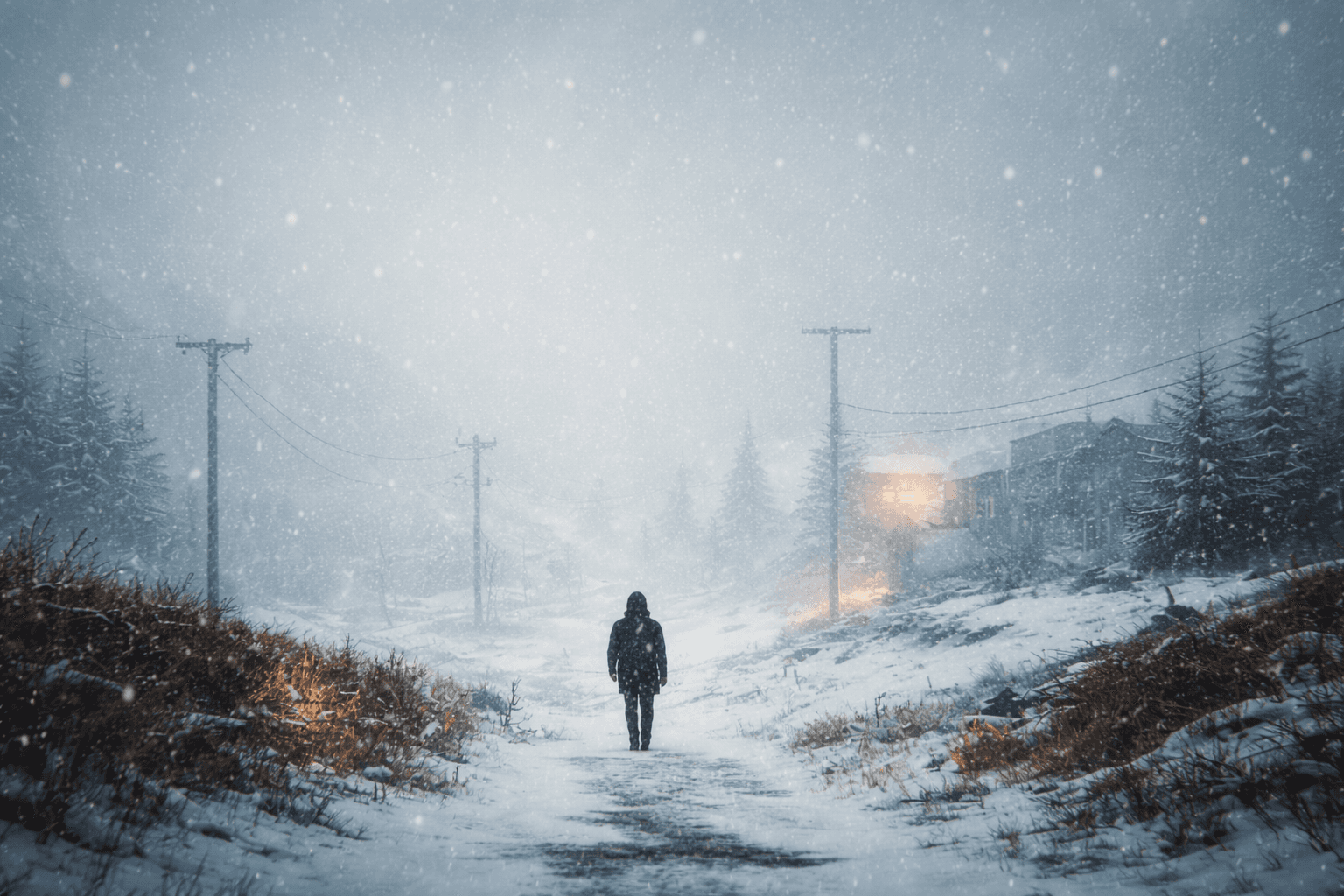
As winter gets closer and daylight saving time ends, many people prepare for shorter days, colder weather, and what’s often called the “winter blues.” But these seasonal changes are more than just a small problem—they can disrupt people’s energy, moods, and daily routines.
What Are SAD and the Winter Blues?
Seasonal affective disorder (SAD) is a condition that makes depression symptoms worse during the fall and winter months. The “winter blues” refers to a milder, temporary dip in mood.
In Canada, about 15% of people experience the winter blues, while 2 to 6% experience SAD. Although scientists aren’t sure of the exact cause of SAD, they think it’s connected to reduced exposure to natural light during fall and winter. This can disrupt our circadian rhythm (our body’s internal clock).
Lower light levels affect brain chemistry by reducing serotonin—a brain chemical that controls mood, sleep, and appetite—while keeping melatonin (a sleep hormone) elevated during daylight hours. This leads to sleepiness and fatigue.
The good news is that with intention and practices backed by science, winter can become a season of meaning, connection, and even joy. As a clinical social worker and mental health therapist, here are four approaches that research and my clinical practice suggest can make the winter months better.
1. Make Time a Friend, Not an Enemy
Winter can make people feel sluggish and unmotivated. Building small but intentional routines can help.
Research in behavioral psychology shows that structured activities, even simple ones, can boost motivation. Try scheduling weekly rituals like:
Coffee with a friend
A library visit
A favorite TV show
These activities function as anchors when energy drops. Treat your own time with the same care you give others, and plan moments of quality time with yourself.
Another useful tool is “body doubling”—doing tasks at the same time as someone else, either in person or virtually. This might mean:
Watching the same movie from different locations
Chatting on the phone while folding laundry
Working together in a cafe
Shared routines create accountability and connection. Structured social routines are elements of cognitive behavioral therapy, a type of treatment used for those experiencing SAD and winter blues. These routines have been shown to prevent depression relapse.
2. Remember to Go Outside
When the temperature drops, it’s tempting to stay indoors. But even brief time outside in the cold offers real benefits.
Exposure to natural light, even on cloudy days, helps regulate circadian rhythms, improves sleep, and stabilizes mood. Try to go outside for at least 10 minutes a day. A brisk walk, skating, or simply standing outside can lift heaviness.
For those experiencing depression symptoms, speak with a doctor about bright light therapy. Clinical studies show bright light therapy is one of the most effective treatments for SAD.
Try to see snow as an invitation rather than an obstacle. Activities can include:
Winter picnics
Pine cone scavenger hunts
Snow painting
Birdwatching
Photography
Snow-shoeing
Winter sports like snowboarding (for adrenaline seekers)
HSA/FSA Eligible
Doctors Are Human.
That's Why There's Medome.
Start your free trial today. No credit card required.
Start Your Free Trial
Join thousands protecting their health with AI that never forgets

Critical details get missed when your health information is scattered. Medome connects the dots across your complete record.
Start Your Free Trial
Get In Touch
Email: service@medome.ai
Phone: (617) 319-6434
This is Dr. Steven Charlap's cell. Please text him first, explaining who you are and how he can help you. Use WhatsApp outside the US.
Hours: Mon-Fri 9:00AM - 9:00PM ET