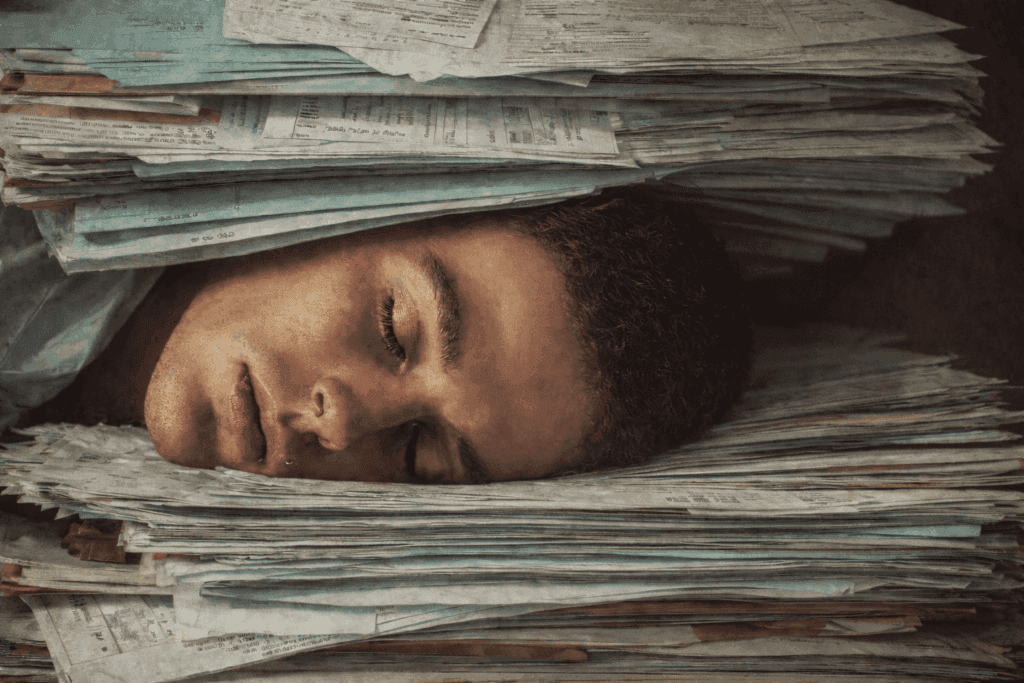
How Medical Bills Are Bankrupting Regular Families (Maybe Yours Next)
Imagine this: You wake up with chest pain. You think, ‘Should I call an ambulance?’ Then your second thought, before wondering if you’re having a heart attack, is ‘Can I afford this?’ If that sounds familiar, congratulations: you’re a normal American.
Here’s the scary truth that insurance companies don’t want you to know: even if you have health insurance, even if you do everything ‘right,’ there’s better than a one-in-four chance that healthcare costs will crush your finances over the next four years. That’s not a typo. More than 26% of American adults will either skip medical care they need because of cost or get buried under medical bills, all in just a four-year window.
And it’s only getting worse.
The Numbers Are Terrifying
Let’s talk money: the kind that disappears from your wallet the moment you get sick.
One in four American adults say they have trouble paying their medical bills. Of those people, more than half owe over $2,500. That might not sound like a lot to some people, but for most families, an unexpected $2,500 bill is the difference between paying rent and losing their home.
Here’s something even crazier: Medical bills make up more than half of all personal debts that get sent to collection agencies. Not credit cards. Not car loans. Medical bills. Getting sick has become the fastest way to wreck your credit score in America.
And medical debt is the leading cause of personal bankruptcy in the United States. Let that sink in. In the richest country on Earth, going to the doctor can literally destroy your financial life.
But Wait, I Have Insurance!
‘I have health insurance through my job,’ you might say. ‘I’m protected.’
Sorry to burst your bubble, but insurance isn’t the shield you think it is.
The average deductible (that’s the money you pay before your insurance kicks in) for employer health plans is $1,478. For plans bought on healthcare.gov, it’s over $3,000. That means if you break your arm or need surgery, you’re paying thousands of dollars out of your own pocket, even with insurance.
And these deductibles have skyrocketed. Over the past decade, the average deductible has risen 255%. That’s not a little increase. That’s more than doubling, plus another 55% on top of that.
Insurance used to mean peace of mind. Now it just means you’ll go bankrupt slightly slower.
Some People Have It Even Worse
While everyone is suffering, some groups are getting absolutely hammered by healthcare costs.
About 27 million Americans have zero health insurance. If you’re uninsured and you have diabetes, you’ll spend an average of $1,446 out of pocket every year, just to stay alive. And more than 30% of uninsured people with diabetes don’t even have a regular doctor. They’re managing a serious, life-threatening disease without anyone helping them.
Cancer patients? More than one in three have borrowed money or gone into debt to pay for treatment. Three percent had to file for bankruptcy. Getting cancer shouldn’t mean choosing between treatment and keeping your house.
And here’s where it gets really dark: among families struggling with medical bills, 34% couldn’t afford food, heat, or housing. When healthcare costs eat up your money, everything else falls apart.
Americans vs. Everyone Else
Want to know how bad things really are? Compare us to other countries.
Before the Affordable Care Act (Obamacare), 39% of Americans with below-average income said they didn’t see a doctor because of cost. In Canada, our neighbor to the north, that number was just 7%. In the United Kingdom, it was 1%. One percent.
That means low-income Brits were 39 times more likely to see a doctor when they needed one compared to low-income Americans. The land of the free? More like the land of ‘I hope this rash goes away on its own.’
The Death Spiral: How It Gets Worse
Here’s where things go from bad to terrifying.
When people can’t afford healthcare, they skip it. They don’t get their blood pressure checked. They don’t refill their diabetes medication. They ignore that weird pain in their chest.
Then the small problems become big problems. The high blood pressure becomes a stroke. The untreated diabetes leads to kidney failure. The chest pain turns into a heart attack.
Now instead of a $200 doctor’s visit, you’re looking at a $200,000 hospital stay. Research shows that skipping care due to cost leads to more hospitalizations, worse disease control, and conditions that could have been prevented. It’s one of the reasons many late-stage cancers first get diagnosed in emergency rooms.
And the financial stress itself makes people sicker. Medical debt harms both physical and mental health. It’s now considered a ‘social determinant of health,’ meaning owing money to a hospital can literally make you ill.
Life After Medical Debt: A Horror Story
Let’s say you get sick and rack up medical bills you can’t pay. What happens next?
First, the bills go to collections. That destroys your credit score. A destroyed credit score means you can’t get a car loan, an apartment, or sometimes even a job. Some employers check credit reports before hiring.
Among families dealing with medical financial hardship, 42% had to take extra jobs or work more hours just to pay the bills. That means less time for family, less time for rest, and, ironically, less time to take care of their health.
Fifteen percent resort to payday loans: those predatory loans with interest rates that can top 400% annually. It’s like escaping a burning building by jumping into a shark tank.
And that bad credit follows you for years, limiting your opportunities long after you’ve ‘recovered’ from your illness.
Where We’re Headed
Here’s the part where I wish I could tell you things are getting better. I can’t.
Deductibles keep rising. Insurance keeps covering less. Healthcare costs keep climbing faster than wages. More than half of people who die experience financial burdens from healthcare costs in the years before their death. Think about that: even at the end of life, Americans are stressed about medical bills.
The gap between rich and poor keeps widening. If you’re wealthy, you get excellent healthcare. If you’re not, you get to play Russian roulette with your health and your bank account.
Programs that could help, like food assistance and housing support, exist, but most people who qualify don’t even know about them or can’t navigate the bureaucracy to enroll. Studies show that 95.6% of people with food insecurity qualify for help, but only 70.2% are actually enrolled.
Can Anything Be Done?
Yes, but only if we demand it.
Research shows that when you remove financial barriers to healthcare, people actually go to the doctor. They take their medications. Their health improves.
We have solutions. What we lack is the political will to use them.
The Bottom Line
The American healthcare system is not scary by accident. It’s working exactly as designed, just not for you. It’s designed to make money, not to make people healthy.
Right now, if you’re reading this and you’re not worried about healthcare costs, give it time. With current trends, there’s a better than one-in-four chance you’ll face crushing medical bills or skip needed care in the next four years.
This isn’t someone else’s problem. This is your problem. This is your parents’ problem. This is your kids’ problem.
And until we decide that healthcare is a right and not a privilege, it’s only going to get worse.
I feel bad adding the following after I laid out the facts. Medome.ai can help. It can become your health advisor, guide, companion, and checker. Keeping you prepared for health care issues, finding problems before they become killers and catastrophically expensive. Let Medome.ai help you. I’ll be there for you as well.
Sources
1. Gaffney A, McCormick D, Dickman SL, et al. “Risk of Burdensome Health Care Spending Over Time in the US.” JAMA Internal Medicine. December 21, 2025.
2. Dickman SL, Himmelstein DU, Woolhandler S. “Inequality and the Health-Care System in the USA.” Lancet. 2017.
3. Gaffney A, McCormick D. “The Affordable Care Act: Implications for Health-Care Equity.” Lancet. 2017.
4. Al Rifai M, Mahtta D, Kherallah R, et al. “Prevalence and Determinants of Difficulty in Accessing Medical Care in U.S. Adults.” American Journal of Preventive Medicine. 2021.
HSA/FSA Eligible
Doctors Are Human.
That's Why There's Medome.
Start your free trial today. No credit card required.
Start Your Free Trial
Join thousands protecting their health with AI that never forgets
Critical details get missed when your health information is scattered. Medome connects the dots across your complete record.
Start Your Free Trial
Quick Links
Medome Men
Home
Pricing
About
Health News
HealthSigns
FAQ
Contact Us
Terms of Service
Privacy Policy
Get In Touch
Email: service@medome.ai
Phone: (617) 319-6434
This is Dr. Steven Charlap’s cell. Please text him first, explaining who you are and how he can help you. Use WhatsApp outside the US.
Hours: Mon-Fri 9:00AM - 9:00PM ET