Let’s be honest: protein has become the Beyoncé of the nutrition world. Everyone’s obsessed. You can now buy protein water, protein chips, protein coffee, and probably protein enriched air (coming soon to a health food store near you). But here’s the thing: most people don’t actually know how much protein they need or where to get it.
Good news: I’m here to break it down for you. No complicated science jargon. No trying to sell you a $50 tub of mystery powder. Just the facts.
How Much Protein Do You Actually Need?
For years, experts said you needed about 0.8 grams of protein per kilogram of body weight per day. (That’s about 0.36 grams per pound, if math gives you hives.) But here’s the catch: that number was the minimum to keep you from falling apart, not the amount to help you thrive.
The newer 2025 guidelines suggest most adults should aim for 1.2 to 1.6 grams per kilogram per day. Let’s make this real:
If you weigh 150 pounds (68 kg): aim for 80 to 110 grams of protein daily
If you weigh 180 pounds (82 kg): aim for 98 to 130 grams daily
If you weigh 200 pounds (91 kg): aim for 109 to 145 grams daily
Special Groups: If you’re over 65, aim for the higher end (1.2 to 1.5 g/kg) to keep your muscles strong. Athletes and people trying to lose weight also need more. If you’re on a GLP-1 medication like Ozempic or Wegovy, protein becomes extra important to prevent muscle loss while the pounds drop.
Timing Matters (A Little)
Here’s something interesting: your body can only use so much protein at once to build muscle. Think of it like a gas tank. Once it’s full, the extra just spills over.
The sweet spot? About 25 to 30 grams of protein per meal. So instead of eating a tiny breakfast, a medium lunch, and a 12 ounce steak for dinner (we’ve all been there), try spreading your protein more evenly throughout the day.
Fun fact: having about 40 grams of protein before bed might give your muscles a little extra overnight repair time. Your dreams of being buff could become reality. (Okay, it’s a stretch, but it helps.)
The Great Debate: Animal vs. Plant Protein
This is where things get spicy. Both plant and animal proteins can keep you healthy, but they come with different pros and cons. Kind of like choosing between a reliable sedan and a flashy sports car.
Animal Protein (The Reliable Sedan)
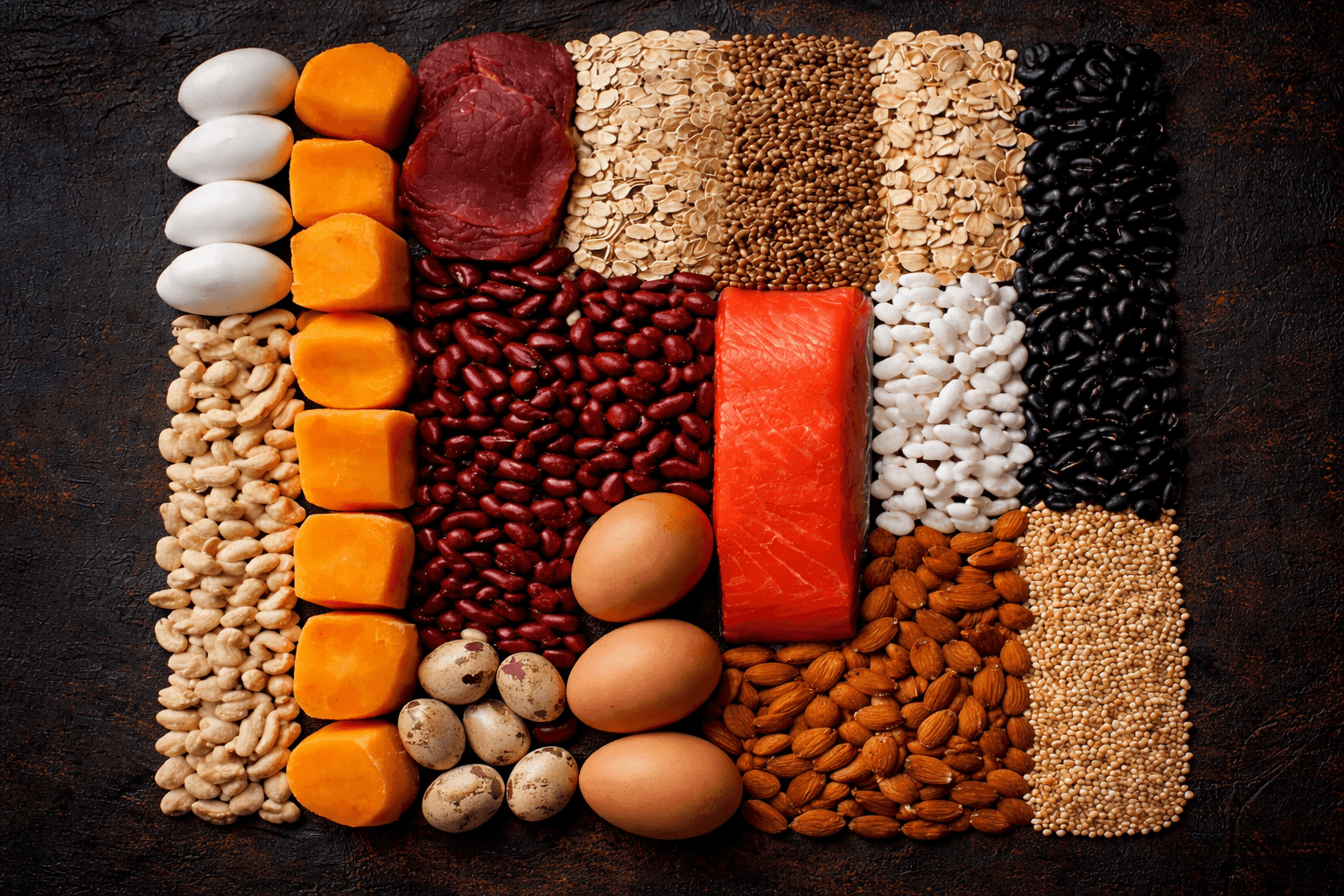
Chicken, fish, eggs, and dairy give you all the essential amino acids your body needs in one neat package. They’re also packed with vitamin B12, iron, and zinc in forms your body absorbs easily. The best fish from a health perspective is Wild Alaskan Salmon and Halibut. Not Atlantic, not Pacific, not Norwegian, Not Scottish. Just Alaska. No antibiotics, dyes, minimal pollutants, minimal mercury, and hormones.
The downsides? Red and processed meats (bacon, sausage, deli meats) are linked to higher risks of heart disease, cancer, and early death. Yikes. Also, heavy meat eaters often don’t get enough fiber, vitamin E, or magnesium.
Plant Protein (The Flashy Sports Car)
Beans, lentils, tofu, nuts, and seeds are heart-friendly superstars. Studies show that swapping out some animal protein for plant protein is linked to a 5 to 14% lower risk of dying early and a 12% lower risk of heart disease death. That’s pretty impressive for something that doesn’t moo.
The catch? If you go fully plant based, you’ll need to pay attention to vitamin B12 (you must supplement since it only comes from animal foods), plus iron, zinc, calcium, and iodine. These nutrients are harder to absorb from plants.
The Winner? There isn’t one. The healthiest approach seems to be eating mostly plants with some fish, eggs, or dairy mixed in. Think Mediterranean diet, not all or nothing.
About Those Protein Powders…
I know, I know. The giant tubs are everywhere. Here’s the scoop (pun intended):
Protein supplements are fine in moderation, but they come with a few surprises. Recent studies found that both plant-based and whey protein powders contain trace amounts of heavy metals like lead, cadmium, and aluminum. Before you panic: at normal serving sizes (about 30 grams per day), this isn’t dangerous. But if you’re slamming three or four scoops a day? That could add up.
Stick to the recommended serving size
Choose products with third party testing (look for NSF or Informed Sport certifications)
Prioritize real food when you can. A chicken breast doesn’t need a warning label.
Quick Reference: What Does 25 to 30g of Protein Look Like?
1 palm sized piece of chicken, fish, or lean meat
1 cup of Greek yogurt
4 eggs (but maybe ease up on the bacon alongside them)
1.5 cups of cooked lentils or beans
3/4 block of firm tofu
The Bottom Line
Protein is important, but it’s not magic. You don’t need to turn every meal into a protein maximizing math problem. Here’s the simple version:
Aim for 25 to 30 grams at each meal
Eat a variety of protein sources: lean meats, fish, eggs, dairy, beans, and nuts
Swap red meat for fish, beans, or tofu whenever you can.
Skip the processed meats (sorry, bacon). Also, the sodium nitrites preservatives are known to cause cancer.
Use supplements wisely and sparingly, if at all. They’re a backup, not a main course. Best to get it naturally.
Pair your protein with strength training for best results.
Your muscles will thank you. And you won’t need to buy protein infused air.
This article is for general information only and is not medical advice. Talk to your doctor or a registered dietitian about your specific needs.
HSA/FSA Eligible
Doctors Are Human.
That's Why There's Medome.
Start your free trial today. No credit card required.
Start Your Free Trial
Join thousands protecting their health with AI that never forgets
Critical details get missed when your health information is scattered. Medome connects the dots across your complete record.
Start Your Free Trial
Quick Links
Medome Men
Home
Pricing
About
Health News
HealthSigns
FAQ
Contact Us
Terms of Service
Privacy Policy
Get In Touch
Email: service@medome.ai
Phone: (617) 319-6434
This is Dr. Steven Charlap’s cell. Please text him first, explaining who you are and how he can help you. Use WhatsApp outside the US.
Hours: Mon-Fri 9:00AM - 9:00PM ET