
The No Nonsense Guide to Building Muscle After 50
(Because your muscles didn’t get the retirement memo.)
Here’s the deal: starting around age 50, your body starts quietly dismantling your muscles like a landlord renovating an apartment you’re still living in. Scientists call this sarcopenia, which is a fancy word for “your muscles are slowly ghosting you.” You lose strength, balance, and the ability to open stubborn jars without breaking a sweat.
But here’s the good news: you can fight back. And no, you don’t need to become a bodybuilder or live at the gym. The science is crystal clear: a combination of resistance training and smart nutrition is the single most effective way to build and maintain muscle as you age. Better than any pill, powder, or miracle supplement your neighbor’s cousin swears by.
1. Lift Things Up and Put Them Down
Resistance training is the undisputed heavyweight champion of muscle preservation. The American Heart Association recommends it at least twice a week for older adults, yet only about 19% of people 65 and older actually do it. That means the other 81% are leaving gains on the table. Literally.
How Much Do You Actually Need to Do?
Less than you think. Research shows that even one set per exercise is enough to improve muscle mass and physical function. If you want to maximize strength, aim for 2 to 3 sets at moderate to high intensity (about 60 to 80% of the heaviest weight you can lift once). Train 2 to 3 times per week, targeting all your major muscle groups.
Pro tip: You don’t need a fancy gym. Free weights, machines, resistance bands, and even bodyweight exercises all work about equally well. The best equipment is the one you’ll actually use.
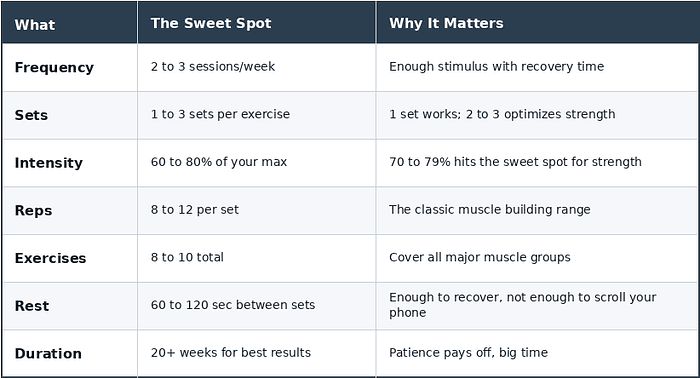
Power Training: The Secret Weapon
Here’s something most people don’t know: you lose muscle power faster than you lose strength as you age, and power (the ability to generate force quickly) is what keeps you from falling when you trip over a curb. Power training means lifting lighter weights (20 to 80% of your max) as fast as you can on the way up, then lowering slowly over 2 to 3 seconds. It improves strength, balance, and your ability to do everyday tasks.
Don’t Forget Balance
Adding balance challenge exercises to your routine, like performing movements with your feet closer together or using minimal hand support, can give you extra fall prevention benefits. Think of it as insurance for your skeleton.
2. Feed the Machine
You can’t build a house without bricks, and you can’t build muscle without protein. As you get older, your body becomes more stubborn about using the protein you eat (scientists call this “anabolic resistance”), so you actually need more protein than younger people, not less.
How Much Protein?
The current recommended daily allowance (RDA) of 0.8 grams per kilogram of body weight was set for the general population. It’s not optimized for people over 50 who want to keep their muscles. The evidence says you should aim for:

For a 170 pound (77 kg) person, that’s roughly 77 to 92 grams of protein per day. Spread it across your meals (about 0.4 to 0.5 g/kg per meal) because your body can only use so much at once.
The Leucine Advantage
Not all protein is created equal. Leucine, an amino acid found in high amounts in whey protein, dairy, eggs, and meat, is like the ignition key for muscle building. Getting about 3 grams of leucine per meal can significantly boost muscle protein synthesis, especially in people with sarcopenia. Whey protein and dairy products are particularly good sources.
Other Nutritional Helpers
Vitamin D: If you’re deficient (and many older adults are), supplementation can improve muscle function and strength. Get your levels checked.
Omega 3 fatty acids, creatine, and HMB: There’s emerging evidence these may help, but the science isn’t settled yet. They’re not a substitute for protein and exercise.
3. The Magic Combo: Training + Protein
Here’s where things get exciting. Resistance training alone is good. Adequate protein alone is good. But together? They’re significantly better than either one by itself. Studies consistently show that combining the two produces superior gains in lean body mass, muscle strength, and overall physical function, especially over longer periods (24 weeks or more) and particularly in people who already have sarcopenia or obesity.
Think of it like peanut butter and jelly. Sure, they’re fine on their own. But the combination is where the magic happens.
4. Medications That Might Be Working Against You
Plot twist: some of the medications you take every day might be quietly sabotaging your muscles. Here are the main culprits to discuss with your doctor.
Statins
Statins, those cholesterol lowering drugs taken by millions, are the most well known muscle offenders. Side effects range from mild aches (myalgias) to, in rare cases, serious muscle breakdown (rhabdomyolysis). Recent long term data shows that continuous statin use is linked to about 25% greater decline in grip strength and 73% greater decline in lean mass over about 10 years compared to people who never used them. Risk is higher if you’re female, have a small frame, low BMI, kidney or liver issues, or take certain other medications.
Proton Pump Inhibitors (PPIs)
Those heartburn pills (like omeprazole) can reduce your absorption of magnesium, which your muscles need to function properly. Low magnesium also messes with vitamin D activation, and that one two punch can ramp up inflammation and muscle wasting.
Psychoactive Medications
Benzodiazepines, antipsychotics, antidepressants, and gabapentinoids can increase your risk of falls through sedation and dizziness. They don’t directly eat your muscles, but if a fall puts you in bed for weeks, the muscle loss from inactivity can be brutal.
Cardiovascular Medications
Loop diuretics carry the highest fall risk among heart meds, especially when you’ve just started them or have been on them a while. Beta blockers, alpha blockers, and SGLT2 inhibitors can cause blood pressure drops when you stand up, which also increases fall risk.
Metformin
Metformin is one of the most common medications for managing blood sugar, but it might be working against your workouts. Research shows that metformin can block some of the key benefits of exercise , especially when it comes to building muscle and improving cardiovascular fitness.
Here’s the problem: when you exercise, your body naturally improves how it uses oxygen, builds new muscle, and becomes more sensitive to insulin. Metformin appears to blunt these responses. Studies have found that people taking metformin while following an exercise program gained less muscle, saw smaller improvements in aerobic fitness, and didn’t respond as well to strength training compared to those who exercised without the drug.
This doesn’t mean you should stop taking metformin, it’s an important medication for many people. But if you’re over 50 and serious about building muscle, it’s worth having a conversation with your doctor about how metformin might be affecting your progress and whether alternatives or timing adjustments could help.
Important:
If you’re on any of these medications, do not stop taking them without talking to your doctor. The goal isn’t to ditch your meds. It’s to be aware of their effects and compensate with extra attention to exercise and nutrition.
5. What About Muscle Building Drugs?
Let’s be real: some people want a pharmaceutical shortcut. Here’s what the science actually says about the most commonly discussed options.
Testosterone
Testosterone therapy is the most studied muscle building drug for older adults, and the story is more nuanced than you might expect. The landmark TRAVERSE trial, which followed over 5,200 men with low testosterone and existing heart problems for almost three years, found that testosterone did not increase the risk of heart attacks, strokes, or cardiovascular death.
However, testosterone therapy was linked to higher rates of pulmonary embolism (nearly double), atrial fibrillation, and acute kidney injury. It also comes with a laundry list of possible side effects including acne, high blood pressure, liver problems, abnormal cholesterol, and gynecomastia (breast tissue growth). And the benefits for physical function? Honestly, limited, especially for people with slow walking speed.
Bottom line: Testosterone may be reasonable for men with documented low testosterone after a thorough conversation with their doctor, but it’s not a muscle building miracle and comes with real risks.
SARMs (Selective Androgen Receptor Modulators)
SARMs sound appealing. They were supposed to give you the muscle building benefits of testosterone without the side effects. The reality? They’re not FDA approved, lack long term safety data, and early promising results from small trials haven’t held up in larger studies. Case reports have linked them to heart inflammation (myocarditis) and liver injury. They also suppress your body’s natural testosterone production. Hard pass.
Growth Hormone
Growth hormone and related agents have been studied, but there’s not enough evidence to recommend them for age related muscle loss. Side effects include fluid retention, joint pain, and metabolic problems. Save your money.
Vitamin D (the Quiet Overachiever)
Vitamin D stands apart because it’s safe, cheap, and actually works, if you’re deficient. It has significant effects on muscle strength and physical performance, particularly in women with low baseline levels. It’s not going to turn you into a superhero, but correcting a deficiency can make a noticeable difference.
6. Got Health Issues? You Can Still Train.
One of the biggest myths out there is that you shouldn’t lift weights if you have heart disease, diabetes, or arthritis. In fact, the opposite is usually true. You just need to modify your approach.
Heart Disease
Dial back the intensity to 40 to 60% of your max (instead of 60 to 80%), use higher reps (10 to 15), and start with two non-consecutive days per week. Breathing technique matters: exhale when you push, inhale when you release. No holding your breath and turning purple. Take longer cooldowns, especially if you’re on blood pressure medication.
Diabetes
Resistance training is great for blood sugar control, but be cautious if you have neuropathy (nerve damage). If you have active eye problems (proliferative retinopathy), skip the heavy lifting because it can cause serious eye complications. Otherwise, gradual progression with good monitoring works well.
Osteoarthritis
Good news: exercise actually helps arthritis, not hurts it. Studies show moderate effects on pain reduction and function that last 2 to 6 months after treatment. Low impact exercise doesn’t worsen joint damage. Options include strengthening exercises, water based activities, balance work, and tai chi (which also helps with mood). Working with a physical therapist to personalize your plan is ideal.
The Bottom Line
The evidence based prescription for muscle after 50:
Resistance train at least 2 to 3 times per week.
Eat 1.0 to 1.5 g/kg/day of protein (with leucine rich sources).
Get your vitamin D checked and supplement if needed.
Talk to your doctor about whether any of your medications might be working against your muscles.
Be deeply skeptical of muscle building drugs. The risk to benefit ratio is unfavorable for most people.
Be patient. The best results come from sticking with it for months, not weeks.
Your muscles may be aging, but they haven’t given up on you. The question is: will you give up on them?
Didn’t think so. Now go pick up something heavy.
* * *
Disclaimer: This article is for informational purposes only and does not constitute medical advice. Always consult your healthcare provider before starting a new exercise program or making changes to your medications
HSA/FSA Eligible
Doctors Are Human.
That's Why There's Medome.
Start your free trial today. No credit card required.
Start Your Free Trial
Join thousands protecting their health with AI that never forgets
Critical details get missed when your health information is scattered. Medome connects the dots across your complete record.
Start Your Free Trial
Quick Links
Medome Men
Home
Pricing
About
Health News
HealthSigns
FAQ
Contact Us
Terms of Service
Privacy Policy
Get In Touch
Email: service@medome.ai
Phone: (617) 319-6434
This is Dr. Steven Charlap’s cell. Please text him first, explaining who you are and how he can help you. Use WhatsApp outside the US.
Hours: Mon-Fri 9:00AM - 9:00PM ET