Lifestyle
Lift Heavy Things, Live Longer: The Surprisingly Small Dose That Works
Two hours a week is the whole prescription
Jul 12, 2026 · 5 min read

For years, lifting weights had an image problem. People assumed it was for bodybuilders, gym bros, and anyone chasing a beach photo. Turns out your muscles aren't just for looking good in a T-shirt. They may be quietly helping you live longer.
A huge new study tracked nearly 150,000 nurses and other health workers for up to 30 years. Over that time, about 36,000 of them died, which (grimly) gave researchers the numbers to see how strength training connected with living longer. The results are good news, and the best part is how little exercise it takes.
The Sweet Spot Is Smaller Than You'd Think
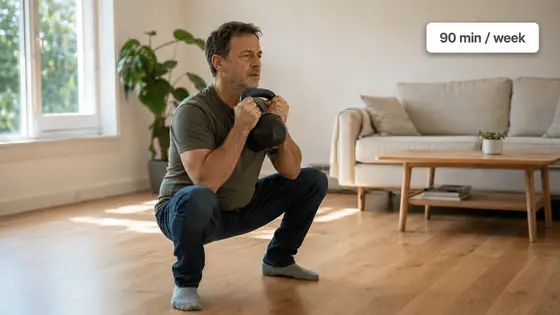
People who did around 90 to 120 minutes of strength training a week, so about an hour and a half to two hours total, had roughly a 13% lower risk of dying from any cause than people who did none. That's it. Two hours a week, spread out however you like.
The benefit was strongest against two of our biggest killers. Strength training was linked to a 19% lower risk of dying from heart disease and stroke, and a striking 27% lower risk of dying from brain conditions like dementia.
Here's the plot twist that'll save you time: more was not better. Once people passed about two hours a week, the benefit stopped growing. So you can put down the "no days off" mug. Your body isn't handing out bonus years for living at the gym.
Team Up With Cardio for the Real Magic
Strength training is great, but it has a best friend: aerobic exercise (walking, jogging, cycling, swimming).
On its own, hitting the recommended amount of cardio, about 150 minutes a week, was linked to a 26% to 43% lower risk of death. Combine solid cardio with one to two hours of lifting, though, and the risk dropped the furthest of all, by around 45%. Cardio still does most of the heavy lifting, ironically, but the two together beat either one alone. They're teammates, not rivals.
One odd exception: for cancer deaths specifically, only smaller amounts of lifting (under an hour a week) showed a clear link to lower risk. Muscle isn't a magic cancer shield, and the science there is fuzzier.
Women May Win Bigger
Here's a finding worth shouting about. Women seem to get more longevity bang for their buck from strength training than men do.
In another large study, regular muscle-strengthening was linked to a 19% lower death risk in women versus 11% in men. For heart-related death, the gap was even wider: 30% for women, 11% for men. The wildest detail? Women reached their maximum benefit from just one session a week, while men needed about three to hit their peak.
One likely reason is that women tend to start with less muscle, so each session delivers a proportionally bigger upgrade. That single weekly session is pulling serious weight.
Okay, but Why Does Muscle Keep You Alive?
Because muscle isn't just meat that moves your bones. It's one of the busiest, chattiest organs in your body.
It's your blood sugar sponge. After you eat, your muscles soak up most of the sugar in your blood, about 80% of it, and either burn it or store it for later instead of letting it float around or turn into fat. Strong, plentiful muscle helps keep blood sugar steady, which fights off type 2 diabetes, itself a major cause of heart disease and early death. Regular strength training is tied to about a 17% lower chance of developing diabetes.
It's also a tiny pharmacy. When muscles contract, they squirt out hormone-like messengers called myokines that travel through your blood and calm down the slow-burning inflammation quietly feeding heart disease, diabetes, and cancer. Some myokines even cross into the brain and boost a kind of "fertilizer" for brain cells called BDNF, which supports memory and may help protect against dementia. Every time you do a squat, your muscles basically text good news to your liver, fat, bones, blood vessels, and brain.
It's good for your heart and pipes too. Lifting helps lower blood pressure and keeps arteries flexible instead of stiff, with a drop of roughly 4 points for healthy folks and bigger for people with high blood pressure, which lands in the same ballpark as some medications.
And it's a bit of a crystal ball. How hard you can squeeze with your hand (grip strength) predicts your risk of dying early even better than your blood pressure does. Stronger muscles also mean fewer falls, fewer broken hips, more independence, and less frailty as you age, all of which shape not just how long you live, but how well.
The Catch (There's Always a Catch)
This was an observational study, which means it spots a strong link but can't fully prove that lifting causes the longer life. Maybe people who lift are healthier in other ways. The researchers adjusted for a lot of that (diet, smoking, cardio), and the exercise was self-reported, so nobody was checking anyone's form.
Still, the study is unusually strong because it tracked people's habits repeatedly over 30 years instead of asking once and guessing, and it fits a mountain of other research pointing the same direction.
The Genuinely Doable Takeaway
You do not need a gym membership, a barbell, or a protein shake with a scary name. Bodyweight moves count: push-ups, squats, lunges, planks, or a cheap set of resistance bands.
Aim for two short sessions a week that hit all your major muscle groups (legs, hips, back, chest, shoulders, arms), plus some walking or other cardio most days. That's the whole prescription. Two sessions, all the muscles, a bit of cardio.
For something that may add years to your life and life to your years, it's a shockingly small ask. And here's the real kicker: barely anyone does it. Only about 1 in 5 women and 1 in 4 men do any regular strength training at all.
So picking up a couple of dumbbells, or just using the floor and your own body weight, puts you ahead of most people, and maybe ahead of the clock.
This article is general education, not medical advice. The headline finding here is a ceiling, not a floor: the benefit flattens out around two hours a week, which means the "more is always better" reflex is not just wrong but a good way to get injured or quit. Start smaller than you think you should, and add load slowly — the fastest way to lose the benefit is a strained back in week two. If you have heart disease, uncontrolled blood pressure, a recent injury, or you've been sedentary for years, get a doctor's read before you start lifting heavy. And if you're losing weight on a GLP-1, this stops being optional and becomes the single most important thing you can do — our guide to that explains why.