Men’s Addictions: When “Just One More” Starts Running the Show
Mood
addiction, the brain, how recovery actually works
33 min
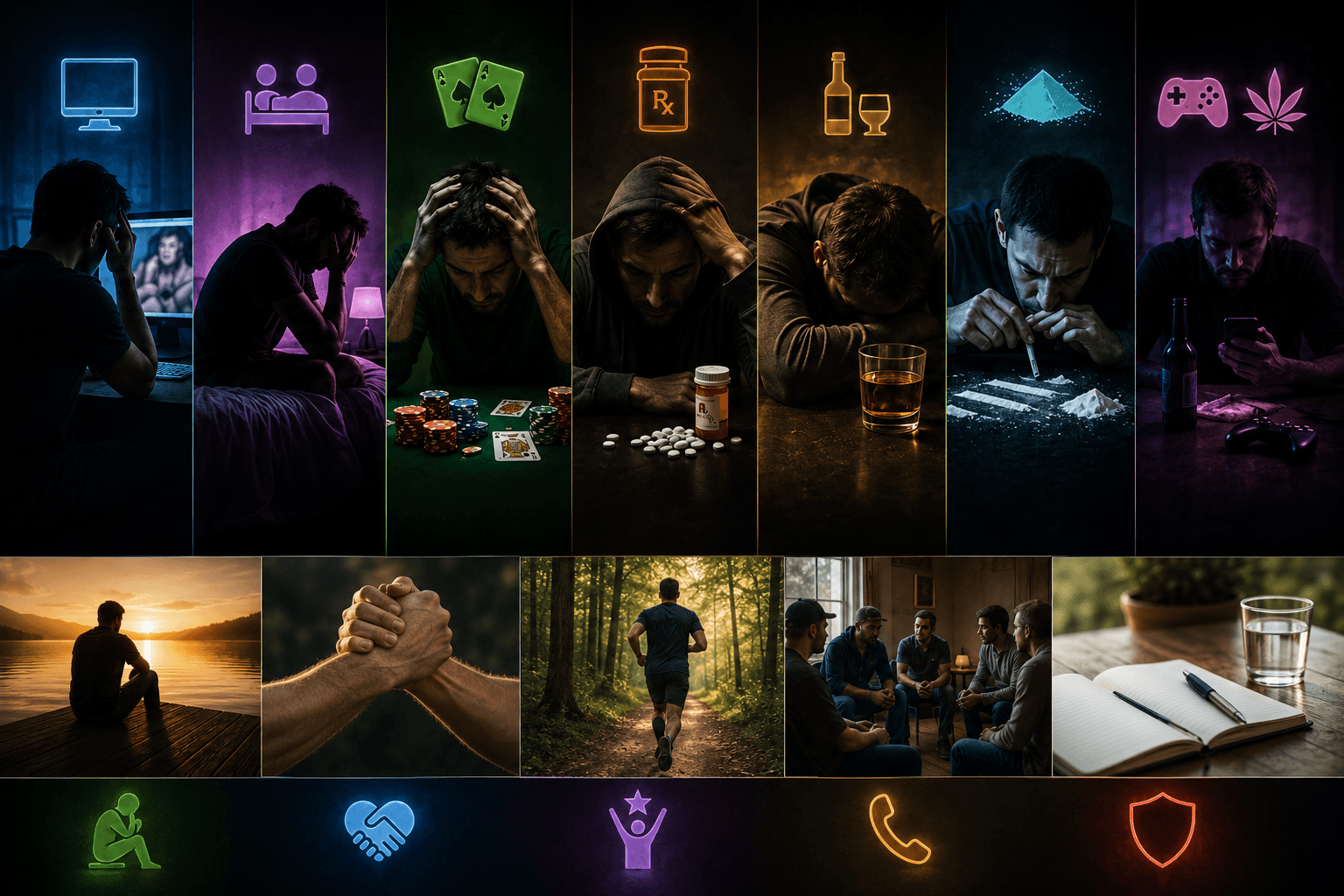
Somewhere between "I can stop anytime" and "I can't stop at all," millions of men get stuck. Opioids, alcohol, gambling, pornography, compulsive sex, anabolic steroids, nicotine, cocaine, meth, your phone. Addiction does not care about your job title, your bench press, or your credit score. It rewires your brain, hijacks your willpower, and quietly convinces you that you are still in control while you are very much not.
This guide is not a lecture. It is not a 12-step pamphlet. It is a field manual that lays out what addiction actually is, why men are wired in particular ways that make us more vulnerable, what each of the big vices does to your body, how to spot a problem in yourself, how to talk about it without wanting to crawl into a hole, what treatments actually work, and how to keep relapse from blindsiding you.
The point is not to scare you. The point is to put the entire playbook in one place.
Let us begin.
Part One: What Addiction Actually Is (and Why Your Brain Is Not Your Friend)
Your brain on rewards
Your brain has a built-in reward system. When you eat a great meal, finish a workout, or crack a joke that lands, your brain releases a chemical called dopamine in a region called the nucleus accumbens. Think of dopamine as your brain's thumbs-up emoji. It says, "That was good. Do it again."
Here is the problem. Addictive substances and behaviors do not just give your brain a thumbs up. They give it a standing ovation with fireworks. Opioids can flood your brain with 2 to 10 times more dopamine than natural rewards. Gambling, pornography, and compulsive sex also trigger huge dopamine surges.
Over time, your brain adapts. It turns down its own dopamine receptors, like turning down a speaker that is too loud. Now the sunset, the joke, your kid's soccer game, all barely register. Only the addictive thing moves the needle. Scientists call this tolerance. You call it "needing more to feel the same."
It gets worse. Your brain also builds powerful associations between the addiction and everything around it. The bar you always drank at. The website you always visited. The casino parking lot. Even feelings like stress or boredom. These become triggers, and they fire off dopamine surges before you consciously decide anything. Your brain is now craving the thing before you even know you are craving it.
This is not weakness. This is neuroscience.
The three-stage cycle
Addiction researchers describe a loop with three stages that just keeps running:
Binge and intoxication. You use. Dopamine floods your reward circuits. You feel great, temporarily.
Withdrawal and negative affect. The high fades. You feel anxious, irritable, depressed, or physically sick. Your brain's stress system (run by a chemical called corticotropin-releasing factor) goes into overdrive. You feel worse than you did before you started.
Preoccupation and anticipation. You cannot stop thinking about the next time. Cues in your environment trigger cravings. Your prefrontal cortex (the brain's brake pedal) gets weaker. You give in. The cycle starts over.
Each lap around the track deepens the grooves. What started as a choice becomes a compulsion.
Part Two: Why Men? Genetics, Hormones, and the Wiring Underneath
It is partly in your DNA
Addiction is 40 to 60% heritable. That means about half of your risk was set the day you were conceived. Scientists have identified over 100 gene variants linked to alcohol use disorder alone. A handful of genes pop up across many addictions:
OPRM1 (the mu-opioid receptor gene): variations change how strongly your brain responds to opioids and alcohol.
DRD2 and DRD4 (dopamine receptor genes): certain versions are linked to lower baseline dopamine, which may push people to chase bigger rewards.
SLC6A4 (the serotonin transporter gene): some variants more than double the risk of addiction across multiple substances.
ADH1B (alcohol dehydrogenase): one variant makes drinking unpleasant (flushing, nausea). That is actually protective. If you do not have it, you can drink more comfortably, which raises your risk.
CHRNA5 (nicotinic receptor gene): strongly linked to nicotine dependence.
Having risk genes does not doom you. It just means you are playing the game on a harder difficulty setting. Knowing your family history is one of the most useful risk assessments you can do for free.
Epigenetics: your life writes on your genes
Your DNA sequence is fixed. But how loudly each gene gets read can change based on your experiences. This is called epigenetics. Childhood trauma, chronic stress, and even the substances themselves can attach chemical tags to your DNA that turn addiction-related genes up or down.
For example, substance use increases methylation (a kind of chemical tag) on opioid and serotonin transporter genes, with different patterns in men and women. Early-life stress reshapes the epigenetic landscape of the reward and stress systems, priming the brain for vulnerability later. Even your gut microbiome (the trillions of bacteria in your intestines) plays a role here.
Encouraging news: some epigenetic changes are reversible. Recovery, exercise, decent nutrition, and stress reduction can help erase or rewrite some of these tags.
Testosterone: the double-edged sword
Testosterone plays a complicated role in male addiction. In adolescence, higher testosterone drives social dominance and norm-breaking behavior, which predicts hanging out with risk-taking peers, which predicts substance use disorders by young adulthood. The same hormone that fuels competitiveness and confidence can also push young men into experimenting with drugs.
In adult men with alcohol dependence, total testosterone and estradiol can actually be elevated, but bioavailable testosterone (the form your body can use) is lower. This hormonal mess contributes to sexual dysfunction, fatigue, and mood swings, which can fuel further drinking.
Testosterone and progesterone seem to amplify addictive behavior in men, while estradiol and progesterone work differently in women. This is one reason addiction looks different across sexes and why treatment may eventually need to be tailored by biological sex.
Part Three: The Big Six Vices
Opioids
What they are. Prescription painkillers (oxycodone, hydrocodone, morphine, fentanyl), heroin, and synthetic opioids. Originally designed to treat pain. Also produce intense euphoria by flooding opioid receptors in the brain.
How it usually starts. Most men do not wake up one day and decide to become opioid-dependent. It starts with a real prescription after surgery, an injury, or chronic pain. The pills work beautifully. Then they need more. Then the prescription runs out. The craving does not.
Clinical presentation.
Using more than prescribed, or for longer
Spending growing time obtaining, using, or recovering
Cravings that feel almost physical
Missing work, school, or family obligations
Continuing despite relationship, health, or legal trouble
Needing higher doses to feel the same (tolerance)
Withdrawal sickness when you stop: anxiety, muscle aches, sweating, runny nose, watery eyes, nausea, vomiting, diarrhea, dilated pupils, goosebumps, insomnia
A diagnosis of opioid use disorder (OUD) needs at least 2 of 11 specific symptoms in a 12-month period. Mild is 2 to 3, moderate 4 to 5, severe 6 to 11.
Health consequences.
Overdose and death (opioids suppress breathing; this is the number one killer)
Severe constipation, sometimes bad enough to hospitalize
Hormonal disruption: low testosterone, ED, dropped libido
HIV and hepatitis C from needle sharing
Depression, anxiety, isolation
Financial ruin, job loss, broken relationships, legal trouble
Male infertility: opioids suppress the hypothalamic-pituitary-gonadal axis, reducing both testosterone and sperm count, and increasing sperm DNA fragmentation. Often reversible once you stop.
Common misdiagnoses.
Depression or anxiety: opioid withdrawal and chronic use look exactly like primary depression or GAD. The tell is timing. If the mood symptoms appeared as your use escalated, think opioids first.
Chronic pain syndrome: some men do have real pain, but the pain becomes the reason to keep using long after the original injury healed.
Sedative or alcohol intoxication: opioid intoxication looks similar (slurred speech, drowsiness) but has pinpoint pupils and responds to naloxone. The others do not.
Medications that treat OUD.
Medication | How it works | Key details |
|---|---|---|
Buprenorphine (Suboxone, Sublocade) | Partial opioid agonist: takes the edge off cravings and withdrawal without a full high | Daily under the tongue or monthly injection. Cuts overdose death risk by about 60%. Can be prescribed in any doctor's office with a DEA license. |
Methadone | Full opioid agonist, slow and steady | From a licensed clinic with daily visits initially. Cuts overdose death risk by about 50%. Typical dose 60 to 120 mg daily. |
Naltrexone (Vivitrol) | Opioid antagonist: blocks the receptors entirely | Monthly injection. You must be opioid-free for 7 to 10 days before starting or you go into precipitated withdrawal, which is a special kind of awful. |
Contraindications.
Buprenorphine: do not start while still on full opioid agonists. Use caution in severe liver disease.
Methadone: avoid with QT prolongation over 500 ms or history of torsades de pointes. Many drug interactions.
Naltrexone: never start with opioids still in your system. Avoid in acute hepatitis or liver failure.
Food effects.
Sublingual buprenorphine needs a clean mouth: no food or drink for 15 minutes before and after. Methadone is fine with food. Naltrexone is fine either way, though taking it with food may cut the nausea.
Drugs that make things worse.
Benzodiazepines, alcohol, and other sedatives combined with opioids dramatically increase fatal overdose risk. Some antidepressants interact with methadone (QT prolongation) or buprenorphine (serotonin syndrome, rare).
🚫 Never combine opioids with benzodiazepines or alcohol.
This combination kills more men than opioids alone. Benzos (Xanax, Klonopin, Valium) and alcohol both suppress breathing through the same brain pathway opioids use. Stack two or three of them and your respiratory drive can quietly shut off in your sleep. Most "accidental" overdoses are this exact combo. If you're on prescribed opioids and your doctor wants to add a benzo, push back and ask about safer alternatives.
Alcohol
How it hooks you. Alcohol is legal, socially celebrated, and everywhere. It boosts GABA (your brain's chill chemical), suppresses glutamate (your brain's excitement chemical), and triggers dopamine in the reward pathway. Relaxation plus reward is a powerful reinforcement combo.
Warning signs.
Drinking more or longer than you meant to
Failed attempts to cut down
Lots of time drinking or recovering
Cravings
Drinking interfering with work, family, or social life
Continuing despite physical or emotional harm
Tolerance
Withdrawal: tremors, sweating, nausea, anxiety, and in severe cases, seizures or delirium tremens (which can kill you)
🚨 Alcohol withdrawal can kill you. Do not quit cold turkey if you've been drinking heavily.
Unlike opioid withdrawal (which feels awful but is rarely fatal), severe alcohol withdrawal can cause seizures and delirium tremens — a state of confusion, hallucinations, racing heart, and dangerously high blood pressure that kills around 5% of untreated cases. If you've been drinking heavily and daily for weeks or months, your detox needs medical supervision. That means a doctor, an addiction medicine clinic, or an ER — not white-knuckling it at home with a friend. Benzodiazepines under medical supervision make this safe. Going it alone makes it dangerous.
Health consequences.
Liver disease (fatty liver, hepatitis, cirrhosis)
High blood pressure, atrial fibrillation, stroke, weakened heart muscle
Pancreatitis
Cancers of the mouth, throat, esophagus, liver, colon
Brain shrinkage and cognitive decline
Erectile dysfunction and low testosterone. Alcohol is directly toxic to Leydig cells, the testosterone factories in your testicles.
Damaged sperm: more abnormally shaped sperm, poorer motility, lower counts
Depression and anxiety (alcohol is a depressant, despite the way the party feels)
Domestic violence, accidents, legal trouble
Common misdiagnoses.
Anxiety disorder: many men drink to self-medicate anxiety. The anxiety often gets caused by alcohol withdrawal between drinks. A period of sobriety reveals which way the arrow points.
Bipolar disorder: alcohol can produce mood swings that mimic bipolar. Sobriety clarifies.
Essential tremor: alcohol withdrawal tremor gets mistaken for essential tremor, especially when drinking is hidden from the doctor.
FDA-approved medications.
Medication | How it works | Key details |
|---|---|---|
Naltrexone (oral or Vivitrol injection) | Blocks the rewarding buzz from alcohol | 50 mg daily oral or 380 mg monthly injection. Best for cutting heavy drinking, not necessarily total abstinence. |
Acamprosate (Campral) | Calms the brain's hyperexcitability in early sobriety | 666 mg three times daily. Best after detox to maintain abstinence. Safe even if the person drinks while taking it. Avoid in severe kidney disease. |
Disulfiram (Antabuse) | Blocks alcohol metabolism, making you violently sick if you drink | 250 mg daily. Works through deterrence. Best with supervised dosing. Can cause liver toxicity. |
Promising off-label options: topiramate and gabapentin have strong second-line evidence. Baclofen is approved in France for alcohol dependence.
Gambling
The sneaky one. Gambling disorder is the only behavioral addiction officially classified alongside substance addictions in the DSM-5. It affects 1 to 3% of the population, with men at higher risk. No chemical enters your body. Your brain does not care. The anticipation of a win triggers dopamine surges that rival some drugs.
Warning signs (need 4 or more from DSM-5).
Needing to bet more to get the same excitement
Restlessness or irritability when trying to cut down
Repeated failed efforts to control gambling
Preoccupation: replaying past wins, planning the next session, figuring out how to get money to bet
Gambling when feeling stressed, anxious, guilty, or down
Chasing losses (returning the next day to win back what you lost)
Lying to hide how much you gamble
Damaging or losing a relationship, job, or opportunity because of gambling
Relying on others to bail you out financially
Health consequences.
Financial devastation: debt, bankruptcy, drained savings, sold belongings
Wrecked relationships
Depression, anxiety, and suicidal thinking. Gambling disorder has one of the highest suicide rates of any psychiatric condition.
Cardiovascular stress (racing heart, chest pain)
About 34% of people with gambling disorder also have a substance use disorder
Sleep disruption and chronic stress
Common misdiagnoses.
Bipolar disorder (manic phase): reckless spending and grandiosity in a gambling binge can look like mania. The difference: in mania, the recklessness shows up across many areas (spending, sex, decreased need for sleep). In gambling disorder, the chaos is mostly the gambling.
Antisocial personality disorder: the lying and money manipulation can look antisocial. But gambling disorder comes with distress and loss of control, not lack of empathy.
ADHD: impulsivity overlaps. ADHD shows up in childhood across many domains, not just gambling.
Treatment.
Psychotherapy is first-line:
CBT is the most studied and effective approach. It targets the distorted thinking ("I am due for a win," "I can win it back") and builds healthier coping.
Motivational interviewing to build your own reasons to change.
Gamblers Anonymous for peer support.
Medication (no FDA-approved options, but evidence supports):
Opioid antagonists (naltrexone, nalmefene) have the strongest evidence. Nalmefene showed the largest effect in a network meta-analysis. Naltrexone may work especially well if you have a family history of alcohol dependence.
N-acetylcysteine (NAC) has preliminary positive evidence.
SSRIs have mixed results.
Lithium can help when gambling co-occurs with bipolar features.
Pornography and Compulsive Sexual Behavior
The elephant in the room. Compulsive sexual behavior disorder (CSBD) is officially in the ICD-11 as an impulse control disorder. Problematic pornography use (PPU) is a subtype. These are real clinical conditions, not moral judgments.
How it works. Pornography activates the same reward pathways as other addictive stimuli. With repeated use, some men develop tolerance (needing more extreme or novel content), escalation, and loss of control. The pattern mirrors substance addiction: continued use despite consequences, failed attempts to stop, and preoccupation.
Warning signs.
Growing time spent on it, at the expense of work, sleep, or relationships
Failed attempts to reduce or stop
Continuing despite real costs (relationship conflict, job impact, distress)
Using sexual behavior to cope with stress, anxiety, or depression
Escalation to more extreme content or riskier behaviors
Shame or distress after, then doing it again anyway
Skipping responsibilities, hobbies, or relationships
Health consequences.
Relationship damage: conflict, reduced intimacy, partner distress
Sexual dysfunction. The research is nuanced. Frequency of pornography use alone does not consistently predict ED. Problematic use, the pattern of loss of control, is associated with erectile difficulties, premature ejaculation, and lower sexual satisfaction. Nearly half of men with PPU report sexual dysfunction with partners.
Mental health: depression, anxiety, shame, isolation
Tolerance and escalation to content that conflicts with your values
Financial costs (paid content, cam sites, sex workers)
Legal risk, depending on the behaviors
The pornography and ED conversation, accurately.
This one gets garbled constantly. Large studies show frequency of pornography use is not a reliable predictor of ED on its own. The traditional risk factors (age, anxiety, depression, chronic disease, low sexual interest) remain the strongest predictors. However, self-perceived addiction to pornography does predict sexual dysfunction. It is not just how much you watch. It is whether you feel out of control. Problematic use, not casual use, is the clinical issue.
Common misdiagnoses.
High libido vs. a disorder: strong sexual desire alone is not a disorder. CSBD requires distress, impairment, and loss of control.
OCD: unwanted sexual intrusive thoughts in OCD are distressing and not pleasurable. CSBD involves behaviors that start out pleasurable and become compulsive.
Bipolar disorder: hypersexuality during mania is episodic and comes with other manic features.
Paraphilic disorders: these involve atypical sexual interests causing distress or harm. CSBD usually involves conventional behaviors that have just spiraled.
Treatment.
CBT has the most evidence. Identifies triggers, challenges distorted thinking, builds healthier coping. Large effect sizes reported.
Acceptance and commitment therapy (ACT): acknowledge urges without acting on them, focus on values-driven living.
Mindfulness-based relapse prevention (MBRP): shown to reduce pornography use and emotional distress.
Medication (off-label, alongside therapy):
Naltrexone: reduces compulsive urges
SSRIs (paroxetine, fluoxetine, sertraline): may help, especially with depression or OCD-like features
N-acetylcysteine: preliminary evidence
Topiramate: case reports
Anabolic Steroids
The gym's dirty secret. Anabolic-androgenic steroids (AAS) are synthetic versions of testosterone used to build muscle and boost performance. Lifetime use prevalence is 1 to 5% worldwide, almost entirely male. Most users do not think they have an addiction. They do. Dependence is real, relapse rates are high, and the consequences can follow you for years after you stop.
How it hooks you. AAS do not give you a classic high. The addiction is driven by results: more muscle, more confidence, more attention. Over time, many men develop body image dependence, sometimes called muscle dysmorphia or "bigorexia," where they feel small and weak without the drugs. There is also a brutal physiological trap. When you stop, your natural testosterone production has been shut down. You wake up exhausted, depressed, weak, and sexually broken. The withdrawal pushes a lot of men right back to using.
Warning signs.
Using AAS without a medical prescription
Escalating doses or "stacking" multiple compounds
Continuing despite known health damage
Anxiety, depression, or rage when trying to stop
Constant preoccupation with body size
Spending heavily on AAS, supplements, and ancillary drugs
Sourcing from the black market (where products may be fake or contaminated)
Hiding use from partners, family, or doctors
Health consequences.
Cardiovascular: thickened heart muscle, cardiomyopathy, hypertension, dramatically lowered HDL ("good" cholesterol), higher risk of heart attack, stroke, and sudden cardiac death. Autopsies of deceased AAS users show greater cardiac mass than nonusers.
Reproductive: the hypothalamic-pituitary-gonadal axis shuts down. Testicles shrink. Sperm count crashes, sometimes to zero (azoospermia). Recovery is unpredictable. Hormones often normalize before sperm counts do, and long or high-dose use can leave permanent damage.
Sexual: erectile dysfunction, dropped libido (paradoxically, while flooded with synthetic testosterone), and gynecomastia (breast tissue) from excess estrogen conversion.
Liver: elevated liver enzymes, cholestatic jaundice, and rarely tumors (especially with oral 17-alpha alkylated forms).
Psychiatric: mood swings, irritability, aggression ("roid rage"), depression, anxiety, and psychotic symptoms. These can persist after stopping.
Skin: severe acne, hair loss.
Musculoskeletal: tendon injuries because muscle grows faster than tendon can adapt.
Infectious: HIV and hepatitis from shared needles.
Common misdiagnoses.
Primary hypogonadism: a guy stops AAS, his testosterone crashes, and a doctor who does not know about the AAS prescribes testosterone replacement. This perpetuates the cycle. Always ask about AAS use when evaluating low testosterone in a muscular young man.
Depression or anxiety disorder: AAS withdrawal includes profound depression and anxiety. If the symptoms appeared after stopping AAS, the cause is hormonal, not a primary psychiatric disorder.
Liver disease of unclear cause: elevated liver enzymes in a young, muscular man should trigger questions about AAS, not just alcohol.
⚠️ Tell your doctor if you've used steroids — even if it was years ago.
If you stop AAS and a doctor diagnoses your crashed testosterone as "primary hypogonadism" without knowing your history, they may put you on lifelong testosterone replacement when what you actually needed was a recovery protocol (clomiphene or hCG) to restart your own production. That mistake can lock in infertility and dependence on the medical system. Doctors are not law enforcement. Your honesty changes the treatment.
Treatment.
Cessation is the goal, but it has to be managed because of the withdrawal syndrome.
For infertility after AAS use, clomiphene citrate or human chorionic gonadotropin (hCG) can help restart natural testosterone and sperm production. Men who used AAS for less than a year usually recover within a year of stopping.
Psychiatric support for the depression and anxiety of withdrawal.
Body image therapy (a form of CBT targeting muscle dysmorphia) for the underlying psychological driver.
Relapse prevention. AAS dependence has high relapse rates because the rewards of use are powerful and the withdrawal is miserable.
The Quick Tour of Other Substances
Stimulants (cocaine, methamphetamine). Massive dopamine surges. Cocaine blocks dopamine reuptake. Meth forces dopamine release. Health consequences: heart attack, stroke, psychosis, dental destruction ("meth mouth"), weight loss, paranoia, violence. Specific genetic risk: SLC6A4 variants more than double meth addiction risk. No FDA-approved medications. Contingency management has the strongest evidence. CBT is also effective. Technology-based contingency management using apps and webcams is emerging and effective.
Cannabis. Often perceived as harmless. Cannabis use disorder is real, affecting about 10% of regular users. Health consequences: impaired memory and motivation, anxiety, psychosis risk (especially in adolescents), chronic bronchitis. Fertility hit: high sperm DNA fragmentation and reduced fertility. Treatment: CBT plus motivational enhancement therapy is best. NAC shows promise in adolescents.
Nicotine. The most addictive legal substance. Kills more people than all other addictions combined. Fertility hit: lower sperm motility, more abnormal forms, lower concentration in heavy smokers (over 20 cigarettes daily). FDA-approved: nicotine replacement (patches, gum, lozenges), bupropion (Wellbutrin/Zyban), varenicline (Chantix). Combination therapy (patch plus short-acting NRT) is the most effective.
Part Four: Addiction and Your Manhood (Fertility, Hormones, and Sexual Health)
This deserves its own section because it is one of the most underappreciated consequences of addiction in men and one of the most powerful motivators for change.
The fertility fallout
Sperm counts in Western countries have dropped 50 to 60% since the 1970s. Many factors contribute, but substance use is a recognized and often reversible cause of male infertility and low testosterone (hypogonadism).
What each substance does to your reproductive system:
Opioids: suppress the HPG axis, reducing testosterone and sperm. Cause ED and dropped libido. Often reversible.
Alcohol: directly toxic to Leydig cells. Damages sperm shape, motility, and count.
Anabolic steroids: shut down natural testosterone and sperm production. Can cause complete absence of sperm. Recovery unpredictable and may be incomplete after prolonged use.
Cannabis: high sperm DNA fragmentation and reduced fertility.
Nicotine: oxidative damage to sperm. Heavy smokers have significantly lower sperm concentration and fertility index.
Amphetamines and methamphetamine: alter sperm production through oxidative stress and testicular cell death.
The good news
Substance use is a potentially reversible cause of low testosterone and infertility. In many cases, stopping allows the reproductive system to recover. This is one of the most concrete, measurable benefits of getting clean. Hormones normalize. Sperm counts climb. Sexual function returns. For men trying to start a family, this can be the most powerful motivator of all.
What most men do not know
In a study of over 1,100 men being evaluated for infertility, 32% of recreational drug users did not know that drugs could affect their fertility. Over 55% did not know that caffeine could affect sperm quality. If you are trying to conceive, your doctor needs to ask about every substance, and you need to answer honestly.
Part Five: The Hidden Fuel (ADHD and Trauma)
ADHD: the addiction accelerator
If addiction is a fire, ADHD is gasoline. Adults with ADHD have nearly 5 times the risk of developing a substance use disorder. In one long-term study, childhood ADHD was linked to a 14-fold increase in alcohol dependence and a 3.5-fold increase in drug dependence in adulthood.
Why? ADHD involves the same brain systems that addiction hijacks: dopamine, prefrontal cortex, impulse control. Men with ADHD often run with lower baseline dopamine, which means they are constantly hunting stimulation. Substances and addictive behaviors deliver it instantly.
ADHD also raises the risk of starting new substances. Young men with ADHD are nearly 4 times more likely to start amphetamines and 4.5 times more likely to misuse ADHD medication than peers without ADHD.
What to do.
If you have an addiction and have never been evaluated for ADHD, get evaluated. Look for lifelong difficulty with attention, organization, impulsivity, restlessness, and emotional regulation, present since childhood.
Treating ADHD with appropriate medication (stimulants like methylphenidate or amphetamine salts, or non-stimulants like atomoxetine) can reduce the drive to self-medicate. Contrary to popular myth, treating ADHD with stimulants does not increase addiction risk. It may actually reduce it.
ADHD treatment should be integrated with addiction treatment, not handled separately.
Trauma: the silent driver
Childhood trauma (physical, emotional, or sexual abuse, neglect, growing up around violence or addiction) is one of the strongest predictors of adult addiction. Among men with alcohol use disorder, childhood emotional abuse links ADHD severity and PTSD symptoms in a brutal triple threat.
Trauma rewires the brain's stress response system. Men with childhood adversity show overactive stress circuits and underactive reward circuits, the exact combination that makes addiction appealing. The substance becomes a way to numb the pain, escape the memories, or feel something instead of emptiness.
What to do.
Trauma-informed therapy (like EMDR or prolonged exposure therapy) should be part of addiction treatment when trauma is present.
Treating the addiction without addressing the trauma is mopping the floor while the faucet is still running.
Many men do not recognize their childhood experiences as "trauma." If you grew up around violence, addiction, emotional coldness, or chaos, those experiences shaped your brain in ways that elevated your addiction risk.
Part Six: Food, Gut, and Addiction (the Piece Everyone Skips)
Nutrition for addiction is the most underused weapon in the recovery arsenal. The evidence is now strong enough that ignoring it is a real mistake.
Malnutrition is both a consequence and a driver
Chronic substance use creates a vicious cycle with nutrition. Substances cut food intake, screw up nutrient absorption, and dysregulate the hormones that control hunger and fullness. The resulting malnutrition then weakens the brain systems you need to recover, making relapse more likely.
A study of people recovering from substance use disorders found that poor eating habits were associated with higher impulsivity, lower quality of life, and lower odds of staying in remission. In a nationally representative US sample, nutrient imbalance was a strong predictor of substance use in both men and women, with depression partially mediating the link.
Specific deficiencies by substance
Alcohol use disorder produces the worst-documented deficiencies:
Thiamine (B1): deficient in up to 80% of patients with alcohol use disorder. Deficiency causes Wernicke encephalopathy (confusion, eye movement problems, unsteady gait), which can progress to irreversible Korsakoff syndrome (devastating memory loss). For hospitalized patients with malnutrition or severe withdrawal, IV or IM thiamine is needed because oral thiamine is poorly absorbed in this population.
Folate (B9): deficient in up to 80% of alcohol use disorder patients, causing macrocytic anemia. Supplementation with 1 mg daily is recommended.
Zinc: deficient in up to 83% of patients with cirrhosis. Contributes to hypogonadism, low appetite, immune problems, and skin changes.
Vitamin D: deficient in 86% of cirrhosis patients. Contributes to bone loss, fatigue, and depression.
Magnesium, potassium, phosphorus: depleted during alcohol withdrawal. Hypomagnesemia should be corrected, especially in anyone with arrhythmias or a history of withdrawal seizures.
Opioid use disorder drives strong preferences for sweet, convenient foods and slashes vegetable, fruit, and whole grain intake. This produces deficiencies in iron, selenium, and potassium with too much sodium. Periods of abstinence are frequently marked by binge eating. Methadone in particular can cause significant weight gain and metabolic changes that need monitoring.
The gut-brain axis: the next frontier
The gut microbiome is emerging as a key player in addiction. Gut bacteria produce neuroactive metabolites including short-chain fatty acids, neurotransmitter precursors (including for dopamine and serotonin), and immune signals that influence the brain's reward circuitry.
Chronic substance use disrupts gut microbe composition and the intestinal barrier, creating a loop where dysbiosis worsens addiction-related brain changes.
Diet is the single most powerful lever for the gut microbiome. A Western diet (high in saturated fat and refined sugar) promotes dysbiosis, inflammation, and unfavorable dopamine changes in the reward system. In a striking preclinical study, rats on a Western-style diet showed dramatically more opioid relapse than rats on a Mediterranean-style diet, which showed none. The Mediterranean diet preserved the brain's reward system. The Western diet sabotaged it.
Amino acid precursors: rebuilding the neurotransmitter factory
Your brain builds its key neurotransmitters from dietary amino acids.
Tyrosine (meat, fish, eggs, dairy, soy, almonds) is the raw material for dopamine, norepinephrine, and epinephrine. Addiction depletes dopamine signaling, so adequate protein with tyrosine supports recovery.
Tryptophan (turkey, eggs, dairy, oats, nuts, seeds) is the essential amino acid precursor for serotonin, which regulates mood, sleep, and impulse control. Your body cannot make this. It has to come from food.
Cysteine is the precursor for glutathione (the brain's main antioxidant) and the basis for N-acetylcysteine (NAC), which has shown benefit across multiple addictions by restoring glutamate balance.
Omega-3 fatty acids
Omega-3s (DHA and EPA from fatty fish, flaxseed, and walnuts) have multiple addiction-relevant effects: they reduce neuroinflammation, accumulate preferentially in the prefrontal cortex (your impulse-control center), and modulate dopamine tone.
A randomized controlled trial in men with severe alcohol dependence found that omega-3 supplementation reduced drinking days at 2 and 3 months after discharge, though the effect did not hold at 6 months. A 2025 systematic review concluded omega-3s may have protective effects on alcohol-related outcomes at both behavioral and molecular levels.
The Mediterranean diet: the anti-addiction eating pattern
The Mediterranean diet (lots of vegetables, fruits, whole grains, legumes, nuts, olive oil, fatty fish; minimal processed food and red meat) has the strongest evidence for anti-inflammatory effects, supports a healthier gut microbiome, and is linked to lower depression and anxiety (both major relapse triggers). The convergence of evidence from inflammation, gut, mental health, and preclinical addiction research makes it the most evidence-supported dietary pattern for recovery.
Sugar and ultra-processed foods: the hidden saboteurs
Ultra-processed foods loaded with refined sugar and fat activate the same mesolimbic dopamine reward circuitry as drugs of abuse, producing bingeing, craving, tolerance, and withdrawal-like behavior. During early recovery, cravings for sweets surge. Sweet consumption typically climbs sharply during inpatient treatment. The problem: it does not actually reduce drug craving, and the rapid blood sugar spikes destabilize mood and impulse control. So the candy bar is not helping. It is dressing up like help.
Practical dietary recommendations for recovery
Dietary lever | Why it matters | What to do |
|---|---|---|
Adequate protein (1.2 to 1.5 g/kg/day) | Tyrosine and tryptophan for dopamine and serotonin synthesis | Lean meats, fish, eggs, legumes, dairy at every meal |
Omega-3 fatty acids | Anti-inflammatory; supports prefrontal cortex | Fatty fish 2 to 3 times weekly, or 1 to 2 g EPA/DHA supplement daily |
Mediterranean dietary pattern | Anti-inflammatory; supports microbiome; preserves dopamine signaling | Lean toward vegetables, fruit, whole grains, olive oil, nuts, fish |
Cut ultra-processed foods and added sugar | Stops the reward circuit hijack; stabilizes mood | Skip sodas, candy, fast food, packaged snacks |
Thiamine (alcohol use disorder) | Prevents Wernicke-Korsakoff | 100 mg daily minimum; IV/IM for high-risk patients |
Folate, zinc, vitamin D (alcohol use disorder) | Corrects common deficiencies | Folate 1 mg/day; zinc and D per lab values |
Fermented foods and fiber | Supports gut microbiome diversity | Yogurt, kefir, sauerkraut, beans, whole grains |
Hydration and regular meals | Prevents blood sugar crashes that feel like cravings | Eat every 3 to 4 hours; drink water steadily |
Part Seven: How to Recognize a Problem in Yourself
This is the hardest step, and where most men get stuck. Addiction is the only disease that tells you that you do not have it.
Honest questions to ask yourself
Have I tried to cut back or stop and failed?
Am I using or doing this more than I used to, or more than I planned?
Is it causing problems in my relationships, work, finances, or health?
Do I feel anxious, irritable, or restless when I cannot do it?
Am I hiding it from people I care about?
Do I keep doing it even though I know it is hurting me?
Has someone who cares about me expressed concern?
Two or more yeses, time to take a hard look. Not with shame. With honesty.
A more detailed checklist
If three or more apply to any single behavior, it is time to seek help.
I spend more time on this than I intend to.
I have tried to cut back and could not.
I think about it constantly, even when I am doing other things.
I feel anxious, irritable, or restless when I cannot do it.
I have lied to someone about how much I do it.
It has caused problems in my relationships.
It has affected my work or school performance.
I keep doing it even though I know it is hurting me.
I need more of it to get the same feeling I used to get.
I feel guilty or ashamed afterward, but I do it again anyway.
I have given up things I used to enjoy because of it.
Someone who cares about me has expressed concern.
The masculine version of denial
Listen for these in your own head, because they are the most common ways men talk themselves out of getting help:
"I can stop whenever I want."
"It is not that bad."
"Other guys do this way more than me."
"I only do it on weekends."
"I am still functional."
"Real men handle their own problems."
Each of these is a clue, not a defense.
Understand why you are stuck
Addiction is not a character flaw. It is a pattern of brain changes:
Weakened prefrontal cortex (brake pedal for impulses)
Overactive stress systems (feel awful when you stop)
Hijacked reward circuits (only the addiction feels good)
Deep cue-response patterns (the brain on autopilot)
Understanding this is not an excuse. It is a map. You cannot fix what you do not understand.
Part Eight: How to Talk About It
With a professional
This is the part where most men would rather chew glass. But here is the truth: doctors and therapists have heard everything. They are not going to judge you. They are going to help you.
Conversation starters that actually work:
"I think I might have a problem with [substance/behavior], and I want to talk about it."
"I have been using [substance] more than I should and I am having trouble stopping."
"I have noticed that [behavior] is affecting my [relationships/work/health], and I want to get ahead of it."
"I read that [condition] is treatable. Can we talk about my options?"
What to expect. A good clinician asks about frequency, duration, and consequences. They may use screening tools like TAPS for substance use, DAST for drugs, AUDIT for alcohol, or for opioids the Rapid Opioid Dependence Screen, which has 97% sensitivity. They will not lecture you. They will help you make a plan.
Who to see:
Primary care doctor. A great starting point. Can prescribe medications for OUD and alcohol use disorder, screen for co-occurring conditions, and refer to specialists.
Psychiatrist. Especially important if you have co-occurring depression, anxiety, ADHD, PTSD, or bipolar disorder.
Addiction medicine specialist. For complex cases or when first-line treatments have not worked.
Psychologist or licensed therapist for CBT, motivational interviewing, or other evidence-based psychotherapy.
Confidentiality. Federal law (42 CFR Part 2) gives substance use treatment records extra protection beyond regular medical privacy. Your doctor cannot just hand your file to your employer or law enforcement.
With someone you love
Do:
Pick the right moment. Sober, calm, private, no audience. A walk works.
Lead with care. "I love you, and I am worried about you" lands differently than "You have a problem."
Use "I" statements. "I have noticed you seem different lately."
Be specific. "Last weekend you blacked out twice" beats "You drink too much."
Ask, do not lecture. Open questions invite reflection. Lectures invite walls.
Offer support, not ultimatums. "I will go with you to the doctor if you want."
Set boundaries. You can love someone and refuse to enable them. Boundaries are not punishment. They are self-preservation.
Be prepared for resistance. Denial is a feature of addiction, not a personal insult.
Do not:
Threaten, shame, or guilt-trip
Stage a multi-person confrontation without professional guidance
Bring it up while either of you is drunk or high
Diagnose ("You are an addict")
Demand instant change
Take their resistance personally
If they get angry: stay calm. Restate that you care. Leave the door open. Many men need to hear the same concern several times across weeks or months before it lands.
Part Nine: Treatment That Actually Works
The best treatment plans combine multiple approaches. Think of it like a football team. You need offense, defense, and special teams.
Psychotherapy (the offense)
Cognitive Behavioral Therapy (CBT). The most studied and consistently effective approach across every addiction. Identifies triggers, challenges distorted thinking, builds coping skills.
Motivational Interviewing / Enhancement Therapy. Helps you find your own reasons to change. Especially useful when motivation is shaky.
Contingency Management. Tangible rewards (gift cards, vouchers, prizes) for meeting goals like clean drug tests. Sounds too simple to work. Works remarkably well, especially for stimulants.
Acceptance and Commitment Therapy (ACT). Observe cravings without acting on them; focus on living by your values.
Dialectical Behavior Therapy (DBT). Emotional regulation skills. Useful when addiction coexists with intense emotional swings.
12-Step Facilitation and mutual support groups. Alcoholics Anonymous, Narcotics Anonymous, Gamblers Anonymous, Sex Addicts Anonymous. AA remains one of the most widely used effective interventions. In one study, 72% of those who attended AA for more than 6 months were abstinent at 16-year follow-up. SMART Recovery is a non-12-step alternative using harm-reduction and CBT principles.
Medications (the defense)
Medications work best with therapy. They are not a crutch. They are a tool.
Opioid use disorder: buprenorphine or methadone (first-line), naltrexone (alternative). These cut overdose death risk by 50 to 60%.
Alcohol use disorder: naltrexone, acamprosate, or disulfiram. Topiramate and gabapentin are promising second-line.
Gambling disorder: naltrexone or nalmefene (off-label, strongest evidence). NAC as an adjunct.
Compulsive sexual behavior / pornography: naltrexone, SSRIs, or NAC (all off-label, alongside psychotherapy).
Nicotine: varenicline, bupropion, or NRT.
Stimulants: no FDA-approved options. Research is ongoing with disulfiram, methylphenidate, and modafinil.
Lifestyle (special teams)
Exercise. Aerobic exercise improves drug abstinence, reduces depression and anxiety, and helps restore normal dopamine signaling. The American College of Sports Medicine formally recognizes exercise as medicine for substance use disorders. 3 to 5 sessions a week of moderate exercise makes a measurable difference.
Sleep. Poor sleep is both a consequence and a driver of addiction. Treat it as medical priority. Consistent bedtime. Dark room. No screens late. No caffeine after noon.
Nutrition. Covered in detail in Part Six. Mediterranean pattern; adequate protein; omega-3s; correct specific deficiencies; minimize ultra-processed food.
Social connection. Isolation is fuel for addiction. Rebuilding relationships and finding sober social activities is critical.
Stress management. Stress is the number one relapse trigger. Mindfulness, deep breathing, yoga, exercise. All reduce stress reactivity.
Natural and complementary approaches
Not replacements for evidence-based treatment. Additions.
N-Acetylcysteine (NAC). Over-the-counter amino acid supplement. Restores glutamate balance. Meta-analyses show reduced craving across multiple substance use disorders. Typical dose 1,200 to 2,400 mg per day. Side effects minimal. Shows promise for gambling and compulsive sexual behavior too.
Exercise. 150 minutes per week of moderate aerobic. Improves mood, cuts cravings, restores dopamine signaling, improves sleep.
Mindfulness meditation. Reduces craving, anxiety, stress reactivity. Mindfulness-based relapse prevention has addiction-specific evidence.
Omega-3 fatty acids. Anti-inflammatory and neuroprotective; preliminary evidence for supporting recovery.
Sleep. 7 to 9 hours. Sleep deprivation impairs prefrontal cortex function, the same region weakened by addiction.
Social support. Not a supplement, but arguably the most powerful natural intervention.
Part Ten: Relapse, Its Causes, and How to Fight It
Why relapse happens
Relapse is not failure. It is a feature of chronic disease, just like blood sugar spikes in diabetes or flare-ups in asthma. Relapse rates for substance use disorders are about 40 to 60%, comparable to other chronic conditions.
The three main triggers
1. Stress. Life hits hard. Job loss, breakups, financial pressure, grief. Stress activates the corticotropin-releasing factor system, which drives intense cravings. Mathematical modeling shows the best protective factor against stress-triggered relapse is not occasional big happy events but a steady, continuous source of contentment: stable relationships, meaningful work, daily routines that bring satisfaction. A boring stable life beats an exciting chaotic one every single time.
2. Cues (people, places, things). The bar. The website. The casino parking lot. Being alone on a Friday. These environmental triggers fire off conditioned dopamine responses that can persist for years or decades after your last use. A meta-analysis confirmed that cue reactivity and craving are significantly associated with drug use and relapse.
3. The substance or behavior itself. One drink. One pill. One bet. The "just this once" trap is real and dangerous. Even small exposure can reactivate the entire addiction cycle.
Other relapse risk factors
Co-occurring psychiatric disorders (depression, anxiety, PTSD, ADHD)
Severity of the original addiction
Lack of social support
Substance use by family members or housemates
Low motivation or ambivalence about change
Stopping medication too early
Overconfidence ("I have got this, I do not need help anymore")
How to prevent relapse
Stay in treatment longer than you think you need to. Early dropout is the single biggest predictor of relapse.
Continue medications as prescribed. For opioid use disorder, long-term (often indefinite) medication is recommended, just like blood pressure medication.
Develop a written relapse prevention plan with your therapist. Personal triggers, warning signs, and specific actions to take when cravings hit.
Build a support network. Attend mutual support groups. Tell at least one trusted person about your recovery.
Avoid high-risk situations, especially in early recovery. Not cowardice. Strategy.
Practice "urge surfing." Cravings are like waves. They build, peak, and pass, usually within 20 to 30 minutes if you do not feed them. You do not have to act on them. Mindfulness-based relapse prevention teaches this skill specifically.
If you do relapse, get back into treatment immediately. Do not let shame keep you out of the building. Adjust the plan and keep going. Modern guidelines explicitly recommend against discharging patients from care after relapse.
Part Eleven: Pros, Cons, and the Hard Truth
Are there any "benefits" to these behaviors?
Let us be honest. If they felt terrible from the start, nobody would do them.
Opioids deliver powerful pain relief and euphoria.
Alcohol cuts social anxiety and helps people relax.
Gambling provides excitement, social connection, and the thrill of winning.
Pornography delivers sexual arousal and stress relief.
Stimulants boost energy, focus, and confidence.
Anabolic steroids deliver muscle and visible results.
These effects are real. They are also temporary. And the price of chasing them keeps going up.
The cons (the bill always comes due)
Every addiction follows the same economic principle: short-term benefits shrink while long-term costs grow.
Physical health deterioration
Mental health decline (depression, anxiety, suicidal thoughts)
Relationship destruction
Financial ruin
Legal consequences
Loss of career and purpose
Social isolation
Premature death
The hard truth about "willpower"
Willpower is a real thing, but it is a limited resource, like a battery. Addiction drains that battery faster than you can recharge it, partly by weakening the prefrontal cortex (your brain's willpower center). Relying on willpower alone is like trying to run a marathon with a broken leg. The problem is not that you are not trying hard enough. The problem is that you need the right tools and the right team.
A word about shame
Shame is addiction's best friend and recovery's worst enemy. Shame tells you that you are broken, that you are weak, that you are the only one dealing with this. None of that is true. Millions of men struggle with these exact issues. The ones who recover are not the ones who never fell. They are the ones who asked for help.
You are not your addiction. You are a person with a treatable medical condition. And the science has never been more on your side.
Part Twelve: Emergency Resources
🚨 Save these in your phone before you need them.
988 Suicide and Crisis Lifeline — call or text 988
SAMHSA National Helpline — 1-800-662-4357 (free, confidential, 24/7)
Poison Control — 1-800-222-1222
Crisis Text Line — text HOME to 741741
Never Use Alone — 1-800-484-3731 (someone stays on the line in case of overdose)
If someone is unconscious, not breathing, or having a seizure — call 911 immediately
Naloxone (Narcan) — available without a prescription at most pharmacies. Reverses opioid overdoses. If you or someone you know uses opioids, or any street drug that could be cut with fentanyl, keep it on hand.
When to seek emergency help.
Opioid overdose: slow or stopped breathing, blue lips, unresponsive. Call 911. Give naloxone if available.
Alcohol withdrawal seizures or delirium tremens: confusion, hallucinations, seizures, racing heart. Medical emergency.
Suicidal thoughts: call 988 or go to the nearest emergency department.
Chest pain or stroke symptoms during stimulant use: call 911 immediately.
The Bottom Line
Addiction is not a moral failing. It is a brain condition with genetic, developmental, environmental, hormonal, and social roots. It is chronic, but it is treatable. The best outcomes come from combining evidence-based psychotherapy (especially CBT), appropriate medications, lifestyle changes (exercise, sleep, nutrition, social connection, stress management), and ongoing monitoring.
Recovery is not a straight line. It is a process of setbacks and victories. The most important step is the next one.
Nobody expects you to do this alone. Trying to do it alone is one of the most common reasons people fail. Recovery is a team sport, and there is no shame in needing teammates.
If you remember nothing else from this guide, remember this: asking for help is not weakness. It is the strongest thing a man can do.
This article is for general education and isn't medical advice. If you recognize yourself in any of the patterns here — whether it's a substance, gambling, porn, steroids, or any combination — that's worth a conversation with a qualified clinician. Withdrawal from some substances (especially alcohol and benzodiazepines) can be medically dangerous, so don't attempt to detox on your own from heavy use. The resources above are free, confidential, and exist for exactly this moment.